updated September 19, 2026
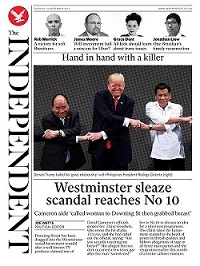 | |
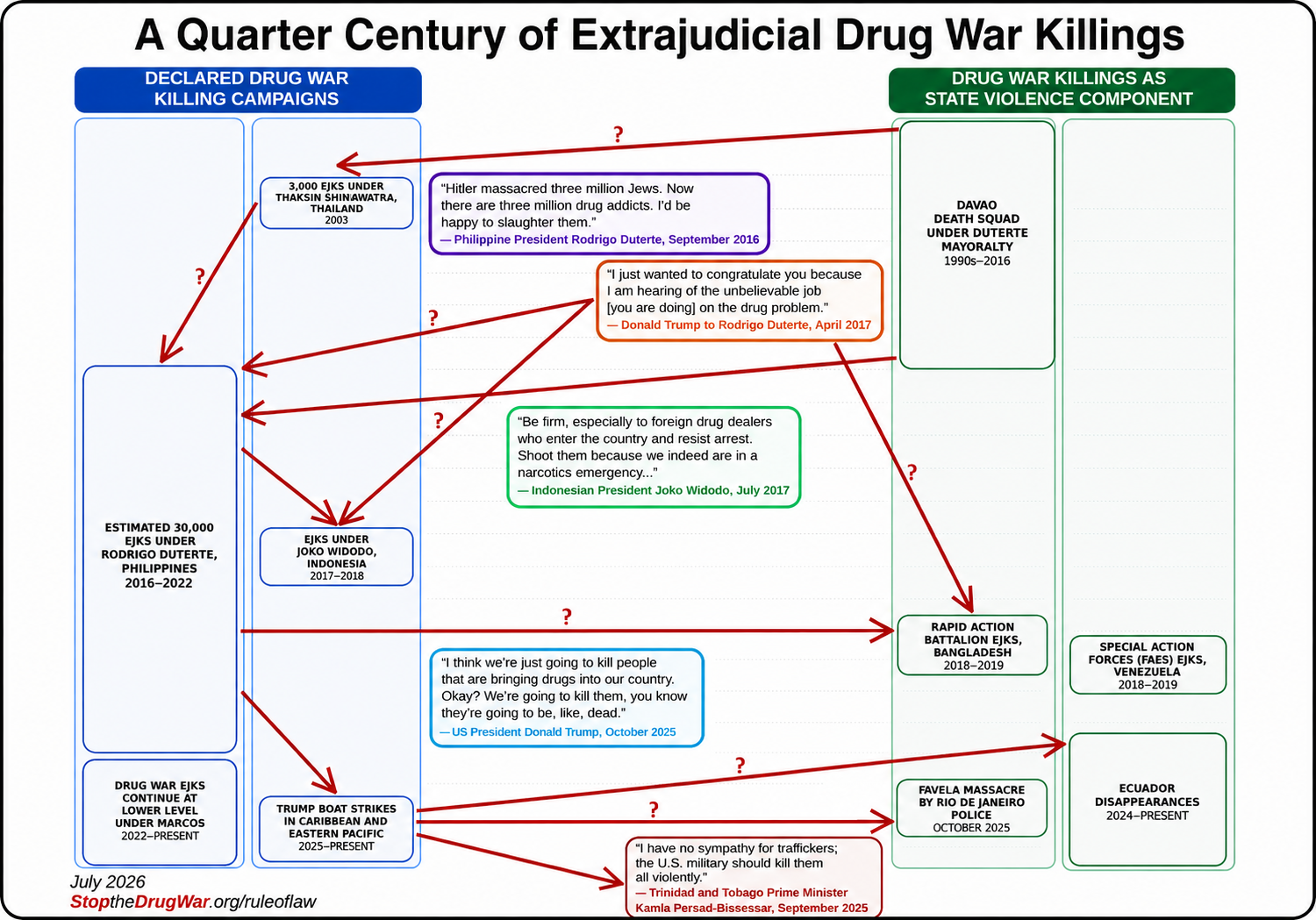
The past quarter century has been punctuated with extrajudicial killing (EJK) campaigns by governments under the guise of fighting drugs. The best-known case is 30,000 estimated murders instigated by President Rodrigo Duterte of the Philippines from 2016. But drug war EJKs go back further and to more places.
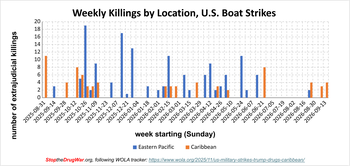
Today, the chief promoter of drug war EJKs is President Donald J. Trump. Since September 2025, the US military at his direction has conducted 71 known strikes on purported "narco-terror boats" in 67 strike incidents in the Caribbean and Eastern Pacific, killing at least 234 people. Trump's words during both terms have inspired violent drug war rhetoric by other leaders, potentially catalyzing several EJK episodes.
 |
|
|
(Click here for high-resolution copy.)
|
StoptheDrugWar.org's Rule of Law in Drug Policy program was launched in 2017, as our Philippines program. Much of our activity has consisted of educational forums at UN and other international meetings. We've also done statements and sign-on letters, legislative lobbying, demonstrations, and editorial columns.
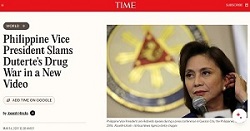 |
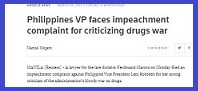
Our first event, at the UN Commission on Narcotic Drugs in March 2017, featured a powerful video by then-Vice President of the Philippines, Leni Robredo, which strongly criticized the Duterte drug war. This video drew international press coverage, following our initial exclusive release of it to TIME.com, and quickly gained traction in the Philippines. (This was followed by a vigorous but ultimately unsuccessful attempt by the president's allies to impeach Robredo, accusing her of recording the video as part of a plot to "destabilize the government.")
|
David Borden laid out what we see as at stake in this issue, at our March 2026 UN event, and called for prosecutions of officials behind the boat strikes. If any destroyed vessels were registered with Rome Treaty member states, the ICC would have territorial jurisdiction.
|
Building from that rocky but high-profile start, we today work with a wide range of high-level political leaders, legal community members, UN and country human rights officials, clergy, victim groups, advocates and officials involved with targeted sanctions, progressive security organizations, NGO leaders, journalists, academic scholars, diaspora groups, trauma experts, international justice advocates and recipients of some of the world's most prestigious awards.
With the help of this network of allies, the Rule of Law in Drug Policy Program today:
- defends the International Criminal Court and its Philippines case;
- communicates why the US boat strikes are murders requiring accountability;
- works with allies on information-gathering to support future boat strikes prosecutions;
- promotes the use for human rights purposes of targeted government sanctions;
- highlights the continuing drug war killings in the Philippines post-Duterte, and other drug war EJK situations; and
- does education and alliance-building linking the drug war and international justice to big picture issues affecting democracy and human rights worldwide.
 | |
We welcome donations, large or small, for continuing and hopefully expanding this program. Should the larger resources needed to expand become available, our plans include grassroots and grasstops coalition activation around the boat strikes; investigatory and legal efforts; accountability efforts for other drug war killings episodes; and strategies targeting the role of social media platforms in facilitating large scale human rights abuses, the Philippine drug war among them.
This program grew out of work at the United Nations since the lead up to the 2016 UN General Assembly Special Session on the World Drug Problem (UNGASS), engaging policymakers, civil society and media in efforts to modernize the global drug policy system and recenter drug policy within a framework based on human rights. Visit https://stopthedrugwar.org/global to read more.
Rule of Law in Drug Policy Program Activities and Resources, 2017 Through Present:
The Duterte Drug War Killings and Vice President Robredo's UN Video
On March 11, 2025, Philippine authorities served an International Criminal Court warrant, transmitted by Interpol, on the former president of the Philippines, Rodrigo Duterte, arresting him and transferring him to detention in The Hague, Netherlands. Duterte, whose trial is scheduled to begin on November 30, 2026, is accused of the crime against humanity of murder in the Philippine drug war. NGOs and the Commission on Human Rights of the Philippines have estimated the number of Duterte victims to be in the neighborhood of 30,000. The government admits killing over 6,200, whom Duterte defenders claim fought back ("nanlaban"). Duterte as mayor of the southern city of Davao operated the infamous Davao Death Squad (DDS -- an acronym also used to represent "diehard Duterte supporters"). His presidential campaign, which played up this reputation and centered a promise to kill hundreds of thousands of drug suspects, effectively exploited Facebook to normalize extrajudicial violence through the orchestrated use of celebrity endorsers and paid internet trolls. Our first UN side event, held in March 2017 at the Commission on Narcotic Drugs annual meeting in Vienna and co-organized with the Manila-based Council of Asian Liberals and Democrats, focused on the Duterte drug war. Philippine National Police by that time had already acknowledged killing over 2,500 people, not including another 5,500 Homicides Under Investigation plus any unreported killings. In that environment, then-Vice President of the Philippines, Leni Robredo, responded to our speaking invitation by providing a powerful video which strongly criticized the president's drug policies. The statement also criticized Duterte-led attempts in the Philippine Congress to reinstate the death penalty, including for drug offenses, and to lower the age of criminal liability to nine.
Unsurprisingly, Robredo's video prompted attacks on her by Duterte allies, which turned into a weeks-long but ultimately unsuccessful attempt to impeach her. The impeachment drive was set off by statements from the Speaker of the Philippine House of Representatives and Duterte's spokesperson in which they argued the vice president's office (OVP) must have timed the video's release to coincide with other events that week. They principally pointed to an impeachment complaint which a congressman from a party allied to the vice president's party filed against Duterte the day after we released the video, as well as a resolution in the European Parliament calling for the release of de Lima. They presented this as evidence Robredo was engaged in a "destabilization campaign" against the government.
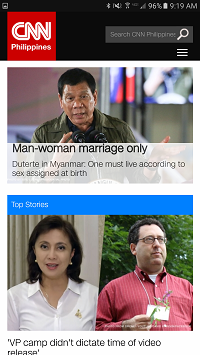
While still in Vienna, we released a statement to media refuting those claims. It documented that UN staff had scheduled side events for the CND nearly two months earlier, and attested that OVP had made no requests of us. (Our event appears on page ten of the 2017 CND side events list; a screenshot of that document's properties page shows it was published on January 23, compared with the event's March 16 date.) Sen. Kiko Pangilinan distributed the statement to the Liberal Party's media list, and we also contacted Philippine media. CNN Philippines, on which the president's spokesperson had first made the false claim about the role of the video, published the most extensive story about our debunking of it. (See news links below.)
While our statement may have helped to defuse the specific charge of a coordinated campaign by the vice president, Duterte's team had ignited a political firestorm over the video. At the height of the impeachment furor, opportunistic celebrities even held a concert and rally against Robredo. (Their campaign reached the US west coast, when a Filipino American group in Hayward, California held an affinity rally.) The political heat that Robredo, a human rights lawyer, took for participating in our event is unfortunate. But she continued to speak out against the killings, and as mayor of her home city of Naga today, remains a popular figure. News reports on our event, the vice president's video, and its fallout, are too numerous to link here, and media continued for a long time to refer to them when discussing the vice president's political trajectory. One example is this analysis in Rappler, the news outlet founded by 2021 Nobel Peace Prize laureate Maria Ressa. We post here a selection of key news links, as well as links for video footage of our entire event and other resources.
Event footage is available online here. Along with the Robredo statement and an Amnesty International video, it includes presentations by the late Chito Gascon, who served as Chairperson of the Commission on Human Rights of the Philippines; Abhisit Vejjajiva, former Prime Minister of Thailand and current chair of event cosponsor the Council of Asian Liberals and Democrats (video); Lousewies van der Laan, former leader of the Dutch D66 party (Skype); Alison Smith, lead counsel and head of international criminal justice programs at the NGO No Peace Without Justice; Marco Perduca, former Senator from Italy and a member of our board of directors; and a written statement from US Rep. Earl Blumenauer (D-OR). We also have transcripts and a detailed summary.
Following are some key news article and related links:
The Philippines' largest broadsheet newspaper, The Inquirer, interviewed our executive director David Borden, as well as fellow event speaker Alison Smith, two weeks after the event. The interview, titled "Group says Duterte, not Robredo, upsetting int'l community," was widely read, shared by Inquirer readers nearly 9,000 times. A transcript of the video was posted on Vice President Robredo's web site. Articles covering our statement defending the vice president against the Speaker's false attack:
Articles covering our publishing of the full event footage: | ||||||||||||||||||||||||||
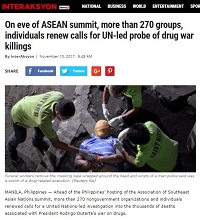
| Global Sign-On Statement for ASEAN Summit, November 2017 In the lead up to the November 2017 Summit of the Association of Southeast Asian Nations (ASEAN), which was hosted by Duterte in the Philippines, we organized a global sign-on statement calling for a UN-led investigation of the drug war killings; for the leaders of ASEAN member states and other world leaders attending to speak up about the issue; and for international aid donor governments to impose human rights conditions on law enforcement assistance to the Philippines, while funding positive programs that could serve as an alternative to the Philippine drug war, and funding the work of human rights advocates.
Nearly 300 NGOs and prominent individuals endorsed the statement. Of the 240 NGO endorsers, more than 50 were based in Asia, including a majority of ASEAN member states as well as India, Pakistan and Sri Lanka. There were also several Asia-wide networks devoted to issues such as HIV, transgender and drug user concerns, and youth democracy activism. Some notable signatories on the document include the National Organization for Women (NOW), Doctors of the World, the Free Legal Assistance Group (FLAG, a nationwide Philippines human rights lawyers group founded during the Marcos dictatorship years), Treatment Communities of America, prominent human rights advocate and actor of MASH fame Mike Farrell, former police chief of Seattle Norm Stamper, and others. A political component of the statement's outreach efforts secured endorsements from legislators in Canada, Italy, Cambodia, and Washington State, as well as other political and governmental officials from Singapore, Canada and the UK. The statement was covered by four important Philippines news outlets:
The Interaksyon article credited our coalition with renewing global calls for a UN-led probe into the drug war killings. | ||||||||||||||||||||||||||
Protest at Philippines Embassy, Washington, DC, February 2018
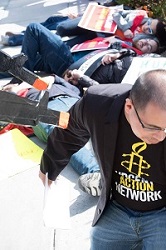
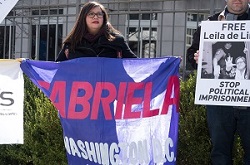
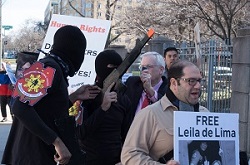
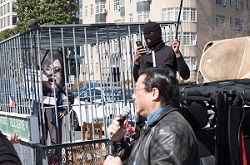
For the one-year mark of the jailing of Duterte critic Senator Leila de Lima on spurious drug charges (February 24, 2018), we organized a protest at the Philippine Embassy in Washington, DC. The event featured street theater with Duterte and Philippine National Police figures arresting Senator de Lima and pretending to shoot attendees. Allies in the Philippines helped to promote the event's Facebook Live video stream, and it went viral in that country, with nearly 470,000 views when we last checked. Among our cosponsors in the action were Amnesty International, the Filipino American Human Rights Alliance and the Ecumenical Advocacy Network on the Philippines.
Other Philippines-focused groups such as Gabriela-DC and the International Coalition on Human Rights in the Philippines-US participated as well. The event represented a step for Philippines-focused groups with various different ideological roots working together; and following it our executive director, David Borden, became a go-to person about the drug war for demonstrations organized by Filipino American groups.
The original Facebook Live video, which was the copy with the viral activity, recently expired. The following is a copy posted to our YouTube account:
(photos and video done by event cosponsor DCMJ) | ||||||||||||||||||||||||||
panel and viral photo, SSDP conference, March 2018
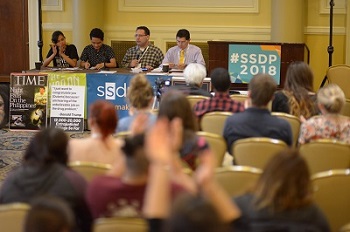
In March before heading to Vienna for our event with Senator Trillanes, we organized a panel for the Students for Sensible Drug Policy conference in Baltimore, "Human Rights Challenge, Responding to extrajudicial killings in the Philippines." Our panel featured Eric Lachica of US Filipinos for Good Governance; and Shamah Bulangis and Justine Balane, National Secretary General and International Secretary respectively of Akbayan Youth, who are also SSDP Ambassadors for the Philippines.
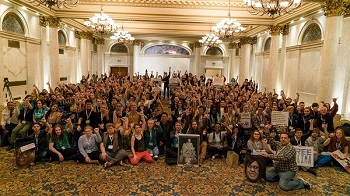
The panel was well attended, and following it, we brought signs from Philippines-related demonstrations (our 2/28 embassy protest and others) to the plenary hall, where conference attendees, following a group picture, took a second group pictures with the signs, while holding hands up in a Philippines protest symbol. The photo, posted to Facebook by an attendee, went viral in the Philippines. | ||||||||||||||||||||||||||
|
Vienna side event with Senator Trillanes, March 2018
A year almost to the day after our 2017 event (and in the same room at the UN), we held another event featuring outspoken opposition Philippine Senator Antonio F. Trillanes IV. (Duterte had said of Trillanes, "I [will] destroy him, or he will destroy me.") In a sign of the times, the day before our event when Senator Trillanes arrived at the UN, President Duterte transmitted one-year notice of the Philippines withdrawing from the International Criminal Court, in retaliation for the ICC's preliminary investigation of his drug war. The night before our event, prosecutors in the Philippines indicted the senator on a spurious sedition charge.
Senator Leila de Lima contributed a written statement to our event as well. Joining Senator Trillanes as featured speaker was Ellecer Carlos, well-known spokesperson for the iDEFEND Philippine human rights coalition. The event was again co-moderated by David Borden and Marco Perduca.
Roughly 70 people attended, many forced to stand outside the 30-person capacity meeting room. Attendees represented a range of governments, UN agencies, NGOs, and members of the local Filipino community. While the sedition charge became the main news story, driving out much of the coverage our event might otherwise have gotten, we did get some media including television: After Robredo, Trillanes Turn to Blast EJKs in war on drugs, Inquirer article published in advance of our event State of the Nation with Jennifer Soho Philtizen article noting State of the Nation report (over 9,700 shares on Facebook) Trillanes not backing down on sedition case (The Philippines' top news outlet, ABS-CBN, filmed for this report at our event. The sedition indictment, which was issued the night before, became the main story.) How many more Filipinos will suffer under Duterte? De Lima asks (Inquirer article -- over 7,700 shares) Rights Reporter interview with Senator Trillanes
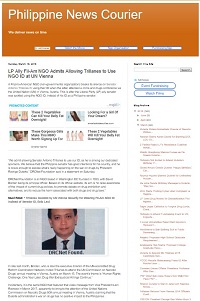
In another sign of the times, Filipinos working in Vienna attended our event, including both supporters and critics of President Duterte. One member of the "Die Hard Duterte Supporters contingent (DDS -- a play on the infamous "Davao Death Squad" Duterte operated as mayor) challenged Senator Trillanes on the number of killings during the discussion time, while others recorded video. The pro-Duterte media forces selectively edited the video in order to create an appearance that Trillanes didn't have an answer for him (as the senator and his staff had predicted). An example from a local newspaper in the Philippines appears here. Our Facebook Live video showed that Senator Trillanes did respond, however, and that the encounter was a civil one. The two spoke at length following the event. Our visit to the UN cafeteria the day before the event led to a series of misleading and fake news stories. A Filipino cashier noticed Senator Trillanes was wearing an NGO badge, rather than one issued by the Philippines' Mission to the UN, and sent a picture to a pro-Duterte blogger. The blogger's post, which misidentified us as a Filipino American NGO, is online here, and got over 7,700 shares. An article posted on two Philippines-focused sites (here and here) "confirmed" that the senator had entered the UN through our auspices. This information in these pieces wasn't fake per se, but they attempted to imply a scandal or problem where there was none. A fake news story followed on the blog post, includes a photo of us on the lunch line with Trillanes, but claims falsely that the senator was "scolded" by a UN security guard who told him to "eat last." A follow-up fake news piece featured a fabricated statement attributed to our organization. A third piece by the same writer provided video from our event of a Filipino Duterte supporter contesting Trillanes' information, but implied falsely that the senator fell silent instead of responding to him. A YouTube playlist including the full event footage is online here and embedded below. A realtime transcript from the CND Blog can be read here. The event program included the following:
(See our September 2018 statement regarding another attempt by the Duterte administration to imprison Trillanes, arguably their most serious.) | ||||||||||||||||||||||||||
| New York side event, High Level Political Forum on Sustainable Development, July 2018 On July 16, we hosted the third event in the series, "Human Rights Challenge: Judicial and Extrajudicial Killings in a Time of Authoritarianism," expanding the scope of the discussion to include the death penalty for drug offenses. The event was held at the Church Center of the United Nations, in conjunction with the UN High Level Political Forum on Sustainable Development. Prominent opposition leader Senator Risa Hontiveros of the Philippines provided a video for our event, calling for international solidarity for human rights and an end to Duterte's drug war. The two hour event also featured Professor Jason Wright of the Washington & Lee Law School, speaking on behalf of the California-based group Death Penalty Focus; and Justine Balane, International Secretary for Akbayan Youth in the Philippines, via Skype. The largest Philippine news outlet at the time, ABS-CBN, filmed the event, and a report ran on their US station, Balitang America. Following is the Balitang America's YouTube copy of the TV report: Following is full video of the event. Individual sections can be accessed by clicking on the time indications in this list:
| ||||||||||||||||||||||||||
launch of Stand with Human Rights and Democracy: Global Campaign for the Philippines, February 2019 In February 2019 we soft-launched "Stand with Human Rights and Democracy: Global Campaign for the Philippines," calling for an end to extrajudicial killings in the Duterte drug war and the release of Senator Leila de Lima. Events, held between February 23-25, took place in Freetown, Sierra Leone (SSDP Sierra Leone); Manila, Philippines; Mumbai, India; Oslo, Norway; Sousse, Tunisia; and Washington, DC. Vicente de Lima II, brother of Senator de Lima, spoke at the Manila action, which was a presentation during a major opposition rally by Tindig Pilipinas. Due to funding constraints, we were not able to continue this part of our Philippines efforts. "Stand with Human Rights and Democracy" has continued, see https://DemocracyStand.global. Photos appearing in this video can be downloaded here. Artwork from the campaign can be viewed here. A Philippine Canadian Inquirer article is online here. (We've linked to an Archive.org copy of the article because photos are no longer appearing on the Inquirer site's copy.) | ||||||||||||||||||||||||||
|
CND side event featuring Chel Diokno, and speakers on disinformation, March 2019 At the March 2019 CND annual meeting, we presented "Alternative Values, Alternative Facts: Drug Policy and Justice as Casualties in the Struggle Between Authoritarianism and Democracy." This event had two parts. One was a prerecorded update on the Philippine drug war situation by Chel Diokno, a leading human rights attorney who at the time was Dean of the De La Salle University School of Law and a candidate for Philippine Senate, and who is now a member of the Philippine House of Representatives. (Diokno participated in the discussion portion of the event live via Skype, but the video footage was not usable.) The other was our first presentation on the topic of online disinformation and manipulation. It featured a prerecorded presentation by researcher Pamela Combinido, whose group interviewed organizers and rank-and-file "trolls" who carry social media disinformation campaigns; and a video from BuzzFeed News on Facebook's role in fueling Duterte's drug war, which accompanied an award-winning article on the topic by technology reporter Davey Alba. Diokno's statement prompted significant news coverage in the Philippines, particularly his statement that the Philippine justice system is "eroding," and elicited a response from then Philippine Justice Secretary Menardo Guevara. Articles reporting on Diokno's remarks:
Articles reporting on the Justice Secretary's reaction, which he emailed to reporters:
Coverage reported by friends in the Philippines on radio stations DZMM and DZBB. Pamela Combinido presentation: PDF and Powerpoint (Note that the BuzzFeed video appearing in the above-displaying playlist is a copy we posted with permission from BuzzFeed, after the outlet took down some of their older content.) | ||||||||||||||||||||||||||
|
side event for the High-Level Political Forum on Sustainable Development, July 2019 In July 2019, we held a side event for the High-Level Political Forum on Sustainable Development at UN Headquarters in New York, again titled "Alternative Values, Alternative Facts: Drug Policy and Justice as Casualties in the Struggle Between Authoritarianism and Democracy." Footage of the live discussion is not available. We were pleased to air a recorded statement provided journalist Davey Alba, creator of the award-winning video on Facebook's role in the Duterte crisis, recorded during her final days at BuzzFeed. (Alba went on to the New York Times and is now technology reporter at Bloomberg.) Other content included the BuzzFeed and Combinido videos displayed above. (A second half of the event dealt with criminal justice and collateral consequences issues from other parts of our work.) | ||||||||||||||||||||||||||
|
side event for the Assembly of States Parties, segment on disinformation, The Hague, December 2019 In December 2019, we held our first side event at the Assembly of States Parties (ASP), the annual diplomatic governance meeting of the Rome Treaty and the International Criminal Court. David Borden presented on challenges faced by the Philippines due to disinformation and social media manipulation, drawing on compilations about the targeting of Vice President Leni Robredo and Senator Leila de Lima. This video includes the presentation and discussion that followed.
(A formally distinct, second half of the program consisted of highly informative presentations by Arpee Santiago of the Ateneo Human Rights Center and the late Butch Olano of Amnesty Philippines, both representing the Philippine Coalition for the ICC. Unfortunately the video footage was not of sufficient quality to post.) | ||||||||||||||||||||||||||
|
CND side event on human rights tools for drug policy, Vienna, March 2020 Through our work on extrajudicial killings, StoptheDrugWar.org has become engaged with civil society efforts related to international criminal justice, and to targeted sanctions regimes aiming to influence rights-abusing or corrupt public officials. The International Criminal Court is the best known example of international criminal justice; but the area also includes universal jurisdiction laws many countries have, in which it's possible to prosecute human rights violations occurring anywhere, in their courts (a strategy to reduce the problem of "accountability gaps"); and it includes international tribunals convened for specific country situations such as those in Rwanda or the former Yugoslavia. The best known example of targeted sanctions is the US Global Magnitsky Act, named after the tax advisor Sergei Magnitsky, who was assassinated after exposing corruption and misconduct by Russian officials. The US has other laws that authorize targeted sanctions as well, and jurisdictions such as Canada, the UK, EU and Australia are jurisdictions that have implemented Magnitsky regimes. As part of our engagement, we participate in networks including the Coalition for the International Criminal Court, the Washington Working on the ICC, and the GloMag Coalition (a global network supporting targeted sanctions efforts, organized by the US-based NGO Human Rights First). We also attend meetings, both in-person and online, of the Assembly of States Parties (the diplomatic body overseeing the ICC's Rome Treaty) and with officials of the court itself. This work has become more complicated in that President Trump, for the second time has imposed sanctions on top officials of the ICC (an abuse of the purpose of the sanctions regime). That in turn means we have to be careful in our engagement with the court, to not run afoul of the requirements US sanctions law has for persons under US jurisdiction; we are prohibited from providing "material support" to sanctioned persons. So far it has been straightforward to continue that engagement. If sanctions are extended to the court in its entirety, however, we will have to do further legal consultations to determine what if anything we can still do. At the March 2020 annual CND meeting, we presented the side event "Human Rights Tools: Incorporating International Justice and Targeted Sanctions Into Drug Policy." This event featured our first talk on the Bangladesh extrajudicial drug war killings, by Mohammad Ashrafuzamman (then of the Hong Kong-based Asian Human Rights Commission, a member of our Advisory Board), the organizer of a successful effort to secure sanctions the US announced in December 2021 on leaders of the Bangladesh Rapid Action Battalion. The event also featured a presentation by attorney Chinonye Obiagwu of the Nigeria Coalition for the International Criminal Court; and comments from Zaved Mahmood, Senior Drug Policy Advisor at the UN Office of the High Commissioner on Human Rights. | ||||||||||||||||||||||||||
|
online side event for July 2020 High-Level Political Forum on Sustainable Development, July 2020 Speakers for our first fully online event included Gang Badoy Capati, prison educator and Executive Director of Rock Ed Philippines; Ruben Carranza, Senior Expert and Director of Reparative Justice Program, International Center for Transitional Justice; Charles King, CEO, Housing Works (NYC); Ehab Salah, Adviser, Prisons and HIV & UNAIDS Focal Point, UN Office on Drugs and Crime; and Ninan Varughese, Director a.i., UNAIDS New York Office. | ||||||||||||||||||||||||||
|
Stand Campaign - "Trump and Duterte: Allies in Violence" video
The Rule of Law in Drug Policy program refers to big picture issues affecting democracies -- in the Philippines, the US and worldwide. These include issues like the rise of autocratic world leaders, attacks on political opposition and media, disinformation and social media manipulation, the intensification of hatred and conflicts in the internet age, and other assaults on human rights and the rules-based order. One of our vehicles for highlighting these issues is the Stand with Human Rights and Democracy campaign, mentioned earlier in the context of a series of global protests we promoted in February 2019 to rally support for the imprisoned Senator Leila de Lima. In October 2020 the campaign, through the 501(c)(4) social welfare nonprofit Drug Reform Coordination Network, engaged in activities related to the US presidential election in which we highlighted the similarities between Donald Trump, Rodrigo Duterte and other autocrats. The first was a video, released on October 26, Trump and Duterte: Allies in Violence." We think this video, which presents quotes by the two presidents promoting violence, and by their enablers defending them, remains relevant today. | ||||||||||||||||||||||||||
|
Stand Campaign - "Autocrat Fair" demonstration
On October 27 (a day after releasing the video, the campaign held a demonstration, "Autocrat Fair," which was covered by Reuters TV and picked up by NowThis Politics. Autocrat Fair, held in front of the now former Trump International Hotel in Washington, DC featured mask figures of ten autocratic world leaders, eight of them holding and pulling the strings of smaller Trump marionettes (plus one of Trump himself -- and another of Chinese Premier Xi pulling the strings of a Duterte marionette, a resonant image for Philippines politics). Movement for a Free Philippines partnered with us for the event, and we read statements provided by Rep. Jamie Raskin and by the NGO Democracy for the Arab World Now (DAWN), founded by the late journalist Jamal Khashoggi. (As with the video, it was the 501(c)(4) social welfare nonprofit, Drug Reform Coordination Network, which financed the costs of the demonstration.) | ||||||||||||||||||||||||||
|
Side event for Assembly of States Parties, The Hague, December 2020 On December 23, 2020, we organized an online side event in association with the Assembly of States Parties meeting, "International Responses to Extrajudicial Drug War Killings – Leverage and Limitations." This event featured presentations by Fhillip Sawali, Chief of Staff to Senator Leila de Lima, Philippines; Elizabeth Evenson, Associate Director, International Justice Program, Human Rights Watch; and Mohammad Ashrafuzzaman, representing the Asian Legal Resource Centre. | ||||||||||||||||||||||||||
|
online side event for High-Level Political Forum on Sustainable Development, July 2021 In July 2021, we held an side event for the High-Level Political Forum on Sustainable Development, "SDG 16: The Global War on Drugs vs. Rule of Law and Human Rights." This event included our first presentation on the drug war in Indonesia, topics including both extrajudicial killings and the judicial death penalty for drug offenses, by researcher Iftitahsari of Indonesia's Institute for Criminal Justice Reform. A representative of the Indonesian UN Mission responded during the Question and Comments segment. The event also featured Scott Johnston, then of Human Rights First, presenting on targeted sanctions programs like the Global Magnitsky Act. Justine Balane (now a member of our Advisory Board) provided an update on the situation in the Philippines. Iftitahsari's presentation slides can be downloaded here. The Mission of the Philippines sent a response, which can be read here. Scott Johnston provided documents including a Global Magnitsky Explainer and a Sanctions Model Case Submission Template. We recommend also visiting the HRF Global Magnitsky web site section, as the situation in this area continues to evolve. A belated report on this event was published in our newsletter, Drug War Chronicle later in the year, "How the Global Drug War's Victims Are Fighting Back." | ||||||||||||||||||||||||||
|
online side event with Chel Diokno for Assembly of States Parties, The Hague, December 2021 In December 2021, on the online margins of the Assembly of States Parties (the governing body of the International Criminal Court), we held the side event "Keeping It Real: Duterte's Drug War Slaughter and the ICC." This event featured keynote speaker Chel Diokno, Founding Dean of the De La Salle University (DLSU) College of Law and Chair of the Free Legal Assistance Group (FLAG), the oldest organization of human rights lawyers in the Philippines. Elizabeth Evenson, Associate Director of the Human Rights Watch International Justice Program provided comment on the ICC process as well. | ||||||||||||||||||||||||||
|
intervention and online side event for the Commission on Narcotic Drugs, Vienna, March 2022 David Borden delivered a statement on Plenary Item #6, implementing the 2019 Ministerial Declaration, 65th Session of the Commission on Narcotic Drugs, March 16, 2022. Due to the time limit, some of the content was omitted from the delivered presentation. The statement addresses the denial of methadone therapy in Crimea by occupying Russian forces, and suggested its applicability to the ICC Ukraine case and Magnitsky sanctions regimes due to Crimea's continued international status as part of Ukraine. While this is not a case of extrajudicial killings, which is our main program focus, we've included the intervention here because it is addresses another rule of law in drug policy issue that deserves attention. Due to a mishap, video of the original English presentation was not preserved. We have posted the French, Russian and Spanish interpretations.) Also for the 2022 CND, we presented the side event "Open Wound, Extrajudicial Drug War Killings in 2022," featuring Commissioner Karen Gomez-Dumpit from the Commission on Human Rights of the Republic Philippines; Hong Kong-based Bangaladeshi native Mohammad Ashrafuzzaman of the Asian Human Rights Commission; Zaved Mahmood, Human Rights and Drug Policy Advisor, UN Office of the High Commissioner on Human Rights; and Cristiano Avila Maronna, Board Member of the Brazil-based Justa Project. | ||||||||||||||||||||||||||
|
online side event for the High-Level Political Forum on Sustainable Development, New York, July 2022 In July 2022 we held an online side event for the High-Level Political Forum on Sustainable Development (HLPF), "Building Back with Justice? Marcos, Duterte, the ICC and the Philippine Drug War." Our speakers included Filipino human rights activist Justine Balane (a member of our advisory board); Ruben Carranza of the International Center for Transitional Justice, who played a leading role in Philippine government investigations of Marcos family financial crimes; and Dr. Aurora Parong of Amnesty Philippines and the Philippine Coalition for the International Criminal Court. | ||||||||||||||||||||||||||
|
hybrid side event for the Human Rights Council, Geneva, October 2022 standalone copy of Senator Hontiveros's statement: | ||||||||||||||||||||||||||
|
hybrid side event for the Commission on Narcotic Drugs, Vienna, March 2023 Despite being assigned a normally unfavorable Friday afternoon time slot, we had well over over 20 attendees, half of them from the local Filipino community in Vienna. photos by Kenzi Riboulet Zemouli:
| ||||||||||||||||||||||||||
| ian style="font-size: 1.3em; font-family: Georgia, Times, serif;">CND Side Event Featuring Keynote Speaker Leila de Lima, Vienna, March 2024 On March 21, 2024, we had the honor of presenting Leila de Lima's first internationally-directed speech since her release from Camp Crame the prior November. The former senator (now congresswoman), who was awaiting the final disposition of the remaining false legal case that had been brought against her, joined us via Zoom. Following Senator de Lima's keynote, our panel of commenters included Montse Ferrer of Amnesty International; Zaved Mahmood of the UN Office of the High Commission on Human Rights; and Socorro Reyes, supporter and former university professor of Leila de Lima. The event moderator was our frequent collaborator Fr. Albert Alejo, who is also a close supporter of de Lima. The event drew roughly 45 attendees in person and another 45 online. The following week, we had the honor of cosponsoring and attending a second event featuring Leila de Lima as keynote, organized by Franciscans International at the UN Human Rights Council in Geneva, Fr. Alejo again moderating and Reyes again speaking. report on our event by GMA (Greater Manila Area) Network, 3/29/24: De Lima to Marcos: End drug war, stop the killings
| ||||||||||||||||||||||||||
|
Independent Online Event on Philippine Drug War Victims, April 2024 On April 15, 2024, we held the independent online event "Victims Move Forward from the Philippine Drug War." This event was intended to be the launch of an ambitious and exciting online event series on these issues, a project to which we are returning our attention at this time, hopefully to relaunch in the early fall. Our speakers for Victims Move Forward were a distinguished set, including Fr. Flavie Villanueva SVD, founder of the church-affiliated AJ Kalinga Foundation and its Program Paghilom program Philippine drug war victims; widely-known psychologist, traumatologist and victimologist Dr. Yael Danieli, founder of the International Center for Multigenerational Legacies of Trauma (ICMGLT); and Gang Badoy Capati, founder of RockEd Philippines and its trauma program Project Steady Asia. Program Paghilom and ICMGLT formally cosponsored the event. Update: In 2025, Fr. Villanueva was honored with the highly prestigious Ramon Magsaysay Award, popularly known as "The Nobel Prize of Asia". A PDF of Fr. Villanueva's PowerPoint presentation can be downloaded here. | ||||||||||||||||||||||||||
|
online side event for the Commission on Crime Prevention and Criminal Justice, May 2024 In May 2024, we held the online event "After a Drug War - Rule of Law in the Balance," an official side event of the 33rd session of the UN Commission on Crime Prevention and Criminal Justice. The primary speakers for this event were Dr. Aurora Parong, Co-Chair of the Philippine Coalition for the International Criminal Court; and Niccolo Figa-Talamanca, Secretary General, No Peace Without Justice. At the time of this event, supporters of the ICC's Philippines investigation were anxiously awaiting news of rumored arrests warrants. Speakers addressed what it would mean for the Philippines, and the world, if perpetrators at all levels did or did not face accountability under law. | ||||||||||||||||||||||||||
| Written Statement for Human Rights Council In June 2024, we submitted "Unfinished Business: Ending Extrajudicial Drug War Killings in the Philippines," an official written statement accepted for the 66th session of the Human Rights Council. The statement notes continuing extrajudicial drug war killings in the Philippines under the Marcos administration, albeit at a lower rate, relying on data compiled by the Dahas Project. | ||||||||||||||||||||||||||
|
Filipino Concerns Over ICC Sanctions Sign-on Letter to US Congress, Led by Leila de Lima
In February 2025, President Trump for the second time imposed sanctions on officials of the International Criminal Court. Preceding this, Republicans in Congress attempted to enact these sanctions legislatively in 2024, then again in December, and January in the new Congress. Legislation passed the House of Representatives, with nearly all Republicans as well as a substantial minority of Democrats. But the bill was blocked from moving in the Senate. This legislation, and the executive order that Trump eventually issued, focused on the concept of "protected persons," meaning officials and others of countries that are "major allies" of the United States and that are not members of the Rome Treaty. The government can declare sanctions on the court, officials of the court, or others supporting the court, over actions by the ICC to investigate or prosecute any protected person. Along with our general support for the ICC and opposition to these sanctions, we also had the concern that the case of the Philippines, a major US ally which has withdrawn from the Rome Treaty, but for which ICC jurisdiction remains in place for crimes committed before the withdrawal became effective, could get swept up. In fall 2024, we organized a sign-on letter to the US Congress, headlined by Leila de Lima, raising concerns about US sanctions on the ICC from the standpoint of Filipino interests. The letter particularly focused on the jeopardy sanctions could cause to victims of mass atrocity crimes who have provided information for ICC prosecutions, by making the institution less able or even unable to operate their programs, which include witness protection. At repeated points during the legislative process on this bill, in both 2024 and 2025, we distributed the letter broadly to foreign policy staff throughout the House of Representatives and Senate, with the help of staff at a larger organization that also opposes these sanctions. We also provided the letter to allies who were still in the government at that time, who despite the big political changes were able to participate in relevant discussions. We don't know whether our advocacy influenced things. However, the White House Executive Order, which was issued after the congressional bill failed, included a modification relative to the language of the congressional bill, namely to exclude persons with major US ally states that have accepted ICC jurisdiction from the protected persons list. Among current ICC cases, that uniquely means the Philippines. news articles about the sign-on letter:
An article in Responsible Statecraft, without mentioning the Filipino concerns sign-on letter, quoted David Borden addressing the Philippines case. | ||||||||||||||||||||||||||
Press Briefing with ICC Advocates from Ukraine, Philippines, Myanmar & Sudan, Opposing US Sanctions, January 2025
We initiated and co-organized a 1/29/25 press briefing on US sanctions that featured speakers from four ICC situation countries, including Oleksandra Matviichuk, who heads the Center for Civil Liberties in Ukraine, which was a Nobel Peace Prize recipient in 2022; Dino S. de Leon, Philippine human rights lawyer, spokesperson of former Senator Leila de Lima, and Director at Human Rights and People Empowerment Center; Kyaw Win, Executive Director, Burma Human Rights Network; and Niemat Ahmadi, President of Darfur Women Action Group and survivor of the Darfur Genocide. The event also featured remarks by sanctions expert Adam Keith of the US-based NGO Human Rights First, and was moderated by Rebecca Shoot, then of Citizens for Global Solutions. 1/29/25 Rappler article: US sanctions bill vs ICC has wide-ranging effects on Duterte drug war probe | ||||||||||||||||||||||||||
|
hybrid side event for the Commission on Narcotic Drugs, Vienna, March 2025
On March 11, 2025, we hosted "Shared Mistakes: Societies Address Mass Incarceration, the Death Penalty, and Extrajudicial Killings," side event at the UN annual Commission on Narcotic Drugs meeting in Vienna. We had the honor of a presentation by our longtime friend Kemba Smith of the Kemba Smith Foundation, a widely-known former drug war prisoner whose mandatory minimum sentence was commuted by President Clinton, and who is the subject of the 2024 movie Kemba. The event also featured important presentations by Father Albert Alejo and Jiavern Tham. Father Alejo is a leader in the effort for an ICC case on the Philippine drug war, but this time he spoke about disproportionate drug sentencing in the Philippines, including the case of his nephew. Tham, representing the Malaysian NGO HAYAT Life, discussed efforts to reform drug policy and end the death penalty in Malaysia. March 21, it so happened, was the day that the arrest of Rodrigo Duterte and his transport to ICC detention in The Hague took place. Though our event only partially addressed extrajudicial killings this time, it was a special time to be there. | ||||||||||||||||||||||||||
|
Rappler editorial on ICC jurisdiction, April 2025
In April 2025, our executive director David Borden published the first of two editorials, in the Philippine news outlet Rappler, analyzing a jurisdictional hurdle prosecutors had to pass before the trial of Rodrigo Duterte for the drug war killings could proceed: ICC clearly retains jurisdiction over Duterte's drug war crimes This editorial was followed by a longer and later version published on the site Just Security. See that next section for background on the jurisdictional hurdle, and for the Just Security link. | ||||||||||||||||||||||||||
|
Just Security editorial on ICC jurisdiction, August 2025
When Prosecutor Fatou Bensouda announced the ICC's preliminary examination into the Philippine drug war killings in February 2018, the Philippines was a member of the Rome Treaty. When Rodrigo Duterte the next month withdrew the Philippines from the treaty, that initiated a one-year waiting period before the country's withdrawal would become effective in March 2019. This meant that Rome Statute crimes committed during that year would be under the court's jurisdiction, but crimes committed after March 2019 would no longer be. Jurisdiction is one thing, but exercise of jurisdiction, supporters of the case learned at the cost of some lost sleep, is another. The Office of the Prosecutor waited until 2021 to request authorization from the court's Pretrial Chamber to conduct an investigation -- the phase of proceedings in which the court can require cooperation from State Parties, issue arrest warrants, etc. The position of OTP, based on language in Article 127 on withdrawal about matters before the court not being prejudiced, was that the opening of the preliminary examination prior to withdrawal was sufficient for the court to retain the right to exercise temporal jurisdiction in the case. The Pretrial Chamber approved the request to authorize an investigation, and in 2023 the Appeals Chamber upheld the authorization. But it did so only preliminarily with respect to temporal jurisdiction, finding that it was not yet the right stage to take up the question. What cost supporters of the case some sleep is that two of the five Appeals judges dissented, raising the question of how the judges serving on the Appeals Chamber would go when they took up the full question, which happened in 2025. In the meanwhile, the Duterte defense team made use of the uncertainty to stoke doubts in the court of public opinion. Despite the chamber ultimately upholding jurisdiction, Duterte allies in the Philippines continue to make the outdated jurisdictional claim in the media. And so the issue is still relevant politically. Our executive director, David Borden, authored two editorials addressing the temporal jurisdictional question, the arguments in which lined up with the case made by prosecutors, and mostly lined up with those ultimately taken by the Appeals Chamber. The first appeared in the Philippine news outlet Rappler in April 2025, as noted above. The second appeared in the US-based law and policy site Just Security, in August 2025: The ICC Has Jurisdiction Over Rodrigo Duterte's Drug War Crimes. (The Just Security editorial is the more developed one, due to being published later and to a greater length being allowed. But the Rappler piece includes a bit of humor that didn't get through the Just Security editing process.) | ||||||||||||||||||||||||||
|
David Borden participation in No Peace Without Justice Human Rights Council event, September 2025
On September 30, 2025, David Borden presented online for a side event at the Human Rights Council organized by No Peace Without Justice, during the early days of the US military's unlawful strikes on boats in the Caribbean and Eastern Pacific. (Video is hosted on our YouTube page with permission of NPWJ.) | ||||||||||||||||||||||||||
|
David Borden presentation for ABA Committee, December 2025
In December 2025, David Borden delivered remarks for the American Bar Association's International Law Section International Criminal Law Committee online forum, "Cautionary Tales? The Prosecutor v. Rodrigo Duterte." | ||||||||||||||||||||||||||
|
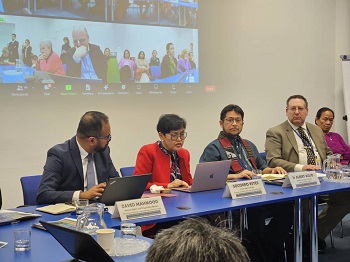
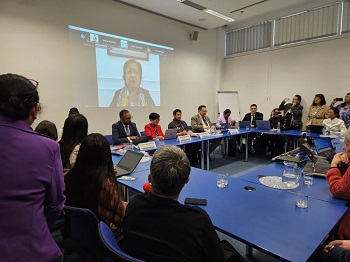
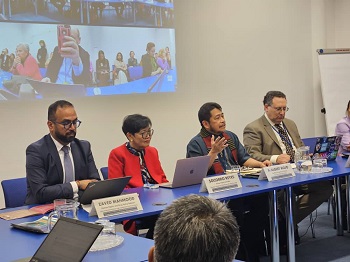
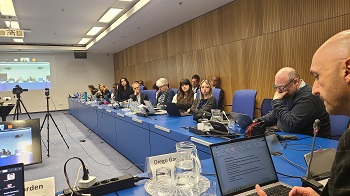
hybrid side event for the Commission on Narcotic Drugs, Vienna, March 2026
In February 2025, we warned that President Trump, who praised the Duterte drug war, could attempt drug war EJKs in the United States. In September Trump EJKs began, in the form of unlawful strikes by the military on alleged "drug boats" in the Caribbean and Eastern Pacific. The number of Trump drug war EJKs now exceeds 220, and it's reported the president wants to accelerate them. We condemn this savage murder spree by our own government -- an operation with no actual relevance to fighting drugs -- and call for national or international prosecutions of the civilian and military officials who've led. We note that if a destroyed boat was registered in a Rome Treaty member state, the ICC would have territorial jurisdiction under maritime provisions in Article 12. The more likely accountability paths are universal jurisdiction cases in third party countries or prosecution by a future US administration. The legal rationale for what looks like mass murder, has been kept confidential; and analysts within and without the government say the strikes have had no discernible impact on the supply of drugs. Two US senators, one a Democrat and one a Republican, say the confidential targeting criteria that the military is using does not include presence of drugs or guns. We also continue to warn -- as our executive director David Borden did in presentations for events of the Human Rights Council and the American Bar Association in September and December -- that Trump may attempt drug war killings inside the US. Indeed we believe he is likely to do so if he feels he can. One possible time is in the lead-up to a US election, if the president's collapsed poll numbers among key voting groups leave him desperate for a way to disrupt it. In the meanwhile, we are pressing the case for treating the boat strikes as criminal activity requiring accountability responses, to be understood in a class with Duterte's depradations in the Philippine drug war for which he now awaits his ICC trial. In March 2026, at the annual Commission on Narcotic Drugs meeting, we presented the first of so far two side events at UN meetings on these themes: "Murder on the Land and the Sea: Extrajudicial Drug War Killings in the 21st Century." This event, moderated by Kat Murti of Students for Sensible Drug Policy, featured presentations by four speakers:
(The second event in this series took place in June.)
| ||||||||||||||||||||||||||
|
Trinidad and Tobago Government Doubles Down on Support for Extrajudicial Killings in the Caribbean (NGO / Security Council dialogue event, New York, May 2026) Following the first US boat strike in September 2025, the Prime Minister of Trinidad and Tobago, Kamla Persad-Bissessar, defended the strike, using violent language, stating the the US military should "kill all drug traffickers violently." Like President Trump's 2017 comment that may have encouraged leaders in Bangladesh and Indonesia to launch drug wr extrajudicial killing campaigns, Persad-Bissessar's words have the potential to contribute to world violence, especially in the Caribbean. Her words in turn demonstrate a pernicious international impact of the boat strikes themselves. In the lead-up to 2026 elections to the UN Security Council -- in which Trinidad was one of two uncontested candidates, along with Zimbabwe -- our UN Representative in New York, Benjamin Phillips, attended an NGO dialogue event at the UN with both ambassadors (which was part of a program of events related to the Security Council organized by the World Federation of United Nations Associations). Our representative was able to pose a question, and asked the ambassadors about their governments' intentions with regard to the boat strikes and extrajudicial killings. As the video footage shows, the Trinidad ambassador doubled down on his prime minister's support for extrajudicial killings, using spurious legal and statistical claims to do so. The Zimbabwe ambassador also responded, stressing that drug policy responses should respect human rights. (The YouTube video's description provides links to the WFUNA program, as well as to the event's full footage archived on UN TV.) | ||||||||||||||||||||||||||
|
online side event for the Commission on Crime Prevention and Criminal Justice, Vienna, June 2026 Following on our March 2026 CND event, in June 2026 we presented "Murder on the Land and the Sea II: Accountability for Extrajudicial Drug War Killings Is Only a Matter of Time," an online side event of the UN Commission on Crime Prevention and Criminal Justice. "Murder on the Land and Sea II" featured presentations by Sarah Harrison of the Stimson Center, coauthor of the Just Security overview piece "International Accountability for U.S. Crimes in the Caribbean and Pacific"; John Ramming Chappell of the Center for Civilians in Conflict (CIVIC), coathor of the Opinio Juris piece "On Notice: Third State Responsibility and U.S. Airstrikes in the Caribbean and Pacific"; and human rights attorney Dino Singson de Leon, Trustee of the Human Rights and People Empowerment Center, an NGO associated with Leila de Lima. We also played the video shown just above of the Trinidad and Tobago ambassador doubling down on extrajudicial killings, at an NGO dialogue with representatives of countries running unopposed for the UN Security Council. (The first event in this series took place in June.) |

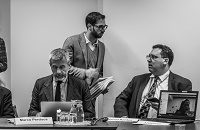
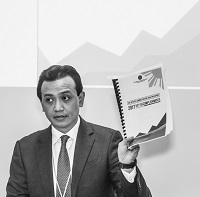
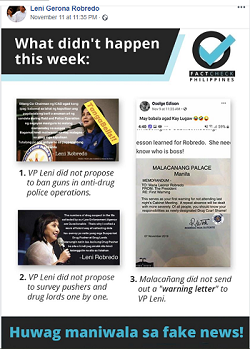
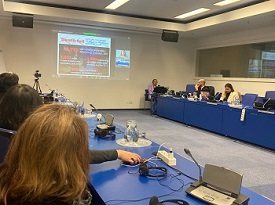
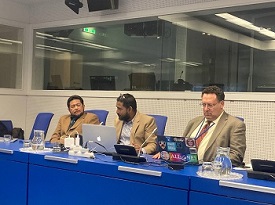
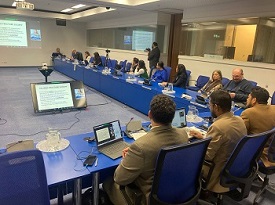
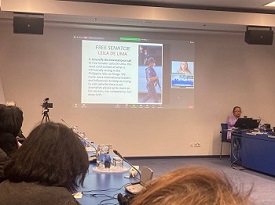
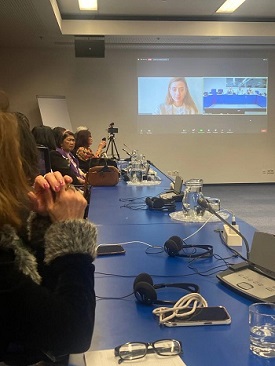
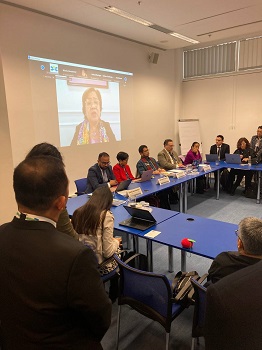
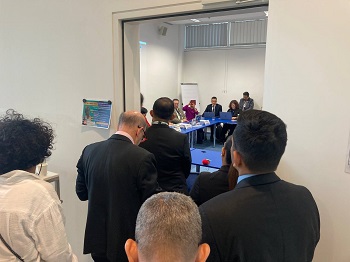
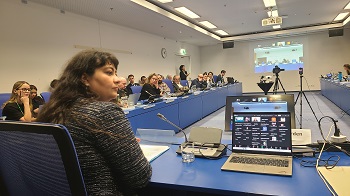
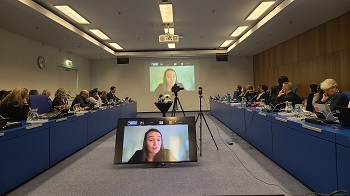
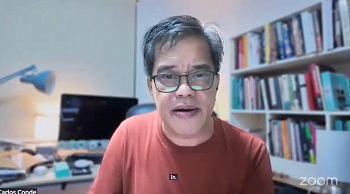
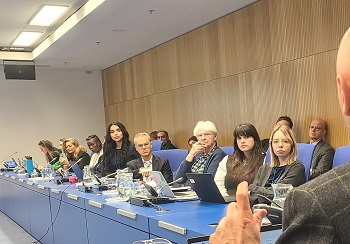
Here are a couple of fun things we didn't want to delete when we reformatted the page:
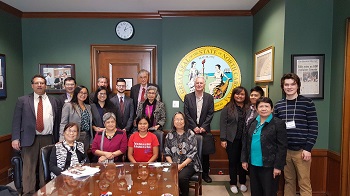
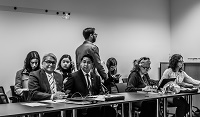
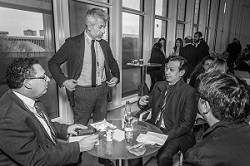
April 2018 lobbying group, supporting the Philippine Human Rights Accountability and Counternarcotics Act of 2017. David Borden was invited to join members of the Stop the Killings Speaking Tour 2018 of the Caravan for Peace and Justice for the Philippines, as well as representatives of Filipino American organizations and faith groups participating in the Ecumenical Advocacy Days held the prior weekend. Key organizers of the lobbying effort were the Ecumenical Advocacy Network on the Philippines and the International Coalition for Human Rights in the Philippines US Chapter.
David Borden visited with members of the Filipino American Human Rights Alliance San Francisco chapter in July 2018, where FAHRA activist Ago Pedalizo asked his reaction to the awarding of the prestigious "Prize for Freedom" award to Senator de Lima: