Latest

In The Trenches

Growth of Ex-Offender Population in United States Is a Dramatic Drag on Economy (Press Release)

For Immediate Release:November 15, 2010
Contact: Alan Barber, (571) 306-2526

Washington, D.C.- Three decades of harsh criminal justice policies have created a large population of ex-offenders that struggle in the labor market long after they have paid their debts to society, according to a new report from the Center for Economic and Policy Research (CEPR). Because prison records and felony convictions greatly lower ex-offenders' chances of finding work, the United States loses between $57 billion and $65 billion a year in lost output.

“It isn't just that we have the highest incarceration rate in the world, we have created a situation over the last 30 years where about one in eight men is an ex-offender,” said John Schmitt, a Senior Economist at CEPR and a co-author of the report.

The new report, “Ex-offenders and the Labor Market,” found that in 2008 there were between 5.4 million and 6.1 million ex-prisoners and between 12.3 million and 13.9 million ex-felons in the United States. Over 90 percent were men.

In 2008, about one in 33 working-age adults was an ex-prisoner, and about one in 15 working-age adults was an ex-felon. Among working-age men in that same year, about one in 17 was an ex-prisoner and one in eight was an ex-felon.

Because ex-offenders face substantial barriers to employment, the authors estimate that the large ex-offender population in 2008 lowered employment that year by the equivalent of 1.5 million to 1.7 million workers.

"The rise in the ex-offender population overwhelmingly reflects changes in the U.S. criminal Justice system, not changes in underlying criminal activity," says Schmitt. "We incarcerate an astonishing share of non-violent offenders, particularly for drug-related offenses. We have far better ways to handle these kinds of offenses, but so far common sense has not prevailed."

The report warns that in the absence of reforms to the criminal justice system, the share of ex-offenders in the working-age population will rise substantially in coming years, increasing the magnitude of employment and output losses estimated for 2008.

###

Latest News
Latest News
Latest News

Arizona Starts Medical Marijuana Implementation

Now that it's clear that Arizona voters have approved medical marijuana, the Department of Health Services is scrambling to meet the four month requirement to implement the law. Medical users could be legally using marijuana by next summer, Arizona Department of Health Services (ADHS) Director Will Humbles said.
Chronicle
coming to Oakland -- licensed commercial-scale marijuana grows (Wikimedia)

Oakland Okays Medical Marijuana Mega-Grows

Oakland is set to become the first city in the nation to tax and regulate large-scale medical marijuana grow ops after a Tuesday night vote at the city council.
Blog
Blog
Latest News
Latest News

Budget Cutters Eye Controversial National Drug Intelligence Center

Newly-elected Republicans coming to Washington this week to slash the federal budget are taking note of a tiny federal agency in the rusting steel town of Johnstown, Pennsylvania -- the National Drug Intelligence Center, a pet project of the late Rep. Jack Murtha (D-Pa). Conceived in the early 1990's as a clearinghouse for all of the intelligence in the nation's war on drugs, the agency was installed on the fifth floor of a defunct department store. For years, Murtha lavished federal dollars on the little agency, even as it struggled to find a mission and critics blasted it as unnecessary.
Latest News

Drug Trafficking Organizations Buy Jets for Trans-Atlantic Coke Flights

Federal investigators are piecing together details of an audacious new trend in drug smuggling: South American traffickers are buying old jets, stuffing them full of cocaine and flying them across the Atlantic to feed Europe's growing coke habit. "The sky's the limit," one Sierra Leone trafficker boasted to a Drug Enforcement Administration informant. In some ways it is a throwback to the 1970s and '80s, when pilots flew drugs freely between Colombia and staging areas near the U.S. border.
In The Trenches

Medical Marijuana Advocates Bring Attention to DEA Confirmation Hearings: Acting DEA Head Michele Leonhart, a Bush-holdover, Led Aggressive Campaign Against Medical Marijuana (Press Release)

FOR IMMEDIATE RELEASE
November 15, 2010
9:28 AM

CONTACT: Americans for Safe Access
SA Government Affairs Director Caren Woodson 510-388-0546 or ASA Media Liaison Kris Hermes 510-681-6361

Medical Marijuana Advocates Bring Attention to DEA Confirmation Hearings

Acting DEA head Michele Leonhart, a Bush-holdover, led aggressive campaign against medical marijuana

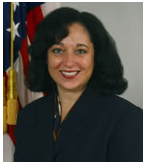
WASHINGTON - November 15 - After more than two years as acting head of the Drug Enforcement Administration (DEA), Michele Leonhart, who served as Deputy DEA Administrator during George W. Bush's presidency, is scheduled to be confirmed by the Senate Judiciary Committee this Wednesday, November 17th at 2:30pm EST. No friend to medical marijuana patients, Leonhart along with her former boss, DEA Administrator Karen Tandy, were responsible for more than two hundred paramilitary-style raids on patients and their providers. As Acting DEA Administrator, Leonhart has continued to raid dispensaries, growers and medical marijuana testing labs despite a change in federal policy under President Obama.

Although Leonhart is expected to be easily confirmed, advocates want to hold her feet to the fire, and are encouraging Senate Judiciary Committee members to ask tough questions about adherence to President Obama's Justice Department policy and her plans for addressing the growing divide between federal and state medical marijuana laws. "Leonhart's track record of causing untold harm to patients and their providers over the years is cause for a serious lack of trust in the medical marijuana community," said Caren Woodson, Director of Government Affairs with Americans for Safe Access, the country's leading medical marijuana advocacy group, which has submitted questions to be asked of Leonhart during the confirmation hearing. "We need to know that Leonhart has a plan for medical marijuana and the protection of patients and that she will be held accountable for her actions."

What: Michele Leonhart's confirmation hearing to be the next DEA Administrator
When: Wednesday, November 17th at 2:30pm
Where: Senate Judiciary Committee, Dirksen Senate Office Building, Room 226, Washington, DC

In October 2009, the Obama Administration issued a memorandum to U.S. Attorneys discouraging the use of federal resources to prosecute individuals who are in "clear and unambiguous compliance" with their state medical marijuana law. Since then, ASA has tracked more than 30 federal enforcement raids in California, Colorado, Hawaii, and Nevada, all medical marijuana states. By contrast, local and state governments are recognizing the need for, and authorizing methods of, distribution of medical marijuana. In a grassroots push over the next two days, medical marijuana advocates across the country are calling on Senate Judiciary Committee members to ask hard questions of Leonhart. "Leonhart must look at this as a public health issue and do more to reconcile the conflict between local, state and federal laws," continued Woodson.

In addition to enforcement, as head of the DEA, Leonhart will have authority over an unanswered marijuana Rescheduling petition that has been pending since 2002. Filed by the Coalition for Rescheduling Cannabis (CRC), the petition originally argued before the Bush Administration that marijuana has medical value and should be rescheduled. Now before the Obama Administration, advocates and coalition members are expecting more rigorous scrutiny on an issue that has been progressively moving toward scientific and mainstream acceptance. This past week it was confirmed that Arizona, which narrowly voted for Proposition 203, would become the country's 15th state to pass a medical marijuana law.

Under the authority of the Controlled Substances Act, Leonhart has significant control over medical marijuana research in the U.S., and has used her position as Acting Administrator to obstruct the scientific advancement of this important therapeutic substance. In January 2009, days before President Bush was to vacate his office, Acting Administrator Leonhart thwarted an effort to end federal obstruction of medical marijuana research, ignoring an 87-page recommendation from her own DEA Administrative Law Judge Mary Ellen Bittner, who ruled that such research was "in the public interest." The DEA and the National Institute for Drug Abuse (NIDA) have colluded to obstruct medical efficacy studies by prioritizing research on the supposed harmful effects of marijuana.

Further information:
Leonhart confirmation hearing notice: http://judiciary.senate.gov/hearings/hearing.cfm?id=4850
ASA Questions for Leonhart: http://AmericansForSafeAccess.org/downloads/ASA_Leonhart_Questions.pdf
ASA Memo to Senate Judiciary Committee: http://AmericansForSafeAccess.org/downloads/ASA_Leonhart_Memo.pdf

###
Latest News

Patients Praise Prop 203's Passage

Now that Proposition 203 passed, legalizing the use of medical marijuana in Arizona, patients who use marijuana for pain say they can stop acting like criminals.
Latest News
Chronicle
California's next attorney general? Let's hope so. (Wikimedia)

Kamala Harris Takes Late Lead in CA AG Race

The California medical marijuana community is starting to breathe a sigh of relief, as San Francisco DA Kamala Harris is taking the lead over LA DA Steve Cooley, a medical marijuana foe, in the late vote counting.
Chronicle
120px-Cannabis_02_bgiu_0.jpg

Arizona Medical Marijuana Initiative Wins

From the It Ain't Over Until It's Over Dept.: After losing on Election Day and trailing almost all the way through the late vote count, Arizona's medical marijuana initiative emerged victorious in the end.
In The Trenches

Arizona Becomes 15th Medical Marijuana State (Press Release)


FOR IMMEDIATE RELEASE                                                                                                                                 

NOVEMBER 14, 2010

Arizona Becomes 15th Medical Marijuana State

Provisional Ballots Secure Victory for Measure That Will Allow About 120 Medical Marijuana Clinics in Arizona

CONTACT: Mike Meno, MPP director of communications: 202-905-2030, 443-927-6400 or [email protected]

WASHINGTON, D.C. – After a tally of late provisional ballots, the Associated Press is reporting that Arizona voters have approved Proposition 203, a state ballot measure that will allow patients suffering from cancer, AIDS, and other life-threatening illnesses to use medical marijuana with a recommendation from their doctor. Arizona now joins the list of 14 other states, along with the District of Columbia, that have passed medical marijuana laws since 1996.

         “Voters in Arizona have sided with science and compassion while dealing yet another blow to our nation’s cruel and irrational prohibition on marijuana,” said Rob Kampia, executive director of the Marijuana Policy Project, which provided significant funding and support to the Arizona Medical Marijuana Policy Project, the local group that ran the Proposition 203 campaign. “Arizona’s law now reflects the mainstream public opinion that seriously ill people should not be treated like criminals if marijuana can provide them relief, and that doctors should be able to recommend marijuana to patients if they believe it can help alleviate their suffering.” 

         Seventy percent of Americans favor making marijuana legally available for doctors to recommend in order to reduce pain and suffering, according to a recent Gallup poll.

         “Sadly, patients in 35 states still have no legal protection if marijuana is the medicine that works best for them,” Kampia said. “We will continue working in the years ahead to ensure that others are awarded the respect and compassionate care that seriously ill patients in Arizona will now enjoy, thanks to this law.”    

         Proposition 203 allows for the establishment of about 120 tightly run, state-regulated clinics that will dispense marijuana to qualified patients in Arizona. Patients who live more than 25 miles from a clinic will be allowed to grow their own medicine. The other jurisdictions with medical marijuana laws are Alaska, California, Colorado, Hawaii, Maine, Michigan, Montana, Oregon, New Jersey, New Mexico, Nevada, Rhode Island, Vermont, Washington state, and the District of Columbia.

         With more than 124,000 members and supporters nationwide, the Marijuana Policy Project is the largest marijuana policy reform organization in the United States. For more information, please visit www.mpp.org.

####

Latest News

Gunmen in Mexico's Drug Prohibition War Getting Younger

Mexican police detained a minor accused of working as a gunman for a drug trafficking organization after shocking videos and photos surfaced online of fresh-faced boys mugging for the camera with guns and corpses. One video, briefly posted on YouTube, showed a youth, apparently in his teens, confessing to working for a branch of the Beltran Leyva organization. "When we don't find the rivals, we kill innocent people, maybe a construction worker or a taxi driver," the youth said.
Event
Chronicle
Latest News

Scarcity of Peyote Means Hard Times for Legal Dealers

When the state of Texas licensed him as a peyote distributor in 1990, Mauro Morales put a sign in his front yard with his name and phone number: "Peyote Dealer. Buy or Sell Peyote." But, the hallucinogenic cactus is becoming more difficult to find because many ranchers have stopped allowing peyote harvesters on their land, preferring to plow the grayish-green plant under so cattle can graze. Peyote is legal for use in some American Indian religious ceremonies, and since the mid-1970s, the Texas has licensed a small number of people to sell it to members of the Native American Church.