Synthetic Cannabinoids: K2/Spice Banned in Missouri
The knee-jerk prohibitionist impulse remains strong in America, especially in the South. Confronted with a synthetic cannabinoid, states are lining up to ban it.

That's the question everyone's asking this week thanks to this piece from Joshua Green at The Atlantic. The idea is that putting marijuana reform initiatives on the ballot could bring greater numbers of young, left-leaning voters out to the polls in November. With marijuana initiatives up for a vote in six states this year, we'll have an interesting opportunity to evaluate how other campaigns are impacted by the pot vote.
[image:1 align:left]Whether the theory amounts to much is hard to predict and will be difficult to measure even after the polls close in November. But the fact that we're even talking about this is significant. Our political culture is fascinated with the idea that niche demographics can be mobilized in a cynical effort to shape the balance of power in Washington. Karl Rove's successful use of gay marriage bans to bring out conservative voters in 2004 is still widely regarded as an ingenious ploy that may have clinched the election for Bush.
The mere notion that state-level marijuana reform efforts can impact national politics is a healthy dose of leverage and legitimacy for our movement. When political pundits begin speculating about our ability to bring out voters, that sends a message to politicians in a language they understand. For decades, the Democratic Party has remained shamefully silent on marijuana policy -- despite overwhelming support for reform within its base – all because party leaders persist in clinging foolishly to the 1980's mentality that any departure from the "tough on drugs" doctrine is political suicide. What now?
Will the Democrats continue defending the arrest of their own supporters, even when doing so threatens to compromise their candidates in close races? Will the Republicans make a show of fighting back against legalization, even when doing so threatens to alienate the party's growing libertarian wing? What happens next is anyone's guess, but it's becoming clear that the surging marijuana legalization debate is pinching political nerves and creating opportunities for anyone clever enough to capitalize on it.
| |||||||
| |||||||

If you've ever wondered how police departments can afford to send so many officers off into the woods looking for pot plants, the Wall Street Journal just figured it out:
IGO, Calif.—Shasta County Sheriff Tom Bosenko, his budget under pressure in a weak economy, has laid off staff, reduced patrols and even released jail inmates. But there's one mission on which he's spending more than in recent years: pot busts.
The reason is simple: If he steps up his pursuit of marijuana growers, his department is eligible for roughly half a million dollars a year in federal anti-drug funding, helping save some jobs. The majority of the funding would have to be used to fight pot. Marijuana may not be the county's most pressing crime problem, the sheriff says, but "it's where the money is."
Every year, more money is spent and more marijuana is discovered. The growers then respond by planting still more. New records are set every harvest season, keeping growers and the police who pursue them steadily employed. The big losers in this ridiculous cycle of idiocy are the taxpayers, who spend billions on this stupid self-perpetuating escapade while neighborhood crimes go unsolved.
Just because some people think legalizing marijuana might "send the wrong message," we're instead stuck in a massive domestic war that we can't afford, and we're losing worse every year. Meanwhile, cops and criminals just continue cashing in.
For more, check out this interesting exchange between MPP's Mike Meno and a California reporter who's been following the story.
| |||||
|

Just watch this news report and try not to laugh:
My favorite part is at the end when the anchor concludes, "Wow. Well, parents have a very real concern about the nutmeg, but so far there are no reports of deaths from nutmeg overdose." That is classic.
Here's the thing about nutmeg: it sucks. According to Erowid, its effects "are considered unpleasant by most who experience them." I've never heard it compared to marijuana before today. For thousands of years, nutmeg has disappointed people who were stupid enough to try getting high on it.
So, there's actually only one way that an epidemic of nutmeg abuse could ever occur, and that's if someone makes news reports about how you can get high on it, stirs parents into a panicked frenzy, and inadvertently puts the idea in teenagers' heads to go screw around with giant bottles of nutmeg. Nice going, FOX.

I'm on Huffington Post again tonight, with a post chastising the UN (and western governments generally) for: 1) continuing the ludicrous coca runaround in South America's Andean region for another year; and 2) turning a blind eye year after year to the indirect support that western funds and cooperation gives to the death penalty for nonviolent drug offenses, mostly in Asia and the Middle East. Check it out here -- comments welcome in either location. If you haven't already, check out our Chronicle articles on these two topics here and here.
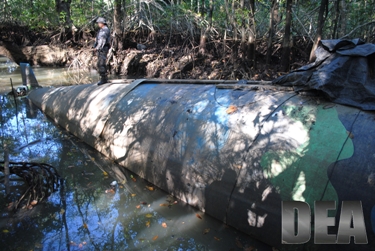
The DEA is proud of having helped Ecuadoran authorities capture this "narco-sub":
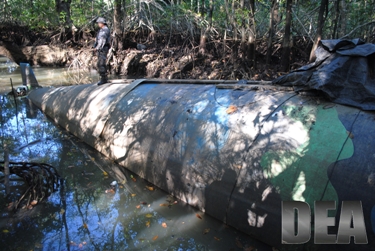
Silly DEA -- don't they realize what the implications are, of drug traffickers having the wherewithal to operate a submarine? It means they have effectively unlimited resources to devote to the task of finding a way to get their product from point A to point B, and to reducing the cost associated with doing so. If it's not over the border, it's under it. If it's not by air, it's on the sea. If not on the sea, then under the sea -- using narco-subs. Apparently lots of narco-subs:
Oh, and don't forget, if not here, then there. Silly DEA. Random thought on the DEA photograph: Does this remind anyone else of Yoda in the jungle on his planet, using the force to lift the damaged spacecraft, Empire Strikes Back movie?

MEDIA ADVISORYÂ Â Â Â Â Â Â Â Â Â Â Â Â Â Â Â Â Â Â Â Â Â Â Â Â Â Â Â Â Â Â Â Â Â Â Â Â Â Â Â Â Â Â Â Â Â Â Â Â Â Â Â Â Â Â Â Â Â Â Â Â Â Â Â Â Â Â Â Â Â Â Â Â Â Â Â Â Â Â Â Â Â Â Â Â Â Â Â Â Â Â Â Â Â Â Â Â Â Â Â Â Â Â Â Â Â Â Â Â Â Â Â Â Â Â Â Â Â Â Â Â Â Â Â Â Â Â Â Â Â Â Â Â Â Â Â Â Â Â Â Â Â Â
JULY 6, 2010
Colorado Petitioners Seek Medical Marijuana Access for PTSD Patients
At Rally Tomorrow, Veterans Will Submit Petition to Colorado Health Officials to Add PTSD to Stateâs Medical Marijuana Law
CONTACT: Brian Vicente, Sensible Colorado: 720-280-4067 or [email protected]; or Mike Meno, MPP director of communications: 202-905-2030 or [email protected]
SOUTH DENVER, COLORADO â Tomorrow, Wednesday, July 7, the medical marijuana advocacy group Sensible Colorado and local veterans will hold a press conference and rally to coincide with the official submission of a petition to the Colorado Department of Public Health and Environment that would add post-traumatic stress disorder, or PTSD, to the list of conditions eligible for medical marijuana recommendations in Colorado. The petition is being filed on behalf of Denver resident Kevin Grimsinger, a retired Army sergeant who served in Kosovo, Operation Desert Storm and Afghanistan. As detailed in a recent Denver Post article, Grimsinger suffers from PTSD related to stepping on a landmine in Afghanistan. Numerous studies, including a 2007 study in the Journal of Traumatic Stress, have found that marijuana can be an effective treatment for severe PTSD symptomsâa condition suffered by 20 percent of soldiers returning home from Iraq and Afghanistan, according to 2008 RAND Corporation study.
        Despite such findings, earlier this year, the Colorado Department of Public Health and Environment actively lobbied members of the state legislature to oppose an amendment that would have allowed individuals diagnosed with post-traumatic stress disorder to have access to medical marijuana, if they have a recommendation from a psychiatrist. In 2009, the New Mexico Department of Health added PTSD to the list of qualifying conditions for medical marijuana patients in that state after a recommendation of approval from an advisory board of eight medical practitioners, who examined the evidence and determined that the use of marijuana by patients with PTSD could be a beneficial treatment option, if used in accordance with a recommendation from a psychiatrist.
        WHAT: Press conference and rally to support medical marijuana access for PTSD patients
        WHEN: Wednesday, July 7, at 11 a.m.
        WHERE: 4300 Cherry Creek Drive, South Denver (CO Dept. of Public Health and Environment)
        With more than 124,000 members and supporters nationwide, the Marijuana Policy Project is the largest marijuana policy reform organization in the United States. For more information, please visit www.mpp.org.
####
| |||||
|


