We are pleased to continue with the restarted Drug War Chronicle newsletter. Our fundraising drive, to help our longtime writer Phillip Smith continue his work and get back to full time, continues.
Maybe the fifth time will be the charm for a Nebraska marijuana legalization initiative, a bill in the House would charge fentanyl sales as attempted murder -- even with no overdose -- and more.
The US is now blowing alleged drug traffickers out of the water in an act of dubious legality, Nebraska regulators promulgate emergency medical marijuana rules, and more.
The Washington Office on Latin America releases a detailed statement on issues around the lethal US attack on an alleged Venezuelan drug boat, and more.
A New York head narc finally gets nailed for a series of hit and runs, a former Alabama state trooper goes to prison for a cocaine trafficking conspiracy, and more.
Dear friends,

Phil receiving the Brecher Award for Journalism, 2013 International Drug Policy Reform conference
As you may be aware, the Chronicle was on a bit of a hiatus for much of this year. We are pleased today to publish the fourth issue of the Chronicle since our longtime writer Phillip Smith resumed his work with us.
Our fundraising drive, to help Phil continue and get him back to part-time. continues. For this to work, we need to raise at least $800/week in tax-deductible grants or donations to our 501(c)(3) nonprofit, DRCNet Foundation. That's not all Phil should be earning for his work, but for now at least it will enable us to complete the restart of the Chronicle and keep it going.
(We also need to raise $900/month in non-deductible donations to our 501(c)(4) public welfare nonprofit, Drug Reform Coordination Network, to continue to afford the our list management service and web site hosting fees. I'll explain why we cover these costs from the non-deductible type of donation in a subsequent email. If you remember this from the past, it's the same reason as before, with the costs somewhat lower now.)
Thank you if you're willing to help us restart Drug War Chronicle. Also, if you were planning to or considering making a gift later in the year, it would make the extra difference if you were to do so now instead. Of course we are grateful for your support, whenever it is provided and in whatever amount.
Note that our online donation system, along with accepting one-time donations of course (via credit card, PayPal or bank ACH), also has a range of recurring donation options that you can use if you wish to make that commitment. People mainly use these for monthly or annual gifts to our organization. But our donation system can also accommodate gifts scheduled weekly, biweekly, every four weeks, quarterly, and twice a year. (Click here if you'd like info on contributing by mail or making a gift of stock.)
Sincerely,

David Borden, Executive Director
StoptheDrugWar.org
P.O. Box 9853, Washington, DC 20016
https://stopthedrugwar.org
back to top
Maybe the fifth time will be the charm for a Nebraska marijuana legalization initiative, a bill in the House would charge fentanyl sales as attempted murder -- even with no overdose -- and more.
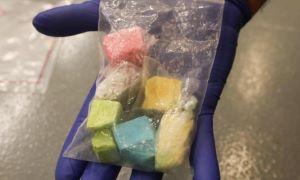
Fentanyl seized in Portland, OR. A new federal bill would impose harsh penalties for fentanyl offenses. (Multnomah County Sheriff)
Nebraska Marijuana Legalization Initiative Filed. For the fifth time since 2018, a state activist has filed a marijuana legalization initiative, this one aimed at the November 2026 ballot. None of the four previous efforts managed to obtain enough valid voter signatures to qualify for the ballot.
Bill Hawkins of the Nebraska Hemp Company filed all five ballot initiatives since 2018.
The Nebraska Cannabis Initiative is short and sweet. It takes the form of a constitutional amendment which says in its entirety "All persons twenty-one years of age or older have the right to use all plants of the genus Cannabis."
Any taxation or regulation of a legal market would presumably require action by the state legislature.
To qualify for the ballot, a state constitutional amendment requires signatures from 10 percent of registered voters. The number of registered voters is not known until signatures are handed in, but in the 2024 election cycle, it took 123,465 valid voter signatures to qualify. Under state election law, campaigners must also obtain signatures from five percent of registered voters in at least 38 of the state's 93 counties. They have until next July to do so.
Cornhuskers voters approved a pair of medical marijuana initiatives in 2024, one legalizing its use and one setting up a regulatory apparatus.
North Carolina Marijuana Legalization Bill Filed. State Rep. Jordan Lopez (D) has filed a bill to legalize marijuana in the states, House Bill 413. Titled the "Marijuana Legalization and Reinvestment Act," the bill would legalize the use and possession of specified amounts of marijuana and created a system of taxed and regulated legal marijuana commerce.
The bill would allow people 21 and over to possess up to two ounces of pot, 15 grams of cannabis concentrates, and two grams of THC. People would also be able to grow up to six plants for personal use, but they would face penalties for growing in public view or in an unsecured fashion.
The bill would also create a new state Office of Community Reinvestment within the Department of Public Safety. That office would create and administer three new funds, the Community Reinvestment and Repair Fund, the Cannabis Enterprise Opportunity Fund, and the Cannabis Education and Technical Assistance Fund.
The bill faces an uncertain future in the GOP-dominated state legislature.
Drug Policy
GOP Bill Would Let Prosecutors Charge Fentanyl Sellers with Attempted Murder, Even if There is No Overdose. Rep. Mike Lawler (R-NY) and three Republican cosponsors have filed the Fentanyl Kills Act in the House. The proposed bill would allow federal prosecutors to charge anyone selling fentanyl with attempted murder, even if no one overdosed on the drug.
"Any individual who has been found to have trafficked fentanyl shall be deemed to have attempted to perpetrate murder," the bill says, "and shall be subject to the penalty pursuant to [that]."
The penalty for attempted murder under federal law is up to 20 years in prison, but this bill cites the US code section for first-degree murder, which is "punished by death or by imprisonment for life."
The bill would define fentanyl trafficking as any federal fentanyl offense other than simple possession, and specifically mentions production, manufacture, distribution, sale, financing, transport, dispensing and "possession with intent to manufacture, distribute or dispense." The heavy federal charge would apply to aiding and abetting such offenses or even attempting them.
Including "dispensing" within the punishable activities means the new law could apply even in cases of sharing among friends with no money changing hands.
Current federal law punishes fentanyl trafficking with between five and 40 years in prison for a first offense. Larger quantities could bring between 10 years and life in prison.
"The Fentanyl Kills Act is about accountability," Lawler stated. "It's about making sure that those who profit off the destruction of our children, our neighbors, and our communities pay a price equal to the devastation they cause."
Lawler sponsored an identical bill last session, but it went nowhere. This session, a Senate bill introduced by Sen. Joni Ernst (R-IA), S. 1502, would also punish fentanyl distribution as felony murder, but only if an overdose death had actually occurred. That bill has been sitting in the Senate Judiciary Committee since it was filed in April.
back to top
The US is now blowing alleged drug traffickers out of the water in an act of dubious legality, Nebraska regulators promulgate emergency medical marijuana rules, and more.

President Trump bragged Tuesday about using the US military to blow alleged drug boats out of the water. (Gage Skidmore/Creative Commons)
Marijuana Policy
Oregon Marijuana Social Consumption Initiative Ballot Title Certified. An initiative that would legalize marijuana social lounges has had its ballot title certified by the state attorney general, bringing organizers one step closer to beginning a signature-gathering campaign aimed at getting the measure on the November 2026 ballot.
The initiative is sponsored by the Oregon Cannabis Café Coalition (OCCC). It received only one public comment -- from someone who objected to the word "lounges" but whose objection state officials overruled -- and that sole commenter now has until Friday to petition the state Supreme Court for review. Once the ballot title is finalized, signature-gathering can begin. Proponents will then need to come up with just over 117,000 valid voter signatures to qualify for the ballot.
"The progress of the campaign is going much better than anticipated," said Justyce Seith, chief petitioner for the Oregon Cannabis Social Lounge Act, OCCC's founder. "We are very excited for the challenges coming up."
The ballot title says the measure "Allows 'lounges' open to public for consumption of cannabis products; requires licensing process, government outreach."
The ballot summary says: "Currently, federal/state law prohibits the public consumption of cannabis products. Measure amends state law, requires Oregon Liquor and Cannabis Commission (OLCC) to establish/issue licenses to qualified applicants for operation of 'social lounges' where adults may consume certain cannabis products in public. Only 'microbusinesses' (undefined) eligible for license; cannabis retail dispensaries may not operate under license and legal entity name. Adults must bring own cannabis for consumption, no on-premises cannabis sales allowed. Operator may sell non-cannabis food/beverages if certified by local health department; may sell products containing hemp-derived CBD. Alcohol/tobacco products/consumption prohibited on premises. Local governments may issue permits, impose additional limitations/restrictions. Requires OLCC/public health authorities provide "educational materials and outreach programs" regarding purpose and rules governing lounges.
In other words, a BYOB (bring your own buds) model.
If approved by voters, the measure would legalize and regulate state-licensed consumption lounges in what the initiative describes as "a safe, legal environment for adults to consume cannabis" in compliance with state law.
Medical Marijuana
Nebraska Regulators Approve Emergency Rules as Licensing Deadline Looms. With an October 1 deadline to begin issuing licenses to medical marijuana growers, manufacturers, transporters, and dispensaries looking, the Nebraska Medical Cannabis Commission has approved a set of emergency regulations for the industry.
The 46-page set of regulations sets outlines the application process for medical marijuana businesses and sets limits on the number of licenses to be granted. Raw plant material is forbidden, as are products infused with Delta-8 or Delta-10 THC. Nor is vaping allowed, leading some advocates to complain that the rules are overly restrictive.
The rules allow for one dispensary in each of the state's 12 district court judicial districts. Cultivator licenses will be limited to four operations.
Patient Denise Wegener said limiting how medical marijuana can be consumed limits her options.
"I'm starting to have some symptoms where my chest begins to constrict because of my muscle spasms and because of my disorder, and it doesn't feel great, but the quickest way to alleviate that is to either smoke or vape the plant, and the quicker I can get that into my system, the faster it can alleviate some of my symptoms," she said.
Nebraskans for Medical Marijuana executive director Krista Eggers criticized the rulemaking process and Gov. Jim Pillen's (R) influence on the commission.
"The fact that we're leaning on DHHS, an agency that has opposed medical cannabis in its entirety from the very beginning, is very concerning," she said. "It's clear you're taking advice and guidance on rulemaking influencing outcomes of this program, as well as the governor's policy office, who are dragging in the same anti cannabis narrative that patients and families have been dealing with for over a decade."
Pillen must now some the regulations before they go into effect for 90 days. They could become permanent in a formal promulgation process that requires a public hearing, then approval by the attorney general and the governor.
Foreign Policy
Trump Says US Military Killed 11 in Attack on Alleged Venezuelan Drug Ship. President Donald Trump said Tuesday that the US military had attacked and sunk a civilian ship allegedly carrying drugs from Venezuela, killing all 11 people on board. The attack was the first known operation after the recent deployment of warships to the southern Caribbean.
"We just, over the last few minutes, literally shot out a boat, a drug-carrying boat, a lot of drugs in that boat," Trump told reporters at the White House. "And there's more where that came from. We have a lot of drugs pouring into our country, coming in for a long time... These came out of Venezuela."
But in later remarks, Secretary of State Marco Rubio suggested the cargo was not headed to the United States at all.
"These particular drugs were probably headed to Trinidad or some other country in the Caribbean," he told reporters. "Suffice it to say that the president is going to be on offense against drug cartels and drug trafficking in the United States."
The Trump administration justifies the fatal attack on a civilian ship as part of its war against "narcoterrorists." Stretching the definition of "foreign terrorist organization" to include apolitical criminal drug trafficking organizations, the administration earlier this year named several Mexican and Venezuelan trafficking groups as "foreign terrorist organizations."
"The strike resulted in 11 terrorists killed in action. No US Forces were harmed in this strike," Trump said.
Trump said the crew of the boat were members of Tren de Aragua, a Venezuelan prison gang, which Trump has claimed is being controlled by Venezuelan President Nicolas Maduro, who has a $50 million bounty on his head from the US over his alleged involvement in drug trafficking.
The attack raises questions about whether the administration is violating domestic and international laws that proscribe the killing of noncombatants.
"'Being suspected of carrying drugs doesn't carry a death sentence," said Adam Isacson, Director for Defense Oversight at the Washington Office on Latin America.
back to top
The Washington Office on Latin America releases a detailed statement on issues around the lethal US attack on an alleged Venezuelan drug boat, and more.
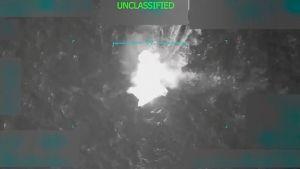
The moment US bombs hit an alleged Venezuelan drug boat. (DOD)
Foreign Policy
Trump Weighs Striking Cartel Targets Inside Venezuela. In what would be a dramatic escalation of the Trump administration's fight against drug trafficking groups, President Trump is considering a number of options for military strikes against groups operating in Venezuela, including possibly hitting targets inside Venezuelan national territory.
The Trump administration also seeks to weaken Venezuelan President Roberto Maduro, who is under indictment for drug trafficking in New York -- a longtime goal of Secretary of State Marco Rubio. But it is being a bit coy.
Asked by a reporter on Friday if he would like to see regime change in Venezuela, Trump said, "We're not talking about that. "But we are talking about the fact that [Venezuela] had an election, which was a very strange election, to put it mildly," Trump said, referring to last year's presidential race in Venezuela marred by accusations of electoral fraud.
The administration has already deployed substantial military firepower into the region in recent weeks, and last week blew a suspected Venezuelan drug boat out of the water, killing 11 people.
Trump has authorized the military to mount lethal operations against drug trafficking groups it has designated as terrorist groups, with the president appearing to claim he can treat smuggling suspects not as criminals but as enemy combatants.
Secretary of State Rubio last week refused to rule out possible military strikes on Venezuelan territory, which, if done without the consent of the government there would be an act of war.
"This is a counter-drug operation," Rubio said. "We are going to take on drug cartels wherever they are, wherever they are operating against the interests of the US."
He also promised more murderous attacks on suspected drug boats.
"Instead of interdicting it, on the president's orders, we blew it up. And it'll happen again. Maybe it's happening right now," he said.
Whether such acts are even legal is unclear, and administration has yet to offer a serious legal justification for them. A briefing for Congress that was supposed to take place Friday was abruptly canceled with no explanation.
Experts Cast Doubt on Legality of Lethal US Attack on Alleged Venezuelan Drug Boat. After the US military killed 11 people in an attack on what the US claimed was a Venezuelan boat full of drugs, legal experts are questioning whether the strike complied with domestic and international law.
While the US Constitution gives only Congress the power to declare war, presidents of both parties have conducted military attacks overseas without seeking congressional approval. The Trump administration's Office of Legal Counsel released a memo saying that presidents have justified the limited use of military force when it was in the national interest, was not restricted by Congress, and did not rise to the level of war.
But those attacks have been aimed at enemy combatants, designated terrorist groups such as Al Qaeda or ISIS, or groups like the Houthis in Yemen, who have attacked US shipping. When it comes to drug traffickers on the high seas, however, it would be the responsibility of the Coast Guard to intercept such ships, seize their cargos, and detain their crews -- not blow them out of the water.
In the case of last week's lethal attack, the Trump administration has not provided any evidence that the US was under imminent threat of attack, that the vessel was armed, or that the ship was carrying people involved in a terrorist attack. Although the Trump administration has designated the Venezuelan crime gang Tren de Aragua as a "narco-terrorist organization," that group is not actively at war with the US, unlike Al Qaeda or ISIS. Legal experts said many people will view the attack as the extrajudicial killing (murder) of civilians on the high seas.
While the Trump administration can argue that it undertook an "anticipatory" self-defense action and claim that Tren de Aragua is under the control of the Venezuelan government (a claim disputed by its own intelligence agencies), legal experts said that without evidence of an imminent attack or past attacks by Tren de Aragua, its justifications for the attack fall short of international law.
Despite the dubious legality of the attack, Congress has in recent decades willingly ceded its war power to the executive, is especially supine under Republican control in the current administration, and is unlikely to move to constrain such actions.
Similarly, any legal challenge to Trump's authority to carry out such attacks face long odds with the US courts generally deferring to the executive on national security affairs and foreign relations. Families of victims could attempt to win damages in a civil case, but that would take years and lots of money for lawyers. It looks like the Trump administration will get away with murder.
Statement from the Washington Office on Latin America on the US Military's Lethal Attack on an Alleged Venezuelan Drug Boat. The Washington Office on Latin America (WOLA) released the following statement on the US military's lethal attack on an alleged Venezuelan drug boat last week:
Lethal US military strike on alleged drug traffickers sets a dangerous precedent in the "war on drugs"
[On September 2], the President of the United States shared a video that appears to show a US military strike on a boat off the coast of Venezuela. President Trump’s social media post stated that 11 of those aboard were killed.
So far, the only publicly available information about this incident is the video that President Trump shared and brief statements from the Secretaries of State and Defense. Much remains to be learned about exactly what transpired, and Pentagon officials have said that they intend to provide additional details.
Ascertaining the legitimacy and legality of the use of force in this case will depend on the factual answers to numerous questions. It is not clear whether the US military forces deployed to the southern Caribbean tried to contact the people aboard the boat, tried to board the boat, fired warning shots, or tried to disable the engine by firing on a part of the boat where humans were not present. US authorities should also address the question of whether there is any evidence that those aboard were threatening US personnel in a way that would justify using lethal force in self-defense.
If the evidence shows that the US military, apparently on the orders of President Trump, engaged in the unlawful use of force that caused the deaths of 11 people in international waters, those responsible, especially at the political and military command levels, must be held accountable in the US criminal justice system and under the Uniform Code of Military Justice. The US Congress should also require the Administration to disclose all the relevant facts.
Defense Secretary Pete Hegseth said in an interview on September 3 that he watched the video live and that those under his command knew "exactly who was in that boat, we knew exactly what they were doing, and we knew exactly who they represented, and that was Tren de Aragua," referring to a Venezuelan gang. Hegseth went on to say that "this is a deadly serious mission" for the Trump administration and that the operation "won’t stop with just this strike, anyone else trafficking in those waters who we know is a designated narcoterrorist will face the same fate."
What we have seen so far suggests that the US armed forces did something that it has never done, to our knowledge, in more than 35 years of military involvement in drug interdiction in the Caribbean Sea: an instant escalation to disproportionate lethal force against a civilian vessel without any apparent self-defense justification.
In the late 1980s, the US Congress made the Department of Defense the single lead agency for overseas interdiction of illegal drugs. In the decades since, Navy and Coast Guard personnel have boarded a large number of vessels, interdicting thousands of tons of cocaine and other drugs. WOLA has sought to monitor those activities, and we know of no cases of those military and Coast Guard personnel using lethal force during these operations without a claim of self-defense.
Using lethal force on suspicion of illegal activity violates the letter and spirit of more than a century of international standards and the United States' own regulations for maritime operations against civilian vessels in international waters. These measures include the United Nations Convention on the Law of the Sea (UNCLOS), Article 51 of the UN Charter, the UN Convention Against Illicit Traffic in Narcotic Drugs, the San Remo Manual on International Law Applicable to Armed Conflicts at Sea, the Defense Department's Law of War Manual, and the Joint Chiefs' Standing Rules of Engagement and Standing Rules for the Use of Force (though key language in the counter-drug section is classified).
These measures all call for restraint in the use of force, especially lethal force, when the lives of civilian non-combatants are at risk: a gradual and proportionate response that carefully escalates force in order to avoid exactly the kind of outcome that President Trump’s video depicts. These standards explicitly or implicitly prohibit the use of lethal force when there is no self-defense justification.
The President claimed that the people aboard the boat were carrying "illegal narcotics," though he did not specify the type or amount of drugs. But proportionality in the use of force is a fundamental principle of international law. Mere suspicion of carrying drugs or merely being pursued by (much faster) naval vessels or other military assets in international waters, are not offenses that carry a death sentence, much less summary execution.
Secretary Rubio stated that the president "has been clear that the days of acting with impunity and having an engine shot down or a couple drugs grabbed off a boat, the -- those days are over. Now it is we are going to wage combat against drug cartels that are flooding American streets and killing Americans." If yesterday's act is a harbinger of more US military actions involving excessive force when conducting drug interdiction operations, then it sets a bleak and dangerous precedent for more unlawful killings and violations of fundamental human rights principles and threatens to undermine international norms that serve to prevent and to punish lawlessness on the seas.
It's also essential to consider the context in which this strike occurred, particularly the increasing tensions in US-Venezuelan relations amid the US military buildup in the Caribbean. As WOLA highlighted previously, this buildup began following the Trump administration’s designation of the Cartel de los Soles as a Specially Designated Global Terrorist (SDGTs) group in early August. (Rather than a hierarchical organization, this group is more like a label for the nexus of relations between Venezuelan government officials and drug traffickers.) This move came with an increase, to $50 million, in the reward that the administration is offering for information leading to authoritarian leader Nicolás Maduro's capture.
In their comments about the strike, President Trump and Secretary Hegseth both claimed that those aboard the boat were members of Tren de Aragua, the Venezuelan criminal group that the administrationdesignated as a Foreign Terrorist Organization in February 2025. According to an August 2025 investigative series by InSight Crime, this networked Venezuelan crime group has been declining in power and has not been linked to "cases of large cocaine shipments… especially not in connection with the US market."
Pending greater clarity than we have now, we cannot ascertain how yesterday's strike may fit into a broader US strategy of escalating pressure on the Maduro regime. To be sure, the situation of impunity in Venezuela allows illicit economies, including illegal drug trafficking, to operate with the acquiescence and complicity of government officials. At the same time, any use of military force, whether by the US or other governments, must abide by prevailing international laws, norms, and standards.
US, Mexico Agree to Increased Cooperation in Anti-Drug Fight. In a meeting last Wednesday in Mexico City, the US and Mexico agreed to cooperate more in the effort to suppress the illicit drug trade, including cooperating on dismantling the so-called cartels and addressing illegal immigration (even though there is little link between the drug trade and migration north of the Rio Grande).
"The aim is to work together to dismantle transnational organized crime through enhanced cooperation between our respective national security and law enforcement institutions, and judicial authorities," the two governments said in joint statement. "Additionally, we are working to address the illegal movement of people across the border."
The agreement said both countries would designate teams to follow up on their commitments, including "measures to counter the cartels, strengthen border security and eliminate clandestine border tunnels, address illicit financial flows, enhance collaboration to prevent fuel theft, increase inspections, investigations and prosecutions to stop the flow of drugs and arms."
The statement was released after Secretary of State Marco Rubio, who also serves as the administration's national security advisor, met with Mexican President Claudia Sheinbaum. In came in the context of intense pressure on Mexico, both to crack down on drug trafficking and to reach agreements on trade issues to avoid new tariffs from the Trump administration.
"During the meeting the Secretary emphasized the importance of resolving trade and non-trade barriers to further the prosperity of both of our nations," State Department spokesperson Tommy Pigott said on Wednesday.
But in the wake of the lethal US attack on an alleged Venezuelan drug boat a day earlier, Mexico Foreign Affairs Secretary Ramón de la Fuente said that Mexico City would prefer "nonintervention, peaceful solution of conflicts."
"Our close coordination has allowed us to secure the border, reduce fentanyl trafficking, and advance intelligence sharing, all within our respective legal frameworks," the US and Mexico said in the statement. "The two governments further intend to strengthen collaboration in public health and coordinate campaigns to prevent the abuse of illicit substances and opioids."
back to top
A New York head narc finally gets nailed for a series of hit and runs, a former Alabama state trooper goes to prison for a cocaine trafficking conspiracy, and more. Let's get to it:
In Raleigh, North Carolina, a Wake County jail deputy was arrested September 3 for allegedly smuggling a variety of drugs into the jail at the John H. Baker Public Safety Center. Deputy Hillary Seekins, 31, was arrested during her shift after investigators got a tip that she was supplying contraband. She is charged with possession with the intent to manufacture, sell, or deliver cocaine, K2 (synthetic marijuana), and suboxone, possession of a controlled substance in jail, and three counts of conspiracy of possession with the intent to manufacture, sell, or deliver a controlled substance.
In Buffalo, New York, the Erie County Sheriff's Office Chief of Narcotics and Intelligence pleaded guilty August 15 to damaging a number of cars in a series of hit and run accidents last year. Chief Daniel "DJ" Granville pleaded guilty on Friday to Reckless Driving and Leaving the Scene of a Property Damage Only Accident. He was sentenced to 50 hours of community service and nearly $700 in fines. News of the crashes first surfaced in a lawsuit last year that charged Granville had negligently, recklessly, and carelessly crashed into multiple parked cars in his county-owned vehicle. Witnesses said he was combative after the crashes and that Buffalo Police protected Granville by failing to do a field sobriety test or a breathalyzer test. The special prosecutor assigned the case said Buffalo Police did not cooperate with his investigation. Granville was placed on administrative leave in April, after the civil suit was filed, and he is now suspended without pay.
In Montgomery, Alabama, a former state trooper was sentenced August 28 to six years in federal prison for his role in a cocaine trafficking conspiracy. Michael Evans, 53, was one of nine people sentenced in a large-scale operation that trafficked cocaine from Mexico into Alabama. The operation unraveled after the DEA began investigating one of the defendants, who traveled to Texas and Mexico to further the conspiracy. After agents seized six kilograms of cocaine in June 2024, they rolled up the conspiracy, including then State Trooper Evans. He copped to one count of conspiracy to traffic cocaine.
back to top