Drug War Issues
Politics & Advocacy
Under an amendment to South Australia's Controlled Substances Act of 1984 approved last year, police are allowed to use drug-sniffing dogs as part of their general drug detection duties. They are doing so with a vengeance.
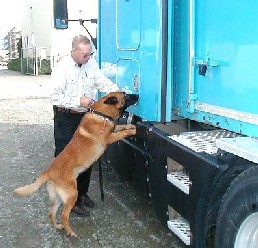
drug dog
Police Minister Michael Wright told reporters Monday 327 people had been caught with drugs, including Ecstasy, LSD, amphetamines, cocaine, and cannabis. Of those, only 17 were arrested for serious drug offenses; the others were given fines, strongly suggesting that what the drug dogs were finding was mainly pot.
Wright naturally praised the drug dog teams, saying they were working hard and producing results. He also said the drug dogs acted as a deterrent for people thinking about going out and taking drugs with them.
"This government is committed to protecting the people of South Australia and helping to ensure their safety at dining and entertainment precincts," Wright said. "Police now have the power to execute drug detection operations in places identified as hotspots for drug dealing and use."
Wright did not provide any statistics on the number of drug dog "alerts" that proved unfounded. But a 2007 study that examined a similar program in New South Wales from February 2002 to February 2003 found that drugs were found in only 27% of the cases where drug dogs alerted. In another 40% of the cases, suspects admitted having smoked cannabis in the recent past or having been near cannabis smokers.
This work by StoptheDrugWar.org is licensed under Creative Commons Attribution-ShareAlike 4.0 International


Comments
Sounds like dogs are an excuse...
27% hit rate? Looking in the kind of places they are talking about i'd expect a 27% hit rate randomly.
"helping to ensure [public] safety at dining...
and entertainment precincts"...so what are the dogs doing to protect the public from drunks? the most dangerous drug users of all...
Add new comment