Consequences of Prohibition
Drug War Issues
David Borden, Executive Director

David Borden
The point is an important one. Coca is a crop grown for generations in Bolivia and other Andean nations, and it is one that is economically needed. Cocalero leaders from Bolivia and Peru spoke eloquently to their situation, their needs -- and their rights -- at our Latin America conference convened in Mexico in 2003. Coca-based tea and candies and even soap given out by conference attendees made the point directly -- coca is not cocaine, cocaine's origin in the coca leaf notwithstanding.
Unfortunately, the article stopped there, and didn't ask the logical next question: Will Bolivia's increased drug control achievements actually reduce the global supply of cocaine?
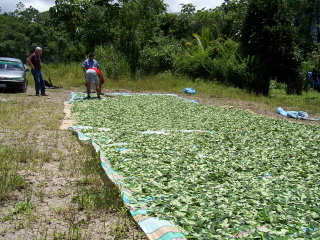
coca leaves drying by highway, Chapare region of Bolivia (photo by Chronicle editor Phil Smith, 2007)
For the shift in coca growing from country to country to be so much greater than the overall change can only mean that demand is the dominant factor at work, not enforcement. For cocaine prices to drop so incredibly too, shows that eradication, interdiction and domestic policing all combined aren't even making a dent -- suppliers simply anticipate the losses by sending more, and they can afford it.
Bolivian farmers deserve better than harassment over a traditional crop they economically need, making the Morales administration's tolerance of coca growing just. But supply-side anti-drug efforts are futile in term of the ultimate goal, and people around the world affected by cocaine and the illegal trade deserve better too. Only global legalization can stop the violence and corruption that characterize the illegal drug trade. Addicted users will also feel freer to seek help when they are not considered criminals, and will be less likely to do harm to themselves or others in the meanwhile. Ending drug prohibition is a win-win proposition.
This work by StoptheDrugWar.org is licensed under Creative Commons Attribution-ShareAlike 4.0 International


Comments
Advice to David Borden
Should you ever decide to try marijuana...
In addition to being psycho-reactive, Delta 8 and Delta 9 THC raise your heart rate. So being high while exercising not only makes it easier to achieve and maintain targeted aerobic levels, it also makes the activities themselves more tolerable.
Just Like Caffeine Doping
Back in the day I was pretty athletic and read fitness & running magazines... full of articles about the benefits of caffeine... and adds selling caffeine pills in eye-popping doses.
In addition to the obvious 'pep' that caffeine gives you it was supposed to cause your body to jump into fat burning mode faster & burn-up white fat cells (bad) before brown fat cells (better).
Unfortunately larger doses of caffeine have annoying side effects... from teeth nashing to facial ticks to blazing headaches and beyond. Funny to remember that caffeine was considered for being a controlled substance!
Add new comment