Drug War Issues
Politics & Advocacy
The Arizona Supreme Court ruled late last month that police cannot routinely search the vehicles of people they arrest. In a 3-2 decision in State v. Gant, the court held that the warrantless search of Rodney Gant's vehicle after he was arrested, handcuffed, and sitting in the back seat of a police car went beyond an allowable search incident to arrest and was "not justifiable."
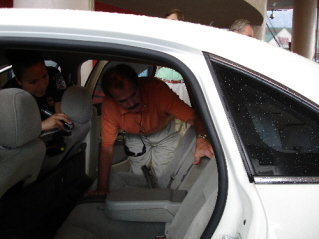
police searching accused drug traffickers' car
The legal argument centered around whether the facts in this case were consistent with a search incident to arrest. US courts have recognized searches incident to arrest as one of the few areas where the Fourth Amendment requirement of probable cause or a search warrant not does apply, citing officer safety and the need to preserve evidence.
The Arizona Supreme Court held that the search of Gant's vehicle after he was already under arrest and handcuffed for a traffic warrant was not a search incident to arrest. "When the justifications [for a search incident to arrest] no longer exist because the scene is secure and the arrestee is handcuffed, secured in the back of a patrol car, and under the supervision of an officer, the warrantless search of the arrestee's car cannot be justified as necessary to protect the officers at the scene or prevent the destruction of evidence," wrote Justice Rebecca Berch for the majority.
Arizona law enforcement was not happy about the ruling, and some agencies suggested they would find ways to skirt it. Police departments across the state, working with the Arizona Association of Chiefs of Police and the Arizona Law Enforcement Legal Advisors' Association, filed briefs urging the court to uphold the conviction and hinting they would adopt different arrest procedures -- perhaps not handcuffing suspects until after a vehicle search -- to be able to continue the practice.
Justice Berch addressed that implied threat in her opinion. "We presume that police officers will exercise proper judgment in their contacts with arrestees and will not engage in conduct which creates unnecessary risks to their safety or public safety in order to circumvent the Fourth Amendment's warrant requirements," she wrote.
This work by StoptheDrugWar.org is licensed under Creative Commons Attribution-ShareAlike 4.0 International


Comments
really?
I dont understand. I was pulled out of a vehicle in AZ last night, searched, then stood by as the police went through my vehicle, leaving everything tossed and discheveled. I had done nothing wrong and nothing was found. The policeman never asked if he could search the vehicle. I was not arrested although I didnt have insurance. I never knew not having proof of insurance was enough to search the car-I had done nothing criminally wrong.
To Really?
That seems to be the case. I've been involved and witness several occurrences of this. The police routinely search just about anything that they come across simply because they know the average person is unaware of this ruling. Either that or they rely on threats of towing your vehicle or impounding it if you do not cooperate. There is no justice in today's world without it being infracted upon. Check with a lawyer about whether or not you can do anything. The answer is probably "no", but you do leave with the added knowledge that if this ever happens again, sue the a$$holes!
impound vehicle inverntory
Vehicle was search because the law is that if the driver has a suspended license they impounded the car in the state of Arizona.
Searching the car, they found a pipe under the back seat.
Facts:
The inventory of the property inside the car, they did not list anything. There were closed bgs, breifcase, clothes shoes c's things in the glove box. wigs, woman's makeup, mans shaving equipment .
They used the inventoy of the car to allow them to search it. Found a glass pipe under the rear seat, it is a four door car and the only way was to pull out the bench seat in the rear of the car. The proplem is that the police never inventory any personal property, just the glass pipe.
In reply to impound vehicle inverntory by Anonymous (not verified)
feed back
need to contact who ever posted this...asap thx
search for impounding the car
The traffic stop was for changing lanes, suspended license and not carrying up to date insurance card in the vehicle.
The driver of the car went to traffice court. Now the changing lanes charge were dismissed. No insurance was dsmissed.
The suspended license charge was changed to Driving without carrying a license paid a fine.
Question: If the traffic charge Changing lanes gives the right to stop the vehicle . That charge was dismissed, is that stop the legal right to impound the car? Suspended license charge was dropped to not have a driver license to show the police. and the no insurance, did have insurance and showed the court and that was dismissed.. I know at the time the computer report showed that th license was suspended, but that was wrong, the suspention was safified in 10/07. Is it the law 'FRUIT FROM THE POSISON TREE, Does that come into play?
The p/o testifed at the probable cause hearing, and the police report are not the same, nder oath the p/o lied or prejury. The audio tape is available and the police report is gotten already
In reply to search for impounding the car by Anonymous (not verified)
SEARCH OF CAR DUE TO ERRONEOUS mvd SUSPENSION OF LIC.
I am in the same, even worse boat. I had things in my car that were not supposed to be there. Pain pills, and the cop arrested me and then said he had to search my car because it wasbeing impounded. I never k new a car had to be searched before being impounded. At any rate. What is the "fruit from the posison tree " mean ? If you found any further relief in regard to this crappy search stuff, pleaseemail me. Thanks, Ron.
In reply to SEARCH OF CAR DUE TO ERRONEOUS mvd SUSPENSION OF LIC. by ron P (not verified)
impoundment
First off, why did the police stop you? Now an arrest does give them the right to do an inventory search of the vehicle. But, when you got pulled over had your car been legally parked? If the car had been legally parked and had not been obstructing traffic, you maybe able to get the pills suppressed, meaning they cannot be use the pills against you as a charge. Even if there is a state law that states that you car is to be impounded for this or that, the impoundment must be reasonable under the 4th amendment, it must be reasonable.
GOING THROUGH IT NOW
I RESIDE IN THE STATE OF NORTH CAROLINA AND I AM GONG THROUGH A SIMILAR SITUATION NOW I AM A BLACK MALE IN A SMALL MAJORITY WHITE TOWN AND I AM INTERESTED IN THE RULING OF THIS CASE AND I ALSO WOULD LIKE TO KNOW IF MY LAWYER COULD USE THIS CASE IM MY SITUATION BEING THAT I AM IN NORTH CAROLINA THANK YOU
GET REAL
We dont get pay by the amount of dope, guns, or shit heads we take of the street. I get pay the same no matter what and it goes up every year! More guns and dope in your comunity go ahead find ways to interpret the 4th Amendment. I have a gun, badge and a vest. I'll be ok :). You better learn to find your own car when it is stolen, find the tweaker who took your property and is sniffing your wife pennys from the burglary he pulled at your place, first aid for when you get stab, shot at, or beaten. Beacuse i do a lame job when i find out my "victim" is a shit head
In reply to GET REAL by Anonymous (not verified)
Get Real
Well said! The spirit of the Law rather than the letter of the Law need to be taken into account in this case. There was already more than enough probable cause to the extent that this person was under survaliance by law enforcement. In any circumstance that a person is lawfully detained by law enforcement and placed under arrest under a valid warrant, etc a search of the immediate surroundings in my mind is what the founding fathers had in mind. If you don't like it, don't have dope, illegal weapons, proceeds from a crime, or have a warrant for your arrest and you don't have to worry about this ruling.
In reply to GET REAL by Anonymous (not verified)
You have a gun, a badge and a vest - and a chip on your shoulder
I believe most of us have relied on having to find our own vehicle if it is stolen - we spend more money on having to track down and pay the damn impoundment fees and clean up of the illegal search done to our vehicle for a light out on our vehicle plate than the chances of you recovering or us ever having our vehicle stolen. As for the burglary - I caught the burglar red-handed inside my home and my neighbor caught them that same morning and identified them as my neighbor two houses down. You and your gun and your vest and your badge didn't even knock on their door or get a search warrant for 9 days later - after I had been on my roof watching them take my stolen items and placing them in a van - of which I got the plate number - It took me getting 45 signatures from other burglary victims in my neighborhood that also had no help in getting the burglar arrested to get a grand jury indictment. After I put signs in my front yard stating I found my neighbor inside my home burglarizing me and the news station came and put my story on news -then (9 days later) - wallah! you guys show up to their house to look around (little late). You are the least respected profession known to man - you got the job to satisfy your own pat on the back because you have some self-gratification or fit-in problem with society and the badge and the billy-club give you the courage and the control over someone that normally you couldn't get to listen to anything you would have to say. So don't go boasting about something you don't do or have - most people don't even call you guys anyway because of the bullshit that comes with it.
In reply to GET REAL by Anonymous (not verified)
the Fourth Amendment
Look, it is not easy to be a police officer but the rules of the land, the constitution of the United States and the Bill of Rights ARE A SACRED RIGHTS ...this notion that the Police State of Arizona can violate civil rights without provocation is against the supreme court in Arizona and SCOTTSDALE--- the off handed illegal search and seizure is and always has been a slippery slope you cop......See State v Gant and Walk and Talk doctrine of pushing your blue against the citizen's right to privacy....IF YOU WEAR A BADGE...GO TO SCHOOL AND LEARN YOUR CONSTITUTION AND THE LAW!
In reply to GET REAL by Anonymous (not verified)
Sorry that you was picked on
Sorry that you was picked on or beat up as a kid, but you don't blame the rest of us under the color of law. And if you became a police because of your bad experience in life, then you are a true shit head. Because it is not your job to judge, it is your job to serve and protect and you are no better than the same shit heads you hate. It is people like you that gives the good police a bad name. It is police like you that make people hate police, you, a small few. You disrespect what police stand for by your comments. Should you not give up the job and go towards your true calling as a criminal or a full time abusive husband!
Get Real
The preceding comment was in support of the original post. I did not make that clear in the post, and it appeared after a post that was clearly the prose of an uneducated right wing armchair quarterback with a shady past. I in no way wanted anyone to think I was remotely supporting this nut.
Dear Chief Justice
Dear Chief Justice Berch:
U.S. Supreme Court Justice Frankfurter once said: "The Court's authority possessed of neither the purse nor the sword ultimately rests on sustained public confidence in its moral sanction.â Baker v Carr, 82 S.CT. 691
The public hopes that Ruth McGregorâs resignation and your election as Chief Justice signal a sincere effort by the legal community to restore confidence in the Arizona Supreme Court.
As you know, Canon 2 of the Arizona Code of Judicial Conduct states:
âPublic confidence in the judiciary is eroded by irresponsible or improper conduct by judges. A judge must avoid all impropriety and appearance of impropriety. A judge must expect to be the subject of constant public scrutinyâ¦â
As publisher of Common Sense II, I am committed to holding all Arizona government institutionsâincluding the courtsâto the high standards the public expects as set forth in the Rule of Law. Therefore; from time to time I will bring to your attention, within your administrative capacity, various issues of public concern such as those listed below:
I Will you continue former Chief Justice Ruth McGregorâs policy of sending documents to the lower courts to address the âpolitical concernsâ of citizens, and those of radical, race based political activist groups such as Los Abogados? If so, will you also include your own letter of endorsement, even though such action creates the impression of partiality?
II How can the Commission on Judicial Conduct effectively carry out their responsibility to protect the public interest when their offices are located down the hall from yours and they appear to be subordinate to your authority as Chief Justice of the Arizona Supreme Court?
As you are aware, âthe test for appearance of impropriety is whether the conduct would create in reasonable minds a perception that the judgeâs ability to carry out judicial responsibilities with integrity, impartiality and competence, is impaired.â A.C.J.C. Canon 2
On a personal note: Members of the Pima County legal community inform me they hold you in high regard. They assure me you will strive to restore and enhance confidence in our legal system, and our courts. Please let me know if there is anything more I can do to assist you in this endeavor.
Yours truly,
Roy Warden, Publisher
Common Sense II
(520) 881-0535
[email protected]
Cc:
Selected members of the Arizona Legislature and Senate, media outlets, political activist groups including Los Abogados and the Minutemen, and, 1500 Pima County lawyers, judges, prosecutors, and other legal professionals who currently subscribe to Common Sense II.
My husband was pulled over
My husband was pulled over because the cop knew him from years ago and the cop arrested for driving on a revoked license. My husband was hauled to jail and the cop proceeded to search my husbands truck, without permission, is that right?
In reply to My husband was pulled over by me and the world (not verified)
inventory search clause, not
inventory search clause, not right, but we live in a country dictated by insurance companies and financial interests. Write your congressman, and tell them you're tired of living in a dictatorship run by those interests.
In reply to My husband was pulled over by me and the world (not verified)
Yes, once they have a reason
Yes, once they have a reason to arrest they can do the so-called inventory search, unless the car had been legally parked. However, the police can say that they impounded to protect the car and against claims against the police department. However, if your husband states that he will not hold anyone liable for claims and write it on the citation, or if the officer has a body cam and he states this. Then they should not be able to tow. If they do, with this as evidence he can win.
A 2002.Traffic Stop $ 1.175 + seized returned 2010 no charges
I was pulled over for using the diamond lane exit during restricted hours . Officer asked me for my Dl . In which I responded by handing him the court documents as to prove that I was in the process of finalizing the matter of having my Drivers license reinstated by the end of the day . And with my paperwork from being in court that very morning was over $ 1700 in cash . It went from a regular traffic stop to my worst nightmare . placed under arrest and detained while offer waited for another officer to arrive on scene . I was informed that I was under arrest for a stolen vehicle in which was registered to my brother for over 5 yrs showing owner ship . During search of vehicle per officers account found a white powder substance and a altered ID . After being detained under arrest finger printed held in police annex . I was driven by officer half way home . Offer flagged down a taxi driver and gave him a pouch of change he had taken out of truck to pay for the cost of my fair . I had not even one document to show that I was involved with any police contact . When contacting the station mediately dispatch had officer contact me direct because she stated there was no record of my claim . Officer returned my call several minutes later and was yelling so many things I don't even remember what he was suggesting . I just knew I was i to be at the police station at a specific time to get my truck or it would be moved to another location with impound fees . NO charges NO documents nothing . NOW 10 yrs later I am informed that I have property to be returned to me . This incident caused my life to become a nightmare of personal destruction along with 5 criminal driving on suspended citations before I could reverse any of the domino effects from this one incident .. Money was returned , And I was not given any evidence that explained or supported of this taking place . Can Anyone give me the reason . Or the tools I need to research on my own about the effect of it destroying my faith as well as the burden it caused .
Police will just use the
Police will just use the inventory search rule to thwart your constitutional rights from now on, as well as criminalizing insurance violations without actually making them misdemeanors or felonies. Insurance companies and financial industry own the government and they will do anything they can to tie up otherwise law abiding citizens and civil disobedience by any means possible.
Arrested and vehicle impounded
In reply to Arrested and vehicle impounded by Suzanne (not verified)
First off, the police was
First off, the police was relying on what they found in your car for the arrest. Therefore, prior to the search you had not been under arrest. They cannot state they was doing a search because of weapons because you was immediately removed from the car. Secondly, they cannot say that it was an inventory search, it was a search for contraband. Get the video, check the time of the stop. Once you had been removed from the vehicle there had been no need for a search of the vehicle. If you had been legally parked then your car could remain where it had been or you could make arrangment to have someone get or towed yourself. The main thing people need to understand when the police stop you, try to always park where it is legal to park. Never park anywhere that gives the police a reason to impound.
My fiance was illegally pulled over in Yuma,AZ.
Supposedly Driving on a susspened lic.
In reply to Supposedly Driving on a susspened lic. by Larry M. (not verified)
He can arrest you for driving
He can arrest you for driving without a license if that is what he wants to do. However, there is a problem to me with the tow. The car was parked in your drive way, the purpose of this point to tow the car would be under the community care-taking function. This means that he can tow your car to prevent claims against the department, and to protect your vehicle, or and if your vehicle is obstructing traffic. By the car being in your driveway, he don't have to worry about claims of theft or anything against the department. He can't say by the car being in the driveway that it is obstructing traffic. Therefore, it had been unreasonable under the 4th Amendment to tow you car. Look, this is policing for revenue. They tow to make money off of you. To stop this practice, you have to file a 42 U.S.C. 1983 civil rights complaint against the city and the police that did this. This will stop them because money will be coming at of the city's pocket and they don't like that. Next time, record things with your cell phone, they can't stop you from doing it, but they will try. Then, if they have body cams request a recording of it when you go to court as evidence.
P/O violating my 4th & 5th amendment/profiling
I was pulled over because of a pax that had been arrested prior. P/O claims that he pulled me over for improper right turn, I was still in the parking lot of a Circle K, as soon as the P/O walked up to my vehicle he immediatly was asking me why I was with who was my pax, then asked me where we had been & where are we going, I then gave him my license/registration,insurance card, he took my info came back sd my lic was suspended/revoked. The P/O arrested me,then went and harrassed my pax accusing her of driving and searched her purse illegally. Police searched my vehicle found a stray and askes me if i new wher it came from,said no, the police officer then read me my miranda rights after the illegal search & seizure. Went to MVD & court got an abstract from judge my lic should never of been suspended. It being the fault of MVD error, i had to pay 200$ to get my car out of impound/miss 2 days of work/now pay 6,000.$ for a criminal attrny so I continue to have a clean record. Its all BullShit!!!!
In reply to P/O violating my 4th & 5th amendment/profiling by MVD error (not verified)
Quit answering questions.
Quit answering questions. Give your licenses and other info and say nothing. Ok, your license was revoked, however, if your passenger has a license you can give them permission to take the car. This stops any search of the vehicle because they have no reason to search the car for the protection of any claims against them or harm to the vehicle. If the police don't allow it and he should, you can come back on this and get your car back at the administrative hearing without cost to you. Your passenger does not have to answer any question, if the officer wants ID from them then they can do that, and don't have to if you don't live in an ID state.
Add new comment