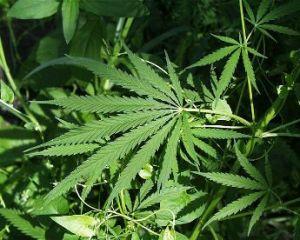
marijuana-plants_3.jpg

Marijuana Legalization Trails in Nevada Poll

The Marijuana Policy Project and its Nevada affiliate want a marijuana legalization initiative on the 2012 ballot. A new poll suggests they have a lot of work to do over the next 27 months if it's to pass. Advocates say public education is what it's going to be about.

ACLU ready to challenge local marijuana ordinances

Officials in the Michigan cities of Birmingham and Bloomfield Hills prohibited the dispensing of medical marijuana by creating laws that state it is "unlawful for any person or business to engage in any activity, conduct, use or venture in the city that is contrary to federal, state, or local laws or ordinances." Medical marijuana is still considered a Schedule I controlled substance under federal law, thus it would now be illegal to use in those cities even though 63 percent of voters statewide voted the Michigan Medical Marihuana Act (MMMA) into law. The ACLU sent letters to both cities challenging the ordinances, which the ACLU claims violate the rights of medical marijuana users.

Cops: Crack, heroin dealt from senior homes

Drug prohibition skews typical market forces -- including real estate options for selling products -- often resulting in danger. In Detroit, drug dealers targeted senior buildings because the high traffic that comes with drug sales wouldn't draw as much attention from law enforcement at multi-unit complexes as it would in individual residences, and because the senior citizens who lived there were easy to bully into keeping quiet.
Election Day is only three months away!

Prop 19 Trumps Opposition in Fundraising

Three months out from election day, California's Prop 19 marijuana legalization campaign is out-fundraising the opposition by better than ten-to-one. And unlike the opposition, a chunk of Prop 19's money is in the form of small donations from the grassroots.

Why Marijuana Decriminalization Should Be a Christian Issue (Opinion)

U.S. drug policy condemns millions of our neighbors to be warehoused in prisons for nonviolent offenses. Today, 1 in 100 American adults is living behind bars. James Clark, a community organizer and Candler School of Theology graduate, reflects on the systemic denial of Christian love and compassion toward those struggling with addiction.

Colorado Nets $7,340,000 From Medical Marijuana Dispensary License Applications (Press Release)


FOR IMMEDIATE RELEASE                                                                                                                                 

AUGUST 3, 2010

Colorado Nets $7,340,000 From Medical Marijuana Dispensary License Applications

Seeking Regulation and Legitimacy, More than 700 Apply for Licenses that Will Generate Millions in New Revenue for Colorado

CONTACT: Mike Meno, MPP director of communications …………… 202-905-2030 or 443-927-6400

DENVER, COLORADO —  More than 2,000 people in Colorado applied for licenses to run state-regulated medical marijuana dispensaries, growing facilities or related businesses before this weekend’s application deadline, according to state officials. In total, the state made $7.34 million from application fees alone.

         More than 700 applied specifically for dispensary licenses, far exceeding the number expected by state officials, who estimated that only half of the state’s roughly 1,100 pre-existing dispensaries would apply for licenses. State officials will now conduct thorough background checks on applicants before awarding licenses, which are expected to generate additional millions in annual revenue for Colorado. 

         “This outpouring of applications is another sign of how willing and eager marijuana business owners are to be taxed, regulated, and given equal treatment to other legitimate establishments,” said Steve Fox, director of government relations for the Marijuana Policy Project. “By sensibly regulating its medical marijuana industry, Colorado stands to gain untold millions in new revenue while at the same time providing legal clarity and rational oversight to what may soon be the largest regulated marijuana market in the world.”

         In June, Colorado Governor Bill Ritter (D) signed legislation designed to regulate the state’s medical marijuana industry through a system of local and state licenses. A state-licensed medical marijuana program is up and running in New Mexico, and similar programs will soon be operational in Rhode Island, Maine, New Jersey, and Washington, D.C. – but the number of sanctioned dispensaries to be allowed in each of those states is fewer than 10. Colorado’s law will authorize hundreds, and potentially more if future demand increases.

         A Rasmussen telephone poll released May 15 showed that there is also plurality support among Colorado voters for further expanding the state’s marijuana laws. Forty-nine percent of likely voters said they support taxing and regulating marijuana like alcohol, with an additional 13 percent still undecided.

         With more than 124,000 members and supporters nationwide, the Marijuana Policy Project is the largest marijuana policy reform organization in the United States. MPP believes that the best way to minimize the harm associated with marijuana is to regulate marijuana in a manner similar to alcohol. For more information, please visit www.mpp.org.

####
Obama signs bill to narrow sentencing disparity between crack and powder cocaine convictions

Drug prohibition allows for massive disparity in sentencing, and this disparity is one of the many reasons millions of Americans see it as the new Jim Crow. President Barack Obama signed into law a bill to reduce the disparity between federal mandatory sentences for convictions for crack cocaine and the powder form of the illegal drug. The quarter-century-old law that Congress changed with the bill Obama signed subjected tens of thousands of black cocaine users to long prison terms while specifying far more lenient sentences to those, mainly whites, caught with powder cocaine.

Gubernatorial Candidate Peter Shumlin to Discuss Marijuana Policy Reform at University of Vermont (Press Advisory)


FOR IMMEDIATE RELEASE                                                                                                                                 

AUGUST 3, 2010

Gubernatorial Candidate Peter Shumlin to Discuss Marijuana Policy Reform at University of Vermont

Former State Rep. Daryl Pillsbury Will Also Speak At Aug. 10 Event

CONTACT: 802-579-1377 or [email protected]

BURLINGTON, VERMONT — Next Tuesday, Aug. 10, the University of Vermont will be the setting for a discussion on current marijuana laws in Vermont and efforts to decriminalize the substance in the Vermont legislature. Speakers will include Vermont Senate President Pro Tempore and Democratic gubernatorial candidate Pete Shumlin, as well as former Vermont State Representative Daryl Pillsbury. The event will be sponsored by Marijuana Resolve, a Vermont non-profit focused on marijuana policy reform issues.

            WHAT: Discussion of marijuana decriminalization efforts in Vermont

            WHO: Gubernatorial candidate Pete Shumlin and former State Rep. Daryl Pillsbury

            WHERE: University of Vermont, Ira Allen Lecture Hall, 42 University Place, Burlington, VT 05405

            WHEN: Tuesday, August 10, 7 to 9 p.m.

            Legislation that would have made possession of up to an ounce of marijuana a civil, rather than criminal violation, punishable by a $100 fine without the possibility of jail time was pending throughout the latest legislative session and had the support of Vermont voters. A 2009 Mason-Dixon poll of voters in the state showed 63% supported the measure with just 27% opposed, and a nonbinding resolution on the Montpelier town meeting day ballot urging the legislature to pass the bill got over 72% of the vote. Nonetheless, the bill never received a hearing.

            If elected, Shumlin has pledged he will work to pass such a measure, which has the support of at least one of Vermont’s State’s Attorneys, Windsor County’s Robert Sand. “Police officers could respond, but they could respond roadside and issue a ticket without the need to arrest, process, run a criminal history, prepare a docket for state’s attorney review,” Sand told the Rutland Herald last month. “That would be a significant savings in law enforcement time, which would allow police officers to then move on to what I would suggest are more pressing matters, like patrolling for drunk drivers or responding to crimes against persons.”

            Tuesday’s event is free and open to the public. For more information, contact Vidda Crochetta,  Marijuana Resolve’s State Coordinator, at (802) 579-1377 or email [email protected].

         With more than 124,000 members and supporters nationwide, the Marijuana Policy Project is the largest marijuana policy reform organization in the United States. For more information, please visit www.mpp.org.

####