Latest
Latest News
Blog
Everyone Loves to Read About Marijuana Legalization
Popular political blogger/statistician Nate Silver says that this post about marijuana legalization was his second most-read piece ever. He became famous for his presidential election polling, but the success of that one marijuana post just shows the intense public interest in reform, especially on the web.
Everywhere you look, even the mainstream press is picking up on the fact that people want to talk about this. Just look at NPR's The New Marijuana series, which has churned out more marijuana stories this week than I have time to read. CBS has been doing the same thing with Marijuana Nation, CNBC had a big hit with Marijuana Inc., and even Fox News has recruited John Stossel and Judge Napolitano to trash the drug war on Rupert Murdoch's dime.
If you think I'm exaggerating what's going on here, just look at the Google Trends results for the search term "marijuana legalization":
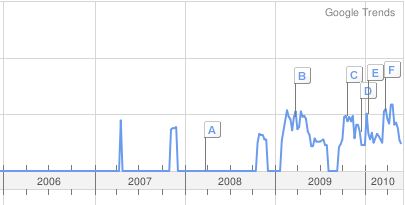
It's incredible to see our progress displayed so vividly, and anyone who doesn’t want legal marijuana in America should think twice about wasting their time trying to stop it. More people are scanning the web for news about marijuana legalization than ever before, and the media is working hard to give them exactly what they want, which results in yet more people reading and searching for news about marijuana legalization.
The whole process cascades and feeds on itself, spontaneously turning longtime observers into voices for reform, and literally creating more news by emboldening activists to launch new campaigns. It's awesome, and it absolutely won't stop until our marijuana laws are fixed forever.
Blog
Drugged Driving: Michigan Supreme Overturns ItselfâDriving With Pot Metabolites Not a Crime
The Michigan Supreme Court Tuesday ruled that it is not illegal to drive while having marijuana metabolites in the body, reversing a 2006 decision by a more conservative version of the court. Marijuana metabolites are not a controlled substance under state law, and their mere presence thus cannot be the basis of a conviction under the state's drugged driving law, the court held.
The ruling came in People v. Feezel, in which the court overturned the conviction of a driver in the death of a severely drunk pedestrian walking in the middle of a five-lane road at night. The driver, George Feezel, was himself borderline intoxicated on alcohol, blowing a 0.009, and also tested positive for marijuana metabolites, which can linger in the system for days or weeks after the pot high is gone. Feezle was not convicted of drunk driving causing a death, but was found guilty of second-offense drunk driving, leaving the scene of a fatal accident, and driving under the influence of marijuana, although there was no testimony to the effect that he had used marijuana that evening and there was testimony to the contrary.
The court ruled that a Washtenaw County jury should have been allowed to hear evidence the victim was drunk, remanding the case back to circuit court. But in ruling that marijuana metabolites are not a controlled substance, the court invalidated what was in effect a per se zero tolerance drugged driving law that allowed for people to be convicted of driving while impaired when they were not actually shown to be impaired.
"We hold that 11-carboxy-THC is not a schedule 1 controlled substance under MCL 333.7212 [controlled substances act] and, therefore, a person cannot be prosecuted under MCL 257.625(8) [drugged driving act] for operating a motor vehicle with any amount of 11-carboxy-THC in his or her system," read the opinion.
The opinion, largely a demolition of the previous Supreme Court's 2006 ruling in People v. Derror that marijuana metabolites are a controlled substance, thus allowing for drugged driving convictions based solely on their presence, noted that Michigan is now a medical marijuana state and that allowing Derror to stand would unfairly impact medical marijuana patients.
Under Derror, Justice Corrigan wrote for the majority, "individuals who use marijuana for medicinal purposes will be prohibited from driving long after the person is no longer impaired. Indeed, in this case, experts testified that, on average, the metabolite could remain in a personâs blood for 18 hours and in a personâs urine for up to 4 weeks."
It's not just about medical marijuana patients, the opinion suggested: "Thus, under Derror, an individual who only has 11-carboxy-THC in his or her system is prohibited from driving and, at the whim of police and prosecutors, can be criminally
responsible for choosing to do so even if the person has a minuscule amount of the substance in his or her system. Therefore, the Derror majorityâs interpretation of the statute defies practicable workability given its tremendous potential for arbitrary and discriminatory enforcement."
It is neither fair nor just nor in the interest of public safety to charge people with drugged driving who arenât impaired. Finally, there is a Michigan Supreme Court that recognizes that.
Latest News
Latest News
Latest News
Latest News
Blog
Marc Emery Calls Out Selfish Marijuana Growers for Opposing Legalization
As November inches closer, California's ballot initiative to legalize marijuana is causing anxiety on all sides of the drug war battlefield. Unfortunately, law-enforcement interests and anti-drug activists aren't the only ones panicking over the possibility of legal pot in the Golden State. This piece from Marc Emery explains why some members of the cannabis community are speaking out against the effort, and why they're wrong to do so.
Marc breaks opposition to the initiative into 3 categories:
1. Police and prison industry profiteers who don't want to lose their jobs.
2. Successful marijuana growers and entrepreneurs who don't want new competition.
3. Old-school activists who feel alienated by the modern reform movement and can't see the forest for the trees.
Now, I'm not sure I agree with everything Marc says here, but the piece on the whole is very interesting. As for the 3rd group, I just don't know what to say, but the first two are basically opposite sides of the same coin. Both groups benefit from marijuana prohibition and fear the impact of its elimination on their livelihood. Both groups prefer to think of their opposition to the initiative as being driven by principle, rather than self-interest. And ultimately, both groups will have to be overcome in order for marijuana prohibition to end.
I don't think anyone really disputes the fact that the Tax and Regulate 2010 Initiative isn't perfect. It apparently increases penalties for distribution to people under 21, and it doesn't create the kind of freedom of cultivation and distribution that many would prefer. But what it will do is completely slaughter the war on marijuana as we know it, and not just in California. If this initiative passes, it will protect multitudes of peaceful cannabis consumers from arrest in California, while sending a message to the nation that further marijuana reform is popular and inevitable.
I promise you, we will not destroy the drug war with one sudden fatal blow. It took more than a decade of legal medical marijuana to set a positive example, disprove negative stereotypes and propaganda, and ultimately help win popular support for further reform. We're headed in the right direction, and if this effort succeeds, we'll be a whole hell of a lot closer than we are today. That's true even if the new law creates some inconveniences that its authors felt were necessary in order to help get it passed.
The bottom line is that if this initiative wins, or merely comes close to winning, it will galvanize our movement behind a victory that's surely just over the horizon. It will show politicians and the press that the recently surging marijuana legalization debate is more than just a fad and that our support base penetrates deeply into mainstream society.
On the other hand, a decisive loss will send a message that the apparent march towards legalization in recent years was little more than a vocal minority exploiting the internet to create a false perception of political momentum. Can you even imagine how eager our opponents are to start saying things like that? Our losses are inevitably exaggerated and twisted by our opponents in a desperate defense of the status quo, and in that respect, the political impact of our victories must be considered in addition to the substance of the reforms themselves.
To put it much more simply, let me just suggest that anyone in California who'd like to end marijuana prohibition would probably want to vote differently than the cops who get paid to pull up plants in the woods.
Marc breaks opposition to the initiative into 3 categories:
1. Police and prison industry profiteers who don't want to lose their jobs.
2. Successful marijuana growers and entrepreneurs who don't want new competition.
3. Old-school activists who feel alienated by the modern reform movement and can't see the forest for the trees.
Now, I'm not sure I agree with everything Marc says here, but the piece on the whole is very interesting. As for the 3rd group, I just don't know what to say, but the first two are basically opposite sides of the same coin. Both groups benefit from marijuana prohibition and fear the impact of its elimination on their livelihood. Both groups prefer to think of their opposition to the initiative as being driven by principle, rather than self-interest. And ultimately, both groups will have to be overcome in order for marijuana prohibition to end.
I don't think anyone really disputes the fact that the Tax and Regulate 2010 Initiative isn't perfect. It apparently increases penalties for distribution to people under 21, and it doesn't create the kind of freedom of cultivation and distribution that many would prefer. But what it will do is completely slaughter the war on marijuana as we know it, and not just in California. If this initiative passes, it will protect multitudes of peaceful cannabis consumers from arrest in California, while sending a message to the nation that further marijuana reform is popular and inevitable.
I promise you, we will not destroy the drug war with one sudden fatal blow. It took more than a decade of legal medical marijuana to set a positive example, disprove negative stereotypes and propaganda, and ultimately help win popular support for further reform. We're headed in the right direction, and if this effort succeeds, we'll be a whole hell of a lot closer than we are today. That's true even if the new law creates some inconveniences that its authors felt were necessary in order to help get it passed.
The bottom line is that if this initiative wins, or merely comes close to winning, it will galvanize our movement behind a victory that's surely just over the horizon. It will show politicians and the press that the recently surging marijuana legalization debate is more than just a fad and that our support base penetrates deeply into mainstream society.
On the other hand, a decisive loss will send a message that the apparent march towards legalization in recent years was little more than a vocal minority exploiting the internet to create a false perception of political momentum. Can you even imagine how eager our opponents are to start saying things like that? Our losses are inevitably exaggerated and twisted by our opponents in a desperate defense of the status quo, and in that respect, the political impact of our victories must be considered in addition to the substance of the reforms themselves.
To put it much more simply, let me just suggest that anyone in California who'd like to end marijuana prohibition would probably want to vote differently than the cops who get paid to pull up plants in the woods.
Blog
POLICE CHIEF RECEIVES LIFE IN PRISON FOR 38 YEAR OLD COLD CASE
Former police chief George Hayden was given a life sentence for the 38 year old cold case of my brother Sgt. William Miller. I have stayed with
In The Trenches
Press Release -- Philadelphia: New Marijuana Procedure in Place on June 8th
PhillyNORML
www.phillynorml.org
FOR IMMEDIATE RELEASE: June 7, 2010
CONTACT: Chris Goldstein at 215-586-3483, [email protected], or 505 577 5093 (cell), or Rob Dougherty at 215-586-3483 or [email protected].
Philadelphia: New marijuana procedure in place on June 8th
Starting tomorrow, those caught with a small amount of pot (30 grams or less) will be issued a summary violation. This will save the cityâs criminal courts the burden of over 4,000 marijuana possession cases each year. Philadelphiaâs new District Attorney Seth Williams announced the change in April as part of a broad court-reform package.
PhillyNORMLâs analysis of the arrest data and continued discussions with city officials were instrumental to the change. Chris Goldstein, the groupâs Communications Director, led the project.
Philadelphia has seen a significant increase in marijuana arrests over the last decade. PhillyNORML found that 4,716 adults were arrested for marijuana possession of less than 30 grams in 2008. Every individual endured a mandatory custodial arrest and full Criminal Misdemeanor prosecution in court.
Summary violations are issued for offenses such as Public Urination. The procedure for a summary violation gives police officers the option of performing a custodial arrest or issuing a court appearance date. Offenders then appear before streamlined diversion court pleading to non-misdemeanor charges. Consequences include fines, attending classes or performing community service.
Assistant District Attorney for the Trials Division, Ed McCann, confirmed that the implementation of the new procedure takes place June 8, 2010.
Chris Goldstein, in an OPED published 5/17/10 in the Philadelphia Inquirer, summarized the change:
âThis is a pragmatic, procedural shift that was supported by other city officials and the state Supreme Court. It is not marijuana legalization, as ⦠claimed, or even the decriminalization that has happened in other states and cities. It simply aligns Philadelphia's procedures with those in the rest of Pennsylvania.â
PhillyNORML, the ACLU of PA and other local advocates welcomed the change.
CONTACT: Chris Goldstein for comment 505 577 5093 cell [email protected].
In The Trenches
Drug Truth 06/07/10
Cultural Baggage * Century of Lies * 4:20 Drug War NEWS
Cultural Baggage for 06/06/10 29:00 Dr. Tom O'Connel, a thoracic surgeon and now Calif pot doc intervewed by Dean Becker
LINK: http://www.drugtruth.net/cms/node/2935
TRANSCRIPT: Tues
Century of Lies for 06/06/10 29:00 Dr. Tom O'Connell takes listener calls about medical marijuana
LINK: http://www.drugtruth.net/cms/node/2936
TRANSCRIPT: Wed
4:20 Drug War NEWS, 06/07 to 06/13/10 Link at www.drugtruth.net on the right margin -
Sun - Charles Bowden 2/2 courtesy CSPAN
Sat - Charles Bowden, author of Murder City re impact of drug war on Ciudad Juarez 1/2 Fri - Dr. Tom O'Connell, Calif pot doctor re marijuana and COPD Thu - Dr. Tom O'Connell, regarding VA's refusal to recognize medical marijuana to treat PTSD Wed - Mary Jane Borden of Common Sense for Drug Policy, is heroin best treatment for heroin addiction?
Tue - Hou Chronicle reporter Dane Schiller re cartel plot to blow up dam on border Mon - Boris St Maurice "dark day for cannabis in Canada"
Programs produced at Pacifica Radio Station KPFT in Houston, 90.1 FM. You can Listen Live Online at www.kpft.org
- Cultural Baggage Sun, 7:30 PM ET, 6:30 PM CT, 5:30 PM MT, 4:30 PM PT
- Century of Lies, SUN, 8 PM ET, 7 PM CT, 6 PM MT & 5 PM PT
Who's Next?": TBD
Hundreds of our programs are available online at www.drugtruth.net, www.audioport.org and now at James A. Baker III Institute for Public Policy at Rice University. http://www.bakerinstitute.org
We have potcasts, searchability, CMS, XML, sorts by guest name and by organization. We provide the "unvarnished truth about the drug war" to scores of broadcast affiliates. You can tune into both our 1/2 hour programs, live, at 6:30 central time on Pacifica's KPFT at http://www.kpft.org and call in your questions and concerns toll free at 1-877-9-420 420.
The two, 29:00 shows appear along with the seven, daily, 3:00 "4:20 Drug War NEWS" reports each Monday morning at http://www.drugtruth.net . We currently have 74 affiliated, yet independent broadcast stations. With a simple email request to [email protected] , your station can join the Drug Truth Network, free of charge.
Check out our latest videos via www.youtube.com/fdbecker Please become part of the solution, visit our website: www.endprohibition.org for links to the best of reform. "Prohibition is evil." - Reverend Dean Becker, DTN Producer, 713-462-7981, www.drugtruth.net
In The Trenches
Press Release: Colorado Gives Marijuana Dispensaries Legal Status

FOR IMMEDIATE RELEASEÂ Â Â Â Â Â Â Â Â Â Â Â Â Â Â Â Â Â Â Â Â Â Â Â Â Â Â Â Â Â Â Â Â Â Â Â Â Â Â Â Â Â Â Â Â Â Â Â Â Â Â Â Â Â Â Â Â Â Â Â Â Â Â Â Â Â Â Â Â Â Â Â Â Â Â Â Â Â Â Â Â Â Â Â Â Â Â Â Â Â Â Â Â Â Â Â Â Â Â Â Â Â Â Â Â Â Â Â Â Â Â Â Â Â Â Â Â Â Â Â Â Â Â Â Â Â Â Â Â
JUNE 7, 2010
Colorado Gives Marijuana Dispensaries Legal Status
Governor Signs Regulations for Stateâs Medical Marijuana Industry
CONTACT: Mike Meno, MPP director of communications â¦â¦â¦â¦â¦ 202-905-2030 or [email protected]
DENVER, COLORADO âToday, Colorado Governor Bill Ritter (D) signed legislation that will regulate the stateâs medical marijuana dispensaries through a system of local and state licenses, but still allow individual localities to ban dispensaries. Currently there are an estimated 1,100 medical marijuana dispensaries throughout Colorado â the most in any state other than California, which does not have statewide dispensary regulations. Colorado officials estimate that about half of current dispensaries will be able to comply with new regulations.
        âBy approving a statewide system of dispensaries through which patients can safely acquire marijuana, Colorado is taking a significant amount of revenue away from the dangerous, illicit, and unsanctioned market created by prohibition,â said Karen OâKeefe, director of state policies for the Marijuana Policy Project. âInstead, patients will now be able to obtain marijuana from a sensible and orderly system of law-abiding and regulated providers. The scope of this newly regulated industry makes it the largest ever in the United States.â
        Under the regulations, dispensary owners will be subject to licensing fees and criminal background checks. Dispensaries will be required to grow 70 percent of the marijuana they sell and, like liquor stores, could not operate within 1,000 feet of a school.
        A state-regulated medical marijuana program is up and running in New Mexico and similar programs will soon be operational in Rhode Island, Maine, New Jersey, and Washington, D.C. â but the number of sanctioned dispensaries to be allowed in each of those states is fewer than 10. Coloradoâs law will authorize hundreds, and potentially more if future demand increases.
        A Rasmussen telephone poll released May 15 showed that there is also plurality support among Colorado voters for further expanding the stateâs marijuana laws. Forty-nine percent of likely voters said they support taxing and regulating marijuana like alcohol, with an additional 13 percent still undecided.Â
        With more than 124,000 members and supporters nationwide, the Marijuana Policy Project is the largest marijuana policy reform organization in the United States. MPP believes that the best way to minimize the harm associated with marijuana is to regulate marijuana in a manner similar to alcohol. For more information, please visit www.mpp.org.
####
In The Trenches
Press Release: New Marijuana Ordinance Could Have Disastrous Impact on Los Angeles
FOR IMMEDIATE RELEASEÂ Â Â Â Â Â Â Â Â Â Â Â Â Â Â Â Â Â Â Â Â Â Â Â Â Â Â Â Â Â Â Â Â Â Â Â Â Â Â Â Â Â Â Â Â Â Â Â Â Â Â Â Â Â Â Â Â Â Â Â Â Â Â Â Â Â Â Â Â Â Â Â Â Â Â Â Â Â Â Â Â Â Â Â Â Â Â Â Â Â Â Â Â Â Â Â Â Â Â Â Â Â Â Â Â Â Â Â Â Â Â Â Â Â Â Â Â Â Â Â Â Â Â Â Â Â Â Â Â
JUNE 7, 2010
New Marijuana Ordinance Could Have Disastrous Impact on Los Angeles
By Closing More Than 400 Medical Marijuana Dispensing Collectives, City Will Lose Countless Jobs and Tax Dollars, Force Some Patients Into Black Market
CONTACT: Aaron Smith, MPP California policy director â¦â¦â¦â¦â¦ 707-575-9870 or 707-291-0076
LOS ANGELES, CALIFORNIA â Today, the City of Los Angeles is expected to begin enforcing an ordinance that could shut down more than 400 medical marijuana dispensing collectives within the city. Approved by the L.A. City Council, the ordinance will give collectives that opened prior to 2007 (about 130 of which remain) six months to comply with new regulations that will force many into new locations.
        âThis new ordinance is all but guaranteed to have a disastrous impact on Los Angeles,â said Aaron Smith, California policy director for the Marijuana Policy Project. âBy imposing zoning laws on medical marijuana collectives that are stricter than those for gun dealers, adult entertainment businesses, alcohol vendors, or pharmacies, the city is placing an undue burden on thousands of medical marijuana patients whose quality of life may depend on safe and reliable access to their medicine. There is no rational reason to impose stricter regulations on medical marijuana collectives than on liquor stores, which sell a substance that everyone knows is more harmful than marijuana and doesnât require a doctorâs recommendation to purchase. With so many collectives being forced to close shop, many patients whose neighborhood dispensaries close will no doubt turn to the criminal market to obtain their medicine. That means sales taxes wonât be paid on those transactions, it will be impossible to monitor the quality or origin of that marijuana, and the typical turf wars and crime associated with black markets will become more prevalent in surrounding communities.
        âEven in terms of simple economics, closing these businesses makes entirely no sense,â Smith continued. âWhy, in the midst of a recession, in a city already plagued by economic stagnation, would anyone think itâs a good idea to shutter more than 400 legitimate businesses that employ hundreds of residents and contribute millions in tax revenue? More empty storefronts are not the solution to L.A.âs financial woes.âÂ
        With more than 124,000 members and supporters nationwide, the Marijuana Policy Project is the largest marijuana policy reform organization in the United States. MPP believes that the best way to minimize the harm associated with marijuana is to regulate marijuana in a manner similar to alcohol. For more information, please visit www.mpp.org.
####
In The Trenches
Press Release: Canadians for Safe Access Denounces Police Raids of Medical Cannabis Dispensaries
For Immediate Release: June 7, 2010
Canadians for Safe Access Denounce Police Raids of Medical Cannabis Dispensaries
Medical cannabis dispensaries, also know as compassion clubs, have played a vital role supplying safe access to cannabis for the critically and chronically ill in Canada for over 12 years. These organizations provide access to a variety of high quality cannabis strains and preparations that can effectively alleviate pain, muscle spasms, nausea, anxiety, and other serious symptoms. Compassion clubs are also at the forefront of academic peer-reviewed research on medical cannabis in Canada.
The services provided by compassion clubs have been appreciated by their patients, accepted by their communities and municipalities, lauded by a Special Senate committee, and upheld in various court rooms across the country.
In 2000, the highest court in Ontario ruled that those in medical need must be able to access cannabis without risking their liberty. The court decision called into question the constitutionality of the overall cannabis prohibition, and the government responded by creating a national medical cannabis program. The national program provides licenses for legal possession and production of cannabis, and provides medicine directly to those in need.
However, the government program has not been able to fulfill the needs of Canadians and aspects of it have been found unconstitutional in several courts. To date, the government has not complied with the court-ordered remedies. Problems with the programme include a poor quality supply of cannabis, and lack of physician participation and patient confidence in the programme. Currently the program only serves about 4,000 patients.
In the meantime, compassion clubs have been providing cannabis to over 15,000 people with documented medical need. Courts across Canada have ruled in favour of these operations, recognizing that they are fulfilling a vital service that Health Canada has not been able to fulfill.
The recent police raids in Toronto, Guelph, Iqaluit, and most recently Montreal and Quebec City appear to be an orchestrated attempt by police to shut these organizations down. The result is that thousands of Canadians suffering from MS, Cancer, HIV/AIDS, arthritis and other critical and chronic illnesses have lost an important source of their medicine.
Canadians for Safe Access denounces these raids. Rather than leave these organizations vulnerable to police raids, CSA is calling on Health Canada to work with these organizations to ensure they are legally protected to provide their services to those in need and continue to contribute to research on this important medicine. "Based on their actions and statements, the police appear to be trying to protect the government's monopoly on selling medical cannabis," notes Rielle Capler, a researcher and director of Canadians for Safe Access.
"Our government should be supporting patients to access the best possible medicine, not using scarce resources to fight over turf."
With the mandatory minimum bill, S-10, currently in the Senate, CSA would also like to draw attention to how this bill could negatively affect medical cannabis patients. "We are asking the Conservative government and opposition parties, in the Senate and the House Commons, to demonstrate their commitment to Canada's medical cannabis patients by ensuring that any new legislation will protect their needs", stated Philippe Lucas, a city counselor in Victoria, BC and also a director of Canadians for Safe Access.
Contacts:
Rielle Capler - 604-818-4082- [email protected]
Philippe Lucas - 250-884-9821 - [email protected]
Blog
HEMP - The most versatile illegal plant on the planet
HEMP IS QUITE LITERALLY THE MOST VERSATILE, USEFUL PLANT KNOWN TO MAN. But in America it is "illegal" - why is this the case?
Latest News