Drug War Issues
Politics & Advocacy
In its annual review of compliance with US drug war objectives, the US decertifies Colombia; Trump's drug war turns even uglier, and more.
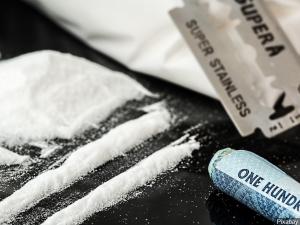
The US has decertified Colombia over cocaine production. (Pixabay)
Marijuana Policy
Minnesota's First Adult Use Marijuana Sales Finally Happen. For the first time, recreational marijuana is available for sale at non-tribal shops. Shops in Duluth, Mankato, and the Twin Cities all opened for business Tuesday.
The shops had been licensed months ago but ran into supply issues because state law requires them to sell only marijuana grown in-state, and with cultivation licenses being issued at the same time as sales licenses, new grower licensees are still growing their first crop.
State officials resolved the issue by allowing the shops to purchase marijuana from grows on tribal land, which have already been operating.
Among the shops opening on Tuesday were Legacy Cannabis in Duluth, the Green Goods chain (eight shops), and RISE Cannabis (five shops).
Foreign Policy
US MIlitary Blows Second Venezuelan "Drug Boat" Out of Water, Killing Three. On Monday, President Donald Trump announced that a US military strike on a Venezuelan boat targeting "violent drug trafficking cartels" left three men dead. He did not provide concrete evidence that the targeted boat was indeed carrying drugs but emphasized the threat these criminal organizations pose to American security.
This was the second murderous attack on an alleged Venezuelan drug boat in as many weeks. One on September 5 left 11 people dead. The attacks are being widely criticized as unlawful by legal experts.
"This morning, on my orders, US military forces conducted a second kinetic strike against positively identified, extraordinarily violent drug trafficking cartels and narcoterrorists," Trump said on Truth Social. "These extremely violent drug trafficking cartels pose a threat to US national security."
Later Monday, Trump claimed a video he released on Truth Social proved the boat was carrying drugs: "All you have to do is look at the cargo -- it was spattered all over the ocean -- big bags of cocaine and fentanyl all over the place," he said. "We recorded them. It was very careful, because we know you people would be after us. We're very careful."
Under maritime law, ships suspected of carrying drugs can be boarded and searched and any illicit cargo seized. Maritime law does not allow the summary execution of ship crews even if they are suspected criminals.
For First Time in 30 Years, US Adds Colombia to List of Nations Not Cooperating in War on Drugs. In an annual exercise of drug war imperialism, the US on Monday released its list of countries it claims are not cooperating with the war on drugs, and for the first time in 30 years, it included Colombia on the list.
But while the US claimed Colombia had failed to meet its international anti-drug obligations, it also issued a waiver of sanctions that would have triggered massive aid cuts, citing the US national interest.
The move comes as coca and cocaine production in the country have surged in recent years but also as relations between the Trump administration and Colombia's leftist President Gustavo Petro have become more strained.
On Colombian TV Monday night, Petro said the Colombia was being punished despite sacrificing the lives of "dozens of policemen, soldiers and regular citizens, trying to stop cocaine" from reaching the United States.
"What we have been doing is not really relevant to the Colombian people," he said of the nation's antidrug efforts. "It's to stop North American society from smearing its noses" in cocaine.
"Decertification is a blunt tool and a huge irritant in bilateral relations that goes well beyond drug issues and makes cooperation far harder in any number of areas," said Adam Isacson, a security researcher at the Washington Office on Latin America. "That's why it's so rarely used."
Colombia was last decertified in 1987, when then-President Ernesto Samper was accused of receiving campaign contributions from the Cali cartel. But since then, successive US administrations have sent billions of dollars to Colombia to wipe out drug crops, strengthen the repressive apparatus of the state, and fight a variety of drug-fueled rebel groups.
But under Petro, coca eradication has slowed dramatically and cocaine production has soared even as seizures of cocaine have reached record highs. He has also irritated Trump administration officials by denying American extradition requests, criticizing Washington's immigration crackdown, and denouncing its recent aggression toward Venezuela.
"Under my administration, Colombia does not collaborate in assassinations," Petro said after the first lethal US raid on an alleged Venezuelan drug boat earlier this month.
This work by StoptheDrugWar.org is licensed under Creative Commons Attribution-ShareAlike 4.0 International


Add new comment