Drug War Issues
Politics & Advocacy
The State Department has revoked the visas of dozens of Mexican politicians and government officials over cartel ties, Kazakhstan legalizes industrial hemp, and more.
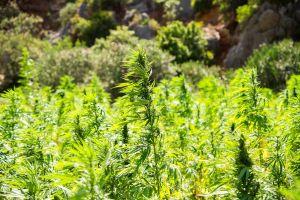
Industrial hemp is coming to Central Asia after Kazakhstan legalized its cultivation. (Pixabay)
Drug Policy
California Governor Signs Bill to Expedite Marijuana And Psychedelics Research. Gov. Gavin Newsom (D) last Friday signed into law Assembly Bill 1103, which aims to streamline research on marijuana and psychedelic substances. The bill will allow the Research Advisory Panel of California (RAPC) to engage in expedited reviews of research proposals on Schedule I and II controlled substances through January 2028.
Sponsored by Assemblyman Christopher Ward (D), the bill will also allow the RAPC chair to assign at least two members of the panel to conduct and approve expedited research proposal reviews on behalf of the whole panel.
And it will allow "individual panel members to communicate and consult asynchronously with other individual panel members with complementary core competencies outside of full panel meetings to conduct their individual reviews," according to the bill summary.
The purpose of the bill is to facilitate studies to determine whether marijuana, psychedelics or other Schedule I or Schedule II drugs can be utilized "to treat opioid use disorders, traumatic brain injury, post-traumatic stress disorder, and other mental health conditions fueling the disproportionate incidence of suicide among California veterans," the summary says. "Eliminating any and all unnecessary delays in commencing such clinical research in California will save lives," it says.
Gov. Newsom made no statement when he signed the measure into law.
Foreign Policy
US Attacks Another Venezuelan "Drug Boat," Killing Six. For the fifth time since September, the US military has attacked and destroyed what he described as a "drug boat" belonging to "narcoterrorists" off the coast of Venezuela. This latest attack brings the death toll to 27 in attacks widely viewed as violating US and international law.
At least that is what the US government says. It has not provided any details or evidence about the identities of the people it killed.
Without providing any evidence, President Trump declared on Truth Social that "intelligence confirmed the vessel was trafficking narcotics, was associated with illicit narcoterrorist networks, and was transiting along a known" route for smuggling.
The Trump administration last week sent a memo to Congress saying it had determined that the US was in a "non-international armed conflict" with drug cartels. That is a way for the administration to justify using extreme wartime powers, such as killing "enemy fighters" even if they are just fishermen on small boats more than a thousand miles from US waters.
While Venezuela is the scene of some drug trafficking, it is neither a drug producer nor a major trafficking location compared to other countries in the region. That has led some observers to speculate that attacks on Venezuelan ships -- as opposed to efforts against Mexican or Colombian drug trafficking organizations -- are more aimed at undermining the regime of President Nicolas Maduro than combatting the drug trade.
US Revokes Visas of More Than 50 Mexican Politicians and Officials as Part of Trump Cartel Crackdown. In a move causing consternation among Mexico's political elite, the State Department has revoked the visas of more than 50 government officials and politicians in Mexico as part of a crackdown on Mexican drug trafficking organizations and their political allies.
While previous US administrations have revoked visas for similar reasons, none have done so to this extent.
"The Trump administration is finding new ways to exert more pressure on Mexico," said Tony Wayne, US ambassador to Mexico from 2011 to 2015.
More than 50 of the revoked visas belong to members of the ruling MORENA Party, but dozens of officials from other parties have had their visas jerked as well. Among those publicly confirming they have lost their visas is Baja California Gov. Marina del Pilar Avila, who denies any links to the cartels.
"Visas, including those held by foreign officials, may be revoked at any time" for "activities that run contrary to America’s national interest," a senior US official said. "The Trump administration has had a good working relationship with the Sheinbaum government, and we look forward to continuing to advance our bilateral relationship in the interest of the America first foreign policy agenda," the official added.
But the visa revocations, especially those of MORENA Party members, could complicate that relationship. President Claudia Sheinbaum has gone down the path of collaboration with the US in going after the cartels, but suggestions by the Trump administration that it could undertake unilateral military action in Mexico raises hackles there. And the visa revocations only add to the strain.
The widespread revocations could backfire and strain US-Mexico cooperation on security. "It could spur blowback, where President Sheinbaum sees collaborating with the US as too high of a political cost.," said former US ambassador to Panama John Feeley.
International
Kazakhstan Legalizes Industrial Hemp Cultivation. The former Soviet republic has legalized hemp production for industrial purposes and awarded hemp licenses to five businesses, according to the Kazinform News Agency.
The Committee for Countering Drug Crimes issued the licenses for companies to grow hemp plants with no more than 0.3 percent THC, the primary psychoactive ingredient in marijuana.
The Industry Ministry says the country plans to develop a vertically integrated hemp industry, from cultivation to processing and the manufacturing of finished products. The country has already approved rules for hemp cultivation, but more regulatory action is needed before significant investments in the sector can commence.
This work by StoptheDrugWar.org is licensed under Creative Commons Attribution-ShareAlike 4.0 International


Add new comment