Drug War Issues
Politics & Advocacy
A new Louisiana law mandates prison time for pot possession in a school zone (including universities), an Arizona initiative would label drug cartels terrorist organizations, and more.
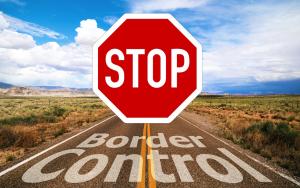
An Arizona initiative would designate Mexican drug cartels as terrorist organizations. (Creative Commons)
Marijuana Policy
New Louisiana Law Makes Pot Possession in School Zones Punishable by Prison Time. A new law that went into effect last month makes marijuana possession in school zones punishable by up to a year in prison, with or without hard labor, and a fine of up to $1,000.
With 1,067 of every hundred thousand residents behind bars, Louisiana already has the highest incarceration rate in the country (trailed closely by Mississippi and Oklahoma), and the second highest incarceration rate in the world, behind only El Salvador.
The new law applies not only to schools themselves, but also anywhere within 2,000 feet of a school property or on a school bus. And it applies to colleges and universities, both public and private, as well as apartments, fraternity and sorority houses, dorms, parking lots, and tailgating areas within the 2,000-foot zone.
The law applies not just to marijuana but also to vapes containing THC, which is considered marijuana under state law.
Before this law went into effect, possession of half an ounce or less anywhere was punishable by no more than a $100 fine.
Hemp
House Approves One-Month Delay on Hemp Cannabinoid Ban. Last November, Congress approved legislation that effectively banned intoxicating products derived from cannabinoids in hemp, threatening the viability of a quickly expanding multi-billion-dollar industry. The industry has lobbied hard for relief, and now that lobbying has paid off—at least temporarily.
On Tuesday, the House approved a continuing budget resolution that includes language giving the industry a one-month extension before the ban would now go into effect on December 12. That gives the industry time to try to persuade Congress to sensibly regulate—not prohibit—intoxicating hemp cannabinoid products.
"Of course, our work is not finished," said the lobbying group the US Hemp Roundtable. "This extension gives us one additional month, and we intend to make every day count. We will continue working with lawmakers and stakeholders to advance a comprehensive federal framework that protects consumers, prevents youth access to intoxicating products, provides certainty for farmers and businesses, and preserves access to lawful hemp products."
The clock is ticking.
Kratom
DEA Uses Emergency Scheduling to Ban Kratom Compounds. The DEA has classified three semisynthetic kratom compounds as Schedule I substances, putting them in the same category as heroin and LSD. Schedule I is the category the DEA uses for substances with "no currently accepted medical use and a high potential for abuse."
The scheduling of the substances is on an emergency basis, which expires in two years.
The scheduling is for two years on an emergency basis, according to the announcement released August 25.
In the announcement, US Attorney General Todd Blanche said the "Justice Department is acting before these dangerous compounds become a broader threat."
The substances are "being manufactured and sold in consumer products, often under labels that obscure their true risks," Blanche added. "This action will protect our nation’s children and communities from the dangers of drug addiction and abuse."
The scheduling is for two years on an emergency basis, according to the announcement statement
"The Justice Department is acting before these dangerous compounds become a broader threat," Attorney General Todd Blanche said in a statement announcing the move. The substances are "being manufactured and sold in consumer products, often under labels that obscure their true risks," Blanche added. "This action will protect our nation’s children and communities from the dangers of drug addiction and abuse."
Kratom is derived from the leaves of the Southeast Asian tree Mitragyna speciosa and has both sedative and stimulant properties. It contains more than 40 alkaloids, with mitragynine being the most prevalent. When dried in manufacturing or metabolized within the body mitragynine turns into 7-hydroxymitragynine, or 7-OH.
The three banned compounds—MGPI, MGM-15, and MGM-16—are highly potent, chemically modified semisynthetic derivatives of 7-OH. MGPI and MGM-15 have both been found in consumer products widely available in the majority of states that have not banned or strictly regulated kratom. MGM-16 has not, but the DEA said it was scheduled out of concern that it could emerge "as a substitute for related substances."
Researchers worry that the ban will send some users into withdrawal and that it will hamper further research into the substances.
Dr. Caleb Banta-Green, a research professor of psychiatry and behavioral sciences at the University of Washington’s School of Medicine said some people with opioid addictions turn to natural or semisynthetic kratom products to manage withdrawal symptoms from opioids.
"If you stop taking any of these chemicals and you are feeling sick, immediately seek care at the closest addiction medicine or treatment center in the area," Kin said. "If you’re having a life-threatening crisis, then obviously you should go to the hospital."
Law Enforcement
Arizona Initiative Would Label Mexican Cartels Terrorist Organizations, Open Door to Border Military Deployments. Republican state House Speaker Steve Montenegro has fulfilled his years-long battle to put an anti-cartel initiative before the voters. Proposition 317 would label the cartels as terrorist organizations under state law and order the state Department of Homeland Security to do everything within its power to "address the threat posed by drug cartels."
Montenegro first tried to tar the cartels as terrorists in a 2023 bill only to see it vetoed by Gov. Katie Hobbs (D). He then turned to the legislature to approve an initiative but got nowhere until last year as the Trump administration turned a laser focus on immigration and the border.
Critics call the initiative symbolic, but also worry it could open the door to the state sending troops to the border.
The proposal is "pure, dumb symbolism," said Joel Erdman, a spokesman for Progress Arizona. "This is clearly trying to support and signal the local legislative Republicans’ loyalty to Trump’s agenda," he said.
But Erdman acknowledged that if it passed, a future Republican governor could use it to send Arizona National Guard soldiers to the border. "(Prop. 317) is part of this broader effort to continue to militarize the border," Edman said.
"It has very loaded language that could lead to the deployment of law enforcement or other resources at the border in excess of what is necessary, but I don’t think the state has the power to declare an invasion," said Arizona ACLU spokesman Darrell Hill.
Hill also pointed to language in the proposal that could sweep up innocent people under the terrorist designation. It defines a cartel as an "ongoing formal or informal association of persons" who individually or collectively smuggle people or drug traffic drugs.
"Arizona residents who are engaged in buying and selling low amounts of drugs may find themselves designated as terrorists simply because they have a substance abuse disorder or are a low-level part of the drug economy," he said.
This work by StoptheDrugWar.org is licensed under Creative Commons Attribution-ShareAlike 4.0 International


Comments
Right direction
Keeping drugs out of school zones makes sense. Good info.
Add new comment