Obeying an order to kill unarmed civilians on the high seas could get American GIs in trouble.
The industry has a year to get Congress to change its mind.
We are pleased to continue with the restarted Drug War Chronicle newsletter. This continuing fundraising drive is vital to bringing the newsletter and our longtime writer Phillip Smith back to full time.
Industry experts propose regulation over outright bans, urging Congress to craft a viable framework for the $30 billion hemp market instead of pushing it toward collapse.
The attacks have "no justification under international law," says UN High Commissioner for Human Rights Volker Türk.
Secretary of Defense Hegseth announces a new counternarcotics task force in the Caribbean, Singapore again resorts to the death penalty for a drug offender, and more.
For at least the sixth time in as many weeks, the US has blown an alleged boat carrying drugs out of the water in the Caribbean, a Colombian family says the strikes killed one of their members, and more.
The State Department has revoked the visas of dozens of Mexican politicians and government officials over cartel ties, Kazakhstan legalizes industrial hemp, and more.
Iran is suffering an unforeseen consequence of Afghanistan's opium ban, Ohio lawmakers move to regulate -- not ban -- intoxicating hemp products, and more.
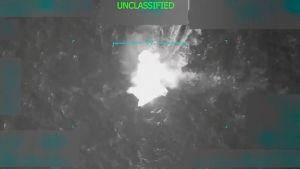
One of the South American "drug boats" blown out of the water by the US military. The death stands at 43 so far. (DOD)
Since the beginning of September, the Trump administration has authorized at least 10 lethal attacks on suspected drug-carrying boats, killing at least 43 people. It claims the strikes are legal because it has notified Congress that the country is engaged in a "non-international armed conflict" with drug cartels it has classified as foreign terrorist organizations. But its argument remains threadbare, and it has failed to release or provide to Congress an opinion from the Justice Department's Office of Legal Counsel that it claims lays out the legal justification for the killings.
What the US military is doing to alleged drug boats in waters off South America is the nautical equivalent of police officers gunning down drug mules. Police officers who do not arrest and charge drug suspects but instead gun them down in cold blood would face murder charges. US military personnel engaged in the planning and execution of the fatal attacks on small boats in the Caribbean and the eastern Pacific, potentially face similar liability under both the Uniform Code of Military Justice (UCMJ) and the federal criminal code.
Still, President Trump has been blunt about his intentions and about his disdain for Congress's role in approving US military actions: "I don't think we're going to necessarily ask for a declaration of war," he told reporters on Thursday. "I think we're just going to kill people that are bringing drugs into our country."
Vice-President Vance was equally blunt as he shared his sneering contempt for the rule of law, especially international law, in an exchange on X with social media personality Brian Krassenstein. Vance had posted: "Killing cartel members who poison our fellow citizens is the highest and best use of our military."
Krassenstein responded: "Killing the citizens of another nation who are civilians without any due process is called a war crime."
To which Vance retorted: "I don't give a shit what you call it."
But many legal experts see war crimes and other violations of international and US domestic law in the attacks on civilian vessels on the high seas.
"There is zero evidence of self-defense here. Looks like a massacre of civilians at sea," said Adam Isacson, the Washington Office on Latin America's director of defense oversight.
And using lethal force against civilians on the high seas "is a war crime if not in self-defense," he added. "'Not yielding to pursuers' or 'suspected of carrying drugs' doesn't carry a death sentence."
The top Democrat on the Senate Armed Services Committee, Sen. Jack Reed (D-RI), accused the administration of leaving Congress uninformed about the strikes and said it "offered no credible legal justification, evidence or intelligence" to support the action. "Every American should be alarmed that their president has decided he can wage secret wars against anyone he calls an enemy," Reed said in a statement.
"This action is legally questionable under both US and international law," said Juan S. Gonzalez, a former National Security Council official under Joe Biden. "As it stands, the administration is claiming authority to sink any vessel it 'deems' tied to drug trafficking. That's a slippery slope," he said. "Without checks, the US risks killing fishermen, migrants, or other civilians… and we'd just have to take the [administration] at its word."
And former Justice Department Office of Legal Counsel attorney Marty Ledermann wrote that there is no legal basis for the president to claim the right to kill people anywhere in the world who might -- in the president's view -- be planning to commit crimes, especially when less lethal options -- such as interdicting and arresting such people -- are available. "That's why there is virtually no historical precedent of any president ordering lethal force in a situation such as this," he noted.
Ledermann also pointed out that the strikes violate the US ban on assassination except when engaged in armed conflict or as a legitimate act of self-defense to stop an armed attack. And they violate Title 18 of the US Code, which makes murder a felony offense. Defined as "the unlawful killing of a human being with malice aforethought," the statute and its associated conspiracy to commit murder statute do not apply if Congress has approved armed conflict and it has been conducted in conformance to the laws of armed conflict. "But that's not the case here," Ledermann notes.
Writing in Just Security, a policy journal of the Reiss Center on Law and Security at the New York University School of Law, retired Army lieutenant colonel and judge advocate Daniel Maurer underlined the sorts of criminal liability servicemembers could face for participating in unlawful lethal strikes on civilians.
"Despite the clear absence of an 'imminent threat of death or serious injury' or 'grave threat to life, the US Coast Guard did not interdict the alleged criminal narcotrafficking in the way this conduct has been historically (and recently) approached," Maurer wrote.
"These suspected criminals were not arrested, prosecuted, convicted, and sentenced through a regular course of criminal procedure and neutral adjudication in a court. They were killed extrajudicially for conduct that could not be plausibly labeled a military attack, use of force, or even threat of imminent harm to anyone in the United States or any other nation, and despite the opportunity and ability to use less-than-lethal force to stop the boats. An extrajudicial killing, premeditated and without justification or excuse and without the legal authority tied to an armed conflict, is properly called "murder." And murder is still a crime for those in uniform who executed the strike even if their targets are dangerous criminals, and even if servicemembers were commanded to do so by their superiors, including the President of the United States," Maurer argued.
Service members involved in planning and executing the strikes could find themselves subject to Article 118 of the UCMJ, which defines the crime of murder. That statute can be applied to "Any person subject to this chapter who, without justification or excuse, unlawfully kills a human being, when such person -- (1) has a premeditated design to kill; [or] (2) intends to kill or inflict great bodily harm."
That includes any servicemember who "aids, abets, counsels, commands, or procures" the commission of the unlawful act.
As Maurer details, "This definition would naturally include the person who 'pulled the trigger' in the Caribbean boat attacks: the officers piloting the drones and firing the missiles. But the officers' immediate supervisors, who presumably authorized the kill shot, would also be liable as a principal for 'commanding it.' But that supervisor took orders from a higher commander as well, so -- theoretically -- every officer in the chain of command who received, tailored, added specificity to, and directed downward the initial order from the President or Secretary of Defense: all would likely fall within the meaning of traditional accomplice liability, and under the UCMJ may be charged as a principal for violating Article 118. So too would many of the staff planners responsible for "facilitating the strike": everyone from the logisticians (and their supervisors) to intelligence analysts (and their supervisors), to the team that wrote and published the operation order (and their supervisors) -- everyone who played a role in determining precisely where and when to strike, what airborne platform to use, and what weapon system to employ."
The UCMJ's definition of "aiding and abetting" is the same as found in the federal criminal code: 18 U.S.C. § 2.
Maurer also points out that since servicemembers have an affirmative duty to comply with the principles of armed conflict, they could also be charged with a slew of lesser offenses for involvement in unlawful actions, including "dereliction of duty" (Article 92(3); "reckless endangerment" (Article 114); or aggravated assault or "assault with intent to commit [another] specified offense" (e.g., murder) (Article 128).
"As with murder, each participant on the relevant staffs and their commanders may be liable for these offenses as aiders and abettors or as co-conspirators," he notes.
Maurer also notes that the Justice Department can exercise concurrent jurisdiction over active-duty servicemembers, meaning it could charge them with crimes under the federal criminal code, including 18 U.S.C. § 1111, the federal murder statute, as well as aiding and abetting and other lesser offenses.
Because federal law prohibits double jeopardy, servicemembers could not be prosecuted under both the UCMJ and federal criminal statutes, "so it would have to be one or the other," Maurer notes.
The likelihood that any servicemembers would be prosecuted for their involvement in the killings of those impoverished South American fishermen -- not Osama bin Laden in a speedboat -- is low under the current administration. But they may well someday face a day of reckoning. That is something for currently serving servicemembers to ponder. It could also be why US Southern Command commander Adm. Alvin Holsey is stepping down at the end of the year, two years ahead of schedule. He reportedly questioned the legality or ethics of the attacks, and now he is getting out.
back to top
In passing the appropriations bill to end the federal government shutdown, Congress earlier this month also dealt a potential death blow to the multi-billion dollar hemp industry. Included in the bill is a provision that ends the so-called hemp loophole, which allowed companies to get around the 0.3 percent THC cap on hemp products by using laboratory processes to extract THC and other cannabinoids from raw hemp.
The provision also bans synthetic cannabinoids and sets a 0.4 milligram limit on THC in any one container, meaning that many non-intoxicating hemp products, including those containing CBD will also be banned. It bans "any final hemp-derived cannabinoid products containing… greater than 0.4 milligrams combined total" of THC or "any other cannabinoids that have similar effects (or are marketed to have similar effects)."
Including that provision in the bill means virtually all hemp products currently on the market will be illegal when the law takes effect next year. According to the industry group the US Hemp Roundtable, that is a nearly $30 billion a year industry and about 300,000 jobs about to go up in smoke. Those hemp-derived gummies, vapes, and drinks will be gone -- or only available in an unregulated black market.
The industry and its supporters had argued that any concerns about intoxicating hemp products could be addressed via regulation, but prohibitionist forces within the ruling Republican Party opted to criminalize them instead.
While hemp had long been treated as a controlled substance indistinguishable from marijuana, then Senate Majority Leader Mitch McConnell (R-KY) championed its legalization in the 2018 farm bill. But despite the urgent protests of Kentucky hemp farmers, this year McConnell changed his tune, saying that legislation unwittingly opened a space for intoxicating hemp products.
"Unfortunately, companies… [take] legal amounts of THC from hemp and [turn] it into intoxicating substances," McConnell said during debate on the bill Monday. Those companies, he claimed, use "candy-like packaging" to market it to kids in "easily accessible places like gas stations," he said.
Fellow Kentucky Republican Sen. Rand Paul was a lonely advocate for the industry, having been joined only by Sen. Ted Cruz in voting against the provision. Paul said offers to find a regulatory path forward had been ignored.
"The hemp industry, myself and others have come together and we have been willing to negotiate to get rid of the bad actors," Paul said during debate on Tuesday. "And yet instead we are met with legislation that would be prohibition. Every hemp seed in the country will have to be destroyed," he added. "This is the most thoughtless, ignorant proposal to an industry that I've seen in a long, long time."
Support for the legislation came not only from Republican prohibitionists but also from a somewhat surprising source: the legal marijuana industry. Some industry players see hemp-derived cannabinoids as competition for their products.
"The bill passed tonight carefully distinguishes between intoxicating and nonintoxicating products and synthetic and natural products," said Chris Lindsey, a vice president at the American Trade Association for Cannabis and Hemp, an industry group that includes companies operating in states where marijuana is legal, whether for adult use or for medicinal use.
But that's not true, said US Hemp Roundtable general counsel Jonathan Miller.
"US senators were promised that this bill protects nonintoxicating CBD products, which is manifestly untrue -- the large majority of nonintoxicating CBD products on the marketplace feature more than 0.4 mg of THC per container," said Miller.
Noting that the legislation could wipe out 95 percent of the hemp industry and cost states more than $1.5 billion in lost tax revenues, the US Hemp Roundtable is also vowing to fight on.
"If the language passes, as-is, the hemp industry is committed to continuing the fight," the group said in a Monday press release. During the one-year proposed moratorium, US Hemp Roundtable will work closely with lawmakers to reverse the ban and replace it with responsible, science-based regulations that crack down on misleading and purely synthetic products, create restrictions that keep products out of the hands of children, and promote standard manufacturing practices. Unlike these regulations, the current proposal fails to protect consumers and risks fueling a dangerous black market.
"Our industry is being used as a pawn as leaders work to reopen the government. Recriminalizing hemp will force American farms and businesses to close and disrupt the well-being of countless Americans who depend on hemp," the Roundtable's Miller said in the statement. "We support Sen. Rand Paul's efforts to push back on this language and will continue to fight alongside him for a regulated, safe, and robust hemp industry."
After the bill passed Congress Wednesday, the US Hemp Roundtable declared "it ain't over." Noting that thanks to Sen. Paul, the industry has 365 days before the ban goes into effect, the group said it was confident it can find "a path forward" in the interim.
"First," the group argued, "the harmful hemp language passed was fueled by misinformation and unrelated political maneuvering. US senators were promised that this bill protects non-intoxicating CBD products, which is manifestly untrue -- the large majority of non-intoxicating CBD products on the marketplace feature more than 0.4 mg of THC per container. They were assured that this would crack down on fully synthetic products and copycat, high THC products that are marketed to kids -- but prohibition without regulation will shift these products to the black markets. Senators were scared by claims that this hemp debate would lead to a longer and more painful government shutdown, forcing some of our good friends to vote against us to hurry the government's opening. Once all of these dynamics are exposed, we believe that we can develop a political consensus on behalf of hemp."
"Second, we have a strong gameplan to move forward. Rep. Morgan Griffith (R-VA) plans to soon introduce a bill that would replace a total ban with robust regulation of hemp products (exactly what we have been advocating for!), including requiring good manufacturing practices, truth in labeling, bans on synthetic THC, and strong measures to keep products out of the hands of children. As chairman of the powerful Health Subcommittee of the House Energy and Commerce committee, Griffith is perfectly positioned to secure a fair and just result. In the Senate, Sens. Ron Wyden (D-OR) and Jeff Merkley (D-OR) will reintroduce their regulatory bill soon, for consideration by the Senate Health, Education, Labor and Pensions (HELP) committee, where we expect action as well. The Roundtable will be furiously lobbying both committees and seeking your help to send emails and make phone calls to secure a positive result."
The clock is ticking.
This article was originally published by the American Hemp Monitor.
back to top
Dear friends,

Phil receiving the Brecher Award for Journalism, 2013 International Drug Policy Reform conference
As you may be aware, the Chronicle was on a bit of a hiatus for much of this year. We are pleased today to publish the fifth issue of the Chronicle since our longtime writer Phillip Smith resumed his work with us.
Our fundraising drive, to help Phil continue and get him back to full-time continues. For this to work, we need to raise at least $800/week in tax-deductible grants or donations to our 501(c)(3) nonprofit, DRCNet Foundation. That's not all Phil should be earning for his work, but for now at least it will enable us to complete the restart of the Chronicle and keep it going.
(We also need to raise $900/month in non-deductible donations to our 501(c)(4) public welfare nonprofit, Drug Reform Coordination Network, to continue to afford the our list management service and web site hosting fees. I'll explain why we cover these costs from the non-deductible type of donation in a subsequent email. If you remember this from the past, it's the same reason as before, with the costs somewhat lower now.)
Thank you if you're willing to help us restart Drug War Chronicle. Also, if you were planning to or considering making a gift later in the year, it would make the extra difference if you were to do so now instead. Of course we are grateful for your support, whenever it is provided and in whatever amount.
Note that our online donation system, along with accepting one-time donations of course (via credit card, PayPal or bank ACH), also has a range of recurring donation options that you can use if you wish to make that commitment. People mainly use these for monthly or annual gifts to our organization. But our donation system can also accommodate gifts scheduled weekly, biweekly, every four weeks, quarterly, and twice a year. (Click here if you'd like info on contributing by mail or making a gift of stock.)
Sincerely,

David Borden, Executive Director
StoptheDrugWar.org
P.O. Box 9853, Washington, DC 20016
https://stopthedrugwar.org
back to top
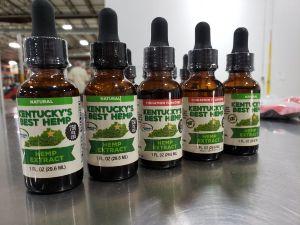
Products such as these will be prohibited if Congress does not replace its hemp ban with a regulatory approach instead. (Creative Commons)
Sen. Mitch McConnell (R-KY) is widely viewed as the father of the American hemp industry, given his role as then-Senate Majority Leader in pushing across the finish line the 2018 farm bill that legalized the cannabis variety. But this year, McConnell worked with his prohibitionist counterparts in the House, such as Rep. Andy Harris (R-MD), to reverse course and push for a ban on most hemp products.
While tactically yielding to opposition from fellow Kentucky Republican Sen. Rand Paul by removing hemp ban language from the Senate version of the farm bill, McConnell then managed to get it included in the legislation to end the federal shutdown last week, and it is now law. That means that 51 weeks from now, the ban will go into effect, with devastating consequences for the near-$30 billion hemp products industry -- unless something changes in the meantime.
Josh Schneider is among hemp industry experts who are working on Capitol Hill this week to make those changes happen. The founder of Cultivaris Hemp, which provides starter plants to American hemp farmers, Schneider has played a key role in the development of federal and state-level hemp policy and has seen his regulatory framework incorporated into House and Senate farm bill drafts. Now, he is pushing for Congress to reject the prohibitionist approach and replace it with a regulatory scheme that will protect both consumers and the industry.
"The ban will kill the industry dead -- fiber and grain will not escape unharmed," Schneider told the American Hemp Monitor. "It would be an extinction-level event for a lot of small businesses."
But he suggested that may not be what McConnell wants to achieve by supporting the looming ban. "It may be that McConnell intended it as a way to bring everybody to the table," he said. "Everyone assured him that nothing bad would happen with hemp legalization, but the advent of Delta 8 THC and synthetic cannabinoids created the image that the plant wasn't the innocuous CBD-only thing he had been sold. While the ban he pushed through is fairly complete and very, very few products will survive it, I think it is a reasonable interpretation to assume that he desires to bring the entire industry into the discussion. Now that the industry is focused, we will all have to come together to find a solution," he added.
"Now, we have been given a timeframe and an opportunity to resolve the issues of concern to Congress," said Schneider. He and his allies, including organizations such as the US Hemp Roundtable, the National Hemp Council, the National Hemp Association, and the National Herbal Products Association, have created a regulatory vehicle they claim will achieve just that.
That schema is laid out in a document released last week titled Pushing Progress. The authors say their objective in the next farm bill is to "clearly define industrial and floral hemp separately and direct the US Department of Agriculture (USDA) to manage hemp production based on the intended end use of the material. This bifurcation protects agricultural producers growing grain and fiber while establishing a clear regulatory pathway for cannabinoid-producing hemp," they add.
The proposal would require additional language under the Energy & Commerce Committee "to secure a complete solution to the challenges facing today's hemp industry," they note.
The farm bill language would define industrial (fiber, grain) and floral (cannabinoid-producing) hemp and clarify that USDA is in charge of all agricultural hemp production. The farm agency would administer licenses that align crop production with the intended end use. The proposed farm bill language would also raise the total THC threshold for hemp from 0.3 percent to 1.0 percent "to reflect real-world crop variability."
The proposed Energy & Commerce Committee language would divide regulatory authority over hemp products by end use. It would amend the 1994 Dietary Supplement Health and Education Act (DSHEA) to clearly grant the Food & Drug Administration (FDA) authority over non-intoxicating cannabinoids, such as CBD. Intoxicating hemp products would fall under the purview of the Bureau of Alcohol, Tobacco, and Firearms (BATF) Tax and Trade Bureau (TTB). And synthetic cannabinoids -- "compounds not naturally present in the cannabis plant" -- would continue to be under the authority of the DEA as controlled substances.
Rather than set arbitrary ceilings on the amount of THC allowed per package, the proposed language would require the TTB to set limits, manufacturing standards, labeling, and age restrictions in consultation with the FDA.
"This is an opportunity to build a resilient and durable regulatory system," said Schneider on Tuesday. "We've never really worked to bring people together around a unified framework. Congress wants us unified, and this document can help bring people together and resolve many of the questions. I think we have a pathway forward."
On Wednesday, after working the halls of Congress, Schneider told the Monitor he is seeing "a strong appetite for reasonable legislation around pathways for non-impairing cannabinoids under the DSHEA framework of dietary supplements, and for an impairing cannabinoid system regulated by TTB."
Located at the base of the Siskiyou Mountains along the California-Oregon border, Williams, Oregon, is a long way from Washington, DC. But for Cedar and Madrone Grey, the owners of Siskiyou Sungrown Cannabis, which produces cannabis oil and hemp CBD products for the wellness market, the looming congressional ban hits close to home. They assign some of the blame not to prohibitionists but to industry actors.
"I believe that this law was an inevitable consequence of the proliferation of synthetic cannabinoid products being marketed to minors under the 2018 farm bill," Cedar Grey told the Monitor. "I'm disappointed that the industry didn't work harder to regulate itself, and it did itself a disservice by looking the other way and ignoring the proliferation of synthetic cannabinoid products."
While Grey said he generally supported the farm bill language because it was "mostly reasonable and helpful for patients and consumers," he raised strong concerns about the 0.4 milligram per package THC limit for hemp-derived products.
"That is going to remove all full-spectrum (CBD plus THC) products from the market, and that is unfortunate because they are the most effective in treating a number of medical conditions," Grey said. "If the law is not amended, the industry will have to pivot to zero-THC products that are not as effective. The fix that is needed is to raise that limit to 40 milligrams per container. Then the law would support a healthy hemp industry. If they don't do that, there's going to be a lot of bloodshed in the industry. All of our products are full-spectrum. If this law were to take effect today, all our products would be banned."
While non-intoxicating hemp CBD products are largely collateral damage in the looming ban, intoxicating hemp products are in the bullseye. They need not be banned, Grey said, but regulated.
"I have no problem with people wanting to get intoxicated, but intoxicating hemp products should be subject to minimal safety limits, such as age limitations, testing, and labeling," he said. "History has shown that when not regulated, bad actors tend to market harmful products in the course of profiteering. When a new industry is developing, we should have rigorous testing until we have standards," Grey added.
"In the broader cannabis industry, the Oregon market needed to start with regular testing," he continued. "There were all kinds of poisonous products, but now the regulated cannabis market has the cleanest supply chain in the country."
As lawmakers back in Washington ponder their options, they would be wise to remember the old mantra that you can't regulate what you prohibit.
This article was originally published in the American Hemp Monitor,
back to top
The following is a Friday press release from the UN High Commissioner on Human Rights addressing the Trump administration's lethal strikes on alleged drug boats.
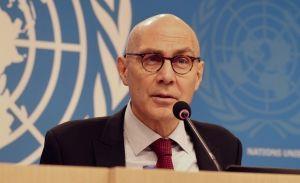
UN High Commissioner for Human Rights Volker Turk (Anthony Headley/OHCHR)
31 October 2025
US Attacks in Caribbean and Pacific Violate International Human Rights Law, UN Human Rights Chief
GENEVA – Airstrikes by the United States of America on boats in the Caribbean and the Pacific -- allegedly linked to drug trafficking -- violate international human rights law, UN High Commissioner for Human Rights Volker Türk said on Friday.
"Over 60 people have reportedly been killed in a continuing series of attacks carried out by US armed forces against boats in the Caribbean and the Pacific since early September, in circumstances that find no justification in international law," the High Commissioner said.
"These attacks -- and their mounting human cost -- are unacceptable. The US must halt such attacks and take all measures necessary to prevent the extrajudicial killing of people aboard these boats, whatever the criminal conduct alleged against them."
The US has argued that these actions are part of necessary anti-drug and counter-terrorism operations, and amount to actions governed by international humanitarian law.
"Yet countering the serious issue of illicit trafficking of drugs across international borders is -- as has long been agreed among States -- a law-enforcement matter, governed by the careful limits on lethal force set out in international human rights law," Türk said.
"Under international human rights law, the intentional use of lethal force is only permissible as a last resort against individuals who pose an imminent threat to life."
"Based on the very sparse information provided publicly by the US authorities, none of the individuals on the targeted boats appeared to pose an imminent threat to the lives of others or otherwise justified the use of lethal armed force against them under international law," he added.
Türk called for prompt, independent, and transparent investigations into these attacks.
While recognising the challenges involved in combating drug trafficking, the High Commissioner urged the US Government to adhere to international law, including as set out in applicable counternarcotics treaties to which the US is also party.
Türk called on the authorities to maintain use of well-established law enforcement methods to respond to alleged illicit trafficking, including through lawfully intercepting boats and detaining suspects under the applicable rules of criminal law.
The United States should investigate and, if necessary, prosecute and punish individuals accused of serious crimes in accordance with the fundamental rule of law principles of due process and fair trial, for which the US has long stood.
back to top
Secretary of Defense Hegseth announces a new counter-narcotics task force in the Caribbean, Singapore again resorts to the death penalty for a drug offender, and more.

Pannir Pranthaman. Executed last week in Singapore for less than two ounces of heroin. (Amnesty International)
Foreign Policy
Senate Republicans Block Effort to Check Administration Use of Deadly Force in Caribbean "Drug Boat" Attacks. In a near party-line vote, the Senate Wednesday voted down an effort to challenge the Trump administration's use of deadly military force against alleged Venezuelan "drug boats." The move would have invoked the War Powers Resolution of 1973, which asserts that only Congress has the power to declare war.
The move failed on a vote of 48-51, with only two Republicans, Rand Paul of Kentucky and Lisa Murkowski of Alaska breaking ranks to vote for the resolution. One Democrat, Jon Fetterman of Pennsylvania, voted with the Republican majority.
The administration has taken credit for shooting four "drug boats" out of the water since September, leaving a claimed toll of 21 dead. The resolution would have required the administration to get formal approval from Congress before undertaking any further military strikes.
Even though the resolution narrowly failed, it gave lawmakers the opportunity to voice their concerns about the administration's claim that the country is in "armed conflict" with drug trafficking organizations, that members of such groups are "narco-terrorists," and that they are thus "unlawful enemy combatants" subject to summary execution by the US military.
"It sends a message when a significant number of legislators say: 'Hey, this is a bad idea,'" said Sen. Tim Kaine (D-VA), who cosponsored the resolution along with Sen. Adam Schiff (D-CA).
"Congress must not allow the executive branch to become judge, jury and executioner," said Sen. Paul during a floor speech.
A number of other Republican senators, while voting against the resolution, expressed concerns about the strikes. Sen. Kevin Cramer (R-ND) admitted "there may be some concern" in Republican circles. But the GOP Senate leadership argued hard against the resolution, calling it a political ploy by Democrats.
"People were attacking our country by bringing in poisonous substances to deposit into our country that would have killed Americans," said Senate Foreign Relations Committee Chair Sen. Jim Risch (R-ID). "Fortunately most of those drugs are now at the bottom of the ocean."
Risch then thanked Trump for ordering the strikes and said he hoped they would continue.
But Democrats warned that continuing the attacks could sleepwalk the country into a war with Venezuela. "This is the kind of thing that leads a country, unexpectedly and unintentionally, into war," warned Schiff.
Hegseth Announces Task Force to "Crush" Drug Cartels in Caribbean. Just two days after the Senate rejected a bid to check the Trump administration's military adventurism in attacking civilian vessels off the coast of Venezuela, Defense Secretary Pete Hegseth announced Friday that the Defense Department is creating a new counter-narcotics task force to "crush" drug cartels in the Caribbean.
"At the President’s direction, the Department of War is establishing a new counter-narcotics Joint Task Force in the @SOUTHCOM area of responsibility to crush the cartels, stop the poison and keep America safe," Hegseth said in a post on X. "The message is clear: if you traffic drugs toward our shores, we will stop you cold," he added.
The vast majority of illicit drugs imported into the US come overland across the Mexican border. And when it comes to maritime drug smuggling routes to the US, the eastern Pacific is far more popular than the Caribbean.
The announcement comes as the US has already ramped up aggressive military activity in the Caribbean, attacking and destroying four alleged Venezuelan "drug boats" and leaving 21 people dead. In an attempt to provide a legal justification for the attacks, the administration has also now notified Congress that the US is at war with drug trafficking groups the US has designated as terrorist organizations.
International
Singapore Executes Man for Less Than Two Ounces of Heroin. Authorities in Singapore executed Malaysian citizen Pannir Pranthaman, 38, last Wednesday. He had been convicted in 2014 of possessing 52 grams of heroin and was sentenced to death.
Pranthaman's execution came despite protests from human rights groups and was the 12th this year in Singapore, with 1o of those killed having been convicted of drug crimes.
Pranthaman's case "has been marred by multiple layers of unfairness, including violations of international human rights law and standards," said Amnesty International in a statement before his execution. "It is indefensible that Singapore continues to cruelly pursue more executions in the name of drug control. So far in 2025, Singapore has executed 11 people, including nine convicted of drug-related offences. Yet there is no evidence that the death penalty has a unique deterrent effect or that it has any impact on the use and availability of drugs.
"Pannir's case is emblematic of the many flaws in the use of the death penalty in Singapore. Under international law and standards, the imposition of the death penalty for drug-related offences as a mandatory punishment is unlawful."
"Singapore must end its use of the death penalty and instead offer effective protection from drug-related harm, such as by expanding access to health and social services for people who use drugs and addressing the underlying socio-economic causes that lead people to engage in the drug trade," the human rights group concluded.
back to top
For at least the sixth time in as many weeks, the US has blown an alleged boat carrying drugs out of the water in the Caribbean, a Colombian family says the strikes killed one of their members, and more.

Colombian President Gustavo Petro is confronting the US over its drug boat attacks. (Creative Commons)
Foreign Policy
US Forces Strike Yet Another "Drug Boat" in Caribbean, With Survivors This Time. In the sixth known lethal attack by US forces against small boats in the Caribbean Sea near Venezuela, the military last Thursday sunk another alleged drug trafficking boat, killing an unspecified number of people. But for the first time in these attacks, there were survivors, a Colombian and an Ecuadorian.
Rather than imprison the two as unlawful combatant narco-terrorists, as the Trump administration is wont to portray the victims of its murderous strikes, or detain them to face criminal charges in the US, the US has instead released them to their own countries. That move allows the administration to avoid having to face judicial scrutiny over its attacks on the alleged drug boats, which are of dubious legality under both US and international law.
In announcing the attack last Friday, President Trump offered no details or evidence but said the US had attacked a "submarine" that was "loaded up" with drugs. "This was not an innocent group of people," he said.
The strikes come as the US engages in a massive buildup of military assets in the Caribbean and appear to be an increasingly threadbare pretext for ramping up pressure or potentially engaging in a "regime change" operation against the government of Venezuelan President Nicolas Maduro. Last week, President Trump also announced he had authorized CIA covert operations inside Venezuela. The authoritarian leftist leader has been indicted on US drug charges, and the Trump administration accused him of leading a Venezuelan drug trafficking organization, the Cartel de los soles.
The administration has attempted to justify the killings of criminal suspects on the highs seas by claiming the US is in "armed conflict" with Latin American drug cartels responsible for "poisoning" Americans. It has named some of those groups as "narco-terrorist" organization, allowing it to claim the people crewing those boats are unlawful enemy combatants.
US Killed Colombian Fisherman in "Drug Boat" Attack, Family Says. The family of Colombian fisherman Alejandro Carranza has told the Colombian TV network RTVC that he was killed in a US military strike after falsely accusing him of being a drug trafficker.
Audenis Manjarres said he cousin went fishing on September 14 and never came home. "He said goodbye on Sunday and now we don’t know anything about him," said Manjarres.
But two days later, President Trump released a video of a typical Colombian fishing boat, claiming that "these narcoterrorists from Venezuela were in International Waters transporting illegal narcotics (A DEADLY WEAPON POISONING AMERICAN!) headed to the U.S. These extremely violent drug trafficking cartels POSE A THREAT to U.S. National Security, Foreign Policy, and vital U.S. Interests."
Manjarres said the video suggested that her cousin and his unidentified companion had engine trouble, and "he was there checking the broken engines and they bombed him like that. It's unfair," Manjarres told RTVC.
Colombian President Gustavo Petro reacted angrily, saying the "US destroyed a fisherman family in the city that will host the Latin America and Europe summit."
"The United States has invaded our national territory, firing a missile to kill a humble fisherman, destroying his family and his children," Petro continued. "This is Bolívar's homeland, and they are murdering his children with bombs. The United States has violated Colombia’s national territory and murdered an honest, hardworking Colombian citizen. Let Bolívar's sword be raised! We are waiting for explanations from the US Government," said the president.
Trump to Punish Colombia as Feud over "Drug Boat" Attacks Intensifies. President Trump said Sunday that the US will impose tariffs on Colombian imports and cut assistance to the country because Colombian President Gustavo Petro "does nothing to stop" the drug trade. The move is the latest in an escalating confrontation between the two leaders.
Petro, a former leftist guerrilla, is a long and loud critic of the American-led global war on drugs and just last month chastised the US on US soil for supporting Israel's war in Gaza. He also urged American soldiers to "don't point your rifles at humanity" and "disobey the orders of Trump." The Trump administration then revoked his visa.
On Sunday, Trump posted on social media that Petro was "an illegal drug leader" who is "low rated and very unpopular." Then, in language reminiscent of a mob boss, Trump warned that "better close up" drug operations "or the United States will close them up for him, and it won't be done nicely."
He also accused Petro of lese majeste, saying the Colombian leader had "a fresh mouth" toward America, and complaining that the drug trade continues "despite large scale payments and subsidies from the USA that are nothing more than a long term rip off of America." "AS OF TODAY, THESE PAYMENTS, OR ANY OTHER FORM OF PAYMENT, OR SUBSIDIES, WILL NO LONGER BE MADE TO COLOMBIA," he added.
Later Sunday, Trump told reporters on Air Force One that Colombia is a "drug manufacturing machine" that has "no fight against drugs" and "a lunatic" for a president.
The Colombian Foreign Ministry called Trump's statement a "direct threat to national sovereignty by proposing an illegal intervention in Colombian territory." And Colombian Defense Minister Pedro Sanchez said Colombia "has used all its capability and also lost men and women fighting drug trafficking."
Petro also responded, defending his country's decades-long fight against the cocaine trade, which, despite billions of dollars in US anti-drug and counterinsurgency assistance over the years, is the world's largest coca and cocaine producer. While Petro has continued the battle against the drug trade, he has also been conciliatory instead of punitive toward coca growing farmers.
"Trying to promote peace in Colombia is not being a drug trafficker," Petro wrote. He also accused Trump of being "rude and ignorant toward Colombia."
Ties between the US and Colombia are now increasingly frayed, despite the decades of cooperation between the two countries, and the administration's latest moves have analyst's scratching their heads.
"It is befuddling and profoundly unwise of the United States to alienate its strongest military partner in Latin America at a moment when tension between Washington and Venezuela are at its highest point in recent years," said Elizabeth Dickinson, senior analyst for the Andes region at International Crisis Group.
"Wisdom is being thrown out the window, with really catastrophic effects," she added, noting that Trump slashed aid to Colombia as part of the destruction of the US Agency for International Development (USAID) earlier this year. Further cuts could undermine military cooperation and undercut the Colombian military's fight against resurgent rebel groups and drug traffickers, she said.
"If that is cut, we will see a strategic loss of capability for the Colombian military and police at precisely the moment when they're confronting the greatest security crisis in Colombia for over a decade," she said.
back to top
The State Department has revoked the visas of dozens of Mexican politicians and government officials over cartel ties, Kazakhstan legalizes industrial hemp, and more.
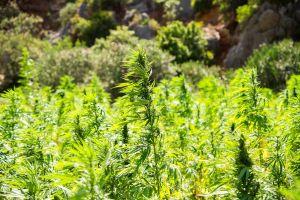
Industrial hemp is coming to Central Asia after Kazakhstan legalized its cultivation. (Pixabay)
Drug Policy
California Governor Signs Bill to Expedite Marijuana And Psychedelics Research. Gov. Gavin Newsom (D) last Friday signed into law Assembly Bill 1103, which aims to streamline research on marijuana and psychedelic substances. The bill will allow the Research Advisory Panel of California (RAPC) to engage in expedited reviews of research proposals on Schedule I and II controlled substances through January 2028.
Sponsored by Assemblyman Christopher Ward (D), the bill will also allow the RAPC chair to assign at least two members of the panel to conduct and approve expedited research proposal reviews on behalf of the whole panel.
And it will allow "individual panel members to communicate and consult asynchronously with other individual panel members with complementary core competencies outside of full panel meetings to conduct their individual reviews," according to the bill summary.
The purpose of the bill is to facilitate studies to determine whether marijuana, psychedelics or other Schedule I or Schedule II drugs can be utilized "to treat opioid use disorders, traumatic brain injury, post-traumatic stress disorder, and other mental health conditions fueling the disproportionate incidence of suicide among California veterans," the summary says. "Eliminating any and all unnecessary delays in commencing such clinical research in California will save lives," it says.
Gov. Newsom made no statement when he signed the measure into law.
Foreign Policy
US Attacks Another Venezuelan "Drug Boat," Killing Six. For the fifth time since September, the US military has attacked and destroyed what he described as a "drug boat" belonging to "narcoterrorists" off the coast of Venezuela. This latest attack brings the death toll to 27 in attacks widely viewed as violating US and international law.
At least that is what the US government says. It has not provided any details or evidence about the identities of the people it killed.
Without providing any evidence, President Trump declared on Truth Social that "intelligence confirmed the vessel was trafficking narcotics, was associated with illicit narcoterrorist networks, and was transiting along a known" route for smuggling.
The Trump administration last week sent a memo to Congress saying it had determined that the US was in a "non-international armed conflict" with drug cartels. That is a way for the administration to justify using extreme wartime powers, such as killing "enemy fighters" even if they are just fishermen on small boats more than a thousand miles from US waters.
While Venezuela is the scene of some drug trafficking, it is neither a drug producer nor a major trafficking location compared to other countries in the region. That has led some observers to speculate that attacks on Venezuelan ships -- as opposed to efforts against Mexican or Colombian drug trafficking organizations -- are more aimed at undermining the regime of President Nicolas Maduro than combatting the drug trade.
US Revokes Visas of More Than 50 Mexican Politicians and Officials as Part of Trump Cartel Crackdown. In a move causing consternation among Mexico's political elite, the State Department has revoked the visas of more than 50 government officials and politicians in Mexico as part of a crackdown on Mexican drug trafficking organizations and their political allies.
While previous US administrations have revoked visas for similar reasons, none have done so to this extent.
"The Trump administration is finding new ways to exert more pressure on Mexico," said Tony Wayne, US ambassador to Mexico from 2011 to 2015.
More than 50 of the revoked visas belong to members of the ruling MORENA Party, but dozens of officials from other parties have had their visas jerked as well. Among those publicly confirming they have lost their visas is Baja California Gov. Marina del Pilar Avila, who denies any links to the cartels.
"Visas, including those held by foreign officials, may be revoked at any time" for "activities that run contrary to America’s national interest," a senior US official said. "The Trump administration has had a good working relationship with the Sheinbaum government, and we look forward to continuing to advance our bilateral relationship in the interest of the America first foreign policy agenda," the official added.
But the visa revocations, especially those of MORENA Party members, could complicate that relationship. President Claudia Sheinbaum has gone down the path of collaboration with the US in going after the cartels, but suggestions by the Trump administration that it could undertake unilateral military action in Mexico raises hackles there. And the visa revocations only add to the strain.
The widespread revocations could backfire and strain US-Mexico cooperation on security. "It could spur blowback, where President Sheinbaum sees collaborating with the US as too high of a political cost.," said former US ambassador to Panama John Feeley.
International
Kazakhstan Legalizes Industrial Hemp Cultivation. The former Soviet republic has legalized hemp production for industrial purposes and awarded hemp licenses to five businesses, according to the Kazinform News Agency.
The Committee for Countering Drug Crimes issued the licenses for companies to grow hemp plants with no more than 0.3 percent THC, the primary psychoactive ingredient in marijuana.
The Industry Ministry says the country plans to develop a vertically integrated hemp industry, from cultivation to processing and the manufacturing of finished products. The country has already approved rules for hemp cultivation, but more regulatory action is needed before significant investments in the sector can commence.
back to top
Iran is suffering an unforeseen consequence of Afghanistan's opium ban, Ohio lawmakers move to regulate -- not ban -- intoxicating hemp products, and more.

In Afghan fields, not enough poppies now grow for Iran to seize and turn into pharmaceuticals. (UNODC)
Ohio House Approves Bill Regulating Marijuana, Restricting Intoxicating Hemp Products. The House last Thursday approved Senate Bill 56, which would change the state's marijuana laws and restrict the sale of intoxicating hemp products. The bill now goes back to the Senate for final approval, with a vote tentatively set for December 9.
The Senate had originally passed the bill in February, but the House made major changes, most notably by regulating intoxicating hemp products, when it first passed the bill in October. The Senate voted unanimously a week later not to approve those changes.
The bill then went to conference committee at the end of October, but the federal Congress then moved to ban intoxicating hemp products in mid-November, and now the House has approved a version of the bill that does not ban the sale of those products but limits their sale to authorized marijuana retailers and limits the amount of THC allowed in beverages to 5 milligrams.
"When it comes to intoxicating hemp products, we essentially cut to the chase," said Rep. Brian Stewart (R). "We had already whittled down most retailers where those could be sold. That is going to kick in. They're going to have the 90 days of runway that's in the bill. After that, all those products are either going to be sold in a marijuana dispensary or they won't be allowed to be sold."
As for marijuana, the bill would decrease the maximum THC level in marijuana extracts from 90 percent to 70 percent and caps THC levels in buds for adult use at 35 percent. The bill maintains the 10 percent retail tax on marijuana sales and keeps home grows at up to six plants per person and 12 plants per residence.
Foreign Policy
Mexico's President Rules Out US Cross-Border Strikes on Drug Cartels. A day after President Donald Trump (R) once again suggested he could approve military action against drug cartels within Mexican territory, Mexican President Claudia Sheinbaum dismissed the notion.
"Would I want strikes in Mexico to stop drugs? Okay with me, whatever we have to do to stop drugs," Trump told reporters last Monday.
But it's not OK with Sheinbaum, who has repeatedly brushed aside similar Trump administration comments about using US military force within Mexico. The administration has repeatedly attacked small boats it claims are carrying cartel drugs, but has been careful to do so only in international waters.
"It's not going to happen," Sheinbaum said last Tuesday. "[Trump] has suggested it on various occasions or he has said, 'we offer you a United States military intervention in Mexico, whatever you need to fight the criminal groups.' But I have told him on every occasion that we can collaborate, that they can help us with information they have, but that we operate in our territory, that we do not accept any intervention by a foreign government," Sheinbaum said.
Sheinbaum added that she has previously told Trump and Secretary of State Marco Rubio that Mexico was not open to foreign military intervention. She said that they understood her position. Indeed, the same day Trump made his comments, the US Embassy in Mexico shared a video on X that had Rubio saying the US would not take unilateral action in Mexico. Someone should tell his boss.
International
Afghan Opium Ban Impacting Iran's Medicinal Opium Supply. When the newly reinstalled Taliban government in 2022 banned opium production in what had been the world's leading poppy producer for decades, disruptions of illicit opium markets was expected. But an unanticipated result of the ban is a large reduction in the amount of Afghan opium seized by Iranian authorities -- and that seized opium was being used in the Islamic Republic's pharmaceutical sector.
Now, Iran is facing a shortfall of 400 to 500 tons of opium for its medical needs. During Afghanistan's opium heyday since the turn of the century, Iranian authorities seized more than a thousand tons of opium a year, but now that figure is down to barely 200 tons -- not enough to produce essential medicines such as morphine and codeine.
Now, local media indicate, authorities are considering growing their own poppies under a tightly regulated system. The scheme would feature a government monopoly on purchases and licensed opium farms with security measures. Production would be coordinated and overseen by the Agriculture Ministry, the Food and Drug Administration, and Drug Control Headquarters.
back to top