It's been a week since leading conservative activist Charlie Kirk was assassinated. It's been a hard week, especially for those who were closest to him. But it's also been a hard week for our country.
Too often, rehab is a racket.
We are pleased to continue with the restarted Drug War Chronicle newsletter. Our fundraising drive, to help our longtime writer Phillip Smith continue his work and get back to full time, continues.
Santa Cruz County is moving to join California's ever-growing ranks of localities that allow for marijuana consumption lounges, Nebraska medical marijuana regulators tighten up commercial grow rules in a bid to appease the Republican governor, and more.
Nebraska's governor signs emergency medical marijuana regulations after forcing cultivation cap, the US attack on the Venezuelan drug boat is now raising even more questions, and more.
Rhode Island regulators open the licensing period for legal weed sellers, a Massachusetts therapeutic psychedelic bill advances, and more.
In its annual review of compliance with US drug war objectives, the US decertifies Colombia; Trump's drug war turns even uglier, and more.
It's been a week since leading conservative activist Charlie Kirk was assassinated. It's been a hard week, especially for those who were closest to him. But it's also been a hard week for our country. As advocates ourselves, we share the condemnations that have been made of the shooting -- from the left, from the right, and every other direction.
We applaud Utah Governor Spencer Cox's uniting words in the wake of the tragedy. We similarly regret that President Donald Trump and Vice President JD Vance -- unlike how perhaps all of their predecessors reacted to such events -- have vigorously attempted to exploit this shooting to fan the flames of division.
Trump falsely and implausibly claimed political violence is only a problem of the left -- ignoring the recent shootings of Democratic lawmakers and family members in Minnesota, the hammer attack on Paul Pelosi, the January 6th insurrection, and the attempted kidnapping of Michigan Governor Gretchen Whitmer, among other events. Vance, guest hosting Charlie Kirk's podcast, promised to go after organizations of the left -- a threat smacking of fascism -- including major funders like the Ford Foundation and the Open Society Foundations.
A study published by the Cato Institute -- not a bastion of the left -- found that political violence in America, while having serious ramifications, in its frequency is rare. Looking at political murders since 2020 (a timeframe which excludes crimes with unusually large numbers of victims like the 9/11 attack, the Oklahoma City bombing and the Pulse nightclub shooting), one finds 81 victims. Right-wing terrorists accounted for more than half of these, according to Cato researcher Alex Nowrasteh, while left-wing accounted for 22 percent.
In citing this fact, I am by no means suggesting the focus of discussion in the immediate wake of the Charlie Kirk assassination should be on right-wing violence either. But since some figures on the right, including the two most powerful and prominent, have attempted to point fingers at the left, it's important for everyone to understand how untenable that is. As Jack Nicastro documents in Reason, "[m]ajorities on the left and on the right denounce political violence and its celebration."
In fact those who have condemned the Kirk assassination include people who had little love for Kirk's work in life. An organization that has long been unjustly maligned by figures on the right, Black Lives Matter, in a statement distributed by email wrote, "Our refusal to celebrate political violence in any form is not an endorsement of anyone's politics. Charlie Kirk was not a friend to us, but he is a human being. We rise above hate in all forms as a commitment to... the belief that no one should face a death sentence for their ideals."
Similarly, if I were to encounter a group of Turning Point activists, there are certainly areas of disagreement that I'd like to discuss with them. But the first thing I'd want to say is that I'm sorry this happened.
Unfortunately, the Kirk assassination was not the only way the past week has been a tough one. As I warned was possible last February, President Trump has now begun Duterte-style extrajudicial drug war killings. So far they are outside the US and on the high seas, not on the streets of our cities, and the number is not yet large. But there are now three incidents in which the president of the United States has directly ordered what legally can only be considered murder of supposed drug suspects. We have a larger discussion with thoughts on what to do about this being prepared, so check back here over the next few days.
back to top
Chronicle Book Review: Rehab: An American Scandal by Shoshana Walter (2025, Simon & Shuster, 299 pp., $29.99 HB)
Even though more than half the people strung out on drugs quit their habits without going through drug treatment, the rote response to illicit drug use by the addiction treatment establishment and the criminal justice system is a stint in rehab. But besides being, in many cases, unnecessary, in too many cases, rehab is a racket.
By racket, I mean an enterprise designed to make money, not treat drug addiction. It's an oh-so-American late capitalist response that sees a social problem and asks: How can I profit from it? And with Rehab, investigative journalist Shoshana Walter, shows just how that is done. Drawing from years of research and reporting, Walter uncovers a troubling landscape where vulnerable individuals seeking help are often exploited, neglected, or even subjected to abuse. Her book is both a searing exposé and a call to action for systemic reform.
Through case studies of four people -- a young white man from Louisiana who faced a choice of prison or two years in rehab (Chris Coon), an impoverished young black woman from Philadelphia who cycled through rehabs for years (April Lee), a privileged white woman from Southern California whose son died in a drug treatment program (Wendy McIntyre), and an ethically-challenged Indiana doctor with a buprenorphine-prescribing practice (Larry Ley) -- Walter unveils the failings of and corruption within the rehabilitation industry. She demonstrates how, in the absence of robust regulation, many treatment centers prioritize profit over patient welfare.
Chris Coons' story is a case in point. He went to rehab at Cenikor, a private company that housed drug users and advertised a full complement of treatment and rehabilitation programs. But instead of treatment, Chris Coons got slave labor. Like all Cenikor residents, he had to work jobs outside the facility to pay his way -- and all his wages went to Cenikor. While the company made bank and the CEO enjoyed hefty annual pay raises, Coons and his fellow residents were worked like dogs in often dangerous jobs.
Cenikor residents suffered on-the-job injuries and got little care for them, being instead pushed to get back to work so the company could make more profits. And drug treatment? There was no time for that. Cenikor residents worked long hours, came back to the facility, gulped down cheap, crappy food, and slept until the next shift. The treatment counselors Cenikor hired who actually cared enough to try to actually do their job were reduced to knocking on room doors and chatting for a couple of minutes, then charting it as a hour of treatment.
April Lee's story is not one of abuse so much as indifference. Struggling with homelessness and a bad drug habit from an early age, she alternated between the mean streets of Kensington and a series of unregulated "sober living" homes, where cash-strapped landlords sought to bolster their incomes by warehousing referred drug users. Some were better than others, but like corporations such as Cenikor, they were more about the money than treating the needy.
While Walter's approach humanizes the treatment crisis, the book's investigative backbone is built on interviews, documents, and court records, providing a comprehensive and credible account of the scope of the problem. She writes clearly and compellingly, making complex policy issues accessible without sacrificing nuance. And she has the journalistic chops to distill large, unwieldy topics into digestible and emotionally resonant stories.
Rehab succeeds in shedding light on an industry that is often shielded from public scrutiny. Walter does not shy away from discussing the failures of the legal and regulatory systems that allow such abuse to persist. She also explores the influence of private equity and corporate interests, which have become increasingly involved in addiction treatment.
But Rehab is not just a critique; it also highlights pockets of hope -- dedicated individuals fighting for change, successful models of care, and the ongoing movement toward evidence-based treatment. Walter encourages readers to consider what real reform would look like and advocates for an approach that centers on compassion, dignity, and medical science.
Rehab is a significant contribution to the national conversation about addiction and recovery. It should be essential reading for policymakers, healthcare professionals, and anyone affected by addiction -- either personally or through loved ones. Walter's work challenges assumptions and prompts reflection on how society treats its most vulnerable members. Anyone interested in understanding the realities of addiction treatment in America will find this book both enlightening and deeply affecting.
back to top
Dear friends,

Phil receiving the Brecher Award for Journalism, 2013 International Drug Policy Reform conference
As you may be aware, the Chronicle was on a bit of a hiatus for much of this year. We are pleased today to publish the fifth issue of the Chronicle since our longtime writer Phillip Smith resumed his work with us.
Our fundraising drive, to help Phil continue and get him back to full-time continues. For this to work, we need to raise at least $800/week in tax-deductible grants or donations to our 501(c)(3) nonprofit, DRCNet Foundation. That's not all Phil should be earning for his work, but for now at least it will enable us to complete the restart of the Chronicle and keep it going.
(We also need to raise $900/month in non-deductible donations to our 501(c)(4) public welfare nonprofit, Drug Reform Coordination Network, to continue to afford the our list management service and web site hosting fees. I'll explain why we cover these costs from the non-deductible type of donation in a subsequent email. If you remember this from the past, it's the same reason as before, with the costs somewhat lower now.)
Thank you if you're willing to help us restart Drug War Chronicle. Also, if you were planning to or considering making a gift later in the year, it would make the extra difference if you were to do so now instead. Of course we are grateful for your support, whenever it is provided and in whatever amount.
Note that our online donation system, along with accepting one-time donations of course (via credit card, PayPal or bank ACH), also has a range of recurring donation options that you can use if you wish to make that commitment. People mainly use these for monthly or annual gifts to our organization. But our donation system can also accommodate gifts scheduled weekly, biweekly, every four weeks, quarterly, and twice a year. (Click here if you'd like info on contributing by mail or making a gift of stock.)
Sincerely,

David Borden, Executive Director
StoptheDrugWar.org
P.O. Box 9853, Washington, DC 20016
https://stopthedrugwar.org
back to top
Santa Cruz County is moving to join California's ever-growing ranks of localities that allow for marijuana consumption lounges, Nebraska medical marijuana regulators tighten up commercial grow rules in a bid to appease the Republican governor, and more.
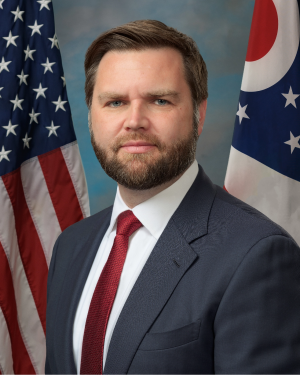
Vice-President JD Vance. Sen. Rand Paul has called him out for callous remarks about killing suspected drug smugglers. (senate.gov)
Marijuana Policy
Santa Cruz Moves to Join California Localities that Allow Marijuana Lounges. The Santa Cruz County Board of Supervisors voted last week to draft a law that would allow existing marijuana retailers to let customers smoke or otherwise consume marijuana products bought on site.
The move would make the county only the latest among a growing number of localities, from Weed and Eureka in the far north to Palm Springs in the south, that allow for social consumption lounges.
The 3-2 board vote comes at the end of an 18-month consultation process. It could be a few months more before the first social consumption premises are licensed, probably not before year's end.
Medical Marijuana
Nebraska Regulators Cut Licensed Growers' Plant Counts in Bid to Appease Anti-Pot GOP Governor. After Gov. Jim Pillen (r) refused to sign off on medical marijuana rules that advocates say are already too restrictive, the Nebraska Medical Marijuana Commission has placed limits on the state's commercial medical marijuana growers. The commission now says each of only four licensed growers will limited to growing 1,250 plants.
State voters easily approved medical marijuana last November, but opposition from the state's Republican political establishment has hindered progress in getting the program up and running.
Last week, the Medical Marijuana Commission unveiled rules that would have allowed for only four growers, four processors, and a dozen dispensaries. But even that was too much for Pillen, who refused to sign off on the proposed regulations. He sent the commission a September 4 letter saying that there needed to be cultivation limits to prevent "an unregulated, unintended black-market supply."
On Monday, the commission moved to appease Pillen by approving new rules limiting growers to 1,260 flowering plants at any given time.
Crista Eggers, executive director of Nebraskans for Medical Marijuana, which organized last year’s successful ballot initiatives, said that won't be enough to supply the anticipated number of patients in the state.
Foreign Policy
Rand Paul Condemns JD Vance for "Despicable" Comments on Venezuelan Drug Boat Attack. Sen. Rand Paul (R-KY) has sharply criticized Vice-President JD Vance (R) over comments Vance made defending the US military strike on a civilian boat that left 11 people dead.
In a post on X Saturday, Vance wrote: "Killing cartel members who poison our fellow citizens is the highest and best use of our military." Vance added: "Democrats: let's send your kids to die in Russia. Republicans: actually let's protect our people from the scum of the earth."
And in a response to a commentator who noted that the attacks were a grave human rights violation, Vance responded: "I don't give a shit."
That didn't sit well with the libertarian-leaning Paul, who chairs the Senate Homeland Security Committee and who has long been a critic of the war on drugs.
"JD 'I don’t give a shit' Vance says killing people he accuses of a crime is the 'highest and best use of the military.' Did he ever read To Kill a Mockingbird?" Paul wrote on X, alluding to Harper Lee's 1960 novel about a wrongly convicted Black man who is killed as he tries to escape prison. "Did he ever wonder what might happen if the accused were immediately executed without trial or representation? What a despicable and thoughtless sentiment it is to glorify killing someone without a trial."
International
Switzerland Begins Three-Month Public Consultation Period for Proposed Marijuana Legalization Model. A three-month public consultation period for the Alpine country's proposed national marijuana legalization model has begun and will last until December 1.
The move comes after the National Council's Social Security and Public Health Committee voted 14-9 in February to give preliminary approval to the plan. The plan gained further approval from the government in July, setting the stage for the consultation period.
"Public health and youth protection must be placed at the heart of a renewed cannabis policy. Adults must be granted strictly regulated access to cannabis. In addition, to ensure that consumption is not encouraged, cannabis products must not be sold for profit and must be subject to an incentive tax. This is what is provided for in the draft drawn up by the National Council's Social Security and Public Health Committee." the committee said.
"The consultation is more than a formal step; it's an opportunity to openly discuss opportunities and concerns. Only through a broad public debate can we create a cannabis law that ensures safety and acceptance in society," said Elias Galantay, President of IG Hanf Schweiz (Swiss Hemp Industry Association.)
back to top
Nebraska's governor signs emergency medical marijuana regulations after forcing cultivation cap, the US attack on the Venezuelan drug boat is now raising even more questions, and more.
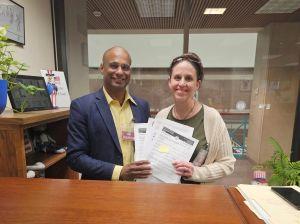
Missouri activists Eapen Thampy and Deb Nash hand in initiative petitions in Jefferson City. (Missourians for a Single Market)
Marijuana Policy
Missouri Initiatives Would Let Marijuana and Intoxicating Hemp Products Be Treated Like Alcohol and Tobacco. Hemp industry leaders and advocates have filed four initiatives that would repeal the state's voter-approved constitutional amendment legalizing marijuana and replace it with regulations like those surrounding alcohol and tobacco.
All four versions would replace the current legalization scheme with language instructing state lawmakers to create regulations that are "no more burdensome than what we already have for alcohol and tobacco," said Eapen Thampy, a longtime hemp lobbyist who filed the petitions.
And all four versions would remove criminal penalties for possessing too much marijuana, retain current taxes for at least the next decade, and allow businesses to seek licenses to sell marijuana and hemp products similar to those for alcohol and tobacco.
Under the current law, marijuana licenses are limited and tightly regulated, but intoxicating hemp products can be sold without a license. Legislators have tried repeatedly but unsuccessfully to ban those hemp products.
"Legislative efforts to ban hemp products allow the illegal market to flourish," said Gary Wiegert, a retired St. Louis City police sergeant. "Regulating these products and preserving legal access to the market ensures public safety by allowing business owners to serve the consumer market instead."
If and when the initiatives are approved for circulation, Missourians for a Single Market will need to gather 170,215 valid voter signatures for each one to qualify for the November 2026 ballot. They will have until May 3, 2026 to do so.
Medical Marijuana
Nebraska Governor Signs New Emergency Medical Marijuana Rules After Regulators Place Caps on Commercial Grows. After earlier balking because proposed regulations were not restrictive enough for him, Gov. Jim Pullen (R) has signed emergency regulations that will allow the state's voter-approved medical marijuana program to begin moving toward actually providing medical marijuana to patients.
Pillen had rejected an earlier version of the emergency regulations because they did not include caps on the number of plants commercial operators can grow. Now, they do. Growers will be limited to cultivating 1,250 plants at a time, an amount advocates say is insufficient to meet patient needs.
The state Medical Cannabis Commission was charged with drafting the regulations, and after Pillen's initial rejection, the commission met Monday and approved the cultivation limits. Pillen signed the emergency regs on Tuesday.
But Nebraskans for Medical Marijuana, the group behind last year's successful initiative, is not happy.
"Today the governor, alongside his allies on the Commission, executed the collapse of Nebraska's medical cannabis program," said Crista Eggers, the group's director. "Constructing barriers at every step, ensuring patients are denied relief, families are left suffering, and the will of the people is shredded. This betrayal will not be forgotten."
Foreign Policy
Alleged Venezuelan Drug Boat Had Turned Back Before US Military Sank It, Killing 11, American Officials Say. Unnamed "American officials familiar with the matter" told the New York Times Wednesday that a Venezuelan boat attacked and destroyed by the US military last week had changed course and appeared to have turned back toward Venezuela before the attack started, casting further doubt on any legal rationale for the deadly attack that left 11 Venezuelan civilians dead.
The people onboard the boat had apparently noticed a military aircraft stalking them, officials said.
President Trump announced the attack last week, saying the boat was transporting drugs "heading to the United States" and claimed the people onboard were part of Tren de Aragua, a middling Venezuelan criminal gang the Trump administration has designed a "narco-terrorist" organization. But his administration has provided no evidence to back his claims.
Legal experts who earlier told the Times that summarily killing low-level drug smugglers as if they were wartime combatants was a crime said the new revelations only strengthen their case.
While the administration has not provided a detailed legal rationale to justify the attack, it has vaguely claimed that it has the right to use lethal force in "self-defense" to fend off illicit drug imports.
But that claim is weak, legal specialists said, and made even weaker by the fact that the boat had already turned back before it was attacked.
"If someone is retreating, where’s the 'imminent threat' then?" said Rear Adm. Donald J. Guter, a retired top judge advocate general for the Navy from 2000 to 2002. "Where's the 'self-defense'? They are gone if they ever existed -- which I don't think they did."
"I would be interested if they could come up for any legal basis for what they did. If, in fact, you can fashion a legal argument that says these people were getting ready to attack the US through the introduction of cocaine or whatever, if they turned back, then that threat has gone away," said Rear Adm. James E. McPherson, the top judge advocate general for the Navy from 2004 to 2006 who later served in the first Trump administration in several prominent civilian military roles, including general counsel of the Army.
back to top
Rhode Island regulators open the licensing period for legal weed sellers, a Massachusetts therapeutic psychedelic bill advances, and more.

President Trump tells a whopper about the number of drug OD deaths. (Gage Skidmore/Creative Commons)
Marijuana Policy
California Legislature Approves Bill to Halt Tax Hike on Pot Products; It Now Awaits Governor's Signature. The state's beleaguered legal marijuana industry may catch a break after the legislature approved Assembly Bill 564, which would undo a recently-enacted excise tax increase for legal pot products. Now, it is up to Gov. Gavin Newsom (D) to sign the bill into law. He is expected to do so.
The bill rolls back a 25 percent tax hike in effect since July 1. It also bars any future tax hikes for the next three years.
The effort was backed by California NORML, the California Cannabis Association, the United Food and Commercial Workers -- Western States Council, and other groups.
"California NORML is proud to have taken a leadership role sponsoring this bill," California NORML Coordinator Dale Gieringer said. "Cannabis is already heavily over-taxed relative to comparable products like beer, wine, and tobacco in California."
National NORML deputy director Paul Armentano added that: "Consumers in many legal states already pay artificially high prices for retail cannabis products. Imposing additional taxes on these goods undoubtedly drives prices out of reach for some consumers. This pushes consumers back to the unregulated market, thereby undermining the primary goal of legalization, which is to provide adults with safe, affordable, above-ground access to lab-tested products of known purity, potency, and quality."
While the state has been a pioneer of marijuana liberalization, efforts to get the legal market off the ground have faced considerable headwinds. The black market remains strong, many localities in the state still do not allow marijuana businesses, and high prices -- including high taxes -- make that black market weed look even more attractive.
Rhode Island Regulators Open Licensing Period for Legal Pot Sellers. The Rhode Island Cannabis Control Commission is now allowing prospective retailers to apply for licenses to sell recreational cannabis. Businesses seeking an adult-use retail license for cannabis must submit an application through the commission's online portal by December 29.
The Social Equity Applicant certification process is also now open. It opened August 28 and closes September 29.
The state legalized adult use marijuana in 2022 but has not yet handed out any licenses.
All questions about the application or application process must be submitted by email only to [email protected] with the subject line "Adult-Use Cannabis Retailer Question."
Questions received, along with the Commission's responses, will be posted on the Commission’s website so that all applicants have access to the same information. The Commission reserves the right not to respond to questions that are already addressed in the application, the Rhode Island Cannabis Act, or the regulations, as well as questions it deems immaterial or inappropriate.
Psychedelics
Massachusetts Psychedelic Therapy Pilot Program Bill Advances. A bill that would create a pilot program for the regulated therapeutic use of psychedelics is moving in the legislature. Senate Bill 1400 passed out of the legislature's Joint Committee on Health Care Financing last Thursday.
The bill calls for a "pilot program to allow for the monitored mental health care of clinically appropriate patients using psychedelic materials." It would involve the "on-site administration by a multi-disciplinary care team in a supervised licensed mental health clinic setting."
The measure would leave decisions on the regulatory apparatus to the Department of Public Health and allows for licenses for three health facilities to operate the pilot programs. They would be tasked with "establishing the best and safest clinical practices for psychedelic mental health treatment programs in the commonwealth and for the purposes of collecting patient outcomes data regarding the benefits of psychedelic pharmacotherapy."
The bill, as well as a separate measure to provide a more limited pilot program for psilocybin therapy alone, will also be the focus of a hearing on November 10 before the Joint Committee on Mental Health, Substance Use and Recovery.
Drug Policy
Trump Wildly Exaggerates Number of Drug Overdose Deaths in US. During a September 5 event at the White House where he signed an executive order changing the name of the Department of Defense to the Department of War, President Trump wildly exaggerated the number of people who died of drug overdoses last year, saying he believed 300,000 or "350,000 people died last year from drugs."
According to the Centers for Disease Control and Prevention (CDC), however, the provisional number of drug overdose deaths last year was 79,383. Drug overdose deaths have declining dramatically after topping out at slightly over 105,000 a year in 2023.
Trump made the wild claim as he responded to a reporter's question about the US military buildup in the Caribbean and the attack by US fighter jets on an alleged Venezuelan drug smuggling boat that killed 11 Venezuelan civilians.
"Well, I just think it's strong," Trump said. "We're strong on drugs. We don't want drugs killing our people. I believe we lost 300,000. You know, they always say 95[,000], 100,000. I believe they've been saying that for 20 years. I believe we lost 300,000 people last year."
"Whether it’s 100,000, but it's not -- it's 300[,000], 350,000 people died last year from drugs. And we're not going to let that happen to this country," he later added.
Trump's numbers are "a gross exaggeration," said Dr. Daniel Ciccarone, a professor of addiction medicine at the University of California. Last year's numbers represented "an impressive drop" in overdose deaths, he added.
As for Trump's claim about possible undercounting of overdose deaths, Ciccarone scoffed. "Counts can be over or under for any statistic; we call this 'error,' or 'variance.'" But the NCHS data "are considered widely to be reliable, authoritative, and while there is some variance, it is estimated to be low," he said.
Trump has a history of inflating drug overdose numbers and fanning skepticism about their veracity. At a rally in Waco, Texas, in 2023, he said the official overdose numbers were "a lie" and that actual overdose deaths were "probably" five times higher. Similarly, at a 2024 campaign rally in Phoenix, he threw out that unsupported 300,000 figure again.
back to top
In its annual review of compliance with US drug war objectives, the US decertifies Colombia; Trump's drug war turns even uglier, and more.
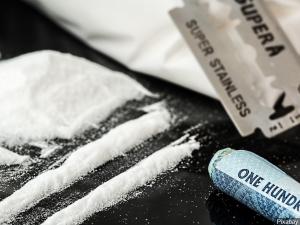
The US has decertified Colombia over cocaine production. (Pixabay)
Marijuana Policy
Minnesota's First Adult Use Marijuana Sales Finally Happen. For the first time, recreational marijuana is available for sale at non-tribal shops. Shops in Duluth, Mankato, and the Twin Cities all opened for business Tuesday.
The shops had been licensed months ago but ran into supply issues because state law requires them to sell only marijuana grown in-state, and with cultivation licenses being issued at the same time as sales licenses, new grower licensees are still growing their first crop.
State officials resolved the issue by allowing the shops to purchase marijuana from grows on tribal land, which have already been operating.
Among the shops opening on Tuesday were Legacy Cannabis in Duluth, the Green Goods chain (eight shops), and RISE Cannabis (five shops).
Foreign Policy
US MIlitary Blows Second Venezuelan "Drug Boat" Out of Water, Killing Three. On Monday, President Donald Trump announced that a US military strike on a Venezuelan boat targeting "violent drug trafficking cartels" left three men dead. He did not provide concrete evidence that the targeted boat was indeed carrying drugs but emphasized the threat these criminal organizations pose to American security.
This was the second murderous attack on an alleged Venezuelan drug boat in as many weeks. One on September 5 left 11 people dead. The attacks are being widely criticized as unlawful by legal experts.
"This morning, on my orders, US military forces conducted a second kinetic strike against positively identified, extraordinarily violent drug trafficking cartels and narcoterrorists," Trump said on Truth Social. "These extremely violent drug trafficking cartels pose a threat to US national security."
Later Monday, Trump claimed a video he released on Truth Social proved the boat was carrying drugs: "All you have to do is look at the cargo -- it was spattered all over the ocean -- big bags of cocaine and fentanyl all over the place," he said. "We recorded them. It was very careful, because we know you people would be after us. We're very careful."
Under maritime law, ships suspected of carrying drugs can be boarded and searched and any illicit cargo seized. Maritime law does not allow the summary execution of ship crews even if they are suspected criminals.
For First Time in 30 Years, US Adds Colombia to List of Nations Not Cooperating in War on Drugs. In an annual exercise of drug war imperialism, the US on Monday released its list of countries it claims are not cooperating with the war on drugs, and for the first time in 30 years, it included Colombia on the list.
But while the US claimed Colombia had failed to meet its international anti-drug obligations, it also issued a waiver of sanctions that would have triggered massive aid cuts, citing the US national interest.
The move comes as coca and cocaine production in the country have surged in recent years but also as relations between the Trump administration and Colombia's leftist President Gustavo Petro have become more strained.
On Colombian TV Monday night, Petro said the Colombia was being punished despite sacrificing the lives of "dozens of policemen, soldiers and regular citizens, trying to stop cocaine" from reaching the United States.
"What we have been doing is not really relevant to the Colombian people," he said of the nation's antidrug efforts. "It's to stop North American society from smearing its noses" in cocaine.
"Decertification is a blunt tool and a huge irritant in bilateral relations that goes well beyond drug issues and makes cooperation far harder in any number of areas," said Adam Isacson, a security researcher at the Washington Office on Latin America. "That's why it's so rarely used."
Colombia was last decertified in 1987, when then-President Ernesto Samper was accused of receiving campaign contributions from the Cali cartel. But since then, successive US administrations have sent billions of dollars to Colombia to wipe out drug crops, strengthen the repressive apparatus of the state, and fight a variety of drug-fueled rebel groups.
But under Petro, coca eradication has slowed dramatically and cocaine production has soared even as seizures of cocaine have reached record highs. He has also irritated Trump administration officials by denying American extradition requests, criticizing Washington's immigration crackdown, and denouncing its recent aggression toward Venezuela.
"Under my administration, Colombia does not collaborate in assassinations," Petro said after the first lethal US raid on an alleged Venezuelan drug boat earlier this month.
back to top