Drug War Issues
Politics & Advocacy
In the first opinion by a federal court on the issue, a federal judge ruled September 10 that the government must obtain a warrant based on probable cause before ordering a wireless service provider to turn over records showing where customers used their cell phones. The case involved a drug trafficking investigation, but could begin to establish a broader standard for such records requests, which are becoming more routine as more and more people carry cell phones that reveal their locations.
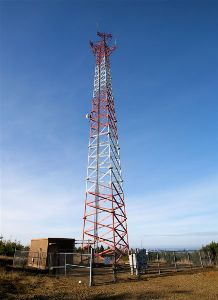
cell phone tower
The federal government had requested an order directing Sprint Spectrum to provide historical cell phone data including cell tower location information, call times, and durations. But Magistrate Judge Lenihan ruled that the information sought was "extraordinarily personal and potentially sensitive... (and) particularly vulnerable to abuse."
On appeal, the government argued that such records are no different from routine transaction records, such as credit card purchase records, and do not require a warrant. "For instance, records of past credit card transactions will often serve to place a person at a given location at a specific time, yet under established Fourth Amendment law they enjoy no Fourth Amendment protection," US Attorney Mary Beth Buchanan said in a brief asking the district court to overturn Lenihan's ruling.
But District Judge McVerry wasn't buying that argument, and now the Justice Department must decide whether it will appeal the decision.
Privacy and civil liberties advocates welcomed the ruling. "People place a certain privacy value on their movements," ACLU attorney Catherine Crump told the Washington Post. "Whether it's their movements yesterday or their movements today, it's the same."
"This is a great ruling for location privacy and for people who think the government should have probable cause before they track you," said Jennifer Granick, an attorney with the Electronic Frontier Foundation, which filed a friend of the court brief in the case. "Most people don't think that somebody could go back in time and find out where I was or who I was talking to or who was nearby at that same time. This is sensitive information, and there should be good reason before the government gets it."
This work by StoptheDrugWar.org is licensed under Creative Commons Attribution-ShareAlike 4.0 International


Comments
good
good
Mary Beth Buchanan
U.S. Attorney Mary Beth Buchanan is the same U.S. attorney who prosecuted Tommy Chong for shipping glass across state lines.
Seems when proud Mary is on the job, respect for our right to privacy becomes some kind of joke as far as the Federal Prosecutor's Office is concerned.
Giordano
Add new comment