Drug War Issues
Politics & Advocacy
Three years after it was first introduced, the Senate Tuesday evening passed the Second Chance Act, a measure aimed at reducing prison populations and corrections costs by reducing the recidivism rate among people released from prison. The bill would provide federal funding to develop programs dealing with job training, substance abuse, family stability, and for employers who hire former prisoners.
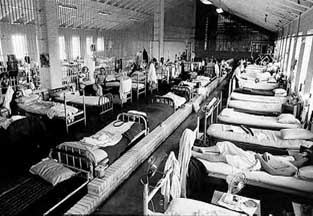
overcrowded prison dorm, California
Currently, an estimated two-thirds of released prisoners will find themselves in trouble with the law at some point in the future. The bill is designed to reduce that percentage.
Although the bill had passed the House in November, it had been stalled ever since by a legislative "hold" put on it by Sen. Jeff Sessions (R-AL), who had expressed a number of concerns about it, including some on the cost and effectiveness of the program. He lifted his "hold" Monday night. On Tuesday, it passed both the Senate Judiciary Committee and a Senate floor vote by unanimous consent.
President Bush is expected to sign the bill shortly.
The bill will provide about $360 million for re-entry services in fiscal years 2009 and 2010. In addition to services already mentioned, the bill provides for assistance to newly released prisoners in obtaining proper identification and mandates that the federal Bureau of Prisons provide prisoners with adequate supplies of their medications upon their release.
Passage of the bill should stimulate a broader discussion of sentencing and alternatives to incarceration, said Rep. Danny Davis (D-IL), one of the bill's main architects. "We add this up and the impact will be far greater than just the amount of money that gets appropriated. We know it's not a panacea," he said. "It's not close to any kind of panacea but our hope is this becomes a sort of trigger for a great deal of additional action."
There was bipartisan support for the bill, with conservative Republicans like Kansas Sen. Sam Brownback joining with Democrats to win passage. "I am very pleased that my Senate colleagues were able to pass legislation that will help combat the high rates of prisoner recidivism in America," said Brownback, who co-sponsored the bill in the Senate. "Everybody -- the ex-offender, the ex-offender's family, and society at large -- benefits from programs that equip prisoners with the proper tools to successfully reintegrate into life outside of the prison walls. I am hopeful that with this legislation we will begin to see tangible results as governments and nonprofit organizations work together to help ex-offenders."
"It is vitally important that we do everything we can to ensure that, when people get out of prison, they enter our communities as productive members of society, so we can start to reverse the dangerous cycles of recidivism and violence," said Sen. Patrick Leahy (D-VT), another co-sponsor. "I hope that the Second Chance Act will help us begin to break that cycle."
"The Second Chance Act will provide an opportunity for realistic rehabilitation for the more than 650,000 inmates who return to their communities each year," said Sen. Arlen Specter (R-PA), another co-sponsor. "The bill's focus on education, job training, and substance abuse treatment is essential to decreasing the nationwide recidivism rate of 66%."
Now, if Congress would only do something about keeping drug offenders out of prison in the first place.
This work by StoptheDrugWar.org is licensed under Creative Commons Attribution-ShareAlike 4.0 International


Comments
Criminal Justice Reform
This is the first step in a broader effort to reform the Federal criminal justice system, from (1) charging to (2) sentencing through (3) sentence execution (hopefully with (a) more community-oriented sentences, (b) shortened prison sentences with additional opportunities either for parole (no parole in the Federal system today) or for Earned Good Time Credits for things like taking extra jobs or completing educational programming), and (c) more dollars to in-prison rehabilitative, psych/health services, and job training programs), and (4) improved post-release oversight, with things like GPS tracking bracelets and mandatory community service (idle hands, not working hands, are the Devil's workshop).
These smart-about-crime -- proven crime-reducing -- changes are long overdue, and can only continue if we have honest discussions about criminal justice data rather than falling prey to the "tough-on-crime" fear-mongering. We can only hope that enacting shortened crack sentences will not mean the rape of our cities, as AG Mukasey is still arguing, so we can see once and for all that the fear-mogering is nothing more than terrorism.
EJ Hurst II, Attorney at Law
Severna Park, Maryland
http://www.victorvillefoia.org/
In reply to Criminal Justice Reform by Anonymous (not verified)
recidivism
I just read your comment on the second chance act and I feel the need to comment here.I have just done a 10 year prison sentence in Rahway state prison for auto burglary in northern nj and the problem in society is that people have criminal records.Having a criminal record is the main reason that no amount of second chance act laws or any other laws that are passed by any federal or state governments will ever work because the only jobs that they can get are minimum wage laws and the employer does not report you as working to the IRS so he does not have to pay any taxes or hospitalization for you.The system must take all the obstacles stopping people from obtaining employment.I have repeatedly talked to people and this is the main reason stopping people from working.I have not worked for the last 24 years because when I did work I was an outcast and people will not socialize with you and I even had an instance where someone put articles in my car to set me up to look like I was stealing from work.I cant leave to start a new life anywhere else because when the employer finds out, all this happens all over again and people tell people.So actually this is why you have repeat offenders in society.People do drugs to escape reality because they dont fit in because of the criminal record....it follows you for life...people steal so they dont have to deal with society. A criminal record should only be for sex offenders and murder and kidnapping and should be suppressed for other crimes from the general public and used only against you if another crime is committed.This makes good sense but this country is on a lock em up attitude and will only swell the jails. thanks for listening [email protected] (if you reply I am having trouble with my computer and will reply when I clear it up)
second chance act
my grandpa is over 45 years of age and has served over half of his sentencing and is non-violent then can he be released
second chance law
My friend is in prison he has only been there for only three months and is non violent can he be released under this law
second chance law
my daughter has servered 2 years of a 5 year sentence.
she is non-violent and a first time offender with a husband and two teenage children at home that need her home. She's in school now, so does that count for early release or time off?
I HAVE A QUESTION
MY FATHER IS IN JAIL NEXT MONTH WILL MAKE A YEAR HE HAS 4 CRIMAL HISTORY POINTS BUT HE GOT CAUGHT WITH 50 GRAMS OF CRACK AND NOW HE MIGHT BE FACEING 10-15 YEARS DO YOU THINK HE CAN BE REALSE OR GET TIME REDUCE?
In reply to I HAVE A QUESTION by Anonymous (not verified)
Grammar
You should learn how to talk or write or something. And no, he won't get an early release.
question on release
I have a friend that is in Fed Prision in Lex. ky. He is do out in 24 months. Does this law mean he will get out early?
In reply to question on release by Anonymous (not verified)
Prision immate
i have a husband that is in federal prision in lex. ky and he is due out in 2011 does this mean he will get a early release we are praying this apply to him we want him home.
Second Chance Bill
Anyone who has served their time and paid their debt to society should be allowed to rehabiliate themselves whether through education or job training. If those individuals have been convicted of nonviolent crimes have proven to be worthy of a second chance I am for it. More power to them!
Second Chance Bill
My dad is 50 years old and in federal prison. It was his first time criminal offence. He was sentenced to 36 months and has almost served the whole thing. Will he get out early?
simply working bingo
I have been blackballed by the state of michigan for working bingo,as I am a felon,I have told them about another felon not only working bingo's but being the chair person of at least one organization.they allow him to work,I believe the reason they wont let me is because of the inspector of bingo is an ex cop who fumbled my brothers death by two gunmen and I expressed my dissatisfaction about the case.one got 4 years and the other got 6 years for what I believe was premetataded murder.what can I do.email [email protected]
early release
My father is 73 and has served 7 years of a 10 year sentence. How can we get a early release? Does the Second Chance Bill provide for this?
Second Chance
My 17 yr old son has been sentenced to 7 yrs in state prison. His crime was a violent offence. Does this second chance law apply to him. And what is the second chance law mean exactly?
In reply to Second Chance by Anonymous (not verified)
How the second chance bill applies to your son
No, he won't get early release and this is not what the second chance bill is for. If your idiot son committed a violent crime he should be in jail. That's what jail is for: violent people who are unfit to live in society with us decent, somewhat intelligent, mindful citizens who obey the laws because....well, YOU GO TO JAIL IF YOU BREAK THE LAW!
Second Chance
My son who is 32 yrs old has been senctenced to 72 months in a Federal Prision for a non-violent offense. He's been in the state jail for 6 months and was on house arrest for 10 months prior to being in the state jail. This is a first time offense. The confusion is that several person's have been convicted of the same offense through the state and have received 6 months to a year in jail. Why is there such a difference between state and federal for the same offense? Would the 'Second Chance' law apply to him? Please reply by e-mail at [email protected]. Thank you.
Anomimous on wed 05/ 21/08
this is about my husband hes been in prison for 17 years he was convicted for conspiracy he has only 2 years left the second chance apply to him.
anomimous on wed 05/21/08
my husband has done 17 years of the 19 the he was sentence he was convicted for conspiracy can he apply for this law and went this law will be in action and how this work. you can email me at [email protected]
SECOND CHANCE
MY HUSBAND IS A FEDERAL INMATE WHO MET ALL OF THE REQUIREMENTS TO BE RELEASED TO A HALFWAY HOUSE 12 MONTHS PRIOR TO HIS ACTUAL RELEASE DATE BUT WAS TOLD THAT BECAUSE HE WILL NOT BE HOMELESS WHEN HE IS RELEASED HE WILL HAVE TO WAIT. THIS MAKES NO SENSE TO ME. IS THERE IS NO INDICATION ON ANY OF THE THINGS THAT I HAVE READ REGARDING THIS LAW THAT INDICATES THAT HE HAS TO BE HOMELESS IN ORDER TO TO QUALIFY FOR THIS. WHY ARE THEY DOING THIS. I UNDERSTAND THAT HOMELESS INDIVIDUALS NEED A LIL MORE HELP BUT I NEED A LIL HELP TAKING CARE OF THINGS AT HOME AND REALLY NEED MY HUSBAND HOME SO THAT ME AND MY CHILDREN DONT' BECOME HOMELESS. SOMEONE PLEASE LET ME KNOW IF THIS HAS HAPPENED TO ANYONE ELSE.
In reply to SECOND CHANCE by Anonymous (not verified)
My father was told the same
My father was told the same thing. He doesn't meet the requirements although there aren't any. My father actually would be homeless except for living with my family. He was in the aircraft business for 47 years. When the FAA couldn't beat him in civil court (he continued to win against them for 20 years), they finally brought criminally charges against him and paid an aviation inspector to lie on the stand, which convicted him. Now I have written proof of all of this and can't get a judge to look at it. In addition, my dad has health problems, like most men his age, and can't get treatment in prison. His lawyers have told me that if he gets sick there - he'll die there. Doesn't seem like these exactly the people who are costing the most to keep in jail? Shouldn't we be looking at programs to get them out?
second chance
My father was railroaded by the FAA and convicted of fraud for $1500. He has never been charged or convicted of another criminal act in his life. He is 67 years old. He was sentenced to 2 years in federal prison and has been there since Feb 08. When he was given the opportunity to speak on his own behalf in relation to the Second Chance Act early release, he was told that he "didn't meet the criteria." He asked what the criteria was. The immediate answer he got was "there is no criteria." Upon further inquiry, he found that anyone who is receiving assistance in the form of money or has family support will not qualify for early release. Is this what congress intended? Is this really a "second chance"? Am I wrong in thinking that the people with stable family ties and assistance when released are the exact people who are least likely to commit crimes again? Isn't that the intention? Isn't that what we want?
second chance
my son plead guilty to 2nd degree murder, under the advice of the trial attorney the pretense that he would serve 10 years instead he was sentenced to life with parole 30 years ago for murder. he has seen the michigan parole board several times, he asked a question to the board what will it take for himto get out of prison? their respond was to save someone life. at the mound road correctional facility in january 25, 2005 a female officer Mc Fall was savagely attacked by a prisoner. my son ran toward this prisoner and grabbed him inside a bear hug until the until other officers arrived to secured the injuryed officer and arrest the prisoner. incendent was capture on video tape. will he get a 2nd chance ? [email protected]
In reply to second chance by Anonymous (not verified)
They will find him guilty of
They will find him guilty of interfering and send him to administration segregation and give him a year in lockup instead of 3 or 4 years for his cooperation.
Convicted of a drug Charge
My friend was convicted of a drug charge and fellony fire arm in 2005. He has completed the 2 years for the gun now he is doing the time for the drug charge. He has completed G.E.D training and phase 1&2 of substance abuse, and now he's in a smokers class. He works on the lawn crew now at the facility he's at, does he qualify for the 2nd chance program.
false confession found guilt by video tape
my nephew who was 19 yrs at the time of the incident was threatned at gunpoint by his father to admit to killing and rape of a nine yr old girl. when he was arrested he sit in the county jail for 1 1/2 yrs before going to trial the jury listen to a video tape confession he made at the time of arrest which he said he had done there were no fingerprints or any other evidence found that belong to him. he was sentenced to life without parole on first degree murder and 100 yrs on attempted first degree rape. his lawyer has done an appeal court appointed but we haven't heard anything
the reason we know he is innocent is because he walked in on his father
and his father held a gun on him to admit to the crime for 2 hrs before they called 911 it was his father's girlfriend daughter. she even stated on trail she had to get permisssion from her boyfriend to call. does this mean he is intial to the second chanceact.
Convicted of a drug Charge
My husband is serving 5 years in federal prison for drug charges will he be intitle for the second chance program this was his first offence.
In reply to Convicted of a drug Charge by Anonymous (not verified)
No One is released on the
No One is released on the Second Chance Act. However, look up Fedcure. first time drug offenders will be able to recieve good time on Federal Parole if Fedcure is passed.
Legal Injustice
Prisons and Law were meant to serve the people, and be for the people, by the people. To keep us safe, not only from criminals but also safe from injustice. Federal law needs to be reformed to remove the criminal stereotyping and felony catergorizing. It is sad that Prosecutors and DA's determine your guilt before you even get to court in most cases. There is very, very little innocents until proven guilty with Federal Law if any. The second chance law will be very effective in a very positive way if Federal law authorities are brought back to serving justice instead of serving their political climb up the ladder of law, their promotions, and their bonuses.
Second Chance Act
How doe's one apply for programs offered through the Second Chance Act?
hello my son's dad is in
hello my son's dad is in prision how will I know if he can get out early? he has been telling me about prisionors getting out early but i really dont know much about it can u help me out?
early realease
my fiance is serving a sentence of 2yrs and 11 months is there a possible early realese date. he has a felony fire arm charge.
My sons graduation
My sons father has been in prison for 8 years due to be released next year for a drug conviction. He has had no hits against him, taken multiple courses since being there. Do you think he can get out early? The only wish my son has is for his father to attend his graduation.
wanting to know
My dad has been in prison for three years on one count of seels of meth hes do out in 2011 do you think he could get an early release
A First Chance
I'am the sister of a young man that was sentenced in 1989 of 1st degree murder for witnessing a crime but, not cooperating with police ,(don't take my word for it it's all documented) he was 14years old at the time and sent to Jackson Prison with adults.My family didn't have means for an attorney so we were basically railroaded. No money, no justice. my brother is also documented in some of the earlier literature in the fight for a second chance. My brother was one of the first children in Michigan convicted as an adult. Pray for us and we'll pray for you all.
In reply to A First Chance by Myra Jessie (not verified)
i read your comment about
i read your comment about your brother, and it was very touching. my thoughts and prayers go out to you and your family. And i pray that something will revail for your brother. such a sad thing, he was so young and innocent. i hope for the best for your family..
In reply to A First Chance by Myra Jessie (not verified)
hello myra jessie i read
hello myra jessie i read this about your brother and yes i will pray for you and your family
GET SOMETHING DONE
you know i have problem understanding this whole second chance thing and im talking to the people that came up with this whole plan and my point is give that he/she that second chance, dont pass a law and dont do nothing with it dont tease these inmates or get their family's hopes up high. And another point I have is that the courts want to sentence these people all these years that get arrested for drugs. But want to GIVE the child molesters & the people that want to take peoples lifes a PAT on the back and let them go... I think you all know that these ex-offenders deserve second chances too. And im sorry if my opinion is a little harsh but I don't sugar-coat nothing and i think you all need to get up off of your butts and think about things like THIS.
help on understanding the hopefully and blessing law
i do not have a comment but a question?my fiance has been in prision for a crime 17 years ago he got charged 96 hrs after his 16th birthday for murder.yes he was wrong for taking someones life but we need help understanding this law it is true some people can not be rehabillitated but some can and for the ones that can i feel they deserve a second chance.when he was charged it was a time when hatians and columbians were going through some stuff. we his family feel he was set up and need some help if anyone could help i would greatly appreciate the help but just remember florida is the toughest prision law along with the hardest on juvinilesand these people need help
I Have a question
My fience was just sentenced last month 8-10 years. Would this bill help him at some point???
Does anyone know when the
Does anyone know when the Second Chance Act will be in effect? I heard about it from my husband who is in Federal Prison but I'm not sure if anyone has benefited from it so far.
ex-offenders need work too
all people need jobs, its not right to convict someone and say through that conviction and the serving of there sentencing that they paid there debt to society and then make it hard for them to function when they get out! how can anyone do better when their held from getting work because of background checks.I feel that a law need to be passed that will not allow charges to be held on someone's record for the first conviction,anything after that should be held against you, but,not in a work related way,the whole plan from the start is to HELP! ex-offenders do better for themselves,their families,and society! ANYTHING LESS THAN THAT IS STILL WORKING AGAINST YOUR PLAN!
A Second Chance
I speak for myself and much of the people who are released from prison each year. I am doing ok and only because of family support. Notice I said ok and not fine, not prospering. Even with family support it is extremely difficult in society when you are not able to obtain employment. We have children and family and not being able to provide for them is like being punished over and over again. I have no crimes in which involve anyone other than myself. No thefts, robberies, sex crimes, injuries, or things of that nature. I have changed from doing the things that got me into trouble and the only major problem I have is not being able to find and keep a job. I know for a fact that without my family support I would not have made it this far without getting back into trouble. I have been out for a year and it has been a struggle. I have used drugs in an attempt to deal with the depression of not being able to do things for my kids. It's December 12th and I have less than $20 to my name so no Christmas gifts from Dad. I think that the way things have been handled in the past need a change. There are jobs that people with backgrounds can do, regardless of their charges. It is the joblessness that contribute to our high crime-rate and recidivism. We get desperate and like any parent, we will do anything, including breaking the law, to feed our families. It is sad and things need to be done to prevent this type of behavior. All we want is a fair chance, a second chance. In my opinion, the laws are the way that they are because it is profitable. Prison industries are making billions on our backs. We are or were stocks. Once it changes from being profitable to being a liability or another expense we will see things change, without government interaction. Thank you for reading and I hope this makes a bit of a difference. Email me at [email protected] with any comments. Again thank you.
A Second Chance
I speak for myself and much of the people who are released from prison each year. I am doing ok and only because of family support. Notice I said ok and not fine, not prospering. Even with family support it is extremely difficult in society when you are not able to obtain employment. We have children and family and not being able to provide for them is like being punished over and over again. I have no crimes in which involve anyone other than myself. No thefts, robberies, sex crimes, injuries, or things of that nature. I have changed from doing the things that got me into trouble and the only major problem I have is not being able to find and keep a job. I know for a fact that without my family support I would not have made it this far without getting back into trouble. I have been out for a year and it has been a struggle. I have used drugs in an attempt to deal with the depression of not being able to do things for my kids. It's December 12th and I have less than $20 to my name so no Christmas gifts from Dad. I think that the way things have been handled in the past need a change. There are jobs that people with backgrounds can do, regardless of their charges. It is the joblessness that contribute to our high crime-rate and recidivism. We get desperate and like any parent, we will do anything, including breaking the law, to feed our families. It is sad and things need to be done to prevent this type of behavior. All we want is a fair chance, a second chance. In my opinion, the laws are the way that they are because it is profitable. Prison industries are making billions on our backs. We are or were stocks. Once it changes from being profitable to being a liability or another expense we will see things change, without government interaction. Thank you for reading and I hope this makes a bit of a difference. Email me at [email protected] with any comments. Again thank you.
:(
my husband was sentenced to 2 1/2 years with a 6 month good time (41 months) and is a felon in possession of firearm will the second chance act help him get out early. he has never been violent and this is his first offence. i need to know EXACTLY when will this go into affect. please some one help me better understand. me and his son need him home ASAP!
Add new comment