Consequences of Prohibition
David Borden, Executive Director
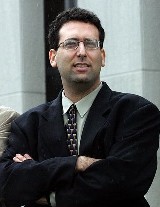
David Borden
- Half a million nonviolent drug offenders clog our prisons and jails. Mandatory minimum sentences, and inflexible sentencing guidelines, condemn numerous low-level offenders to years, even decades behind bars, often based solely on the word of compensated, confidential informants. With two million people behind bars, the US leads the world in incarceration, at a level radically beyond any time in our history before a quarter century ago.
- Prohibition creates a lucrative black market that causes violence and disorder, particularly in our inner cities, and lures young people into lives of crime. Laws criminalizing syringe possession, and the overall milieu of underground drug use and sales, encourage needle sharing and increase the spread of HIV and Hepatitis C. Thousands of Americans die from drug overdoses or poisonings by adulterants every year, most of their deaths preventable through the quality-controlled market that would exist if drugs were legal.
- Our drug war in the Andes fuels a continuing civil war in Colombia, with prohibition-generated illicit drug profits enabling its escalation. Opium growing, and attempts to stop it, both hurt Afghanistan's attempts at nation building and help our enemies.
- Patients needing medical marijuana, and the people who provide it to them, go without or live in fear of arrest and prosecution. Physicians' fears of running afoul of law enforcers causes large numbers of Americans who need opiates for chronic pain to go un- or under-treated.
- Profiling assaults the dignity of members of our minority groups, and of the poor, denying them equal justice.
- From drug testing in our schools, to SWAT teams invading our homes, privacy has been gutted.
- Ethics in our criminal justice system are virtually the exception rather than the rule, with perjury, violations of constitutional rights, corruption and general misconduct endemic and largely tolerated -- all of it driven by the drug war.
- Frustration over the failure of the drug war, together with the lack of dialogue on prohibition, distorts the policymaking process, leading to ever more intrusive governmental interventions and ever greater dilution of the core American values of freedom, privacy and fairness.
And that isn't even all of it, and it isn't a pretty picture. And so we oppose the drug laws -- so we fight for an end to prohibition, for legalization -- because of the harm and the injustice that prohibition is inflicting on so many different people in so many ways. And because we understand that freedom is not just the right to control our bodies and what we put in them, even though that ought to be enough. Because freedom is the right for all people on this earth, not having infringed the freedom of others, to walk down the street, to go about their business, to live as they choose not confined to a prison cell just because their personal behavior was not officially approved.
And so for so many reasons that I almost don't know where to start -- to save the lives of the addicted, so patients can be treated, for privacy, for peace, for safety, to restore ethics to government, to end the injustices large and small -- for all these reasons and more, we seek to end drug prohibition. Our views are correct, our cause is just, and we fight for it to make this a better world for all.
This work by StoptheDrugWar.org is licensed under Creative Commons Attribution-ShareAlike 4.0 International


Comments
Great summary...how do I Digg this?
Great stuff and very concise especially that last paragraph.
How can I Digg this editorial?
In reply to Great summary...how do I Digg this? by Anonymous (not verified)
Digg
Thanks for asking! You have brought to my attention the fact that while we have Digg buttons on all our blog posts, these Chronicle articles do not have them. I will put that on the list for our next round of web site work. In the meanwhile, if anyone knows if pages without Digg buttons on them can be "dug" in some way, let us know.
David Borden, Executive Director
StoptheDrugWar.org: the Drug Reform Coordination Network
Washington, DC
http://stopthedrugwar.org
Inspiring!
Yes Dave, That was very inspiring. A perverted morality has us where we are. It's everyone's moral duty to oppose drug prohibition.
Perfectly concise.
This is so right on the money, some of the best concise explanations for ending the drug war I've ever seen.
Fantastic Information
I always say, "The drug war causes more crime than what is was meant to stop."
Please, everyone get involved in this effort!
In reply to Fantastic Information by Anonymous (not verified)
Re Fantastic Information
It is not only the Drug War which causes more crime than it is supposed to stop.
The plethora of unneccessary driving offences causes many crimes to be committed.
Yeah, right on
I agree very much with the list presented here.
Before I took the wider view to legalize all drugs I made this list just for cannabis:
1. Democratic values of freedom are more important than the risks involving use
2. Prohibition discriminates against minorities
3. Prohibition damages exceed those of the drugs in themselves
4. The eradication strategy doesn't work
5. Legalization is a condition for constructive solutions.
(Ironically, adding heroin and similar drugs to the list have, paradoxically, made my conviction stronger - because the REAL dangers are found among the drugs that kill you. Unclean cannabis is just a nuisance and a minor irritation on the lungs, but unclean heroin will kill you, and then it's suddenly not so innocent to "oppose drugs".)
Besides this somewhat older list I also wanted to bring attention to something a lot of people don't realize: that the UN Single Convention on Narcotic Drugs, 1961, has a hard-coded ideological slant that simply CUTS OFF certain solutions no matter how effective they may be.
As an example the UN International Narcotics Control Board (INCB) has frequently opposed "fixing rooms", ie. facilities manned by skilled personnel that can help the addicts get clean, sterile equipment, tend their wounds and see to it that they don't overdose. To create such a fixing room is, in fact, a violation of our international obligations.
The horror is two-fold. Not only does the UN oppose such fixing rooms (and many other things), and as a result they actually prohibit solutions that could be effective in reducing harms to our citizenry. But in addition a strict adherence to the UN convention would actually PREVENT proper scientific inquiry into harm reduction approaches. In my country, Denmark, I have a word for it: Danish Sharia. Yes, that's right: this is pure faith based morals that have been codified into Law, and just like in the Middle Ages those rules trump rational, pragmatic solutions.
This unreason needs to end.
UN Single Convention on Narcotic Drugs:
http://www.incb.org/incb/convention_1961.html
Criminalization of Americans with disabilities
I began using stimulants in my early teens, finding speed was a stroke of luck. For reasons unknown to myself at that time, I was failing school, too tired to socialize, and gaining a reputation as a delinquent from parents and teachers. After taking my brothers Ritalin, I became a straight "A" student, was socially outgoing, and considered a model example of responsiblity. The change occurred literally over night. Because of the social stigma, I kept my drug use a secret from everyone. During the following 15 years I graduated at the top of my class and achieved personal and financial success. I married, had two children, and established myself as a business owner. My husband was the only person who knew the extent of my drug use, because I purchased the drugs I needed from him. We built a lovely family together, and became financially secure.
The marraige ended badly, and my enraged husband set out to destroy me. It was only then that I began to understand my drug use would end up being his most effective and deadly weapon. To make a long story short, I was slandered professionally, he obtained full custody of our children, and with the help of the courts, I was destroyed in every sense of the word. California's "no fault", "50/50 split of marital assetts", was a joke manipulated by the Judge, and delayed or postponed to draw the whole affair out to 18 years. When my husband refused to pay the ridiculous pittance ordered by the Judge, we returned to court only to have the same Judge amend his own order. Labeled a "drug addict", I got what was coming to me. During this time I worked jobs that didn't drug test and managed to get on with my life. Several times I attempted to stop my drug use, each time ended with the same conclusion. Without stimulants I couldn't wake up.
Between the years of 1998 and 2001, I was arrested and charged with three drug felonys. I was a confidential informant magnet. Rather than go to work for Law Enforcement, I went to prison, and everything else that choice entails. I was released in 2003 and my youngest son moved in with me after 10 years apart. To my utter dismay, I began to recognize that he was trying to cope with the same hypersomnia and fatigue symptoms. After asking the Parole department for help to determine the meaning of our symptoms, and being denied any assistance, I searched the internet for answers. Narcolepsy was the best fit. The symptoms my son and I have are much more subtle than what is most often described, but after paying the ridiculously pricey diagnostic test, we were both diagnosed.
After the diagnosis, I expected people in Law Enforcement to show some kind of curiousity, questions, some kind of interest in what I then assumed was an unusual situation. I was released from parole within the week, over the phone. After researching the statistics on Narcolepsy, having personal knowledge of a Narcoleptics attraction to illicit methamphetamine, and my personal certainty there are many others trapped in the system: these facts speak volumes about Law Enforcements refusal to acknowledge the possibilities. I have written letters, personally spoke to Public Defenders, and various members of Law Enforcement, alerting them to this huge flaw in reasoning, and educating them of the legitimate medical use of Methamphetamine. They can't seem to get past thier own misinformation.
I wish I could say that since diagnosis my life has become a higher functioning existance than what I had before. That I can now legally obtain the drug that allows me to lead a normal life. Unfortunately the truth is just the opposite. My Doctor's view me with suspicion and will only prescribe the lowest dose of stimulants. Rather than prescribe patients the amount of medication they need to acheive normal wakefulness, they are expecting patients to get by on the lowest dose possible. Though Desoxyn has historically proved to be the most effective stimulant-with the fewest side effects, it is rarely prescribed.
Physicians have been contacted by DEA or State Attorney Generals offices and informed that they are prescribing controlled substances to a person of "high abuse potential". Physicians are intimidated and avoid prescribing drugs that might draw DEA attention, or for amounts that DEA will investigate. Despite everything I have endured, and that I have followed procedures as instructed, I still walk away feeling the same stigma. I have a verifiable diagnosis for Narcolepsy and my government stands in my way of obtaining adequate treatment. There is no cure, it is life long, and If I can get a prescription, it will only cover 30 days.
If I get frustrated with the options allowed me, and I once again take matters into my own hands, I will certainly be prosecuted to the full extent of the law.
Add new comment