A school in Colonia San Antonio was supposedly torched because school staff refused demands for payment made by drug gang extortionists. Classes were canceled indefinitely.
Across the border from El Paso, Texas, a mass exodus triggered by a murderous prohibitionist war for drug trafficking routes into the United States has left huge swaths of Ciudad Juarez uninhabited, rocking Mexican home builders and gutting the large industrial city of its upwardly mobile working class. Residents are fleeing many towns along the Mexican border, but the migration is perhaps most acutely felt in Juarez, which until recently was among Mexico's fastest-growing cities, its industrial jobs attracting immigrants from across the country and Central America.
The bodies of 31-year-old Camerino F. Corral and 27-year-old Lorenzo Renteria, both of Deming, New Mexico, were among 20 victims found in a mass grave in drug prohibition war-plagued Mexico.
WikiLeaks cables show the US has lost confidence in the Mexican army's ability to win the country's prohibitionist drug war, branding it slow, clumsy and no match for "sophisticated" narco-traffickers. Classified diplomatic information released by WikiLeaks also reveals a growing sense of alarm within Mexico's government that time is running out in the battle against organized crime and that it could "lose" entire regions. The memos detail blunders in the fight against drug traffickers and a desperate search for a new strategy to save President Felipe Calderón's administration from a bloodsoaked fiasco.
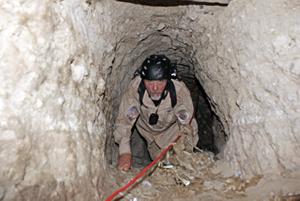
just another drug smuggling tunnel -- how many more?
Hermila Garcia, 38, who became the top law enforcement officer in the town of Meoqui only two months ago, was killed as she drove to work. Her death has left some wondering if it wasn't a warning from the drug traffickers to other women, like Marisol Valles Garcia, 20, a student who became police chief of Praxedis, in the Juarez valley, also in the state of Chihuahua, home to Ciudad Juarez, Mexico's most violent drug war city.
An Associated Press investigation casts doubt on whether the crackdown on the Sinaloa Drug Trafficking Organization caused any significant impact. It still ranks near the top of Mexico's drug gangs, most of those arrested were underlings who were swiftly replaced, and the leader remains free, along with his top commanders. The findings confirm what many critics of the prohibitionist drug war have said for years: The government is quick to boast about large arrests or drug seizures, but many of its most-publicized efforts result in little, if any, slowdown in the drug trade.
It is unlikely the arrest of the suspected leader of the Aztecas gang over the weekend will end the bloodshed in Juárez, says George W. Grayson, a government professor specializing in Latin America at the College of William and Mary in Williamsburg, Virginia.
The Mexican army discovered several clandestine graves holding at least 20 bodies near a ranch in the northern border state of Chihuahua. The bodies had been buried between four and eight months and that it had not yet been determined how they were killed because they were badly decomposed.
A four-year army crackdown in Mexico's methamphetamine-producing heartland has provoked a dizzying increase in violence, fueling fears that the country is losing its battle against drug traffickers. Despite heavily armed patrols, hundreds of drug lab busts and thousands of arrests, locals say gangs in the president's home state wield huge power, ramping up drug output while using terror and bribes to control towns mired in poverty. "Crime has only gotten worse. Before, things were calm. Now you don't know what could happen...We are afraid here," said Miriam Ortiz, a 32-year-old teacher.