Scottish Needle Exchange Conference

Scottish Needle Exchange Conference

'Working Together'

Stirling Highland Hotel, Stirling, Scotland 

WEDNESDAY 9TH NOVEMBER


The conference is the inaugural Scottish Needle Exchange Conference held to support the implementation of the first national needle exchange contract.

The primary aim of the conference is to communicate on a Scottish wide basis, trends within the needle exchange arena, and to support best practice, working together.

Visit http://www.snxc.org for further information.

Advocates Hope Ken Burns/ PBS Prohibition Doc Provokes Debate

Drug Policy Alliance

www.drugpolicy.org

For Immediate Release: September 30, 2011
Contact: Tony Newman

New Ken Burns PBS Documentary “Prohibition” to Air October 2nd– 5th

Advocates Hope Spotlight on Failed Alcohol Prohibition Will Provoke Debate on Drug Prohibition, Black Market Violence and the Criminalization of More Than a Hundred Million Americans

The history of our country’s disastrous period of alcohol prohibition will be  broadcast into homes across America this weekend when PBS airs Ken Burns and Lynn Novick’s Prohibition, a three part series on America’s failed “noble experiment” of banning alcohol.

Drug policy advocates are thrilled that filmmakers of the stature of Ken Burns and Lynn Novick have taken on this topic – and hope that the series reminds Americans about the futility of prohibition and its devastating collateral consequences.

“Alcohol prohibition didn’t stop people from drinking any more than drug prohibition stops people from using drugs,” said Tony Newman, director of media relations at the Drug Policy Alliance. “But prohibition did lead to Al Capone and shoot-outs in the streets. It is the same today. It is not the marijuana or coca plants that have caused 50,000 deaths in Mexico over the last 5 years – but because they plants are illegal and thus unregulated, people are willing to kill each other over the profit that can be made from them.”

"Making drugs illegal has created a violent criminal market where cartels battle it out to control territory in much the same way gangsters did during alcohol prohibition," said Neil Franklin, a retired Baltimore narcotics cop and executive director of Law Enforcement Against Prohibition. "The one major difference between the two prohibitions is that we came to grips with the failure of our experiment to ban alcohol after just 13 years, while the 'drug war' that President Nixon declared 40 years ago is still being prosecuted, more harshly and expensively than ever."

“My two sons have struggled with addiction. My family has experienced not only the devastation of this life-threatening disease, but also the destructive effects of punitive prohibitionist policies and incarceration,” said Gretchen Burns Bergman, lead organizer of Moms United to End the War on Drugs. “Mothers were instrumental in ending alcohol prohibition in the 30s, not because they wanted to encourage alcohol use, but because they wanted to end the gangland violence and loss of lives caused by organized crime, fueled by prohibition. Moms are needed to join the movement to end the violence, mass incarceration and overdose deaths that have resulted from prohibition and the failed war on drugs.”
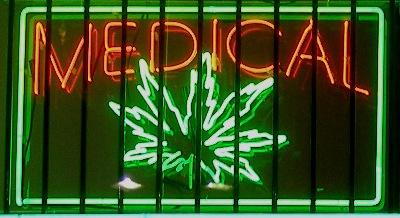
Neighborhoods are safer where dispensaries are open, a RAND study finds. (image via wikimedia.org)

No Evidence Medical Marijuana Dispensaries Cause Crime, RAND Study Finds

A study of medical marijuana in Los Angeles found that when dispensaries were shut down, crime went up. The results are preliminary, but suggest law enforcement has constructed a bogeyman argument about crime and dispensaries.
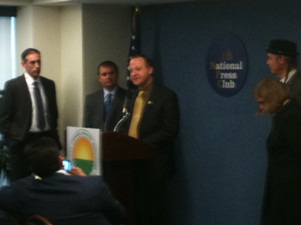
Rep. Jared Polis at National Cannabis Industry Association press conference, April 2011

Marijuana Dispensaries Are Buying Safes to Store Cash After Feds Scare Away Banks

[image:1 align:right caption:true]We've reported this year on moves taken by the feds this year in California and Colorado putting

Only One Month Left Until Drug Policy Reform Conference


The Reform Conference is just a month away – have you secured your spot yet?

Click here to register to attend.

If you haven’t, you should soon. Booking your travel a month out will save you money. And you won’t want to miss what former New Mexico Governor Gary Johnson and current California Lieutenant Governor Gavin Newsom have to say at the Opening Plenary!

The rest of the conference program is packed full with trainings, roundtable discussions addressing controversies within the movement, and panels exploring and sharing innovative approaches to reform challenges. Thursday evening you can stand up for justice at the No More Drug War rally at nearby MacArthur Park, hosted by dozens of local California organizations and emceed by KPFK radio personality Lalo Alcaraz.

And the activities and highlights don’t stop there…

Very soon we’ll be announcing three special Mobile Workshops – learning sessions that will take a select group of conference-goers out of the hotel and into the local community.

You’re also invited to host informal Community Meetings of your own during the conference. These meetings are meant to be your opportunity to organize reformers around action plans. They take place in open session rooms in the mornings, evenings and at lunch.

What do these Mobile Workshops and Community Meetings have in common? They’re only available to registered conference attendees – and they’ll be limited by space availability!

So register now…and I’ll see you in Los Angeles!

Stefanie Jones
Event Manager
Drug Policy Alliance

New Ken Burns PBS Documentary Brings "Prohibition" Lesson to Modern America

New Ken Burns PBS Documentary Brings "Prohibition" Lesson to Modern America

More Politicians Joining the Call to End "War on Drugs"

Cops Who Fought "Drug War" Say It's Time for Legalization

WASHINGTON, DC -- As more politicians and world leaders declare willingness to consider ending the "war on drugs," a group of law enforcers who fought that war says a new Ken Burns PBS documentary about alcohol prohibition premiering Sunday provides an important lesson for today's prohibition on marijuana and other illegal drugs. 

"Does anyone think making the dangerous drug alcohol illegal actually decreased the harm associated with its use, abuse and distribution?" asked Neill Franklin, a retired Baltimore narcotics cop who now heads up Law Enforcement Against Prohibition (LEAP). "Just as then, today's prohibition on drugs doesn't accomplish much to reduce harmful use and only serves to create gruesome violence in the market where none would exist under noncriminal regulation. Legalizing these drugs will make our streets safer by reducing the crime and violence associated with their trade, just as when we re-legalized alcohol."

Many current and former elected officials are calling for a re-evaluation of the "war on drugs" and a growing number are even suggesting that marijuana and other drugs should be legalized. For example, last month, Mexican President Felipe Calderon made headlines by saying - in light of an uptick in cartel attacks - that the U.S. should look at "market alternatives" for drug supply if demand can't be reduced.

Advocates are pointing out the parallels between the repeal of alcohol prohibition and today's debate about ending the "war on drugs." For example, one factor that led to the demise of alcohol prohibition was its enormous pricetag for taxpayers during the Great Depression. Today's rough economic climate is leading more politicians to criticize the growing cost of the "war on drugs."

LEAP's Franklin said, "The one major difference between the two prohibitions is that our wise grandparents came to grips with the failure of their experiment to ban alcohol after just 13 years, while the 'drug war' that President Nixon declared 40 years ago is still being prosecuted, more harshly and expensively than ever. It's about time more of our political leaders start to think about an exit strategy."

Other influential leaders and groups recently issuing calls to move away from prohibitionist drug policies include the NAACP, former U.S. President Jimmy Carter, former U.N. Secretary General Kofi Annan, former U.S. Secretary of State George Shultz, former U.S. Federal Reserve Chairman Paul Volcker, the Washington State Democratic Central Committee and the UK's Liberal Democrat Party.


Law Enforcement Against Prohibition (LEAP) represents police, prosecutors, judges, FBI/DEA agents and others who want to legalize and regulate drugs after fighting on the front lines of the "war on drugs" and learning firsthand that prohibition only serves to worsen addiction and violence. More info at http://www.CopsSayLegalizeDrugs.com.

#        #        #

FOR IMMEDIATE RELEASE: September 29, 2011

CONTACT: Tom Angell - [email protected]