How Bush's Drug Czar Fooled the Media and the American People
Remember back in 2007 when Bush's drug czar John Walters announced that cocaine prices were spiking and proceeded to do a proud drug war victory dance in newspapers nationwide? It was the high-water mark of his tenure in terms of positive press for the national drug strategy he'd championed shamelessly since taking office in late 2001. If drug prices were increasing, his argument claimed, then our campaign to rid the nation of drugs must be on the right track and our arsenal of brutal drug war tactics was being vindicated for all to see.
 | |
I recommend reading Grim's account to understand how badly Walters manipulated the data to make his case, but what I find most troubling in all of this is the role of the press in enabling such a transparent and self-serving deception. This is the story of a man who had already jettisoned all credibility through an endless series of similarly dubious pronouncements. ONDCP's bogus theatrics were sufficiently notorious by this point that even the conservative Washington Times balked at the opportunity to break the story of the Bush Administration's self-proclaimed surprise victory in the war on drugs.
It was Donna Leinwand at USA Today who gave Walters a podium from which to deceive the American public about the success of his policies. Drug policy was â and remains â Leinwand's beat at USA Today, thus she could easily have included a counterpoint in her coverage from one of the many experts that would gladly take her call. Instead, she uncritically passed along the claims of a notoriously deceitful propagandist to the American public, igniting a firestorm of press coverage that fraudulently propped up the drug czar's political agenda.
If there's a lesson to be learned from all this, it seems not to have sunk in yet. Only a month ago, Leinwand was still promoting misleading claims about the success of the war on cocaine. It is, of course, perfectly appropriate to quote the leaders of the worldwide war on drugs as they endeavor desperately and predictably to highlight any and all miniscule data points that favor their fixations. But that should only be half the story. If you base an entire news report on something a drug war cheerleader told you, then your story wonât be true and the public that relies upon you for drug policy news will end up understanding less about the issue than if they'd never read your article to begin with.
Ironically, widespread disgust with John Walters and the entrenched drug warrior mentality he represented has likely helped set the stage for the present political climate in which the drug policy debate has finally gone mainstream. The case for reform is at long last embraced and amplified by the same media that once ignored it at every turn. Prominent journalists themselves are speaking out and saying things that used to be off-limits.
Still, all those who rejoice at the impending collapse of the great drug war juggernaut should not lose sight of the fact that only 2 years ago, a single man was able to freeze time with a simple lie.
Breaking: House Subcommittee Votes to Reduce Crack Cocaine Penalties to Powder Cocaine Level
 | |
lead sponsor and long-time champion for criminal justice reform |
The bill would remove references to "cocaine base" from the US Code, effectively treating all cocaine, including crack, the same for sentencing purposes. Original cosponsors of the bill include all Democratic members of the subcommittee and the sponsors of all other Democratic bills that address the cocaine sentencing disparity.Click here for the full press release. Exciting times -- as I noted a few minutes ago when writing about another good vote that took place in Congress yesterday, eliminating the loss of financial aid penalty that exists for students convicted of drug possession. That one was part of a larger, high-priority bill that that committee is now sending to the full House of Representatives. Whether this standalone bill, coming out of a subcommittee, will get to that level is less certain. However, the chairman of the Judiciary Committee, John Conyers (D-MI), is an ardent supporter, and the bill passed the subcommittee unanimously, meaning the Republicans on the subcommittee must have voted for it too. (The roll call isn't online yet.) So it is very encouraging nonetheless.
Breaking: House Committee Votes to Eliminate Financial Aid Loss Penalty for Drug Possessors
Read about the partial repeal of Souder's law included in their student loans bill by the House Education and Labor Committee -- of which Souder is a member -- in Souder's hometown newspaper.
This is the third time Congress has moved to scale the law back -- the first two times Souder supported the changes, this time he didn't. Of course this is just one stage of the process, but leadership wouldn't have moved it forward if they didn't think they could make it stick.
We've been working on this issue since 1999 when the law first passed. Exciting times. The work will go on, or course, to fully repeal the law for everyone. Look for more news on this soon.
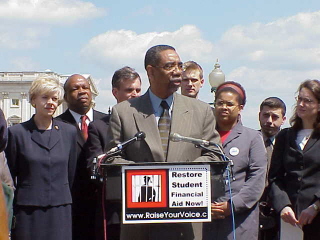
press conference we organized on this issue in 2002, for the
Coalition for Higher Education Act Reform, attended by ten
members of Congress
press conference we organized on this issue in 2002, for the
Coalition for Higher Education Act Reform, attended by ten
members of Congress
Tax Us: Oakland Voters Approve Medical Marijuana Dispensary Tax -- Dispensaries Supported It
Drug War Chronicle
Voters in Oakland, California, approved by a wide margin a measure to tax medical marijuana sold at the city's four dispensaries. The measure is the first in the country to impose a special tax on medical marijuana.
The special tax was supported by the city's medical marijuana community, led by Oaksterdam University head and Coffeeshop Blue Sky owner Richard Lee. Lee and other supporters, including city council members, said the dispensaries wanted to do their part to help the city during economic hard times.
The all mail-in vote took place during the one-month period beginning June 22, and the votes were being counted Tuesday night. According to the Alameda County Registrar of Voters, as of 8:00pm Tuesday, the ballot measure, known as Measure F, was winning with 79.9% of the vote.
The measure creates a special business tax rate on dispensaries of $18 for every $1,000 in gross sales and is expected to generate hundreds of thousands of dollars a year for the city. Currently, the dispensaries are paying the same business tax rate as any other retail business in the city, $1.20 per $1,000. The measure will take effect on January 1.
The measure was part of a package of revenue measures before Oakland voters. All passed, but none by as large a margin as Measure F. That's just the latest sign of acceptance of marijuana in a very pot-friendly city. In 2004, voters there approved a measure requiring police to make arresting adults for small-time pot offenses their lowest priority.
 |
|
Apple's New Marijuana Feature for iPhone is a Smart Business Move
The press has been having a field day over a new iPhone application that helps users locate medical marijuana. As if the iPhone needed more product recognition, it is once again the most-discussed commodity on the web thanks to Apple's shrewd decision to approve this unique feature:
The whole thing is just brilliant. They'll sell many thousands of these apps at $2.99 each, not to mention additional iPhone sales resulting from the massive press coverage. Of course, any time a marijuana-related story gets big coverage, you can count on someone in the press to botch the story. This time it was Alex Salkever at Daily Finance, who wrote:
Wait a second. Apple just generated explosive international press for offering an innovative product and here we have a business columnist who thinks it's a mistake? Where is this "backlash" going to come from? If you want a controversy, you're going to have to start it yourself.
Medical marijuana has been legal in California for more than a decade and it's working so well that the Governor is now talking about legalizing marijuana outright. For many years now, the only controversy surrounding medical marijuana has been the DEA's widely unpopular interference with it, and President Obama has drawn nothing but praise for putting a stop to that.
Ironically, Salkever's analysis isn't just wrong, it's really the perfect opposite of what's going to happen here. Apple is doing this precisely because it's a good business strategy to reach out to marijuana culture and especially legal patients. Fears of "backlash" are what led Kellogg's to drop Michael Phelps and they got crucified for it, which is exactly what would have happened to Apple if they blocked services for medical marijuana patients.
Here's how it works. The application displays an interactive map dotted with doctors who can prescribe medicinal marijuana treatment for their patients.
It also shows -- after, presumably, users have procured prescriptions -- the medicinal marijuana suppliers within the users' vicinity. And, what's more, the application includes a database of lawyers who specialize in marijuana-related cases, in [case] should users encounter skeptical local authorities. [ABC News]
The whole thing is just brilliant. They'll sell many thousands of these apps at $2.99 each, not to mention additional iPhone sales resulting from the massive press coverage. Of course, any time a marijuana-related story gets big coverage, you can count on someone in the press to botch the story. This time it was Alex Salkever at Daily Finance, who wrote:
I expect a backlash will hit Apple for having greenlighted Cannabis. Legalization opponents call marijuana a gateway drug that leads users to harder narcotic substances.
Wait a second. Apple just generated explosive international press for offering an innovative product and here we have a business columnist who thinks it's a mistake? Where is this "backlash" going to come from? If you want a controversy, you're going to have to start it yourself.
Medical marijuana has been legal in California for more than a decade and it's working so well that the Governor is now talking about legalizing marijuana outright. For many years now, the only controversy surrounding medical marijuana has been the DEA's widely unpopular interference with it, and President Obama has drawn nothing but praise for putting a stop to that.
Ironically, Salkever's analysis isn't just wrong, it's really the perfect opposite of what's going to happen here. Apple is doing this precisely because it's a good business strategy to reach out to marijuana culture and especially legal patients. Fears of "backlash" are what led Kellogg's to drop Michael Phelps and they got crucified for it, which is exactly what would have happened to Apple if they blocked services for medical marijuana patients.
Patients Defeat Effort to Restrict Medical Marijuana in Colorado
special to Drug War Chronicle
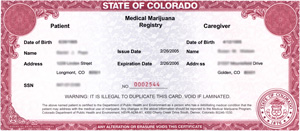
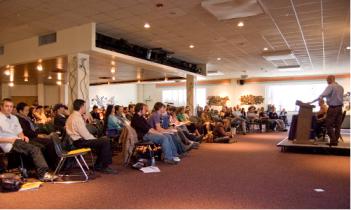
Monday night, Colorado's rapidly increasing number of medical marijuana patients and burgeoning medical marijuana industry won a major victory against state regulators trying to cramp their style -- and fiddle with a medical marijuana law written into the state constitution by voter initiative nine years ago. After a marathon public hearing packed with nearly 400 medical marijuana supporters, the Colorado Board of Health rejected a controversial proposal from the state Department of Public Health and Environment that would have tightened up the definition of a caregiver and would have limited caregivers to providing for no more than five patients.
The vote comes on the heels of Rhode Island legislation establishing a dispensary system, the third state in the nation to legislatively approve dispensaries, and the first on the east coast. Rhode Island's legislature overrode a veto by Gov. Donald Carcieri (R) to pass the law, which they did 35-3 in the Senate and 67-0 in the House.
"It's a great win for Colorado," said a tired but elated Brian Vicente Tuesday morning. "We took on the machine and won."
Vicente is head of Sensible Colorado, which worked with Colorado NORML, SAFER, the Marijuana Policy Project, and Americans for Safe Access to spearhead the campaign to keep the Colorado program intact.
The Board of Health was originally scheduled to vote on the proposal in February, but was forced to postpone the vote until it could find a venue large enough to accommodate the hundreds of people who wanted to have their voices heard during a public hearing. A 2004 effort by the Board of Health to impose similar restrictions was thrown out by the courts because it held no public hearing then.
"The health department seems to be a glutton for punishment," said Vicente. "This is the second time we've beaten them on this issue. I'm fairly confident this will keep them quiet for awhile."
Between February and now, the state's medical marijuana program has gone into overdrive. The number of patients is increasingly dramatically, with some 2,000 patients added in June, bringing the state's total to more than 9,000. And with the change of administrations in Washington, dispensaries have begun proliferating. There are now nearly 40, most of them in the Denver metro area. Nearly 600 different physicians have issued recommendations for medical marijuana.
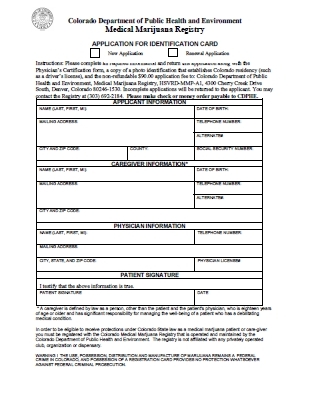
Two provisions of the health department proposal earned the most denunciations from patients and providers: One would tighten the definition of who qualifies as a licensed caregiver; the other would limit the number of patients a caregiver can provide for to five. There is currently no limit on the number of patients a caregiver can grow or otherwise provide for.
Supporters of the proposal -- basically limited to police, prosecutors, and the state's chief medical officer -- told the Board of Health Monday that the current situation, which sets no limits on the number of people for whom caregivers can provide, was susceptible to fraud and caused confusion over who could legally grow.
Dr. Ned Calonge, the chief medical officer, warned that the medical marijuana program will "continue to grow out of control" unless the restrictive rules were adopted. The 2000 initiative defines caregivers as people who have a "significant responsibility for managing the well-being of a patient," he said, adding that he did not think that allowed for the creation of dispensaries.
Capping the number of patients a caregiver could provide for at five was reasonable, Calonge said. "We define a primary caregiver as significantly participating in a patient's everyday care," he said. "If those caregivers are making home visits to each patient, considering travel time, they could visit five patients a day. We believe we have ample precedent and supportive evidence for this number," he said.
Denver Assistant District Attorney Helen Morgan told the board some counties aren't prosecuting marijuana grows because of confusion over who is allowed to grow medical marijuana. She also said that authorities in Denver have found large marijuana grows whose operators claim to be providing medical marijuana.
That claim was echoed by Holly Dodge, deputy district attorney for El Paso County, who spoke on behalf of the Colorado District Attorney's Council. "There is no way of appropriately protecting a patient when they have a caregiver with 300 other patients," she said. "That's not caregiving, that's marijuana growing."
But Calonge, Dodge, and Morgan were definitely in the minority, with the sometimes raucous crowd hissing and booing their comments. For most of the day, the board heard from patient after patient, as well as caregivers, dispensary operators, and doctors, that the system was working just fine as it is. The board was also clearly warned that it would be slapped with an already prepared lawsuit today if it voted to adopt the restrictive proposal.
One physician opposing the restrictive proposal was Dr. Paul Bregman, who warned it would drive patients to the streets in search of their medicine. "More regulation drives people to the black market, and that means patient care suffers," said Bregman.
Damien LaGoy told the board he smokes marijuana to counter the side effects, including nausea, of his daily doses of HIV medication. He gets his medicine from a caregiver who serves nine people, he said, adding that if couldn't use that caregiver he would be forced to trawl Colfax Avenue in search of street dealers. "I might as well not have a license and just go buy it on the street like everyone else," he said.
Dispensary operator Jim Bent told the board the proposal threatened patient health and treated marijuana dispensaries unfairly. "If this law passes, patients will lose their access to safe medicine and some will die," he said. "Please be compassionate." Bent also rejected any limits on the number of patients a dispensary can handle. "I'd like to be under the same standards as Walgreens or a Wal-Mart pharmacy," he said.
Former Denver senior deputy district attorney Lauren Davis told the board the proposal would not address law enforcement concerns raised earlier in the day and could even be counterproductive. "Limiting caregivers will increase the number of small-grower operations," she said.
At the end of the day, the Board of Health agreed with opponents of the rule change. It voted 6-3 to reject the proposal.
"They received more emails and written comments on this than they had on any issue in history," said Vicente. "They had hundreds of people show up to testify against this. They heard from an impressive array of experts, doctors, lawyers, writers of the law, sick patients, and caregivers. The board listened."
 |
|
 | |
(courtesy Cannabis Culture Magazine) |
 |
|
organized by SAFER, November 2008 |