Latest

Chronicle

Plan Colombia: Ten Years Later

Ten years ago this week, President Bill Clinton signed off on the first $1.3 billion installment of Plan Colombia. A decade later, how is that working out? We ask the experts.
Blog

RAND's Research on Marijuana Legalization is Questionable

Confusion abounds following last week's release of a RAND study on the ramifications of legal marijuana in California. In particular, RAND's discussion of rock-bottom prices has growers panicking and the suggestion that use could increase dramatically has opponents chomping at the bit. But, as Pete Guither helpfully explains, the whole thing is just a bunch of wild speculation.

Just look what passes for scientific analysis at RAND when it comes to marijuana legalization:


However, a simple calculation suggests that, if someone believes that marijuana is causally responsible for many crashes that involve marijuana using drivers, legalization’s effect on crashes could be a first-order concern for them. [...]

There is no empirical evidence concerning an elasticity of fatal accident rates with respect to marijuana price, prevalence, or quantity consumed, and, as we have underscored repeatedly, there is enormous uncertainty concerning how legalization might affect those outcomes.

However, 50- or 100-percent increases in use cannot be ruled out; nor can the possibility that marijuana-involved traffic crashes would increase proportionally with use. So it would be hard to dismiss out of hand worries that marijuana legalization could increase traffic fatalities by at least 60 per year…


Nor can we entirely rule out the possibility that legalizing marijuana could somehow cause the earth to stop spinning on its axis, resulting in the incineration of a hundred nations, while others are left buried beneath sheets of ice.

I'm exaggerating, but the point is that when RAND says legalization might double marijuana use and lower the ounce price to $38, they're just babbling because the media is stupid enough to listen. Even RAND admits that their analysis is subject to so many intangible variables as to render futile any effort to quantify legalization's practical impact. The problem is that they went ahead and proceeded to announce various arbitrary computations that sound provocative and mean absolutely nothing.

So, for what it's worth, let's just establish a couple principles that might help sort out some of the confusion here:

1. Marijuana will never cost $38 per ounce in California as long as it remains illegal everywhere else and sells for up to $500. Prop 215 didn't reduce prices by 80% and neither will Prop 19.

2. Marijuana is already way too available in California for any policy change to dramatically impact rates of use. No one is sitting around in Los Angeles waiting for legalization so that they can find a way to buy some weed.

3. If marijuana were a significant cause of traffic fatalities, California's highways would already be stained with blood. See point #2.

Update: Dave Borden has convinced me that I've been at least somewhat unfair to RAND, insofar as a big part of my frustration here results from the way the media presented the research. It's true that the study's authors were careful to explain that there remains considerable uncertainty about the practical impact of legalization. There are issues that I think could have been handled much better, but I wouldn't want to set a standard that prohibits inquiry, simply because so much remains unclear.

In The Trenches

Vienna Declaration Update: Number of endorsements

Dear friends,

Thank you for endorsing the Vienna Declaration.
Joining your ranks are over 5000 individuals, among them ex-presidents, Nobel Laureates, literary icons, police officers, current and former drug users and many, many others who believe drug policy should be based on evidence, not ideology.

This Saturday, to celebrate our success so far, the President of the International AIDS society (IAS) will be releasing the exact number of declaration endorsements at the opening of the International AIDS Conference, the largest public health conference on the planet. To help the IAS President make it clear that illicit drug policies causing disease, violence, and crime will not be tolerated by the international community we're asking each signatory to bring on four more endorsements.

Will you help us?

There are three easy ways you can encourage your friends to sign the Vienna Declaration online, right now:

1. Email them. Send them a pre-written email with our easy-to-use
Tell-A-Friend tool or share this shortened link to our site: http://bit.ly/signtheviennadeclaration.

2. Facebook and Twitter. Invite your friends to fan us on Facebook or follow us on Twitter to get daily updates and learn more about why they should sign the Declaration.

3. Blog or post a link. Visit the
media section of our site for all the information you need to blog about the Vienna declaration. You can also email us at [email protected] if you would like a badge to post to your site.

Every endorsement counts so please, continue spreading the word and help us make this Saturday's announcement a powerful one.

Thank you for your continued support,

The Vienna Declaration Team


In The Trenches

Second Chance Conference Website Released


Justice Center

July 14, 2010

Making Second Chances Work
Conference Website Released

The National Reentry Resource Center, with support from the Bureau of Justice Assistance, U.S. Department of Justice, has launched the Making Second Chances Work conference website. Conference participants and others interested in reentry can view the videotaped sessions with experts and download materials used during the conference on some of the most pressing issues facing the field.

Making Second Chances Work: A Conference for Grantees Committed to Successful Reentry was held May 26-27, in Washington, D.C. It brought together 2009 Second Chance Act grantee representatives. Individuals from state and local governments, community and faith-based organizations, and federally recognized Indian tribes participated in two days of meetings with experts in the fields of housing, employment, mental health and substance abuse treatment, community supervision, and other areas important to people transitioning from prison or jail to the community.

Many sessions focused on grantees making the most of the federal investment in their programs by highlighting accountability issues and key practices such as assessing an individual's risk for committing future crimes, designing data-driven programs, and effectively allocating the limited resources available for people returning from prisons and jails. Special attention was dedicated to sharing strategies on meeting the distinct needs of youth returning to schools and families from detention in a secure facility in an effort to interrupt the costly cycle of crime and incarceration.

To visit the website, please click here.

If you have any questions, please contact Shawn Rogers at 646.383.5745 or by e-mail at [email protected].


The National Reentry Resource Center (NRRC) provides education, training, and technical assistance to states, tribes, territories, local governments, service providers, nonprofit organizations, and corrections institutions working on prisoner reentry. The NRRC is coordinated by the Council of State Governments (CSG) Justice Center, with support from the Bureau of Justice Assistance, U.S. Department of Justice (www.ojp.usdoj.gov/BJA). For more information, visit http://www.nationalreentryresourcecenter.org. For more about the CSG Justice Center, see http://www.justicecenter.csg.org.

The NRRC was established by the Second Chance Act (Public Law 110-199), which was signed into law on April 9, 2008. The Act was designed to improve outcomes for people returning to communities from prisons and jails. This first-of-its-kind legislation authorizes federal grants to government agencies and nonprofit organizations to provide employment assistance, substance abuse treatment, housing, family programming, mentoring, victims support, and other services that can help reduce recidivism. For more information about the Act, see http://www.nationalreentryresourcecenter.org/about/second-chance-act.

The NRRC's work also is directed by the Justice Center's key project partners: the Urban Institute; Association of State Correctional Administrators; American Probation and Parole Association; and Shay Bilchik, research professor/center director, Georgetown University Public Policy Institute. Additional guidance is provided by advisory committees that include representatives of nearly 100 leading nonprofit organizations and service providers in the reentry field.


Our postal address is
100 Wall St
20th Floor
New York, New York 10005
United States

Chronicle

Do You Read Drug War Chronicle?

Do you read Drug War Chronicle? If so, we need your feedback to evaluate our work and make the case for Drug War Chronicle to funders. We need donations too.
Latest News

Former Leaders Urge Alternatives To 'War On Drugs' In Lead Up To XVIII International AIDS Conference

Drug prohibition leads policymakers to employ a criminal justice paradigm rather than a science-based, public health one when setting drug policy. Authored by an international group of distinguished scientists and experts, the Vienna Declaration highlights the ways that over reliance on drug law enforcement results in a range of health and social harms including growing HIV rates among people who use drugs. It seeks to improve community health and safety by calling for the incorporation of scientific evidence into illicit drug policies.
Latest News

Drug hub Guinea-Bissau awaits first prisons

Drug prohibition results in the corruption of governments, militaries, etc. all over the world. Guinea-Bissau's ailing infrastructure, weak political institutions and powerful and corrupt military has made it a favorite transit country with Latin American drug lords. Drug traffickers bring cocaine through the tiny West African state and smuggle it onwards through local networks to valuable consumer markets in Europe.
Latest News

Officers indicted in scheme to steal and sell drugs

Drug prohibition makes the drug trade extremely lucrative by establishing an extremely overpriced black market, and with it comes the power to corrupt law enforcement. On that note, three Pennsylvania police officers were indicted this week for allegedly being part of a plan to steal heroin from a drug dealer and sell it. You can read all about more about cops corrupted by the drug trade every week in our Drug War Chronicle.
Chronicle

Budget Axe Falls on Stockton Narcs

California's Central Valley city of Stockton has been a poster child for the Great Recession, and now, with layoffs hitting the police department for the second time in two years, the cops have announced they don't have enough manpower to staff their dope squad.
Blog
medical marijuana (courtesy Coaster420 and wikimedia.org)

Greedy Dispensary Owner Opposes Marijuana Legalization

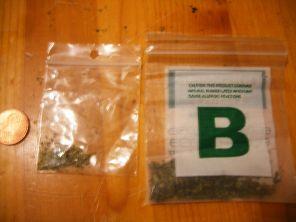
[image:1 align:right caption:true]Via NORML, check out these comments from a medical marijuana businessman who opposes Prop 19:


"I'll give you two reasons," Craig said. "One is big tobacco. Did you know that Phillip Morris just bought 400 acres of land up in Northern California? The minute marijuana becomes legal, they'll mass produce and flood the market. And of course, they'll add the same toxins they put in regular cigarettes to get you addicted, and very little THC, so you'll have to buy more... In short, they're going to ruin weed." He gestured around his beloved shop, with every flavor of every strain, in its purist form, selling for at-cost prices. "I like the way things are now."

I'll bet he does. But while you're making money and having a great time, thousands and thousands of people are being arrested. Conspiracy theories about Phillip Morris don't even begin to justify the war on marijuana, and anyone who advances such mindless speculation – while simultaneously lining their own pockets – is a first-rate jackass.

He even tries to bring children into the debate:


"Two, legalization will mean more fifteen-year-old kids smoking pot. Smoking pot mellows you out, makes you lazy. When you're twenty-one, twenty-five, you can make your own decisions. But California doesn't need its fifteen-year-olds lazier than they already are."

Seriously? Well, let me ask you something, sir. Does your dispensary sell marijuana to 15-year-olds? Do your customers resell your product to young teenagers? I imagine you would insist that this isn't the case, and I can't fathom why you think things would be any different if regulated marijuana retailers were allowed to serve all adults instead of just those with a doctor's recommendation.

Let's not forget: Prop 19 is about so much more than just how marijuana will be grown and distributed. It's about stopping the arrest and persecution of marijuana consumers and reducing the violence and chaos of prohibition. Concerns about how it might affect the market are understandable, but people were nervous about Prop 215 as well, and it's clearly become a miracle for patients and a huge step forward for reform in general.

The bottom line is that anyone who currently sells marijuana in California, medical or otherwise, should be thrilled with the prospect of dramatically reducing arrests for marijuana possession and the vicious consequences that go along with it. All other concerns are secondary to ensuring the freedom of adults to enjoy cannabis without fear of arrest, and Prop 19 will do exactly that. Those who object, those who would fight to continue the war, are enemies of justice. Patients should never purchase medicine from anyone who lobbies to continue the disease of prohibition.

Chronicle
Chronicle
Chronicle
Latest News

High school drug testing shows no long-term effect on use

Drug prohibition has led to such hysteria about drug use that some schools -- thankfully only less than 5% of the total in the U.S. -- drug test students. Drug policy reformers have said for years this plan wouldn't work, and now a U.S. Department of Education study shows that mandatory drug testing for high school students has no effect on teens' plans to use drugs in the future. About one in three students said they "probably" or "definitely" will use drugs in the next year.
Latest News

Wall Street Is Laundering Drug Money And Getting Away With It

Wachovia Bank is accused of laundering $380 billion in Mexican drug cartel money. Internal whistleblowers at Wachovia warned that the bank was laundering drug money, higher-ups at the bank actively looked the other way in order to score bigger profits, and the U.S. government is about to let everyone involved get off scott free. Think about what would happen if you or I were accused of laundering $380 billion in drug money.
Latest News

Science-based drug policies for injecting drug users gain support ahead of Vienna

One of the most damaging consequences of drug prohibition is that scientific approaches to drug policy tend to take a backseat to ideological ones. Ahead of the 18th AIDS meeting, experts from across the world have released the “Vienna Declaration” calling on governments and the UN to promote rational drug policies that promote human rights and public health. “I hope that the Vienna Declaration will inspire many more political leaders to cast aside the drug war rhetoric and embrace evidence-based policies that can meaningfully improve community health and safety,” said Dr. Julio Montaner, president of the International AIDS Society.
Latest News

Court: Michigan medical pot law isn't retroactive

In a blow to seriously ill people who were forced to utilize the black market due to federal drug prohibition, the Michigan appeals court ruled that medical marijuana patients arrested and charged for possessing their medicine prior to Michigan's medical marijuana law taking effect have no protection under the law.
Chronicle
In The Trenches

Tagline Competition

Alert Header 20100713 Tagline


Alert Image 20100713 Tagline

Alert Button 20100713 Tagline

No adult should be punished for choosing something that is safer than alcohol and has widely recognized medical benefits.  But we won’t win the fight for more sane marijuana laws until our elected officials understand how many of you stand beside us in this battle.

Help MPP make marijuana legal for adults by giving us your suggestions for new and innovative slogans and taglines that we may use on our website, merchandise, and printed materials. Submit what you think is the most provocative, motivating, or catchy slogan or tagline for MPP to use in selling its message of reform to the nation.

Prizes

1st place: Vaporbrothers skateboard deck
2nd place: small jar from 420 Science
3rd place: large (10-inch) pouch bag from Dime Bags
(Each of these prizes was donated to us by these companies, in support of our work.)

Contest Rules

* Tagline/slogan submissions should be original creations of no more than 15 words long (generally, the shorter the better)
* Submissions should not include any vulgar or sexual words, or any (other) slang words for marijuana
* Send your submission via email, along with your name, mailing address, and month/year of birth to: [email protected]. (Must be 21 or older to participate.)
* Participation in this contest requires no purchase or donation.
* All submissions must be received by Tuesday, July 20 at 6 pm PST.  The winners will be announced on Tuesday, July 27.
* Click here to see the contest’s official rules on our website.


To contact MPP, please click here or reply to this e-mail. Our mailing address is Marijuana Policy Project, 236 Massachusetts Ave. NE, Suite 400, Washington, D.C. 20002. Any donations you make to MPP may be used for political purposes, such as supporting or opposing candidates for federal office.


Chronicle