Latest
Latest News
Latest News
Blog
Day One at the U.N. Drug Treatment Meeting -- Slightly More Interesting Than Predicted
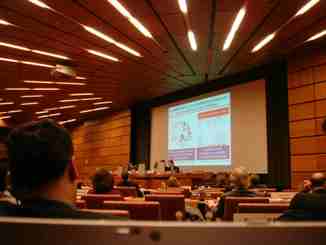
More than 200 people from around the globe have shown up for the first day of this drug treatment meeting at the United Nations Office on Drugs and Crime (UNODC) in Vienna. (If you're just tuning it, it may be helpful to read my first post, from yesterday, where I set the stage for what's to come.) Tantalizingly titled "Technical Seminar on Drug Addiction Prevention and Treatment: from Research to Practice," the tag line at the bottom of the conference program awkwardly hawks "NOTHING LESS than a qualified, systematic, science-based approach such as that used to treat other health conditions" â a fair enough goal. I tell you, the crowd was on tenterhooks for the event to begin.
In truth it was the most subdued, dead crowd ever gathered. Perhaps the most exciting event of the day was kangaroo hotpot on the canteen menu. To be clear, I have less interest in the science on show than on the subtexts of the dialogue and what is said and not said â all with an eye on the Commission on Narcotic Drugs (CND) meeting occurring next March. At that convening, countries will gather to review the last decade of UN-approved international drug policy, set forth at the first United Nations General Assembly Special Session (UNGASS) on Drugs in 1998, and issue a new UN Political Declaration. I suspect that the goings on at this prior conference may offer hints of what's to come.
Antonio Maria Costa, the Executive Director of the UNODC, was in fine fettle opening the event. True to his pompous, unapologetic manner he was disrespectfully late, but his opening remarks were good. He wants the CND/UNGASS process to put increased money into demand reduction in order to put health at the center of the equation and reduce drug related crime. Consequently, Costa called for the rebalancing of drug control (by putting a greater emphasis on health), expressed concern that too little is spent on treating drug addiction, and acknowledged that law enforcement should not be used as an alternative to treatment. Costa also rejects the over-incarceration of drug users (he's been consistent about this).
I'd like to think that Costa's comment re: over incarceration was an unsubtle dig at the US, where 1 in 31 US citizens live under the auspices of the criminal justice system. However, I suspect he's directing his remarks at the world below the equator or at Central Asia. In so many words, he admonished member states for not protecting their drug users and respecting their human rights.
The day went downhill from then on in, as the conference morphed into a showcase for the disconnect between the science around drugs and addiction and the current reality re: which research-based policy recommendations are ever actually applied or funded or prioritized by governmental bodies. Consider the presentation of the keynote speaker, Dr. Nora Volkow, who heads the United States' National Institutes on Drug Abuse. I like Volkow. She cares about people who use drugs, and exudes compassion and even fire when she defends them. Before her presentation, we had a conversation about the federal ban on the funding of syringe exchange, and she expressed real excitement about working for Barack Obama.
Certainly Dr. Volkow's presentation on the science of addiction was well done, and it affirmed much of what has been said for years by those of us who are involved in harm reduction. She ran through her Positron Emission Tomography (PET) Scan studies (they show the effect of drugs on the brain) and noted that there is hope of our someday being able to know in advance who is vulnerable to problematic drug use. In stating that abstinence is 'magical thinking' and addiction has a smorgasbord of serious medical consequences, including hiv/hcv, cancer, and mental illness, associated with it, she laid out a fine argument for embracing harm reduction without connecting the dots of course. She noted that people are people are at risk due to environmental factors.
But looking at the blues, reds and yellows in the dissected brains on show, one would be hard pressed not to consider the color of the person who possessed this brain to begin with and then the hard, cold facts re: the skin color of who actually gets locked up for long periods of time in the US for having what Dr. Volkow was describes as a brain disease. The drug war in the US has disproportionately affected people and communities of color. Looking at the science of addiction doesn't dispel the effects of institutionalized racism. Nor does it reunite families, deliver education, or prevent HIV transmission. Scientific discovery is only the first step; it won't do us much good unless and until it's translated into real world policies and services. Hopefully that's Dr. Nora Volkow's dream under Obama (and Obama's dream as President): to put the theories that come out of what she and her colleagues are learning in the lab into practice.
Most of the rest of the presentations were equally predictable. Drug treatment works. Drug prevention is cost effective. Drug treatment is cost effective. Addiction is a brain disease. Methadone works. Buprenorphine works. And that's all to the good. But will any of the policy recommendations that come out of this research ever actually be applied or funded or prioritized by governmental bodies? Anywhere?
Vladimir Poznyak, from the Department of Mental Health and Substance Abuse at the World Health Organization (WHO), was the first person to bring up harm reduction. Clearly there is some tension between WHO and this UNODC meeting. Given the consistent commitment WHO has expressed for harm reduction, Poznyak pointedly highlighted needle exchange and harm reduction as HIV prevention in a WHO technical manual during his talk.
But for my money the Man of the Day was Ingo Michels from the Ministry of Health in Germany. Michels' presentation, which detailed Germany's comprehensive drug treatment system and included information on safer injection sites, heroin prescription, and drug user organizations, clearly rejected the extent to which harm reduction had remained hidden and unspoken during the first day. It was also the first indication that harm reduction is more than just a means of HIV prevention.
Your intrepid reporter then got the first question in. Prattling on in my usual fashion that is never succinct and always more about making a point rather than asking a simple question, and bearing in mind what I said in yesterday's post about the way in which US governmental representatives at these UN meetings always suppress the extent of harm reduction and needle exchange programs in the US and their success, I went at it. I detailed out the number of needle exchange programs in the US; noted out that the larger programs are federally funded (except for needles); and pointed out that they represent a continuum of care for drug users, act as a safety net for drug users who are "out of treatment," and make referrals to drug treatment. In short, I argued that the UN is cornering itself by limiting harm reduction programs as just an HIV intervention.
Well, that set Michels off. He slammed the US representatives for blocking the UNGASS process and said he hoped the Obama Presidency would mean that there would be a new UNGASS delegation at this March's meeting. (Being fairly new to this process, I think he probably overstepped his bounds. Excellent stuff.) Surprisingly, the conservative panel facilitator, Gilberto Gerra, Chief of Health and Human Development Section of UNODC, also animatedly joined the discussion by saying that UNODC believes that harm reduction should be part of the "comprehensive package."
I'll be damned.
More battle to be joined tomorrow.
Allan Clear is executive director of the Harm Reduction Coalition.
 |
 |
|
|
|
Blog
When it Comes to Marijuana Laws, Obamaâs Website Should be Called Same.gov
Did anyone notice how the marijuana legalization question was ranked #1 on Obamaâs Change.gov site, but he answered the question 4th? Not only did Obamaâs team fail to explain the "no" answer, but they didnât even honor the 1st place popularity rank the question earned when it drew the most votes from the public.
Thereâs nothing surprising about any of this, but it is indeed perfectly emblematic of the profound lack of seriousness with which this issue is treated in our political culture. The marijuana question was answered second to last and received the shortest response of all the questions. Itâs just not something our political leadership wants to talk about. There is scarcely anything less important to them than this and theyâd really appreciate it if we stopped asking about it.
But we wonât stop. Certainly not now. Perhaps we appreciate the symbolism behind Obamaâs Change.gov campaign even more than its authors do. Yes, we surged at the opportunity to push forward ideas long relegated arbitrarily to the political fringe. We seized upon this new venue for unfiltered political dialogue, an entirely unclaimed territory in which we had yet to be told we were unwelcome. We clutched it in our collective fist, squeezed it with all our might, and recoiled in disgust when it squirted us in the eye.
Sure, we got burned, but we saw it coming. They didnât see us coming. They never could have imagined that this experiment with online democracy would find us standing at the front of the line. They shook their heads, sighed and joked that this is what you get when you let the frickinâ internet dictate political priorities.
Well, itâs fine with me if they think that, because theyâre the ones kissing the internetâs ass in the first place. Will they now retreat to the editorial pages and go back to letting the pundits tell them what the people want?
Thereâs nothing surprising about any of this, but it is indeed perfectly emblematic of the profound lack of seriousness with which this issue is treated in our political culture. The marijuana question was answered second to last and received the shortest response of all the questions. Itâs just not something our political leadership wants to talk about. There is scarcely anything less important to them than this and theyâd really appreciate it if we stopped asking about it.
But we wonât stop. Certainly not now. Perhaps we appreciate the symbolism behind Obamaâs Change.gov campaign even more than its authors do. Yes, we surged at the opportunity to push forward ideas long relegated arbitrarily to the political fringe. We seized upon this new venue for unfiltered political dialogue, an entirely unclaimed territory in which we had yet to be told we were unwelcome. We clutched it in our collective fist, squeezed it with all our might, and recoiled in disgust when it squirted us in the eye.
Sure, we got burned, but we saw it coming. They didnât see us coming. They never could have imagined that this experiment with online democracy would find us standing at the front of the line. They shook their heads, sighed and joked that this is what you get when you let the frickinâ internet dictate political priorities.
Well, itâs fine with me if they think that, because theyâre the ones kissing the internetâs ass in the first place. Will they now retreat to the editorial pages and go back to letting the pundits tell them what the people want?
Blog
High School Seniors Are Using Lots of LSD This Year
Jacob Sullum pokes numerous holes in the drug czarâs recent claims of dramatic drug war progress. This in particular jumped out at me:
Be careful out there, kids! Thanks to the total failure of the war on drugs, you are up to your asses in acid and meth, but seriously, do not mix them. It will suck. Youâll get arrested (and probably tasered, too).
See, contrary to the drug czarâs wild accusations, those of us who want to end the drug war have no interest in seeing young people make poor choices. And the fact that Americaâs high schools are overflowing with acid and speed ought to help illustrate why closing the black market is actually a perfectly rational approach to keeping powerful drugs away from our kids.
â¦if Walters wants to take credit for every drop in drug use that occurs on his watch, he'll have to take the blame for the enormous increases in past-month LSD use among high school seniors and past-month methamphetamine use among sophomores, both of which nearly doubled between 2007 and 2008 (hitting a whopping 1.1 percent and 0.7 percent, respectively).
Be careful out there, kids! Thanks to the total failure of the war on drugs, you are up to your asses in acid and meth, but seriously, do not mix them. It will suck. Youâll get arrested (and probably tasered, too).
See, contrary to the drug czarâs wild accusations, those of us who want to end the drug war have no interest in seeing young people make poor choices. And the fact that Americaâs high schools are overflowing with acid and speed ought to help illustrate why closing the black market is actually a perfectly rational approach to keeping powerful drugs away from our kids.
Blog
More on the Ryan Frederick Case
Radley Balko has new details in the case of Ryan Frederick, the Virginia man who was charged with murder for killing a police officer who he mistook for a burglar during a questionable drug raid.
The story just gets more complicated all the time, but if one thing remains clear, itâs that the entire case against Frederick is a sham. The loss of life is regrettable indeed, but it is the result of shoddy drug war policing, not premeditated cop-killing by Frederick.
The story just gets more complicated all the time, but if one thing remains clear, itâs that the entire case against Frederick is a sham. The loss of life is regrettable indeed, but it is the result of shoddy drug war policing, not premeditated cop-killing by Frederick.
Blog
New Jersey Medical Marijuana Bill Gets Favorable Committee Vote
As a native New Jerseyan, I'm pleased to report that a committee of the state senate gave its approval yesterday to the New Jersey Compassionate Use Medical Marijuana Act. One of the cosponsors of the bill, Sen. Loretta Weinberg, even represents my hometown.
The upcoming Drug War Chronicle will have a feature story on the vote, and Phil actually got a preliminary version of that to me last night, so I thought I would make it available here on the blog. The article will be finalized sometime Thursday, but in the meanwhile you can read it here.
Latest News
Blog
Why Should You or Anyone Care About This Week's U.N. Anti-Drug Meeting?
What's on in Vienna this week? Oh it's the "The Technical Seminar on Drug Addiction Prevention and Treatment: From Research to Practice."
What on earth can be the reason for holding a drug treatment meeting at the United Nations Office on Drugs and Crime (UNODC) in Vienna right before the holidays? Alas, I'm not familiar enough with local tradition to know whether it's as customary as a carol service or just another of the Bush Administration's dying groans â a last-ditch effort to spend down its budget or influence UN drug policy.
There's plenty of reason to believe that it might be both. The US is the prime instigator of this conference, charmingly titled (in classic UN-speak) "The Technical Seminar on Drug Addiction Prevention and Treatment: From Research to Practice." Don't let the exciting title fool you. What happens here under the auspices of the US, in league with its dear friend Antonio Maria Costa, the Executive Director of UNODC â who is capable of saying very sensible things, but is also on record as having said that "One song, one picture, one quote that makes cocaine look cool can undo millions of pounds' worth of anti-drug education and prevention" â may well set the tone of future international drug policy.
Although not directly connected to this conference, we'll know for sure in March. That's when the Commission on Narcotic Drugs (CND), which serves as the UN's governing body on these issues (the UNODC is the CND's administrative wing), will be having its 52nd Annual Meeting here in Vienna. The business at hand will include a Ministerial segment which will sign off on and release a new UN Political Declaration. This follows a year-long review and evaluation of the performance of the policies set forth during the 1998 United Nations General Assembly Special Session (UNGASS) on Drugs, which was the first of its kind.
And why should you or anyone care about these meetings or UN Declarations? Because they have genuine implications in the national, international, and local level. The policies set during that first 1998 UNGASS on Drugs came down firmly on the side of the criminalization of illicit drugs and their users. Its goal was "eliminating or significantly reducing the illicit cultivation of coca bush, the cannabis plant and the opium poppy by the year 2008." Translation: it rubber stamped the ongoing War on Drugs. In the US, this disastrous, expensive, and ineffective strategy costs taxpayers a cool 12 billion in 2004 alone, and swelled the ranks of non-violent first-time drug offenders in US prisons, many of them low-income or working-class people of color. It has been equally disastrous internationally, from Mexico to Afghanistan.
Now the future of international drug policy rests on what this new UNGASS Declaration will say. And at this very moment, out of your sight and away from the news media, there's a pitched battle being waged in the Demand Reduction Working Group â one of many working on that document. Representatives from the meetings' participating nations and from outside community-based organizations are arguing amongst and between themselves about the strategies for reducing illicit drug use. Are the collected nations going to sign on to yet another tour of duty with the War on Drugs? Or will this Declaration finally shift the focus of international drug policy towards a human rights, public health-based approach that will serve rather than merely criminalize and punish drug users?
The answer to that question will be particularly important to countries that are in the process of developing their own drug plans. Certainly they should be able to turn to a science and public health-based document. Even 11 years ago, when the first UNGASS Political Declaration and action plans were being written, the science was clear re: the importance of harm reduction and syringe exchange as a mean of preventing HIV among people who use drugs. Even then, there was murmuring about the importance of developing drug policies that intersected with a human rights framework, and of "evidence based" solutions. Times have changed and our thinking has become more sophisticated. Drug treatment has to have a bigger role now; the interplay between drugs and infectious disease is more apparent. The world of drug policy has the opportunity to learn some towering lessons learned from the world of HIV, which long ago learned to include People Living with AIDS in policy discussions. In short, now is the moment for an evidence based, health oriented, human rights based international drug policy.
But will the US stand aside and let that happen? Or will countries developing their own drug policies be denied access to evidence-based drug strategies? Will they be forced instead to rely on the existing official drug plans of countries like the US, which is notorious for exporting the same bad drug policy as it reserves for us at home and for acting out in a belligerent, bullying style at most international forums?
At meetings held here in Vienna, the US delegation and the US mission are infamous for having apoplectic fits every time the term "harm reduction" is raised. They do so despite the considerable amount of harm reduction work that takes place in the States and its proven effectiveness in curbing HIV; despite the amount of federal funding that supports some of the larger programs around the country; despite the promotion of Safety Counts as an HIV prevention intervention; despite widely available methadone; and despite the great work that has curbed overdose and viral hepatitis, and made possible housing and mental health care for people who use drugs.
Still, the State Department and the Office of National Drug Control Policy have happily and successfully ignored these vast accomplishments, and never breathed a word of them to fellow governments at these meetings. The rest of the international community believes that no harm reduction occurs in the States. And for so long as they believe that, they will be less well equipped to counter the resistance of their US counterparts.
Which brings us to the issue of why I'm here and why we need to show up to meetings such this "technical seminar" â even in mid-December. Because back in July 2008, over 300 community-based organizations from around the world came together under the auspices of UNODC to prepare our own Political Declaration. And while not perfect, our Declaration is inclusive of people who use drugs, human rights, and harm reduction. http://www.harmreduction.org/article.php?id=782. Still, the work we put into that document will go unheeded and unused if countries like the US (and its allies in the War on Drugs, Russia and Japan) remain resolutely opposed to good policy reform. Someone has to challenge our government or we'll stay stuck in our rut and produce the same tired, regressive UN document no matter who has been elected to the White House.
Anyway that's the scene setting for the next couple of days. There could be some cloak and dagger goings on â hints of the meeting to come in March. Or it's quite possible that this drug treatment conference is going to unfurl as, well, a very boring drug treatment conference in which case I'll report back on the hairstyles of the US Government delegation. Manana â¦â¦.
Allan Clear is executive director of the Harm Reduction Coalition.
In The Trenches
Drug Policy Alliance: Your Gift Will Be Matched
You Can Make a Difference |  |
If you're like me, lately you've been thinking about the economy and the recent electionâa lot. These are exciting but uncertain times. Unlike some issues, a tough economic climate actually makes the possibility of meaningful drug policy reform even more likely. No single factor was more important in bringing an end to alcohol Prohibition than the Great Depression. When governments find they can't afford policies based on empty ideology, it's time to get smart about crime and public health. One thing Iâm certain about is DPAâs ability to make progress in the struggle to reform our countryâs drug policies. That progress depends on supporters like you not only making donations during these difficult times but being as generous as possible. Your gift to DPA is especially urgent, and will be especially effective, right now. If you give today, your gift will be doubled by an anonymous donor. The drug war's folly and waste are no longer a secret. With new leadership in Washington more aligned with our agenda than ever before, we will work to bring about the changes you and I have been demanding for so long. And when a growing movement like ours has allies for the first time in key leadership positions in the halls of Congress, good things are bound to happen. You can read about the work DPA has accomplished in the last year in our annual report. Weâve had a good year, and together weâve built a strong, stable organization. We suffered a tough loss in California when Proposition 5, the Nonviolent Offender Rehabilitation Act, lost at the ballot box but we came out of that fight recognized as the national leader taking on the monstrous prison industrial complex. Now is a great time to be a financial contributor. A major donor has made a special challengeâshe will match, dollar-for-dollar, all online gifts through the end of the year. Every dollar invested in DPA will be used as effectively as possible to end the drug war. Circumstances are aligning such that this is our moment. How big can we make that moment? The answer depends on you. Please give generously today. My best to you and your family this holiday season. Sincerely,
Ethan Nadelmann P.S. If you have stocks or other securities which you bought at a low price many years ago, right now may be the perfect time to donate those stocks while they still hold their appreciated value. You can take a tax deduction, avoid capital-gains taxes, and, most importantly, support DPAâs work. Because DPA sells donated shares as soon as we receive them, gifts of stock are a certain way to support our work in these uncertain times. For stock transfer information, please call Clovis Thorn, Managing Director, Development, at (212) 613-8046. |
 Dear friends,
Latest News
Latest News
In The Trenches
Press Release: Year in Review - 2008 a Huge Year for Marijuana Reform

FOR IMMEDIATE RELEASEÂ Â Â
DECEMBER 16, 2008
Year in Review: 2008 a Huge Year for Marijuana Reform
CONTACT: Bruce Mirken, MPP director of communications ............... 415-668-6403 or 202-215-4205
WASHINGTON, D.C. -- In this annual season of year-end reviews, marijuana policy reformers are counting 2008 as one of their most successful years ever. 2008 saw major progress on legal reforms plus a raft of new data that validated reformers' critiques of current marijuana laws. Some highlights:
   MARIJUANA DECRIMINALIZED IN MASSACHUSETTS: A measure to replace criminal penalties for possession of up to an ounce of marijuana with a $100 fine similar to a traffic ticket passed with a whopping 65 percent majority in the Bay State.
   MICHIGAN BECOMES 13TH MEDICAL MARIJUANA STATE: The 63 percent majority racked up by Proposal 1 was the largest ever for a medical marijuana initiative and exceeded Barack Obama's vote total in the state by six points.
   A NEW PRESIDENT PLEDGES TO END FEDERAL RAIDS IN MEDICAL MARIJUANA STATES: During the campaign, president-elect Barack Obama repeatedly promised to end federal attacks on individuals obeying state medical marijuana laws. Strikingly, of the 13 medical marijuana states (including Michigan), Obama carried 11 -- including such traditionally red states as Nevada, Colorado and New Mexico.
   NEW RESEARCH VERIFIES MARIJUANA PAIN RELIEF: For the third time in less than two years, a published, peer-reviewed clinical trial demonstrated that marijuana safely and effectively relieves neuropathic pain, a notoriously hard to treat type of pain related to nerve damage, and often seen in illnesses such as multiple sclerosis, HIV/AIDS and diabetes. The new study, from the University of California, was published online by the Journal of Pain in mid-April.
   FEDERAL REPORTS DOCUMENT FAILURE OF CURRENT POLICIES: The Monitoring the Future survey, released Dec. 11, found that more 10th-graders now smoke marijuana than cigarettes, with teen marijuana use rising while teen use of cigarettes (which are legally regulated for adults) has dropped. The National Drug Threat Assessment, released Dec. 15, reported that despite record seizures, "marijuana availability is high throughout the United States."
   With more than 26,000 members and 100,000 e-mail subscribers nationwide, the Marijuana Policy Project is the largest marijuana policy reform organization in the United States. MPP believes that the best way to minimize the harm associated with marijuana is to regulate marijuana in a manner similar to alcohol. For more information, please visit http://MarijuanaPolicy.org.
####
In The Trenches
Want to party at the Playboy Mansion?
Dear friends:
The Playboy Mansion is the stuff of legends â and by attending the Marijuana Policy Project's upcoming party there, you can be one of the few people in the world who have visited it.
But if you're planning to reserve tickets to the party, you should probably do so now â since the ticket price will increase soon.
Guests will be able to explore the Playboy Mansion's famous grounds. Playmates will give personal tours as partiers enjoy the pool area, with its lagoon-shaped swimming pool, waterfalls, and the legendary grotto.
       
This might be the perfect holiday present for someone on your list.
Keep in mind that this is an exclusive event with limited capacity, so if you want to attend, reserve your tickets now. You'll get a tax deduction, and all proceeds will benefit MPP's efforts to end marijuana prohibition in the U.S.
Sincerely,
Rob Kampia
Executive Director
Marijuana Policy Project
Washington, D.C.
P.S. As I've mentioned in previous alerts, a major philanthropist has committed to match the first $3.0 million that MPP can raise from the rest of the planet in 2008. This means that your donation today will be doubled.
In The Trenches
CMMNJ Minutes & Senate Hearing News
Minutes from our Monthly Public Meeting, Lawrence Township Library, Tuesday, December 9, 2008; 7:00 PM â 9:00 PM
Meeting was called to order at 7:15 PM and adjourned at 8:30 PM. The October 2008 minutes were approved.
à The NJ State Senate Health Committee will hold hearings on the âNew Jersey Compassionate Use Medical Marijuana Actâ (S119) on Monday, 12/15/08 at 9:30 AM in the State House Annex. Let Ken know if you plan to attend/submit testimony. Ken to prepare Press Releases. Members may contact senate health committee members to show your support at: https://secure2.convio.net/dpa/site/Advocacy?cmd=display&page=UserAction&id=264
à Michigan became the 13th medical marijuana state last month. CMMNJ issued a press release http://drugsense.org/temp/78oTtWM2Mcyv.html & published a letter-to-the-editor (LTE): http://drugsense.org/temp/d9s28IMQbWPM.html
à CMMNJ sent NJEA the letter: âDARE propaganda about medical marijuanaâ http://drugsense.org/temp/d8UEdGVs4w1l.html A CMMNJ NJEA member also sent a similar letter.
à Discussion re: how to most effectively use CMMNJâs 1100 names of supporters of S119.
à Update on NJ Crohnâs patient Mike Miceli who was arrested 9/4/08. Mike had major abdominal surgery since his arrest; CMMNJ sent a letter to the prosecutor at Mikeâs request. Also, CMMNJ sent a letter to NJ Attorney General Anne Milgram on behalf of MS patient John Wilson who was arrested on 8/18/08 for medical marijuana âmanufactureâ in Somerset Co.
à Donald Abrams, MD at San Francisco General Hospital is seeking patients who consume cannabis for a government-funded study. Please directly contact him at 415-476-9554 (x315).
à Recommendations on medical marijuana for President-elect Obama from the ACLU & ASA are at: http://www.aclu.org/transition/#_Toc212436207 & http://www.safeaccessnow.org/article.php?id=5612 CMMNJâs recommendations are:
1. Reschedule marijuana to a more appropriate schedule.
2. Stop all federal harassment of medical marijuana patients and distributors.
3. Pass the New Jersey bill into law.
à CMMNJ appeared at: The Ewing Twp., NJ âCommunityFestâ on the campus of TCNJ on 10/25/08; and at the Fourth Annual Medical Marijuana Candlelight Vigil in Philadelphia at City Hall on 11/1/08.
à CMMNJ has new photos, etc. on Facebook at: http://www.facebook.com/profile.php?id=502598656
à Ken attended the SSDP conference 11/22-23/08 in College Park, MD on the campus of U. of MD
à Treasury report: Checking account ($2167.92); Paypal account ($577.58). Fund raising?
à Web site update: Gary updated web site (www.cmmnj.org) for 12 hours @ $15.00 per hour = $180.00.
à Lawrence Twp. Library OKâd CMMNJâs dates for 2009 meetings--the 2nd Tues. of each month.
Next Meeting: January 13, 2009 at the Lawrence Twp. Library, from 7:00 PM until 9:00 PM. All are welcome. Light refreshments are served. (Meeting at the library does not imply their endorsement of our issue.)
For more information, please contact:
Ken Wolski, RN, MPA
Executive Director, Coalition for Medical Marijuana--New Jersey, Inc. www.cmmnj.org
844 Spruce St., Trenton, NJ 08648 (609) 394-2137 [email protected]
Latest News
Latest News