Latest

Blog

More Proof that Changing Marijuana Laws Doesn't Hurt Children

The first and last thing almost any opponent of marijuana reform will tell you is that if we ease up on marijuana enforcement, our children will pay the price. Reforming marijuana laws, they claim, "sends the wrong message" to our young people and paves the path to a life of addiction, crime, and lost promise.

Chronicle
Latest News

Mexican Drug Prohibition War Crossfire Kills Baby

An eight-month-old infant was fatally wounded after being caught in the crossfire during a gun battle between police and drug traffickers, authorities and police said. The baby was shot during a gunfight in the town of Apatzingan in the western Mexican state of Michoacan.
Latest News

Safe Shooting: Downtown Needle Exchange Cactus Montreal Says It Will Open A Safe Injection Site Next Year, With Or Without Provincial Approval

If a Montreal needle exchange has its way, Quebec will soon become the second Canadian province to offer a safe-injection site — whether the provincial government wants it or not. Cactus Montreal, announced last week that it will offer IV drug users space to inject drugs under medical supervision at their office on Ste-Catherine E. and Sanguinet. Their goal is to reduce HIV and hepatitis C infection and prevent accidental overdose deaths.
Latest News

Arizona Comfort Care Now Writing Medical Marijuana Recommendations

ACC is a group of board-certified doctors who openly support medical marijuana for qualified patients. ACC's Dr. Edgar Suter stressed that not everybody who sends their information for an evaluation will qualify for medical marijuana, and he's only writing recommendations for patients that he believes, after a full examination, are truly qualified candidates. "We take, I think, great pains to care for the patient and honor the law," Suter says. "We're bending over backwards to make our process fair for everybody."
Chronicle
Latest News

Latin America Drug Laws 'Failure' ?

Drug laws in eight Latin American countries have exacerbated their prison overcrowding problems and failed to curb trafficking, a study says. The Transnational Institute and the Washington Office on Latin America say most of those convicted are not high or medium-level drug traffickers. Imprisoning minor offenders is "useless", as they are easily replaced by the bosses at the top, they warn.
Latest News

School Paid a Salary to Alleged Mexican Drug Lord?

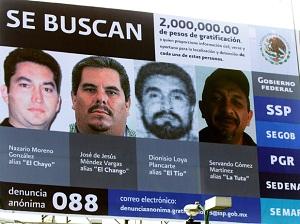
A man Mexican prosecutors say is one of the country's most-wanted drug kingpins has collected a salary from the Mexican school system for years, according to official documents, showing the ability of fugitives to draw support from the very government charged with capturing them. Servando "La Tuta" Gómez, a reputed leader and spokesman for the La Familia drug trafficking organization, held a tenured position at an elementary school in the central state of Michoacán and has received paychecks for 15 years.
Latest News
In The Trenches

New Data: Pursuit of Misdemeanor Marijuana Possession Costs Vermont Over $700K Annually, Rep. Lorber Calls for Decriminalization (Press Release)

CONTACT: Rep. Jason Lorber, 802-863-9429 or [email protected]

New Data: Pursuit of Misdemeanor Marijuana Possession

Costs Vermont Over $700K Annually

Rep. Lorber Calls for Decriminalization

Burlington, VT – Dec. 9, 2010 – New data unveiled today shows that Vermont state government spends over $700,000 annually to pursue Vermonters for possession of small amounts of marijuana. 

Based on the new findings, Rep. Jason Lorber (D-Burlington) today announced plans to introduce a bill that would decriminalize the possession of less than one ounce of marijuana.

“We should stop wasting $700,000 a year on a failed policy,” said Rep. Lorber. “It’s time for a smarter approach.  That means decriminalization for an ounce or less of marijuana.”

“In a time of great fiscal strain, it is critical that we focus law enforcement resources on offenses that pose the greatest threats to public safety,” said Windsor County State’s Attorney, Robert Sand. “Possession of small amounts of marijuana does not fall into this category. Converting misdemeanor marijuana crimes into civil violations is an appropriate and laudatory legislative endeavor.”

Today’s announcement follows the release of a memo written for Rep. Lorber by the non-partisan Vermont Legislative Joint Fiscal Office (JFO).  The report detailed costs totaling $716,021, broken into categories of Police ($45,257), State’s Attorneys ($10,429), Defender General ($19,768), Court Diversion ($169,500), Judiciary ($105,344), and Corrections ($365,725).  It involves 801 arrests, 76 Vermonters serving time behind bars, and 270 on field supervision.  JFO estimates that the true costs could be 20% more or less than the $716,021 figure.  The study focused on cases in which possession of up to 2 ounces of marijuana was a stand-alone charge.

Strong Support for Decriminalization in Vermont and Nationally

Marijuana has been decriminalized in 13 states, including New York, Maine, and Massachusetts. A 2009 Mason-Dixon poll of registered voters in Vermont showed over 2-to-1 support for marijuana decriminalization, with 63% in support, 27% opposed, and 10% undecided

“Decriminalization is different from legalization,” Lorber was quick to point out. “I am crafting a bill that would keep it illegal to sell or use marijuana, and not change the penalty for driving under the influence. This would simply change the penalty for possession of up to an ounce of marijuana to a civil, rather than criminal offense. It would be a ticket, not jail time.”

This news follows an August 2010 panel discussion in which Rep. Lorber and then-gubernatorial candidate Peter Shumlin called for decriminalization of possession of under an ounce of marijuana.

Rep. Lorber has served in the Vermont House of Representatives since 2005.  He co-authored sweeping legislation called “Justice Reinvestment,” which reduces prison costs while improving safety by finding less costly and more effective alternatives to prison.  In 2005, he authored a 42-page report “53 Voices on Corrections in Vermont” chronicling the stresses placed on the Department of Corrections by overcrowding. 

#  #  #

Latest News

Colorado Clears Backlog of Applications for Medical Marijuana Cards

About 2 percent of Colorado residents now have cards to buy medical marijuana. The state health department said that it came up with the figure while clearing a backlog of medical marijuana applications. Officials said the number of approved medical marijuana users totals about 116,000.
Latest News

Idaho Businesses Try Selling Altered Versions of Spice

Certain Treasure Valley businesses think they've created an exception to the ban by tweaking the chemicals found in Spice, but law enforcement says, "not so fast." Officers went into a couple businesses, seized samples, and sent those off for testing. Results are not back yet but according to the Idaho Office of Drug Policy, the sellers could be charged.
Latest News

Marijuana Seed Company Sees Budding Business

Now that Centennial Seeds has established a presence in Colorado selling cannabis seeds to producers of medical marijuana, Ben Holmes wants to tackle supplying seeds to vendors in other states where medicinal use of the drug is legal.
Blog
plantpic_6.png
plantpic_6.png

If Pot Were Legal, No One Would Grow it in the Woods

Can you even think of anything besides marijuana that is grown secretly in the woods? Of course not, because hiking over mountains through dense underbrush with pounds of fertilizer on your back is so stupid and crazy that no one would ever do it unless there were millions of dollars at stake. Unfortunately, there actually are people making millions off these operations and the U.S. Congress is so fed up with the situation that they've issued a resolution demanding that something be done about it.

Chronicle
Latest News

As Medical Marijuana Proliferates, Recreational Marijuana Prices Decline

Recreational users of marijuana are seeing price cuts on the street thanks to the growing number of states that have approved the drug for medicinal use. The price of cannabis, of course, varies wildly — depending on the strain purchased, its potency and the parts of the plant. Top quality pot in New York, for example, costs nearly $442 per ounce, while low quality is just $161, according to one website that tracks costs, PriceofWeed.com. On the whole, though, prices have been dropping nationwide over the past three to four years.
Latest News

Mexican Children Learn to Take Cover in Drug Prohibition War

Mexican officials are teaching school children how to dive for cover if they come under fire from gangs fighting over the Pacific beach city of Acapulco as drug prohibition violence reaches deeper into everyday life. At a drill in an Acapulco primary school this week, instructors used toy guns that simulated the sound of real gunfire. "Get down, let's go!" shouted an instructor as children threw themselves on the ground in classrooms and the playground and then crawled toward safety, burying their heads in their hands.
Chronicle
Ciudad Juarez
Ciudad Juarez

Mexico Drug War Update

As 2010 ticks down, Ciudad Juarez is on track to hit 3,000 murders this year, and that national toll for the year could hit 10,000.
Chronicle
In The Trenches

U.S. House Expected to Pass Resolution Today Calling for New Marijuana Strategy (Press Release)


FOR IMMEDIATE RELEASE                                                                                                                                 

DECEMBER 8, 2010

U.S. House Expected to Pass Resolution Today Calling for New Marijuana Strategy

Rep. Jared Polis, MPP Say It’s Time to End “Failed” Marijuana Prohibition, Regulate Marijuana Industry to Combat Drug Traffickers

CONTACT: Mike Meno, MPP director of communications: 202-905-2030, 443-927-6400 or [email protected]

WASHINGTON, D.C. — The U.S. House of Representatives is expected to pass a resolution today declaring illegal marijuana cultivation on federal lands to be an “unacceptable threat to the safety of law enforcement and the public,” and calling upon the nation’s drug czar “to work in conjunction with Federal and State agencies to develop a comprehensive and coordinated strategy to permanently dismantle Mexican drug trafficking organizations operating on Federal lands.”

            Speaking on the House floor yesterday, Rep. Jared Polis (D-CO) agreed with the goals of H. Res. 1540, but said the only way to accomplish such objectives would be to eliminate “the failed policy of prohibition with regard to marijuana and replac[e] it with regulation.” 

            “I have no doubt that marijuana plantations, as the resolution states, pose a threat to the environmental health of Federal lands, that drug traffickers spray unregulated chemicals, pesticides, and fertilizers, but I submit that the best way to address that is to incorporate this into a meaningful and enforceable agricultural policy for the country with regard to the regulatory structure for the production of marijuana,” said Polis, whose home state of Colorado has emerged as a national leader in the regulation of medical marijuana. “… As long as [marijuana] remains illegal and as long as there is a market demand, the production will be driven underground. No matter how much we throw at enforcement, it will continue to be a threat not only to our Federal lands, but to our border security and to our safety within our country.”

            Steve Fox, director of government relations for the Marijuana Policy Project, today joined Rep. Polis in endorsing the underlying rationale of the resolution and suggesting that accomplishing the goals detailed in legislation will require an entirely new strategy by the federal government.

            “Passage of this resolution will send a clear message to the drug czar and others that our current strategies for combating illegal marijuana production are not working and that a new direction is needed,” Fox said. “There are two choices here: continue the failed prohibitionist policies that encourage Mexican drug cartels to keep growing marijuana on federal lands, or embrace a new path that would acknowledge the reality that marijuana is not going away, but its production and sale can be sensibly regulated in order to reduce the harm caused by its illicit production on federal lands.” 

         With more than 124,000 members and supporters nationwide, the Marijuana Policy Project is the largest marijuana policy reform organization in the United States. For more information, please visit www.mpp.org.

####