Latest
Teen Marijuana Use Continues to Rise: Report Consistently Shows Prohibitionâs Failure to Curb Teen Access to Marijuana; More Teens Say Marijuana is Easy To Get (Press Release)

FOR IMMEDIATE RELEASE
DECEMBER 14, 2010
Teen Marijuana Use Continues to Rise
Annual Report Consistently Shows Prohibition’s Failure to Curb Teen Access to Marijuana; More Teens Say Marijuana is Easy To Get
CONTACT: Mike Meno, MPP director of communications: 202-905-2030, 443-927-6400 or [email protected]
WASHINGTON, D.C. – Marijuana use by 8th, 10th and 12th grade students increased in 2010, with more American teenagers now using marijuana than cigarettes for the second year in a row, according to numbers released today by the National Institute of Drug Abuse and the University of Michigan as part of the annual Monitoring the Future survey. In 2010, 21.4 percent of high school seniors used marijuana in the last 30 days, while 19.2 had used cigarettes.
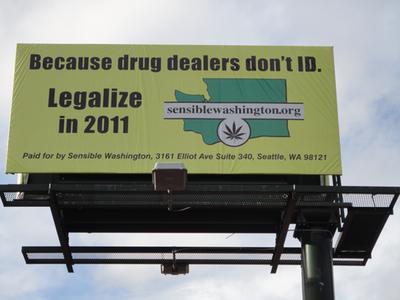
“It’s really no surprise that more American teenagers are using marijuana and continue to say it’s easy to get. Our government has spent decades refusing to regulate marijuana in order to keep it out of the hands of drug dealers who aren’t required to check customer ID and have no qualms about selling marijuana to young people,” said Rob Kampia, executive director of the Marijuana Policy Project. “The continued decline in teen tobacco use is proof that sensible regulations, coupled with honest, and science-based public education can be effective in keeping substances away from young people. It’s time we acknowledge that our current marijuana laws have utterly failed to accomplish one of their primary objectives – to keep marijuana away from young people – and do the right thing by regulating marijuana, bringing its sale under the rule of law, and working to reduce the unfettered access to marijuana our broken laws have given teenagers.”
Since the survey’s inception, overwhelmingly numbers of American teenagers have said marijuana was easy for them to obtain. According to the 2010 numbers, the use of alcohol – which is also regulated and sold by licensed merchants required to check customer ID – continued to decline among high school seniors.
With more than 124,000 members and supporters nationwide, the Marijuana Policy Project is the largest marijuana policy reform organization in the United States. MPP believes that the best way to minimize the harm associated with marijuana is to regulate marijuana in a manner similar to alcohol. For more information, please visit www.mpp.org.
####
Anti-Drug Chief Warns About Deterioration in Central Asia
WikiLeaks Cables: Ghanaian Police 'Helped Drug Smugglers Evade Security'
WikiLeaks: Nicaragua Government Took Bribes from Drug Traffickers
Busted CA Medical Marijuana Patient Now Free to Leave Alabama
NJ Senate Demands Governor Fix Medical Marijuana Regulations
Michoacan Peace March Turns Into Rally for La Familia Drug Lord
The Prospects for Drug Reform in This Country Have Never Been So Good (Opinion)
New Jersey State Senate Passes Resolution Invalidating Medical Marijuana Regulations (Press Release)
DRUG POLICY ALLIANCE
FOR IMMEDIATE RELEASE: December 13, 2010
CONTACT: Roseanne Scotti 609-610-8243
New Jersey State Senate Passes Resolution Invalidating Medical Marijuana Regulations
Department of Health and Senior Services Now Has Thirty Days to Rewrite Regulations
Patients and Advocates Urge Health Department to Act Quickly So Program Can Move Forward
Trenton, NJ— Today, the New Jersey State Senate passed a resolution invalidating the Christie Administration’s regulations for implementing the Compassionate Use Medical Marijuana Act. The Department of Health and Senior Services now has thirty days to rewrite the regulations to make them comport with the original legislation. The New Jersey State Assembly passed the resolution on November 22nd.
The Compassionate Use Medical Marijuana Act was signed into law on January 11th by outgoing Governor Jon Corzine. The Christie Administration released its draft regulations in October, but legislative sponsors, patients and advocates have criticized the regulations for conflicting with the original law and being so restrictive that they make the program unworkable. In light of the vote, patients and advocates urge the Christie Administration to move quickly to make changes to the regulations and get the program up and running.
“We urge the Department to move swiftly to change the problematic sections of the regulations,” said Roseanne Scotti, Director of Drug Policy Alliance New Jersey, which spearheaded the effort to pass the legislation. “We are approaching the one year anniversary of the bill becoming law and patients are still suffering and still no closer to having safe and legal access to their medicine.”
“I’m tired of fighting for what I deserve,” said Diane Riportella, who suffers from ALS (also known as Lou Gehrig’s Disease). “I don’t have much time left and want to see this program started before I’m no longer here.”
The Compassionate Use Medical Marijuana Act was passed after five years of intense advocacy by patients, families and a coalition of medical and professional organization. The Act will allow patients suffering from certain debilitating and life-threatening illnesses such as cancer, HIV/AIDS, and multiple sclerosis to use and possess medical marijuana with a doctor’s recommendation. The bill will also allow for the licensing of Alternative Treatment Centers where qualifying patients could safely access medical marijuana. The program will be administered by the New Jersey Department of Health and Senior Services. The Act is the most restrictive medical marijuana law in the nation.
The Senate resolution addresses four specific provisions in the regulations:
· The requirement all qualifying medical conditions for which a patient may get medical marijuana be resistant to conventional medical therapy. In the original legislation only certain medical conditions were required to meet this threshold.
· The limit of two Alternative Treatment Centers that will grow medical marijuana and four that will dispense marijuana. The original bill called for at least two Alternative Treatment Centers in the north, central and southern parts of the state.
· The draft regulations’ arbitrary limit on the permissible levels of THC the medical marijuana may contain. There was no such restriction in the original bill.
· The two year waiting period mandated by the regulations before patients can petition to have new conditions added to the list of conditions for which medical marijuana can be accessed. No such waiting period was included in the original legislation.
The Compassionate Use Medical Marijuana Act is supported by a coalition of organizations including the Drug Policy Alliance New Jersey, the New Jersey Academy of Family Physicians, the New Jersey League for Nursing, the American Civil Liberties Union of New Jersey, the New Jersey State Nurses Association, the New Jersey chapters of the Leukemia and Lymphoma Society, Faith is Our Pathway, and the New Jersey Hospice and Palliative Care Organization.
# # #
Salvia Poses Little Short-Term Health Risk, Researchers Say
Senators Introduce Bill to Create Western Hemisphere Drug Commission
Medical Marijuana Business Attracts Hedge Funds, Venture Capitalists
Students for Sensible Drug Policy Featured in The Nation Magazine
Have you heard about the special drug policy focused issue of The Nation magazine? Because of our expertise in empowering young people to change harmful drug war policies, I was invited to write a feature piece in The Nation magazine's December 27, 2010 issue about how students are motivated to work for marijuana ballot measures, here's an excerpt: "Watching these young activists voraciously consuming information about how to win an election, just days after a historic loss, was more than invigorating. It made the hairs on the back of my neck stand on end. Change is coming sooner than anyone believes. And this is what it's going to look like." Read the full article here. The cover of this special issue of The Nation couldn't drive home the point any better. If you appreciate the work that we are doing, please consider making your end-of-year donation to SSDP's work today. Sincerely, Aaron Houston P.S. Check out our storefor our "DARE to resist the war on drugs" t-shirts, stickers, and other merchandise. Connect with SSDP Please help us grow our grassroots movement to end the failed War on Drugs by inviting family and friends to join. http://www.ssdp.org/invite |
N.J. Senate Weighing Defying Governor Over Medical Marijuana
Budding Prospects: Youth Activists Push Marijuana Reform
Do you know what you're missing?
| |
Do you know what made this year like 1998 all over again? Were you among the first to know when MPP helped pass medical marijuana in Arizona? Do you know what the Marijuana Policy Project had to say about Obama's new head of the DEA?
Rob Kampia | |
To contact MPP, please click here. Our mailing address is Marijuana Policy Project, 236 Massachusetts Ave. NE, Suite 400, Washington, D.C. 20002. Any donations you make to MPP may be used for political purposes, such as supporting or opposing candidates for federal office. | |
Activists Look to Advance Marijuana Reform Legislation
Proposed Medical Marijuana Database Worries Some Patient Advocates
UK Could Decriminalise Cannabis Without Worry of EU Sanctions
Pagination
- First page
- Previous page
- …
- 372
- 373
- 374
- 375
- 376
- …
- Next page
- Last page