Drug War Issues
Politics & Advocacy
New York Mayor Eric Adams wants to forcibly remove drug users from city streets, New Mexico Gov. Michelle Lujuan Grisham declares a drugs and crime emergency in Rio Arriba County, and more.
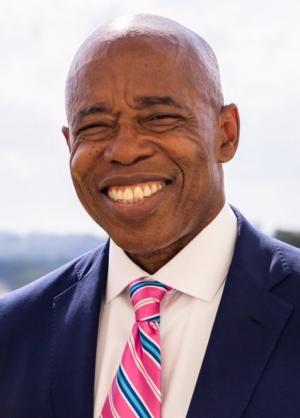
NYC Mayor Adams talks tough on drugs and homelessness in a desperate bid for electoral relevance. (nyc.gov)
Marijuana Policy
Texas Hemp THC Fight Continues in New Legislative Special Session. Texas Republicans continue to be split on whether to ban or regulate hemp THC. Gov. Greg Abbott (R), who favors regulation, vetoed a hemp THC ban bill during the regular session and called on lawmakers in this special session to move a bill regulating hemp THC, but they responded by moving a bill that would again just ban it.
The new special session, called after a walkout by Democratic lawmakers seeking to block a mid-decade legislative redistricting bill sought by President Trump left the first special session without a quorum, opened Friday. That same day, the Senate State Affairs Committee approved a reintroduced Senate Bill 6, which bans hemp products with "any amount" of cannabinoids other the CBD and CBG.
It also makes even possession of a prohibited hemp THC a Class B misdemeanor punishable by up to 180 days in jail.
While lawmakers are advancing the ban, Abbott said in his proclamation that we wanted to sign a bill that would "comprehensively regulate hemp-derived products, including limiting potency, restricting synthetically modified compounds, and establishing enforcement mechanisms, all without banning lawful hemp-derived products."
Meanwhile, a second measure this session, House Bill 36 filed by Rep. Charlie Geren (R) would follow the governor's directive to make it so consumable hemp products could only be purchased by adults 21 and older. That bill has yet to be acted on.
Psychedelics
Alaska Natural Psychedelic Decriminalization Initiative Approved for Signature-Gathering. Lt. Gov. Nancy Dahlstrom (R), who heads the Alaska Division of Elections, said last Thursday that she has approved for signature-gathering a proposed initiative that would allow for the use of psychedelic mushrooms and other natural psychedelics for traditional and therapeutic purposes.
The Alaska Natural Medicine Act would "establish a regulated natural medicine program for mental health treatment and to decriminalize personal use of natural medicine for adults in Alaska," the initiative says.
The campaign is sponsored by Natural Alaska Medicine Inc., a nonprofit organization "dedicated to fostering charitable, educational, and social welfare initiatives that promote the safe and responsible use of natural medicines," according to its website. The president and other members of the group are Indigenous Alaskans and the initiative contains provisions for traditional healers.
The president of Natural Alaska Medicine Inc. and other team members are Indigenous Alaskans. The proposed ballot initiative includes provisions for Alaska Native traditional healers.
The initiative would decriminalize personal use by adults and the home cultivation of natural entheogens. It would also create a Natural Medicine Control Board in the state Department of Commerce, Community, and Economic Development. And it would establish an advisory Traditional Use Council.
Organizers have one year from last Thursday to come up with 34,098 valid voter signatures to qualify for the November 2026 ballot.
Drug Policy
New York City Mayor Calls to Forcibly Remove Drug Users from City Streets. Embattled Mayor Eric Adams, who is running a long-shot third party campaign to be reelected, called last Thursday for forcibly removing drug users from city streets and for allowing health care workers to order drug treatment with a court order.
Adams is courting right-leaning and centrist voters after losing the Democratic Party nomination in the wake of his indictment on corruption charges and their subsequent dismissal in a very peculiar deal with the Trump administration.
He rolled out his new plan at the conservative think tank the Manhattan Institute.
"The evidence is right there in front of us," the mayor said. "People openly using illegal drugs on the streets and in our parks, passed out in doorways and sidewalks, encampments littering with syringes and vials and unsanitary conditions that are a threat to public health and public order. This cannot be allowed to continue."
But Adams' proposal was not all regressive. He also called for a new drop-in center in the Bronx, a new pilot program of "contingency management," where users are paid to not use drugs, and funding for cell phones through a program that provides support to people taken to emergency rooms after overdosing.
The involuntary removal of drug users and court-ordered treatment were "horrible" ideas, said Jasmine Budnella, drug policy director at the low-income advocacy group Vocal-NY, but added that his ideas weren't all bad. "The rest of it continues to build off of the public health data insight that his administration has really been using around the overdose crisis," she said.
New Mexico Governor Declares State of Emergency over Drugs and Crime in Rio Arriba County. Gov. Michelle Lujan Grisham (D) declared a state of emergency last Wednesday in Rio Arriba County, which includes the city of Espanola and two Native American pueblo communities and has historically had high opioid use and overdose rates.
The governor's declaration frees up $750,000 for local governments and tribal officials after they called for reinforcements in their fight against violent and drug-related crime.
"The surge in criminal activity has contributed to increased homelessness, family instability and fatal drug overdoses, placing extraordinary strain on local governments and police departments that have requested immediate state assistance," said Lujan Grisham.
Lujan Grisham declared a similar state of emergency in the state's largest city, Albuquerque, in April, arguing that an increase in crime demanded the help of the state National Guard.
Back in Rio Arriba County, the tribal governor of the Santa Clara Pueblo called on the state to do more.
"The pueblo has expended thousands of dollars trying to address this crisis... and to protect pueblo children who are directly and negatively affected by a parent's or guardian's addiction," said Santa Clara Gov. James Naranjo. "But we are not an isolated community, and the causes and effects of fentanyl/alcohol abuse, increased crime, and increased homelessness extend to the wider community."
This work by StoptheDrugWar.org is licensed under Creative Commons Attribution-ShareAlike 4.0 International


Add new comment