Drug War Issues
Politics & Advocacy
Building on an executive order last September from Gov. Jim Abbott (R), the state Department of State Health Services (DSHS) banned the sale of hemp products containing the cannabinoid THCA in March. After a round of court challenges, a three-judge appeals court panel ruled in June that the ban should be upheld, declining to extend a temporary injunction that had blocked its enforcement.
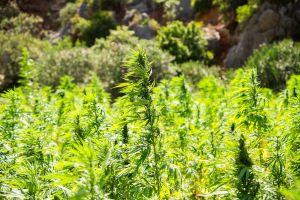
While THCA has now vanished from smoke shop shelves, hemp sellers have found an alternative in yet another obscure cannabinoid, tetrahydrocannabiphorol (THCP). THCP was only discovered in 2019, and is both exceptionally potent and exceptionally long-lasting because it binds more closely to the brain's CB1 receptors than THC. A dose of only 1-2 milligrams will produce a psychoactive effect.
The Green Goddess shop in San Marcos is now selling THCP products, especially flower products, in place of THCA products.
"THCP is more like a concentrate," McLaughlin told Spectrum 1 News. "We have a lot of it in the gummies; this is the first time we’re doing it in the flower form."
It's taking some adjustment by customers, McLaughlin said.
"It did take a little for our customers to grab onto," she said. "As far as THCA sales versus THCP sales, worlds of a difference. THCA is what our customers are really going for, because [with] THCP, it’s hard to find a sativa THCP. THCP is more of a body-feeling than a head-feeling, and most of our sativa smokers are looking for that head-feeling," McLaughlin said.
While DSHS is now enforcing all the rules regarding THCA and other hemp products, THCP is not specifically mentioned in its rules, leaving the door open for shops to sell it as a workaround.
Drug policy fellow at the Baker Institute at Rice University Dr. Katherine Neill Harris, who writes on hemp policy, said DSHS had neglected THCP
"I think that they’ve [DSHS] been kind of preoccupied with the THCA issue at this point," said Harris. "There’s still this very big, grey area where businesses are still kind of figuring out ways to sell some of these products."
San Marco attorney David Sergi, who specializes in cannabis issues, said THCP was "fair game" for sellers.
"My argument is it shouldn’t be included [in the rules] because it’s not directly included," Sergi said.
While Harris conceded that there was currently no legal basis to stop THCP sales, she still had some concerns.
"There’s been studies that look at how it binds to the cannabinoid receptors in our brain that shows that it has about a 30 times higher affinity to binding to our cannabinoid receptors than delta-9 THC, which indicates it’s more potent," said Harris.
She also warned even though THCP occurs naturally in cannabis plants, it only does so in tiny quantities, thus requiring a chemical extraction process to obtain it in usable quantities.
"There are risks with that," she said. "For one, we don’t know the full effects of that compound, THCP. Second, we don’t know what’s going on with that manufacturing process, whether there’s residual solvents or other byproducts that are still there," she said. "Yes, there are testing requirements in Texas, but we don’t really have a robust regulation of that testing."
Harris and Sergi agreed that the preferred way to regulate THC products is through legislation—not executive orders and executive branch rulemaking. The governor and the legislature have been trying to do that for several years but have not managed to turn a proposed bill into law, thus Abbott's executive order. Maybe next year.
This work by StoptheDrugWar.org is licensed under Creative Commons Attribution-ShareAlike 4.0 International


Comments
reply
Thanks for sharing! quordle
Add new comment