Consequences of Prohibition
Drug War Issues
Politics & Advocacy
A new study blames COVID and fentanyl -- not drug decriminalization -- for Oregon overdoses and crime increases, and more.
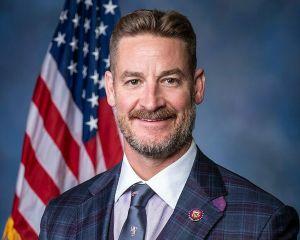
Rep. Greb Steube (R-FL) has again filed a bill to reschedule marijuana legislatively. (congress.gov)
Marijuana Policy
GOP Congressman Files Marijuana Rescheduling Bill. For the fourth session in a row, Rep. Greg Steube (R-FL) has filed a bill to reschedule marijuana, HR 4963. The bill is named the Marijuana 3-to-1 Act because it would move the substance from Schedule I to Schedule III of the Controlled Substances Act.
The bill comes even as the Trump administration is considering a marijuana rescheduling proposal that would take place through executive action. But legislatively-mandated rescheduling could prove less open to legal challenges than administrative rescheduling.
"The Attorney General of the United States shall, by order not later than 60 days after the date of enactment of this section, transfer marijuana… from schedule I of such Act to schedule III" of the CSA," the bill says.
"It makes zero sense that federal law treats marijuana the same as heroin and LSD," Steube said in a social media post. "It is even more ridiculous that cocaine is technically classified as less restrictive than marijuana."
"This week, I'm reintroducing my Marijuana 1-to-3 Act to move marijuana from Schedule I to Schedule III under the Controlled Substances Act. This is a common-sense change that will finally allow real scientific research into its medicinal value and ensure our drug laws reflect reality," he said. "I urge my colleagues and the Trump administration to get it done."
Drug Policy
Florida Bans Kratom Concentrate 7-OH. The state has banned a chemical found in trace amounts in kratom if it is isolated from the plant and concentrated. While concentrated 7-hydroxymitragynine (7-OH) is banned, kratom itself is not.
On Wednesday, Attorney General James Uthmeier (R) filed an emergency rule designated 7-OH a Schedule I controlled substance in the state. The order criminalizes the distribution, sale, or even possession of 7-OH.
"Due to the danger posed to the public, Florida is taking 7-OH off the shelves immediately," Uthmeier said. "This dangerous substance is being marketed to teens and young adults and has a high potential for abuse and death."
7-OH appears only in trace amounts in kratom, its concentrates have been used to manufacture tablets, gummies, drink mixes, and shots. Last month, the federal Food and Drug Administration (FDA) warned consumers, health care professionals, and 7-OH manufacturers about potential risks from the substance.
"Vape stores are popping up in every neighborhood in America, and many are selling addictive products like concentrated 7-OH. After the last wave of the opioid epidemic, we cannot get caught flat-footed again," FDA Commissioner Marty Makary said. "7-OH is an opioid that can be more potent than morphine. We need regulation and public education to prevent another wave of the opioid epidemic."
Under the new emergency rule, law enforcement and regulatory authorities can start removing 7-OH products from retailers in the state.
COVID, Fentanyl -- Not Drug Decriminalization -- Caused Jumps in Oregon Crime and Overdoses, Study Finds. Researchers from Portland State University's Department of Criminology and Criminal Justice have released a final report studying the impact of drug policy reforms in the state since 2008, and found little evidence to support widely made claims that the state's short-lived experiment with drug decriminalization caused higher crime and overdoses.
The report, "Examining the Multifaceted Impacts of Drug Decriminalization on Public Safety, Law Enforcement, and Prosecutorial Discretion," outlines a decade of drug reform beginning in 2013, when the state reducing mandatory minimums for marijuana and diverting more drug users to probation. Four years later, reclassified drug possession felonies as misdemeanors, and in 2020, voters approved Measure 110, which decriminalized possession of small amounts of drugs, such as methamphetamine and fentanyl.
Drug overdose deaths were rising before decriminalization and had already peaked by the time the legislature moved to end decriminalization last year, the study found. The rise in overdoses coincided with the late arrival of fentanyl in Pacific Northwest drug markets. But it was COVID and associated social dislocations that played the key role, the researchers found.
"Of all the events we examined, the COVID-19 pandemic disrupted the justice system the most, more so than any legislation," said Brian Renauer, a lead researcher and university professor.
"What we observed was far from a causal connection to Measure 110," said Christopher Campbell, a lead researcher and associate professor at the university Campbell. "Rather, we saw an unprecedented impact of the COVID-19 pandemic and fentanyl on public health and safety outcomes."
This work by StoptheDrugWar.org is licensed under Creative Commons Attribution-ShareAlike 4.0 International


Add new comment