Drug War Issues
Politics & Advocacy
House members seek Trump administration guidance on marijuana as Schedule III, Australia's New South Wales will resume festival drug checking after a successful pilot program, and more.
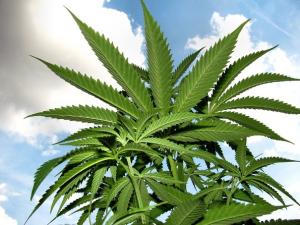
Marijuana Policy
Every Marijuana and Hemp Bill Alive in the US Congress, Ranked by Number of Sponsors. The Marijuana Herald has released a comprehensive list of cannabis-related bills in the current Congress, from national marijuana legalization and banking reforms to competing efforts to either regulate or ban intoxicating hemp-derived cannabinoid products. Click on the link to see them all.
The Herald notes that as of Wednesday, there are 31 marijuana, hemp, or cannabinoid-focused bills still pending before Congress, not including annual appropriations or farm legislation where hemp- or marijuana-related amendments often are offered.
Of the bills still remaining, those with the most cosponsors include a legalization bill, the Marijuana Opportunity Reinvestment and Expungement Act (MORE Act) -- HR 5068, sponsored by Rep. Jerrold Nadler (D-NY) with 74 cosponsors; the hemp ban-delaying Hemp Planting Predictability Act -- S 3686 and HR 7024, sponsored by Sen. Amy Klobuchar (D-MN) in the upper chamber and Rep. James Baird (R-IN), with 44 cosponsors; and the industry-assisting SAFE Banking Act -- S 4942 and HR 9471 sponsored by Sen. Lisa Murkowski (R-AK) in the upper chamber and Rep. David Joyce in the House (R-OH), with 44 cosponsors.
US House Members Push Trump Administration for Guidance on Schedule III Federal Framework. A bipartisan quartet of lawmakers sent a letter to Trump and three cabinet members, asking for clarity on the federal policy for medical cannabis. The Trump administration rescheduled state-licensed medical cannabis four months ago, but lawmakers in Congress are still seeking answers about the impacts of the new federal policy that they can provide to their constituents.
Rep. Dina Titus (D-NV) was the lead author of the letter sent to Attorney General Todd Blanche, who signed the Schedule III order on April 23, Health Secretary Robert Kennedy Jr., and Treasury Secretary Scott Bessent.
"The order marks a significant step in establishing a federal framework for certain state-licensed medical marijuana entities to register and comply with the CSA," the lawmakers wrote. "We appreciate this development and the progress it reflects toward greater clarity in federal policy.
"As implementation moves forward, additional guidance would be helpful on several practical questions, including worker protections, patient rights, health care coverage, privacy safeguards, home cultivation and the operation of the new DEA registration system."
Reps. Dave Joyce (R-OH), Ilhan Omar (D-MN), and Greg Steube (R-FL) also signed the letter.
The 280E tax picture for businesses with bifurcated operations was among the questions the bipartisan quartet asked Trump and his cabinet members to answer by Sept. 30. Here are those questions:
- How will the order affect patients currently participating in state medical marijuana programs?
- Is medical marijuana cultivated by a patient or their registered caregiver in accordance with state law currently considered a Schedule I or Schedule III substance?
- Does the DOJ anticipate coordination with the Centers for Medicare & Medicaid Services regarding Medicare coverage or reimbursement considerations for Schedule III medical marijuana products?
- Please describe how, if at all, the framework addresses health insurance reimbursement or coverage for marijuana-based treatments for patients operating in compliance with state medical marijuana laws.
- How will the order apply to operators who participate in both medical and adult-use marijuana markets? For example, certain states have a single license that covers both medical and adult use and other states have a dual license that covers both activities.
- Specifically, will such entities remain eligible for federal tax treatment changes associated with Schedule III status, including relief from Internal Revenue Code Section 280E?
- How will DEA registration and compliance with Schedule III obligations be expected to affect federal enforcement posture with respect to businesses, health care providers, workers and patients?
- How does the department anticipate federal enforcement will be handled for businesses that do not register with the DEA, and for patients who obtain medical marijuana from state-licensed businesses that are not registered under the federal framework?
- What information will be required to obtain and maintain DEA registration, and how will the DEA use that information? What safeguards will be in place to prevent misuse of this information?
International
Australia's New South Wales to Resume Drug Checking at Festivals. The New South Wales health department announced Wednesday that it will resume drug checking at music festivals beginning next month but will not roll out the program more broadly despite calls to do so from health and harm reduction groups. It also said it would continue to use drug-sniffing dogs and body searches, a policy that has also been widely criticized.
The resumption of drug checking comes after a 12-month trial that ended in February, where some 1,480 drug samples were tested across 12 music festivals. Unexpected substances were found in eight percent of the samples and high-dose MDMA was found in four percent of MDMA samples.
A University of Sydney evaluation of the drug checking pilot found that people changed their approach to drug use after getting their drugs tested, especially when the results differed from what they expected.
Festival-goers liked the drug checking, but not the drug dogs, the researchers found, citing "a consistent concern … was the conflict between policing activities (such as drug detection dogs) and access to the service site, which may have dissuaded potential service users from accessing harm reduction services."
A 2025 summit on reducing drug-related harms recommended that New South Wales consider ceasing the use of drug detection dogs and strip-searches at music festivals.
This work by StoptheDrugWar.org is licensed under Creative Commons Attribution-ShareAlike 4.0 International


Add new comment