Consequences of Prohibition
Drug War Issues
Politics & Advocacy
An ICE/FBI effort to smear an immigrant ICE agents killed as a meth user has flopped, the Russian Federation has added the International Drug Policy Consortium to its list of "undesirable organizations," and more.
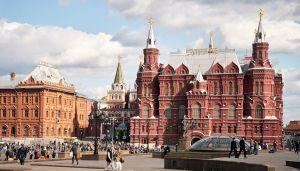
The Kremlin. The atmosphere grows ever chillier in Moscow. (Creative Commons)
Marijuana Policy
Marijuana Policy Project Warns of "Disastrous" Consequences if Massachusetts Legalization Rollback Initiative Does Well. In an email to supporters, the Marijuana Policy Project is warning that a victory or even a narrow defeat for the Question 8 Massachusetts initiative to undo marijuana legalization could have "disastrous" consequences for the push for broader marijuana legalization and the legal marijuana industry.
"If you haven't been paying attention to what's going on in the Bay State, it's time to start," Marijuana Policy Project (MPP) Executive Director Adam J. Smith said in the alert. "A loss in Massachusetts would have disastrous political and economic consequences for legal cannabis markets everywhere, and even a too-close victory would spook markets and incentivize a rash of similar initiatives in states around the country, each costing millions to try and defeat."
Question 8, which qualified for the November ballot last month, would recriminalize marijuana sales and home cultivation but would allow for possession of small amounts and keep the state's medical marijuana regime intact.
"Now, ten years into Massachusetts' legal cannabis market, we are faced for the first time in history with the question… Will supporters of legal cannabis markets -- in Massachusetts and elsewhere -- stand up to defend them?" Smith wrote. "They had better, because victory is not a sure thing, and the risk is existential."
Smith noted that the initiative is behind by only single digits in state polls, and that the gap "narrows to within the margin of error once respondents hear arguments in favor of recriminalization."
"Legal cannabis is responsible for more than 20,000 jobs in the state. The legal cannabis that people are using, unlike the illicit market, is tested and properly labeled. Cannabis arrests and their associated costs -- personal, economic, and in law enforcement -- are down nearly 90%, and youth cannabis use is down 25% since the state legalized adult-use cannabis."
"The case needs to be made that ending the regulated market would lead to an explosion in the illicit market, reversing those gains and exponentially increasing the number of easy access points for kids," the alert said.
Question 8 backers, most prominently Smart Approaches to Marijuana, have millions of dollars to spend, and Smith and MPP are calling on legalization supporters to counter that cash.
"Question 8 could pass if the 'No on 8' Campaign lacks the resources to get its message out, broadly and consistently, from here to the election," Smith said. "Whether you're an industry member, an allied business, an advocate for the plant or for rational public policy or personal freedom -- and wherever you are in the country -- the Massachusetts ballot initiative is your fight," he said. "It's our fight."
Immigration
ICE and FBI Effort to Dope-Smear Immigrant Gunned Down in Houston Flops. ICE agents shot and killed Houston construction worker Lorenzo Salgado Araujo, a 52-year-old Mexican immigrant, as he drove to work on July 7. Seeking to tamp down growing public outrage over the killing and tarnish the reputation of the victim, a week later the FBI suggested there could be meth inside the van when it sought a search warrant to test "crystal-like substances."
Salgado Araujo's family, coworkers (who were with him in the van and also detained by ICE), local elected officials, and lawyers immediately rejected the claim.
"After consulting with my client and his family, our understanding is that this was granulated salt, which is paired with lemon and water as a homemade electrolyte mix used by outdoor workers in extreme Texas heat, not methamphetamine or any other illicit substance," said the lawyer, Ruby Powers.
Now, the US Attorney for the Southern District of Texas Aaron Reitz has confirmed that there were no drugs in the van.
"I can confirm what's already public: lab testing showed the substance in the baggies was not meth," said Reitz.
The official drug test results have not yet been made public, and the Houston FBI office said it "continues to decline commenting on an open investigation."
"They made the announcement (about the search warrant) with full intention to cause harm, period. They could have done the test before the announcement, but normally within one or two days you already know if it's drugs or not," said attorney Raed Gonzalez, who is representing two of the witnesses, José Trinidad Rojas Pliego and Daniel Tirado Pantoja, for their habeas corpus petitions challenging their detention.
"If they arrest a client of mine right now with something that looks like marijuana, it's immediately sent for analysis, and we have the result the next day because they have to book him," Gonzalez added. "You have it that fast, within one or two days."
Former police officer and current professor of policing and public safety at the University of South Carolina Seth Stoughton said a drug test is a "fairly straightforward" procedure.
"When it's in the government's interest to get an answer quickly, they can get an answer quickly. But the opposite is also true: with the right couple of phone calls, somebody can slow-walk something," he said.
"I think we see it in multiple administrations and sometimes with state and local police agencies, where there is a reluctance to release information that they think might make them look bad or that might contradict a narrative that they are trying to establish," Stoughton said. "One of the hard-earned lessons in policing at every level is that it is much better to be upfront with information, even if that information seems bad for you, than it is to try and hide information."
Salgado and his three co-workers were followed by ICE early on the morning of July 7. ICE then claimed that Salgado rammed their vehicles trying to flee and its officers fired in self-defense. But his co-workers said Araujo didn't hit the ICE vehicles but that the ICE vehicles struck their van from behind and the side.
"When we look at other things this administration has done towards victims and witnesses, it's to attempt to tarnish their name and put doubt in the public's mind about their intentions and their good moral character," said Powers, the attorney for Víctor Salgado Araujo.
International
International Drug Policy Consortium Becomes Latest NGO to Be Hit with Russian Sanctions. The International Drug Policy Consortium (IDPC), a network of more than 190 NGOs working for rational and humane drug policies, is now on the list of the Russian Federation's "undesirable organizations" for its work promoting human rights and effective drug policies. In a missive this week, the IDPC announced that:
"On July 24 2026, the Russian Ministry of Justice formally added the International Drug Policy Consortium (IDPC) to the regime's ever-growing list of 'undesirable organizations' based on the work we do to promote human rights and more effective drug policies.
"In becoming the 373rd entry on this registry, we find ourselves in good company, as other so-called 'undesirables' include: IDPC members -- the Eurasian Harm Reduction Association (EHRA) and Human Rights Watch; several of our donors -- including the Open Society Foundations (who were among the first to be listed), the Elton John AIDS Foundation and the Robert Carr Fund; and other IDPC partners and notable names such as Amnesty International, Chatham House, the Eurasian Network of People Who Use Drugs (ENPUD) and Greenpeace.
"Under Federal Law 129-FZ from 2015, Russian authorities may declare any international organization as being 'undesirable' if it is deemed to threaten 'the foundations of the constitutional order of the Russian Federation, the country's defense capability, or state security'. However, it is clear from how the law has been utilized since that this is just one of many attempts by the Russian regime to stifle, silence and threaten civil society for speaking against human rights abuses, punitive policies and war crimes. Indeed, civil society organizations are the most common target of the 'undesirable organizations' regime, and new designations sharply accelerated following Russia's full-scale invasion of Ukraine in 2022.
"Furthermore, in 2024, the European Court of Human Rights ruled that the 'undesirable organizations' regime violated freedom of association and of expression, created significant legal uncertainty, and lacked safeguards against abuse. Defying the Court's binding judgment, Russian authorities have since doubled down.
"As IDPC does not have projects, offices, staff, events or members in Russia, this designation has no immediate impact on our work. Designated organizations are effectively prohibited from operating in Russia, which includes bans on events and the distribution of materials (whether online or offline), while being exposed to surveillance and subsequent proceedings that can lead to asset confiscation. Individuals and organizations in Russia deemed to collaborate with designated organizations and their activities can face administrative penalties and criminal charges that may lead to imprisonment for up to six years.
"Unfortunately, we therefore caution any Russian citizen, resident or organization not to share or promote any of IDPC's resources or reports -- even on social media -- and suggest deleting previous posts relating to our work. This includes the Support Don't Punish campaign, which IDPC remains proud to host and facilitate. Even continuing to receive the IDPC Monthly Alert newsletter could carry risks for Russian citizens or others based in Russia.
"IDPC does not have any network members from Russia since the Andrey Rylkov Foundation for Health and Social Justice was sadly forced to close operations after years of repression and sanctions from the Russian Government for promoting and delivering harm reduction services in the country.
"The Russian Federation has one of the most stubbornly punitive drug policies in the world. Opioid agonist treatment using methadone or buprenorphine is completely banned in the country despite being globally recognized as a gold standard and included in the WHO Model List of Essential Medicines. IDPC's Global Drug Policy Index scored Russia at just 41/100 -- with especially low scores for proportionality, health responses and access to controlled medicines. These damaging policy choices harm, first and foremost, people in Russia. Around 30 percent of the country's large prison population is estimated to serve sentences for drug-related offenses, often in conditions that further worsen health and life outcomes. HIV prevalence among people who inject drugs stands at 26 percent, nearly four times the global median. Stigma, punishment and criminalization expose people to withdrawal without adequate treatment, rights abuses, and heightened risks of transmissible diseases. And this punitive logic goes beyond drugs: sex workers, LGBTQ+ people, and other marginalized communities face discriminatory treatment and repression that erect barriers to accessing care, while rights defenders and community-led organizations invested in their protection are under attack.
"IDPC remains completely undeterred from our core mission: to amplify and strengthen a diverse global movement to repair the harms caused by punitive drug policies, and promote just responses.
"At the United Nations level, IDPC has frequently stood up to resistance from Russia and other countries to health- and rights-based approaches, advocating instead for what decades of evidence make clear: harm reduction, decriminalization and community leadership work.
"We strongly condemn these attempts to shut down civic space and critical debate, and stand in solidarity with the organizations on this list targeted for their commitment to health, rights and freedoms, as well as with all of those impacted by the Russian regime's failed wars, whether on drugs or on its neighbors."
This work by StoptheDrugWar.org is licensed under Creative Commons Attribution-ShareAlike 4.0 International


Add new comment