The Chronicle was on a bit of a hiatus for much of this year, but is now restarting. To continue, though, we need your help.
Despite the sensationalist title, and the author coming across as a bit of a grumpy old man, this is an important and fascinating book about today's methamphetamine scene.
The move could pave the way for US military action inside Mexico, as well as other nasty consequences.
We may have gone on hiatus, but police drug war corruption didn't. Here's a full month's worth to get you restarted.
The Drug War Chronicle is back! So let's start catching up.
Germany's legal marijuana-growing collectives are taking off, a legalization bill gets filed in Texas, and more.
Delaware saw nearly a million dollars worth of cannabis sales on the first weekend of adult-use sales, Slovenian lawmakers push for legal marijuana, and more.
Dear friends,
You may have noticed that the Chronicle was on a bit of a hiatus for much of this year. Phil is back writing now, and we'd like to keep it that way. To make this possible, and to bring his schedule and the Chronicle to a full level, we need to raise at least $800/week in tax-deductible grants or donations to our 501(c)(3) nonprofit, DRCNet Foundation. That's not all Phil should be earning for his work, but for now at least it will enable us to complete the restart of the Chronicle and keep it going.

Phil reporting live from Afghanistan, 2005
(We also need to raise $900/month in
non-deductible donations to our 501(c)(4) public welfare nonprofit, Drug Reform Coordination Network, to continue to afford the our list management service and web site hosting fees. I'll explain why we cover these costs from the non-deductible type of donation in a subsequent email. If you remember this from the past, it's the same reason as before, with the costs somewhat lower now.)
This week's Chronicle features a book review, a restarted "This Week's Corrupt Cops Stories" installment that looks back over more than a week this time, and a few of Phil's daily roundups of important drug policy stories (still known internally as the "Chronicle AM"). One story with important ramifications is the confiming by Congress of a new DEA administrator, who intends to make the cannabis rescheduling decision a priority, but who hasn't indicated what that means. A story we were sad to note is the passing of our friend, Oaksterdam founder Richard Lee. (Until we meet our $800 weekly goal for this, the daily roundups will probably get published more like three times a week.)
This week's Chronicle also links a feature story about President Trump's declaration of organized criminal groups involved in drug trafficking as terrorist organizations, and the ramifications that blurring the lines in this way may have for policy and international relations. Phil wrote and we published this in February, but the story has entered a new stage this month, as we'll be reporting on this week. Also, while I don't like to say anything good about our current president (and I understand that some of you feel differently), the Chronicle will be faithfully reporting on the president's promising statement late last week regarding cannabis rescheduling.

Phil receiving the Brecher Award for Journalism, 2013 International Drug Policy Reform conference
Thank you if you're willing to help us restart Drug War Chronicle. Also, if you were planning to or considering making a gift later in the year, it would make the extra difference if you were to do so now instead. Of course we are grateful for your support, whenever it is provided and in whatever amount.
Note that our online donation system, along with accepting one-time donations of course (via credit card, PayPal or bank ACH), also has a range of recurring donation options that you can use if you wish to make that commitment. People mainly use these for monthly or annual gifts to our organization. But our donation system can also accommodate gifts scheduled weekly, biweekly, every four weeks, quarterly, and twice a year. (Click here if you'd like info on contributing by mail or making a gift of stock.)
Sincerely,

David Borden, Executive Director
StoptheDrugWar.org
P.O. Box 9853, Washington, DC 20016
https://stopthedrugwar.org
back to top
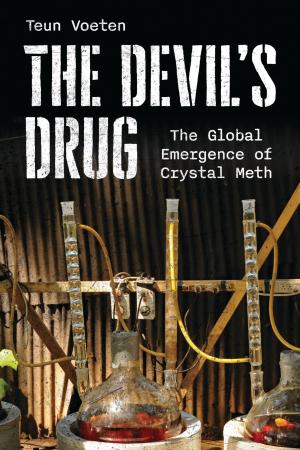
Chronicle Book Review: The Devil's Drug: The Global Emergence of Crystal Meth by Teun Voeten (2025, Rowman and Littlefield, 303 pp., $34 HB)
In its recently released UNODC World Drug Report 2025, the United Nations Office on Drugs and Crime (UNODC) warned that "methamphetamine and amphetamine (including "Captagon") continued to dominate the use of and trafficking in synthetic drugs worldwide in 2023." The anti-drug agency added that seizures of illicit stimulants -- mainly meth, but also including other amphetamines and Ecstasy -- reached a record high that year, jumping 31 percent over 2022.
The UNODC report identified Mexico and Myanmar as major sites of industrial meth production. Still, there are other meth hotspots around the world, and Dutch journalist and photographer Teun Voeten has the beat covered with The Devil's Drug. Voeten himself cites a UNODC statistic or two as he tells meth's story, but the dry numbers are heavily leavened with detailed on-the-scene reporting and interviews with users, dealers, cooks, smugglers, cops, prosecutors, harm reductionists, chemists, and social scientists.
Voeten's unique professional pedigree makes him an excellent scene observer, whether it's Dutch amphetamine cooks in the Brabant, Mexican mobsters in Sinaloa, or the open-air drug markets in places as far removed as Tijuana, Kabul, and Philadelphia. Trained as a cultural anthropologist, he has made a career as a war photographer, covering conflicts in the former Yugoslavia, Rwanda, Colombia, Liberia and Afghanistan, among others. He has written books on the underground homeless in New York City and the civil war in Sierra Leone. And his PhD dissertation was on drug violence in Mexico.
He spent two years researching this book, and the result is a sweeping global survey of meth's ever-increasing reach. He traces transnational criminal producing and smuggling networks, not only in Mexico and the Golden Triangle, but also in the Netherlands, the Czech Republic, and obscure corners of the meth world. The Czechs, for example, have a long history of communitarian speed making going back decades. But that hippie-ish sense of druggie solidarity has faded as the glamor of profits from increased production and sales has transformed Czech amphetamine production into a full-scale commercial enterprise.
While he talks to meth users who manage to manage long-term habits, Voeten seems fascinated with the worst off, the most down-and-out meth users and meth scenes, repeatedly describing tableaux of degradation and debasement among the addicted and homeless of LA's Skid Row, Philadelphia's Kensington, and under the bridges of Kabul. It's almost as if he gets the same kick as when he was snapping photos in war zones back in the day.
But while he writes of compassion for lower-class addicts, he approaches his topic from the perspective of crime, and while he generally shies away from policy prescriptions, his bottom line is prohibitionist: "Consumption and drug-related crime cannot be wiped out unless one opts for a North Korea-style control state," he writes. "But at least it should be kept under control, with an eclectic combination of repressive, preventive, and curative tactics."
He also attacks decriminalization and legalization with a tortured version of Herbert Marcuse's "repressive tolerance," arguing that progressive governments that have moved away from prohibition do so to keep the population sedated. And he seems to have a personal bone to pick with educated drug users: "A white educated elite snorts, and they think cocaine is no big deal since they handle it well (apart from becoming unbearably arrogant, egotistic dickheads) and assume it is true for everyone, a poignant lack of empathy which is particularly endemic in a white liberal elite." Voeten is clearly no progressive on drug policy, and he writes with his hair on fire about the looming menace of meth.
But for all his alarm-ringing, he has done his research, and even readers well-versed in the literature are going to learn a few things about the contours of the global trade and its impact on people and societies. And while he denounces himself as "an old conservative bastard, a kind of Archie Bunker" for criticizing drug consumption, he has a point about the meth business being the ultimate exploitative capitalist enterprise. "It is imperative to formulate a progressive anticapitalist narco-critical discourse," he writes. I'd like to see him get to work on that. But one can be both anticapitalist and antiprohibitionist, too, even if Voeten doesn't.
back to top

The CIA is already operating Reaper drones like this one over Mexico. (Air Force)
On January 20, the first day of the new administration, President Trump issued a slew of executive orders, the first in an avalanche of actions from the White House that have come so fast and furious that it is difficult to keep up. Almost lost in the torrent was a move that addressed Trump's campaign promises on fentanyl and immigration, an
executive order designating "cartels and other organizations as foreign terrorist organizations."
Faced with the evident failure of drug prohibition, especially regarding fentanyl, the Trump White House is not radically rethinking drug policy but instead doubling down with an even tougher approach to the intractable problem. But in doing so, it blurs the line between crime and terrorism, opens the door to lethal US "anti-terror" operations inside Mexico (the CIA is already flying surveillance drone missions aimed at cartels there), jeopardizes relations with Mexico and other Latin American countries, and endangers immigrants who may have been coerced into using cartel services to get across the border, thus exposing them to charges of "providing material support for terrorism."
Those cartels "constitute a national-security threat beyond that posed by traditional organized crime," the order reads, citing a "convergence between themselves and a range of extra-hemispheric actors, from designated foreign-terror organizations to antagonistic foreign governments; complex adaptive systems, characteristic of entities engaged in insurgency and asymmetric warfare; and infiltration into foreign governments across the Western Hemisphere."
And just to make sure we get the point, the order blames the cartels—not a century-long policy of drug prohibition—for "destabilize[ing] countries with significant importance for our national interests but also flood[ing] the United States with deadly drugs, violent criminals, and vicious gangs."
The order declared a "national emergency" under the International Emergency Economic Powers Act of 1977 "to deal with these threats."
The January 20 order was curious in that it did not designate any particular organizations, only "the Cartels," in itself a common misnomer for (mostly) Mexican illegal drug trafficking organizations since they are not entities engaged in collusive price-fixing but violent rivals. It did, however, mention two other groups, the Venezuelan criminal organization, Tren de Aragua (TdA), and La Mara Salvatrucha (MS-13), founded by the children of Salvadoran refugees from the 1980s US-financed civil war who learned their gang-banging skills on the streets of Los Angeles. Those groups "pose similar threats to the United States" as the cartels, the executive order proclaims.
The omission on particulars about which groups were the cartels in question was rectified two weeks later when the New York Times reported that the State Department would designate the following drug trafficking groups as foreign terrorist organizations: Mexico's Sinaloa, Familia Michoacana, Jalisco New Generation, Northeast, and United cartels; Colombia's Clan del Golfo, and the previously mentioned Venezuelan Tren de Aragua and Salvadoran Mara Salvatrucha.
The designations have yet to be formally announced, but the Times reported that the State Department has told congressional committees about the forthcoming announcement, which could come as early as this week.
Designating the drug trafficking organizations as Foreign Terrorist Organizations (FTOs) allows the US government to bring to bear against the cartels the same tools used to combat Al Qaeda and ISIS: financial sanctions, expanded intelligence operations (see the CIA drones above), and even direct military action since FTO designees are considered enemy combatants.
The move has been a fever dream of congressional GOP chest-thumpers, who for the past few years have regularly called for it, sponsoring bills such as the Drug Cartel Terrorist Designation Act (HR 1564). But those bills failed to pass, perhaps because of the dangers of unleashing the full power of the US to take action not in lawless failed states in the Middle East and the Horn of Africa but in Mexico or Colombia, states whose governments take great umbrage with any implication they do not control their national territory and great pride in their national sovereignty.
But it is drawing criticism from across the political spectrum. Writing for the libertarian Cato Institute, where he is vice president for economic and social policy studies, Alex Nowrasteh notes that cartels are not terrorist organizations in any normal sense of the phrase: "Drug cartels are vicious criminals, but they are profit-seeking criminals who are not motivated by political, economic, religious, or other social goals. There is a tendency to label the worst criminals as terrorists because crimes terrorize. That feeling is understandable, but that’s not the purpose of the anti-terrorism laws, and that’s certainly not consistent with any reasonable understanding of the real terrorist threat (small as it is).
"Congress has given the president too much authority to prosecute a war on terrorism without sufficient oversight by the legislature and the courts," Nowrasteh continues. "By designating drug cartels as FTOs, the Trump administration unlocks new powers for itself, creates a new media narrative that could fool many [describing cartel violence as "terrorist attacks], and reinforces the rest of its anti-immigration and border enforcement agenda."
Meanwhile, nonresident fellow in Drug Policy and Mexico Studies at the University of Houston's Baker Institute Gary Hale warns that the FTO designation is "a double-edged that will have limited impact on the mayhem caused by those organized criminal groups and will likely have negative effects on trade, commerce and other crucial aspects of the US–Mexico relationship. The gains that Trump has made through Mexico’s cooperation toward reducing the number of migrants reaching the U.S. southern border could also suffer significantly should US forces intervene in any manner in Mexico, including a surgical attack against any one member of a cartel or anyone of the several cartels that are operating throughout Mexican territory."
Citing the US military raid that killed Al Qaeda leader Osama bin Laden, Hale writes that "the FTO designation of Mexican targets could just as easily lead to similar unilateral action inside Mexico by US special operations forces, drone attacks, or other specific and limited military action against individual Mexican criminals, their organizations or their infrastructure — exponentially more provocative acts than seizing money from bank accounts.
"Unlike OBL and Al Qaeda, many more individuals in Mexico could end up listed as FTOs and could be killed by the US for the terroristic actions they commit in Mexico, albeit mostly against Mexicans," Hale continues. "Thus, if a Mexican criminal is designated as an enemy combatant as a result of an FTO designation, that civilian could be subject to execution through U.S. military action, an act of war in which a person is summarily killed without benefit of a full and fair trial. That is hardly the "American Way.'"
Mexican criminals should be treated as criminals and prosecuted under judicial process in Mexico or the US " and not mislabeled as military combatants for political purposes," Hale argues. Instead, the US should increase assistance to Mexico to strengthen its law enforcement, intelligence, and judiciary.
And Brennan Center’s Liberty and National Security Program managing director Rachel Levinson-Waldman warns that the "dangerous sweep" of Trump's plan "could harm large numbers of people with no connection to drug trafficking, let alone terrorism."
Asylum seekers who had to pay money to cartels to move north toward the border could be charged with "material support for terrorism," she writes, warning that the FTO designation "could sweep in a range of activity that has nothing to do with furthering terrorist activity or even the cartel’s activities, and everything to do with targeting the most vulnerable."
Churches, synagogues, and food banks that provide services to migrant communities could also be at risk, given the broad language of the FT. O designation. If a migrant availing himself of their support was smuggled across the border, "the organization may be vulnerable to prosecution or to having their assets frozen while an investigation is underway, effectively starving them of resources."
Even American drug users "could end up buying from a member of a 'foreign terrorist organization,' exposing them to material support prosecution. In light of the racial disparities in drug enforcement, these prosecutions are likely to disproportionately impact Black and Brown Americans," she writes.
The Trump administration looks tough going after "terrorists," but the downsides, from serious conflict with Mexico to the criminalization of migrants and homegrown drug users could be devastating. It's better that the Trump administration charge at windmills in Greenland than try to seriously implement a "war on terror" on the people who supply the drugs we demand.
back to top
Drug War Chronicle may have gone on hiatus, but police drug war corruption didn't. Here's a full month's worth to get you restarted. Let's get to it:
In West New York, New Jersey,
a West New York police dispatcher, a retired detective, and a Hudson County corrections officer were arrested on July 17 along with four others in a drug bust that led to the seizure of four kilograms of suspected cocaine, two handguns, seven vehicles, and more than $70,000 in cash. Ileana Hernandez, 56, a dispatcher with West New York Police Department, is charged with official misconduct, pattern of official misconduct, conspiracy to commit official misconduct, and conspiracy to distribute CDS (cocaine). Thomas Mannion, 60, a retired West New York police detective and longtime Police Benevolent Association local president, is charged with conspiracy to distribute (cocaine), and Marquis Santiago, 33, a Hudson County corrections officer, is charged with conspiracy to possess a controlled dangerous substance (cocaine). Hernandez has been suspended from duty.
In San Francisco, a former Sonoma County police officer was convicted on July 9 of extortion, impersonating a federal agent, and other charges for a scheme to steal marijuana and money from southbound drivers coming from the state's Emerald Triangle pot-growing region. Former Rohnert Park Police officer Joseph Huffaker was found guilty of six counts of conspiracy to commit extortion, extortion, conspiracy to falsify records in a federal investigation and falsifying records in a federal investigation, along with conspiracy to impersonate a federal officer and impersonating a federal officer. He and another former police officer, Brendan Jacy Tatum, were involved in a scheme where they pulled over drivers suspected of possessing "significant amounts" of cannabis. The officers would falsely claim to be agents of the Bureau of Alcohol, Tobacco, Firearms and Explosives (ATF) to extort the cannabis and threaten to arrest the drivers if they objected. While the Rohnert Park police had previously run enforcement actions aimed at the traffic on US Highway 101, Huffaker and Taum continued them without official sanction. They went down after the FBI received complaints from citizens of being "shaken down" by officers on the highway. Tatum earlier pleaded guilty to conspiracy, falsifying records, and tax evasion in connection with the scheme. He is scheduled to be sentenced on September 3. Huffaker will be sentenced on October 15 and faces a potential prison term of decades.
In Los Angeles, an LA County sheriff's deputy pleaded guilty on July 10 to possessing more than a pound of heroin he planned to smuggle into a Santa Clarita Valley county jail last year. Deputy Michael Meiser, 40, had been working at the North County Correctional Facility in Castaic, and he went down attempting to smuggle Pringles cans filled with heroin into the prison in exchange for $15,000. But sheriff's department investigators were onto him and stopped and searched him, finding the heroin and the cash. He's looking at a mandatory minimum of five years in federal prison and a statutory maximum sentence of 40 years in federal prison.
In Atlanta, a former Customs and Border Patrol officer was sentenced July 8 to 20 years in federal prison for smuggling 16 bricks of cocaine into the US at Atlanta Hartsfield-Jackson International Airport. Ivan Van Beverhoudt, 45, boarded a flight in the US Virgin Islands with two carry-on bags loaded with the coke, and traveled in his official capacity with his CBP-issued firearm to avoid screening. But a dope-sniffing dog alerted on him, and he was arrested on the spot. In February, he was convicted of conspiracy to import cocaine into the United States, importation of cocaine into the United States, conspiracy to possess with intent to distribute cocaine, and possession with intent to distribute cocaine.
In Louisville, Kentucky, a former Louisville police officer was sentenced on July 21 to 33 months in prison for his role in the botched March 2020 raid that left emergency medical technician Breonna Taylor dead from police gunfire on the floor of her apartment. Former Louisville Metro Police detective Brett Hankison, 46, had been found guilty in federal court last November of violating Taylor's civil rights during the incident, in which a squad of officers executing a search warrant with bogus information conducted a late-night no-knock raid on her apartment, leading her boyfriend to open fire on the violent intruders and thence to the police return fire that killed Taylor. Hankison did not fire the shots that killed Taylor, but was found guilty of wildly shooting into her and an adjoining apartment. Taylor's death helped spark the massive Black Lives Matter protests in 2020, and the lack of punishment for other officers involved led to renewed unrest outside the courthouse during the sentencing, where four people were arrested. While the Biden Justice Department had prosecuted Hankison, the Trump Justice Department asked the judge to sentence him to only time served, just one day in prison. But US District Court Judge Rebecca Grady rejected that request, calling it "incongruous and inappropriate," and saying the department treated Hankison's actions as "an inconsequential crime."
The corrupt cops stories are back. Really, they never went away.
back to top
The Drug War Chronicle is back! We may have been on hiatus for awhile, but the war on drugs hasn't gone anywhere. So let's start catching up.
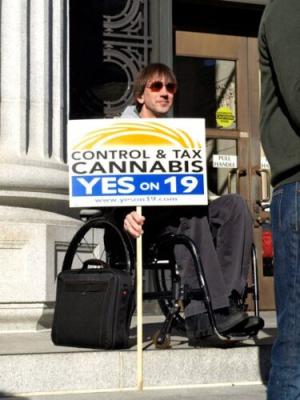
Richard Lee during the 2010 Prop 19 campaign. (Oaksterdam University)
DEA Finally Gets a Permanent Administrator as Marijuana Rescheduling is Stalled. More than six months into the second Trump administration, the Senate has given final approval to Trump's pick to run the Drug Enforcement Administration (DEA), finally getting the agency past a pair of acting administrators.
The new DEA head is Terrance C. "Terry" Cole, a longtime veteran of the agency who rose through the ranks over two decades and served a range of domestic and international assignments, including in Oklahoma City, Washington, DC, New York, Afghanistan, Colombia, and the Middle East. When he retired from the agency in 2020, he was DEA's Acting Regional Director for Mexico, Canada, and Central America.
After his retirement from the DEA, Cole served as Virginia's Secretary of Public Safety and Homeland Security under Gov. Glenn Youngkin (R) from 2023 until this year.
Queried about one of the biggest issues facing the agency -- marijuana rescheduling -- Cole has said examining the rescheduling proposal would be "one of my first priorities," but he has not said what result he wants and has been known to make comments worrying about the health effects of marijuana.
Initiated under the Biden administration, the move to reschedule marijuana has been stalled in the early months of the Trump era. DEA Administrative Law Judge John Mulrooney, who is handling the case, paused hearings on the issue amid charges of improper behavior by the DEA six months ago, and last month, the DEA and rescheduling proponents told him they remained at an impasse.
The issue had not advanced under two acting DEA administrators, but there is hope it will move with a new administrator now in place. [Ed: Whether reformers will like the decision is another question.]
Opiates and Opioids
Regressive Fentanyl Bill Becomes Law
In mid-July, President Trump signed into law the regressive Halt All Lethal Trafficking of Fentanyl (HALT) Act (S. 331). The new law permanently places fentanyl and its analogs on Schedule I of the Controlled Substances Act and imposes mandatory minimum sentences of five years in federal prison for dealing 10 grams of the drugs and 10 years for 100 grams.
Fentanyl had been temporarily assigned to Schedule I since 2018. The synthetic opioid has been implicated in hundreds of thousands of overdose deaths since initially appearing in the US opioid black market a decade ago. But those deaths have declined in the past couple of years.
Over objections from the research community, the bill makes all fentanyl-related substances Schedule I even though not all have been tested for medical benefits. To be placed on Schedule I, substances must have "no currently accepted medical use and a high potential for abuse." Researchers fear that the move could block research leading to new overdose treatments.
But President Trump touted the law as a victory in his war on the fentanyl trade.
"Today we strike a righteous blow to the drug dealers, narcotic traffickers and criminal cartels," Trump said. "We take a historic step toward justice for every family touched by the fentanyl scourge. We are delivering another defeat for the savage drug smugglers and criminals and the cartels," Trump said.
While some relatives of overdose victims attended the bill signing and praised the legislation, that sentiment was not unanimous.
"I lost my son to a fentanyl overdose and don't want another parent to experience that pain," said Susan Ousterman, founder of the Vilomah Memorial Foundation. "My son died because he couldn't access the care he needed. It is deeply hypocritical for Congress to claim a commitment to reducing overdose deaths while continuing to pass legislation that prioritizes punitive measures over meaningful solutions. Instead of perpetuating cycles of stigma and incarceration, we should create pathways to healing and recovery by focusing on treatment, harm reduction, and the underlying social determinants of health. The actions of Congress must align with the commitments they made to families like mine to reduce these preventable deaths."
The Drug Policy Alliance also criticized the new law as misguided and emphasizing law enforcement over public health and harm reduction.
"Congress should address Americans' very valid concerns about fentanyl by prioritizing bills that advance health approaches that save lives and give people who are struggling a chance at recovery. Health and harm reduction interventions are responsible for the recent decrease in overdose deaths," said Maritza Perez Medina, the group's federal affairs director. This includes expanded access to evidence-based treatment and overdose prevention tools like naloxone which can reverse opioid/fentanyl overdose, fentanyl test strips which can detect fentanyl in drugs, and medications for opioid use disorder which can cut overdose risk in half and reduce cravings so people can stay alive and have a shot at recovery," she added.
"Our elected leaders must invest more in these lifesaving health approaches, yet Congress is doing the opposite. Instead, they are set to make catastrophic funding cuts to essential health and addiction services to prioritize immigration enforcement -- to the tune of $2 trillion. And they are doubling down on failed drug war approaches by passing misguided bills like the HALT Fentanyl Act. We are deeply disappointed to see Congress take this step backward."
Obituary
Richard Lee, Founder of Oaksterdam University and California Marijuana Legalization Proponent, Dies at 62
Wheelchair-bound Richard Lee, who became a major player in the California marijuana legalization scene in the 2000s and 2010s, died July 27 in his hometown of Houston, Texas. He was only 62.
Lee founded Oaksterdam University, which has trained more than a hundred thousand students in cannabis production, law, and policy over the years, as well as creating the Blue Sky Coffeeshop, the Bulldog Coffeeshop, and the Oaksterdam Gift Shop. Lee used profits from his marijuana-related enterprises to fund activism around marijuana law reform and social justice.
Those profits helped him become the moving force behind the Proposition 19 statewide marijuana legalization initiative in 2010. That effort garnered nearly 47% of the popular vote, but could not get over the top. Still, it paved the way for successful marijuana legalization initiatives in Colorado and Washington two years later and a successful California legalization initiative in 2016.
But by that time, Lee was out of the scene. After a 2012 raid on Oaksterdam and his own home, Lee retired from Oaksterdam and returned to Houston, where he was the primary caregiver for his mother Anne Lee. At her son's behest, she founded Republicans Against Marijuana Prohibition (RAMP) in 2012.
Lee helped bring medical marijuana, adult use, and marijuana reform into the mainstream by the openness of his advocacy and the generosity of his spirit. He was publicly proud to be a cannabis entrepreneur and invited the media to come watch him do his good works. Lee didn’t wait for change to occur; he made it happen.
"Richard was an inspiration to so many," said his younger brother Donald after his death. "No less so for his family. That inspiration will never fade."
And his legacy lives on, both in a revitalized Oakland and in a national and global policy landscape where marijuana legalization is rapidly becoming the norm, not the exception.
back to top
Germany's legal marijuana-growing collectives are taking off, a legalization bill gets filed in Texas, and more.

Another marijuana legalization bill gets filed in Austin. (Creative Commons)
Delaware Becomes Latest State to See Legal Marijuana Sales. The state has become the latest to allow the legal sale of marijuana, with cash registers ringing up sales beginning last Friday.
The move comes after lawmakers legalized marijuana in 2023 and created a regulatory structure for the legal industry. The Office of the Marijuana Commissioner (OMC) published final regulations in September 2024.
The sales that began on Friday were at existing medical marijuana retailers who obtained one of the 125 licenses available via lottery, allowing them to do recreational sales, too. Not all of those licensees are offering recreational marijuana yet, however.
"The OMC has worked closely with our medical marijuana operators to ensure a smooth transition to the adult-use market," said Deputy Commissioner Paul Hyland. "Their ability to convert licenses has been instrumental in fast-tracking this launch."
"Today's launch of adult-use cannabis sales by Delaware's existing medical operators is an important milestone in the rollout of the state's regulated cannabis market," said Commissioner Joshua Sanderlin on Friday.
Under the state's marijuana law, people 21 and over can possess up to an ounce of marijuana and 12 grams of cannabis concentrate. With home growing remaining illegal, retail outlets are the only legal source of weed in the state. Consumers must pay a 15 percent tax.
Oklahoma Marijuana Legalization Initiative Campaign to Begin Signature-Gathering. A signature-gathering campaign to put a marijuana legalization initiative on the November 2026 ballot is getting underway in Oklahoma. Petitioners will begin hitting the streets on Thursday.
The Oklahoma Responsible Cannabis Act, which would appear on the ballot as State Question 837, would legalize marijuana possession and home cultivation for people 21 and over and would subject retail sales to a 10 percent tax.
State voters rejected a marijuana legalization initiative in 2023, but the group behind this year's campaign, Oklahomans for Responsible Cannabis Action, said that unlike earlier, this time around the measure has broad support from the community and within the state's marijuana industry.
"We've been working to communicate with our industry and community across the state the last couple of months and expect to have a presence in at least a simple majority of Oklahoma counties when we begin on August 6," the group’s director, Jed Green said. "What is really encouraging, to us, is that we have broad consensus of support within our industry and community, which if you go by patient car licenses directly, you know, is a good thermometer on about 330,000 Oklahomans," Green said.
The campaign has 90 days (until November 3) to come up with 173,000 signatures to qualify for the ballot next year.
Texas Marijuana Legalization Bill Filed. Democratic state Rep. Jessica Gonzalez filed a marijuana legalization bill, House Bill 195, in the House late last month.
The bill was filed during a legislative special session called by Gov. Greg Abbott (R) to take up several issues, including last month's deadly floods and the regulation of hemp products. But Abbott's proposal to further gerrymander the state's congressional districts to help maintain Republican dominance in Washington has led Democratic lawmakers to leave the state, preventing the legislature from achieving a quorum and effectively stalling the session's work.
The bill faces daunting prospects in the GOP-controlled state legislature, but if it were to become law, adults would be able to possess up to 2.5 ounces of marijuana, including 15 grams of concentrates.
The bill would also allow for taxed and regulated marijuana commerce to be regulated by the Texas Department of Licensing and Regulation. That agency would issue licenses for marijuana enterprises and draft regulations to govern the nascent industry.
The measure also allocates revenues from marijuana taxes and fees as follows: 10 percent to administer the marijuana program, 10 percent to the Department of Public Safety for marijuana lab testing, 20 percent to localities with at least one licensed marijuana business, and 60 percent to the Texas Education Agency’s Foundation School Program.
The bill awaits a committee assignment.
International
Germany Has Nearly 300 Cannabis Clubs. Germany legalized marijuana possession in 2024, but not a legal marijuana market. Instead, lawmakers approved "cannabis clubs" that can grow marijuana and distribute it to their registered members. According to a survey of state-level regulatory offices, there are nearly 300 such clubs nationwide.
Regulators across the country have approved 293 pot co-ops, with two states bordering the Netherlands having approved the most. North Rhine-Westphalia has 83 approved clubs and Lower Saxony has 55.
Rhineland-Palatinate came in third with 27 clubs, and Baden-Wurttemberg followed with 23. There are seven approved clubs in Berlin.
back to top
Delaware saw nearly a million dollars worth of cannabis sales on the first weekend of adult-use sales, Slovenian lawmakers push for legal marijuana, and more.

A medical marijuana dispensary. Coming soon to the Bluegrass State. (Sandra Yruel/DPA)
Delaware Sold Nearly a Million Bucks Worth of Weed on Opening Weekend. State officials reported combined adult-use and medical marijuana sales of $903,000 over the three-day weekend marking the beginning of adult-use marijuana sales in the state. That included roughly $625,000 in adult-use and $278,000 in medical sales at 14 retail locations.
The $625,000 in adult-use sales generated an estimated $93,700 in tax revenues, officials said.
"Delaware's first weekend of adult-use cannabis sales has shown that our state is ready -- and eager -- for a well-regulated, responsible market," Gov. Matt Meyer (D) said. "This moment reflects our commitment to growing Delaware's economy, strengthening our communities, and prioritizing public health. Now, we have a real opportunity to reinvest this revenue directly into neighborhoods across our state, ensuring Delaware becomes a national model for cannabis quality, innovation and fairness. I'm proud we're moving thoughtfully and deliberately to get this right for all Delawareans."
The most popular cannabis items were marijuana buds (accounting for 56% of sales), vapes (26%), and edibles (14%). Less popular products, accounting for less than 4 percent of sales, were pre-rolled joints with concentrate, liquid edibles (tinctures, elixirs, capsules), and topical lotions.
"Delaware's transition to adult-use cannabis sales has exceeded expectations," Delaware Marijuana Commissioner Joshua Sanderlin said. "More than $900,000 in sales over the first three days reflects not only strong consumer demand, but also the readiness and professionalism of our licensed operators to serve the public safely and responsibly."
"This successful launch positions Delaware to realize the economic benefits of regulated cannabis sales while maintaining our commitment to public safety and responsible implementation," said Joshua Bushweller, secretary of the Department of Safety and Homeland Security.
Medical Marijuana
Kentucky Approves First Medical Marijuana Dispensary. State officials have approved the first of 14 expected medical marijuana dispensaries in the state, although there is no firm date for opening yet. The dispensary is located in Beaver Dam, between Evansville and Bowling Green.
The state legalized medical marijuana beginning January 1, but patients still have no legal access within the state, although an executive order allows them to obtain medical marijuana from other legal states.
Gov. Andy Beshear (D) said the dispensary is expected to open its doors in the fall.
By the end of May, the state had issued more than 10,000 medical marijuana cards to eligible patients.
Harm Reduction
Trump Takes Aim at Harm Reduction And Safe Consumption Projects. In a July 24 executive order, Ending Crime and Disorder on America's Streets, President Donald Trump moved to end federal funding for harm reduction programs in general and safe injection sites in particular.
The executive order directs secretary of the Department of Health and Human Services (HHS) "ensure that discretionary grants issued by the Substance Abuse and Mental Health Services Administration (SAMHSA) for substance use disorder prevention, treatment, and recovery fund evidence-based programs and do not fund programs that fail to achieve adequate outcomes, including so-called 'harm reduction' or 'safe consumption' efforts that only facilitate illegal drug use and its attendant harm."
Another section directs that the HHS secretary and the secretary of the Department of Housing and Urban Development (HUD) to [end] support for 'housing first' policies that deprioritize accountability and fail to promote treatment, recovery, and self-sufficiency." Federal housing or homelessness grantees should lose funding if they "operate drug injection sites or 'safe consumption sites,' knowingly distribute drug paraphernalia, or permit the use or distribution of illicit drugs on property under their control," the order says.
The move is not going over well with drug reform and harm reduction advocates.
"If our leaders are serious about building safer communities and supporting people struggling with drugs, they must invest in what works: stable housing, overdose prevention, and accessible treatment," Maritza Perez Medina, director of federal affairs at the Drug Policy Alliance (DPA), told Marijuana Moment. "Yet housing remains out of reach for many, and while it takes just 35 seconds to be arrested for a drug offense, it can take weeks to access treatment."
"This executive order is alarming -- it invites federal interference in local decisions and threatens to punish cities and community groups for pursuing proven public health solutions," she said. "The potential loss of federal funds to organizations distributing naloxone that reverse a fentanyl overdose, syringes that stop the spread of infectious diseases, or other life-saving overdose prevention tools will only increase the risk of overdose deaths or illness to our loved ones."
The president’s executive order "promotes the illusion of safety by criminalizing people for being visibly unhoused rather than addressing root causes like the dearth of affordable housing and accessible substance use disorder and mental health care," said Paul Samuels, president of the Legal Action Center. "The approach outlined echoes decades of failed 'tough on crime' strategies that have harmed already marginalized communities, especially Black and brown, and wasted huge amounts of money without making anyone safer," he said.
International
Slovene Lawmakers Push for Adult-Use Marijuana Legalization. The Slovenian parliament has approved a bill to legalize medical marijuana, but members of several parties are going a step further and have now introduced a bill to legalize adult-use marijuana.
The bill is a project of the Freedom Movement, The Left, and the Social Democrats. It would allow adults to grow up to four marijuana plants (no more than six per household) and possess up to seven grams in public and 150 grams at home per adult, with a maximum of 300 grams per household.
The bill would allow for marijuana sharing but not commercial sales or monetary exchanges.
The bill also contains protections for workers' rights: Employers would not be allowed to conduct routine, random drug tests -- only for cause.
"According to analyses, cannabis is no more dangerous than other already legalized drugs, such as tobacco and alcohol," said Natasa Sukic, a The Left MP.
There is public support for legalization. In a pair of non-binding referenda in June 2024, two-thirds supported medical marijuana and a narrow majority (52%) favored the idea of letting adults grow and keep their own weed.
back to top