Consequences of Prohibition
Drug War Issues
Politics & Advocacy
An Ohio woman who shot and killed an FBI agent during a pre-dawn no-knock drug raid at her family home in Indiana Township, Pennsylvania, on November 19 now faces federal homicide and weapons charges. When police serving an arrest warrant for her husband broke into Christine Korbe's home at 6:00am, she fired one shot from a .38 caliber pistol from the top of a second-floor stair case, striking and killing Special Agent Sam Hicks. She was arrested moments later as she called 911 to report a home invasion.
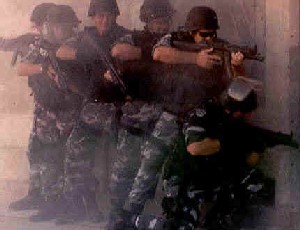
Will they never learn?
In one notorious case, that of Corey Maye, a Louisiana man whose home was mistakenly hit in a drug raid is now serving a life sentence for murder for shooting and killing an intruding officer. In another, as yet unresolved case, Virginia resident Ryan Frederick faces murder charges in the death of an intruding officer in a raid that now appears to have been without any legitimate basis.
Robert Korbe was to be arrested as part of a round-up of drug suspects in the Pittsburgh area. He was one of 35 people charged in a 27-count indictment charging them with conspiring to traffic in powder and crack cocaine from October 2007 through September 2008. He was arrested in the basement of the family home, which he shared with his wife and two young daughters, as he allegedly sought to destroy evidence.
Christina Korbe made her first federal court appearance Monday before Magistrate Judge Robert Mitchell, where she was arraigned on second-degree murder and several firearms charges. A bail hearing is set for next Monday.
"She's totally distraught," defense attorney John Elash told the Associated Press. "All she cares about and all she mentions is she wants to be home with her children. Can't imagine that she won't be home for Christmas."
Elash said that while his client is "extremely remorseful," she will argue that she acted in what she thought was self-defense. "I don't believe my client's guilty of any crime. I think the evidence will show that," Elash said. "It's obviously a self-defense or a defense of others, and the others that she's defending are a 5- and 10-year old that were with her when she was on 911, making the call to the police that somebody had broken into her house."
Law enforcement affidavits filed with the court claim that FBI agents shouted "police" and warned they were serving a warrant before breaking down the door to the Korbe's home as the family slept. According to those affidavits, Robert Korbe said he heard the agents and knew a raid was happening.
"Was this, something, everybody's yelling at one time, so that nobody could understand what's being said?" Elash said. "Could it have been heard by somebody that was asleep or just woken in an upstairs bedroom in a large home? If, in fact, she did hear it was a police officer or an FBI agent, why would she fire one shot at one of them and not continue to fire?" he asked.
"She thought she was being attacked, thought that she had to defend her children," Elash said. "That is what was going through her mind. Only pulled that trigger for one reason, because she thought she was going to get killed or that her children were going to get killed or seriously injured."
Elash isn't alone in sticking up for his client. Neighborhood residents have begun circulating a petition asserting her innocence and holding a collection for the family's children.
"I honestly believe that she couldn't possibly have known that it was a cop," friend Angie McCarrison said. "I think she heard glass break, and she thought, 'Oh my God, my kids,' and that was the end of that."
However Christina Korbe's case ends up, FBI Agent Hicks is dead, a victim as much of overly aggressive law enforcement practices as the bullet that ended his life.
This work by StoptheDrugWar.org is licensed under Creative Commons Attribution-ShareAlike 4.0 International


Comments
She was defending her home from intruders!
These FBI agents are cowards. They remind me so much of the Gestopo that it is nauseating. Why can't they go after real criminals?
Norman Lepoff, M.D.
In reply to She was defending her home from intruders! by Anonymous (not verified)
The picture's caption
"Will they never learn?"
How about: "Will people never learn to stop using drugs and getting raided by law enforcement?"
I don't care if people choose to be retards and use drugs, but since it's illegal, be prepared to face some consequences.
In reply to The picture's caption by Anonymous (not verified)
And if you are innocent?
There have been plenty of documented wrong address raids. Maybe you'll understand when it happens to you or a family member. Remember, if you are tough on crime,you may be soft in the head. I hope this poor woman is found innocent of all charges. Prohibition is the gateway to tyranny!
In reply to The picture's caption by Anonymous (not verified)
Worthess.
Or how about: "Will people never learn to stop reading articles and only grasping the parts that suit their preconceptions?"
I don't care if people choose to be retards as long as they don't reproduce and poison the gene-pool, but since morons like you that can only see law as infallible tend to be the heavy breeders because your double-digit IQ's can't conceive of anything to do aside from mindless rutting, we're stuck with each other; So, please, be kind to those of us still capable of abstract thought and kindly refrain from making comments like this that fuel our baser impulses towards aggression and violence. Your betters thank you.
In reply to The picture's caption by Anonymous (not verified)
Home invasion
I hope all those who break into a home cop or otherwise suffer the same fate.....good shot by the way.
In reply to She was defending her home from intruders! by Anonymous (not verified)
law and order
While others get elected and stay free and the rest of us live in fear of both sides. We are overwhelmed from both sides, Its getting too dangerous to live on this on this planet, and it isn't the meek who are taking over,. only
wolves in sheep's clothing.
In reply to She was defending her home from intruders! by Anonymous (not verified)
Real criminals? He was a
Real criminals? He was a drug dealer. Have you never seen a person whose life has been destroyed by drugs? Others who have been victims of people on drugs? I'm sorry but this woman invited the FBI into her home when she and her husband decided to become drug dealers.
In reply to Real criminals? He was a by Anonymous (not verified)
Wake Up America-It's time to TAKE BACK OUR rights!
If you or someone you know, or love, hasn't been affected directly by the "war on drugs", should get educated on alcohol and drug addiction. Over 85% of the prison population is due to, or related to addiction. One in one-hundred persons in the U.S. is in prison or jail. It costs thousands of dollars to incarcerate these inmates yet our government is making $$ on these people. Do the math!
Twice as many have been killed crossing the border as in Iraq, and not because they were crossing WITH drugs!
Education is cheaper than incarceration!
1
In reply to Real criminals? He was a by Anonymous (not verified)
Fairness
I was reading on the net about different articles and I happened to come across this one. After I read this comment I had to reply because its completely impulsive, rude and ignorant. How can you accuse her of knowing what her husband was even doing? You can't go around accusing anyone of something when you don't know what they knew. I'm a mother of 4 and I keep a baseball bat by both of my doors. I'm also a heavy sleeper, it doesn't matter what someone shouted before they broke in, I would not be able to comprehend, past the fact someone is busting down my door. I would only be thinking of defending my children, not even myself just them. It doesn't matter if it was the president or a true robber, I would be kicking butt period. I would be grabbing whatever I can grab and start bashing till no one moves. I'm also a military wife and I live on base housing which is generally safe but that would not give me second thought to my baby's in danger. Police procedures need to be changed when innocents are in the house. If she knew her husband was dealing drugs then she would of been charged with what comes with that but what about their children? They could of been hurt when they busted in? How many children have been accidently killed during drug busts? How many of those officers get in trouble for hurting or even killing the children? Look at both sides instead of just thinking about drug dealers. Procedures should be changed when it isn't just one bad guy in the house. They only think about getting that one bad guy. They don't think of going easy because of what is inside they only break in and start throwing people down to the ground. When innocents are merely protecting themselves and those they love from a danger they think exists, how can they be found at fault? The officers don't get in trouble when they hurt in innocents in busts. How is that fair?
In reply to She was defending her home from intruders! by Anonymous (not verified)
We have to defend our homes
I can agree that there should be a war on drugs. But the law has to understand that in this day and time if someone comes thru your door ,busting in,yelling and screaming and you were asleep, there is a great possibility of someone getting injured or killed. EVEN if the PERSON IS GUILTY of a crime. We have to find a better way to do this ! The risk is far to great to our officers. Defending oneself is a natural response when one feels threatened. So i cannot blame the woman even if she is guilty of a crime. We cannot act like thieves in the night and not expect harm to come to us.
In reply to We have to defend our homes by Anonymous (not verified)
Hello...
They had a warrant for the husbands arrest. The article says nothing about anybody baing a drug dealer.
In reply to She was defending her home from intruders! by Anonymous (not verified)
She was defending her home from intruders!
The police are not cowards, they are enforcing the laws of the states and nation. Drug dealers have armed themselves over the last 2 decades with increasingly leathal weapons and have often shown the willingness to kill the police. And far to often the drug dealers will stall the police while destroying the drugs when the police do not have a 'no knock' warrant. Thus, the increase in no-knocks and the overwhelming force applied. The police/FBI wear identifying words on their uniforms and always shout police or federal agents during the no-knocks. These drug dealers have often planned what to do during a raid - shoot at the police while I destroy the drugs and you claim self defense, dial 911 to creat an alibi for resisting / shooting, run out the back door - thus distracting the police so I can hide or destroy the drugs, etc. The police have seen all of these and many other techniques the criminals plan to evade their own conviction - many times they are willing to sacrifice their spouse, sibling, parants or even their own children in the attempt to avoid arrest.
Illegal drug traffic increase the crime rates of burglaries, robberies, car jacking, murders, arson, etc. - thus, the hard tactics against these criminals.
In reply to She was defending her home from intruders! by Anonymous (not verified)
Shes guilty
her husband facing life in prison and she firers only 1 shot seems more vindictive then innocent since he most likely sold his crack and powder coccain to his neighbors, She looses her gravy train and wanted someone to pay for it.
In reply to She was defending her home from intruders! by Anonymous (not verified)
real criminals
drug dealers, drug sellers, drug entrapeneurs are not criminals? Hmmm maybe they should investigate, doctors malpractice or those that perform unnecessary surgeries, so they can make more money!
too bad
too bad she didn't happen to have a assault weapon around with 3 shot burst or something to take out a few more raiding assholes
Protect and Serve is now Punish and Enslave
Criminals all you have to do is shout police search warrant and you can break down doors and shoot people in there own home? We are losing the right to defend our own home! This woman should be let go and the FBI should learn a lesson from this death. I think she had a right to defend her home. Most free Americans have a gun for home protection I keep a 12 gauge with buckshot in it at all times by my bed. If I heard someone breaking in my house awaking me they would be in trouble. We must end the War on US (drugs) we have lost so many personal rights during this war. The cops feel if you have a joint in your home you are a criminal and they have the right to shot you in your own home and they are getting away with it. But on the other had if you defend your own home they will put you in jail? This war has cost our country so much it was illegal when it was started it strip of our rights and enslaves the poor and mainly black and Hispanics for exercising our right to free choice. Greed runs this war and must be stopped.
Cherokee Fred Hussein
Give me liberty or give me death!
In reply to Protect and Serve is now Punish and Enslave by Anonymous (not verified)
you mean
Protect and serve no longer
It's now: harass and arrest which then turns into punish and enslave
2nd murder
the fact that that bitch Mary Beth is not charging her with 1st degree murder indicates to me that they know they have problems with their case.
ps. This word verification system sucks. I'm typing it in right, but it won't let me post!
get rid of no-knock warrants
There is a simple solution to all of this. GET RID OF NO-KNOCK WARRANTS. It was a bad idea when it was introduced and all evidence indicates it is still a bad idea. They should politely knock on the door and show the resident the warrant. It should not be done in pre-dawn times to avoid disturbing other residents. The Federal Bureau of Intimidation might even be able to give special training to their agents so that they can interact with citizens in a respectful manner.
If some "evidence" gets destroyed -- so what. Is it worth the death of an agent or an innocent person?
In reply to get rid of no-knock warrants by Anonymous (not verified)
Sure get rid of no knock
Sure get rid of no knock warrants, let the criminals gather their automatic weapons, open their door and shoot a whole team of FBI agents. "Then everyone will be saying why doesn't someone do something to stop this?" Don't be ridiculous, if you're not a criminal you have nothing to worry about.
In reply to Sure get rid of no knock by Anonymous (not verified)
Absolutely wrong.
"if you're not a criminal you have nothing to worry about."
This is the motto of someone who takes NO responsibility for their personal freedom. Having 100% blind faith in a system that constantly fails is about the worst thing anyone can do as an individual who has (had?) the right to life, liberty, and the pursuit of happiness.
The use of drugs is a victimless "crime". The acts that people commit while on drugs are where the law should bring down the hammer. The problem is that the public views things like "guns" and "drugs" as the problems, but the problems are the people's choices to do illegal things associated with those nouns. Drugs and guns are inanimate objects, with no guilt or feelings or responsibilities. You cannot punish a gun. You cannot punish guns. We need to bring justice back to the PEOPLE and make sure there are consequences to actions. If we did this properly, there would be no need to do these preventive measures like no knock drug raids which are done under the presumption that by getting rid of this particular drug dealer (at the cost of law officers?), they can decrease real crimes such as burglury, ect... They need to crack down on the crime at the end of the line, and stop fighting what they "think" are the sources of the problem.
One less drug dealer. Lets suppose drugs are harder to get. Price goes up. Now junkies need to commit larger crimes to pay for them. How does that prevent crime?
In reply to Sure get rid of no knock by Anonymous (not verified)
That is retarded statement.
That is retarded statement. The fact is there are numerous innocent deaths resulting from these tactics. There are a lot of cases of warrants being served on the wrong home. Not too mention property damages pets killed children traumatized.
Automatic weapons? This woman shot the agent with a 38 (revolver). This is one of the most common forms of home defense weapon and usually recommended by experts.
I support the police and agree that we should get tough on crime. That means more leg work (investigations survailance). Seizing assets tougher sentences. I know it's not as sexy as dressing up as a ninja and breaking down doors but it works a lot better and is a lot safer.
CQB style raids should be used in hostage situations or stand-offs or only when it is know for a fact there are huge weapons caches. Risking lives just to get evidence for a conviction is stupid. I would rather see a few drug dealers get off than have an innocent shot accidentily by overzealous ninjas.
In reply to Sure get rid of no knock by Anonymous (not verified)
What a Joke - Don't you read the paper? Obviously Not
What about the little old lady that was 90 years old in Atlanta...nothing to worry about. I believe she lost her life and they were at the wrong house.
I would say that was definitely something to worry about!
Strange Priorities
The FBI has strange priorities.
If you have drugs that you want to take , you are a dangerous criminal.
If you join a gang, become a "gang stalker" , and openly and notoriously poison and irradiate people, the FBI leaves you alone.
I Think most people would say that people who assault others with poisons and radiation are worse than people who just want to feel good ingesting what they like.
.
She is not being charged
She is not being charged with first degree murder because this was not a premeditated attack, which is a requirement of that charge. Also while I understand that the sound of your home being broken into can alter your state of mind, wouldn't seeing 4-8 armed men dressed in tacticle gear lead you to think that this is not just a break in, nevermind their verbal communication. And why if she felt threatened did she fire only one round. Her argument would be more convincing if she would have emptied her weapon rather than firing only once. Lastly why is there no mention of how the suspect (husband) was finally arrested in the process of destroying the evidence, the very point of these style of raids. If the agents would have rang the doorbell and waited the husband would have easily destroyed the evidence the raid was meant to discover.
I understand that most who read this will not agree with it. Nor because my points are week, but just because I am supporting the evil FBI rather than the poor housewife who sat beside her husband on the couch with her two young daughters night after night while the husband trafficed coke through their home. Why was she not concerned for her kids when daddy came home with coke?
In reply to She is not being charged by Anonymous (not verified)
Is that evidence worth the
Is that evidence worth the officer's life? The FBI created that situation. They have the power, not the people being raided. They CHOSE to run in with automatic weapons on a measly drug charge (the guy had never killed anyone, nor did he plan to), so why are they using DEADLY FORCE?
No-knock raids are about as hard-fascist as you can get before sending people of particular ethnicities to "work camps". This government has gone too far. Stop siding with the police. They have it easy in this growing police state. If they murder some 87 year old woman when they break into her home at 4:00am without warning, they don't get into trouble.
He who would trade a little liberty to get a little safety deserves neither, and loses both.
In reply to Is that evidence worth the by Anonymous (not verified)
The person who decided to
The person who decided to bring the drugs into the home is the one at fault. The responsibity falls squarely on the husbands shoulders. The wife has to share some of the blame also for allowing it.
In reply to She is not being charged by Anonymous (not verified)
They will lead ostriches
They will lead ostriches like you to the gulags, having come in the middle of the night, so that you won't be able to hide the flimsy evidence they will use to convict you of what should be your own business--drugs, sex, vitamins, gold, weapons-- whatever they can conjur up to say that you are a danger to society and not fit to be free.
As to the night raiders--they love the job as long as they have the guns and the badges. I, too, wonder why she didn't take out a couple more of those rat bastards.
"Positions of force attract men of low morality".
In reply to She is not being charged by Anonymous (not verified)
RE: "she is not being charged
I totally agree with the last statement you mentioned!!
How could she peddle coke with her husband and be concerned for her kids?
Any monkey could figure out drugs, and rearing kids do not mix.
In reply to RE: "she is not being charged by Anonymous (not verified)
Get serious
Uh, do you have any evidence that she knew her husband was dealing drugs?
In reply to She is not being charged by Anonymous (not verified)
Ever notice?
Ever notice that most of those apologists for the cops, the ones who defend "no knock raids" and praise prohibition 2.0, do not seem able to spell correctly? Where do these drug warriors get their education? From a cereal box? Are they too uneducated (or too unintelligent) to get a job anywhere but law enforcement? Perhaps we need to raise the standards for law enforcement personnel?
In reply to She is not being charged by Anonymous (not verified)
"And why if she felt
"And why if she felt threatened why did she fire only one round. Her argument would be more convincing if she would have emptied her weapon rather than firing only once."
She had a revolver. Once the hammer was cocked it's easy to get of the first round but not necessarily subsequent shots as it requires more force to pull the trigger. If she had an auto she might very well have emptied it. It's entirely possible that out of fear she brought the hammer back fired a round and sought cover to bring back the hammer single action.
She may very well have feared for her life but she will likely be convicted if drugs were found.
charges
"She is not being charged with first degree murder because this was not a premeditated attack, which is a requirement of that charge." Premeditation can be formed in the twinkling of an eye. It is the government's theory that she knew he was an FBI agent and shot him to slow them down so her husband could destroy the evidence. That is 1st degree murder. If she didn't know he was an FBI or law enforcement agent then it is involuntary manslaughter at best.
Also, prosecutors aren't generally shy about overcharging in order to get a plea. Maybe Mary Beth isn't the complete zealot that we all thought.
Why did she only fire one round? Maybe she realized her mistake after she shot him?
Regarding the destruction of evidence - it was an arrest warrant, not a search warrant. The FBI should have had enough evidence at that point. If this guy was a major dealer he would likely not have been able to destroy the additional evidence before they came in.
Finally, the point about being concerned with her kids is irrelevant and a low blow. But maybe she was just an idiot and didn't know what he was doing for a living. Also, women sometimes do make bad choices about who they have relationships with. I've known women who law enforcement who have had boyfriends and husbands who were doing time for felonies. I can't explain it. Some women are just fucking nuts.
One dead cop?
One dead cop? Well, it's a start.
In reply to One dead cop? by Anonymous (not verified)
INdeed!
Tpp bad she didn't take more of them out. She is right and they are wrong, even if their guns are bigger.
Anonymous on Sat, 12/13/2008 - 7:33am
Your "points" are weak to an epic degree. You assume that magically she could see what the intruders were wearing, who they were, what they were planning on doing, and what they were saying. That assumption is absolutely ridiculous as it was 6:00am and the level of disorientation from the event + waking up from sleep overwhelmingly would inhibit such observations. I know you only want to see things through your rose-colored glasses sitting around like some arm-chair expert, but your assumption falls flat when you take into account real-world circumstances.
You also assume that a person who is feeling threatened would automatically start spraying bullets endlessly, but this is just another case of you looking through rose-colored glasses and leaving out real-world factors. Not everyone behaves the same way when they feel threatened, not everyone has the same level of training with a firearm, not everyone is dealing with a 6:00 raid on their house with two children to protect, not everyone is just going to spray bullets randomly into their house, etc. For all you know she figured out that it was the cops after she fired the first shot, she thought she had subdued the threat with the one shot, or she was so disoriented from the conditions that the shot helped bring her back closer to a regular level of perception. Ultimately, we don't know for sure what happens, but for you to automatically assume that someone who feels threatened shoots multiple shots shows your lack of understanding.
The husband's actions in the basement are irrelevant to the incident with the woman. Him destroying evidence or the supposed need for this type of tactical approach has nothing to do with this lady's belief that she was defending herself/her family. Now if the husband had been in the same room or gave warning at the time of the raid, one could argue that she was attempting to give her husband time to destroy evidence, but I don't see anything about that. Plus, if she was trying to give him time, why would she only fire one bullet?
Ultimately, your assumptions just show a level of ignorance that often is found in TV shows. People don't always randomly fire endless bullets at a target when they are afraid. People don't always know exactly what is going on around them at all time, who is after them, or what the intruders' intentions are. People don't always hear perfectly through walls/doors while they are asleep at 6:00am. Etc...
Stupid cops
It's my opinion that if a cops or cops raid a home, then they deserve to be SHOT on site. Getting shot at comes with the badge. Dont like it? Get another job. She should be given a medal for defending her home! I would LOVE to sit on that jury.
jess
www.Privacy-Center.net
THIS is SOOOO wrong!
What really sucks is that Joseph Chavalia , a cop from Lima Ohio was found INNOCENT of killing a mother who was armed with her baby during a drug raid... and yet this poor girl WILL get convicted and get the maximum sentence for 2nd degree murder... The circumstances surrounding these two incidents are hauntingly similiar but remember the police can get away with ANYTHING....
(I know I'm preachin' to the choir on this site but)
Legalize drugs and end this ridiculous victimless drug war that will NEVER, I repeat NEVER be won and senseless tragedies like this will not have to happen.....
The only thing that happens by the DEA and FBI and all other drug task forces and agencies trying to take all theses drugs off the streets is that prices go up and violence increases! It doesn't have to happen because where there is demand there will be supply and there will ALWAYS be demand! The war on drugs is nothing but a huge waste of money that could be better used toward education and heath care... It also puts law enforcement officers in harms way needlessly.... and as I have seen first hand many law enforcement officers focus solely on arresting people for drugs thus letting violent and property crime slip into the shadows.
In reply to THIS is SOOOO wrong! by Anonymous (not verified)
The war on drugs is really a war against the people!
Come on, man, get real. Why would they legalize drugs? Its one of the biggest money makers for the system that has ever come down the pike. The bankers, the lawyers, the courts, CIA, FBI, the entire legal system is making a killing from drugs. Not just from selling the product to the dealers and little men who use them but also from the prosecution and incarceration of millions. Ever hear of "Prison Industries"?
We only see the visible part of the war on drugs. The part that the controlled media wants us to see. What they don't tell you is that they write huge astronomical bonds on anyone arrested for drugs, or any other so-called crime for that matter. They write even bigger bonds on prisoners. Why do you think they have increased penalties over the last 25 years? Because they use the bonds to finance the debt. The media never tells us who the real criminals are because they work hand in hand with them.
You can tell just how much debt a govt. has by how many people it warehouses in its prison system. The U.S. has 5% of the worlds population and 25% of the worlds prison population--right here in the land of the free. As our girl Anne said, "If you want more lawbreakers (and consequent prisoners) then make more laws."
The "war on terror" is the latest of a long series of wars against the American people. It would probably do away with the war on drugs but that one has been far too profitable. Just in case you forgot, we have had one war after another ever since the International banksters took over the country with their Federal Reserve banking system. There was WWI, WWII, Korea, war on poverty, war on illiteracy, war on cancer, war on drugs, ad infinitum. They keep declaring these wars because that is the only excuse for a military govt. to continue to exist. They have to fight the war.
Under the Trading with the Enemies Act, the U.S. govt. name all US citizens as enimies of the state requiring licensing for every activity. You have a right to free travel but most have contracted it away in exchange for the privilege of driving-a commercial term under Federal law meaning-"Transporting goods and passengers for a fee".
Now you can all spout off because you are on one side of the fence or the other. That is still being permitted, most probably so they can get the name of the trouble makers for some of those 6am raids when they get serious about filling up all the detention camps set up across the country. Your other option is to get busy and educate yourself while information is still flowing on the internet. Believe me, it is all there for those who have eyes to see and the will to pursue it.
Bad Rationale for no-knock warrants
The rationale is that things will get flushed down toilets, but when it comes to weapons charges, how can you flush a rifle or pistol down a toilet?
The reason we are seeing the militarization of the police has to do with the "toss them in prison and throw away the key" mentality among conservatives. These are the same conservatives ironically that want to keep their guns and want the government out of their wages. You can't have both.
Grace
The US has become a fascist police state. We are not safe from law enforcement they are just as dangerous as criminals.
In reply to Grace by Anonymous (not verified)
Fascist police state???
Actually Grace, I can tell ya for a fact -- this is not a Fascist police state. As former head of the American Fascist Party, I know for certain that this sort of behaviour has nothing to do with Fascism. Mussolini himself stated in "The Social Doctrine," "Fascism has nothing to do with police states!" and he wasn't kidding. We of the AFP are solidly against the feds and this kind of thing. And they hate us in return, and have most of us marked for death already, under various pretexts. Don't get suckered in by the media's highly inaccurate "definition" of Fascism. Anyone wants to know what it's really about, read "The New Fascism: An Idea Whose Time Has Come" from Lulu.com. We want a no-shit revolution, to get rid of this damn Tyrant Regime.
No more "no-knock" warrants!
The DEA/FBI/USA needs to stop this inane, insane war on drugs. It's getting innocent people killed, and it's getting the law enforcement personnel killed as well. There are several very good points being brought up in these posts regarding the fundamental rights of Americans to use whatever they want, as long as it is not threatening others. I think me sitting in my house smoking a joint and watching TV or listening to music does NOT make me a terrorist! Let the armed police forces in this country go after the violent criminals, the rapists and sodomizers (oh, wait, they ARE the rapists!) and leave the rest of us alone! And to you people who want to dictate to ME what I can or cannot do in my own home, on my own time, well then, you should move to Afghanistan and join the Taliban, you'd fit right in.
One last point: why is alcohol and tobacco, both of which are shown beyond any doubt to kill its users, legal in this country, but an herb like marijuana, which has been around since the dawn of Man, and is proven to help people, is illegal? Can anyone answer that one for me? I'd really like to know. Prohibition at its worst is useless and doesn't work, so let's give it up, divert that DEA money into education and health care instead. C'mon, America, we should be better than this!
Josephine
What Ultimately Justifies Drug Raid Tactics?
It seems to be a no-brainer that dangerous SWAT-style drug raids could be eliminated by employing a different means of arrest or capture. The mayhem resulting from these types of raids is certainly uncalled for, especially when something as insignificant as a drug warrant is involved. Botched raids should be a clue that militarized invasions of personal property really donât protect police officers as much as some claim. And the raids donât protect the rights of suspects, their children or pets.
When drug raid tactics donât make sense, itâs time to look to other, less obvious motives for the raids by asking some basic questions. Â For instance, what would it take to eliminate the anti-drug storm troopers and their murderous methods?
For one, undercover cops would need to watch a residence long enough to know the occupantâs personal habits so well that arrests can take place outside the suspectâs home during optimum times and circumstances. This means more effort, resources and money will be spent investigating and concluding each drug case. With fixed resources, it might also mean fewer drug cases overall and lower arrest statistics for the cops.  In addition to the fact that SWAT teams have little to do if their job is restricted to cornered snipers, hostage situations and major street gunfights; the bottom line on militant drug raids is that doing it peacefully with a minimal loss of life simply costs too much money. This cost overrun might be viewed by some police agencies as outweighing the cost of big lawsuits when things go terribly wrong.
At least some problems emerge because the use of SWAT teams for drug busts creates a division of labor between the investigators and certain types of thugs whose only talent seems to be terrorizing people by knocking down their doors in the middle of the night. Â Communications have a high probability of becoming garbled when official police duties are handed off to emotionally wired up uber-commandos.
Needless to say, this is not the kind of policing we expect in return for our earned tax money, particularly in what is supposed to be a free, open and just society. Anything that ratchets up brutality in the U.S. in the manner of the malignant tactics employed in drug cases increases the risk of a major blowback. If history is to be our guide, then the blowback will comprise more and more crime and social disorder owing to an increasingly alienated and paranoid society that moves ever nearer to totalitarianism.
Giordano
This country is in more trouble than we can imagine.
Mr. Obama, please form a "constitution commitee" to review the abuse's that we are suffering due to a lack of "following the rules". Our constitution has been systematically torn down to represent "nothing". The rights "guranteed" by the constitution, to the people, are being recended by the supreme court, congress, and other entities of the government, illegaly. This must be corrected, and reversed, and the authors of these illegal "laws" must be brought to "justice", the same kind of "justice" they inflict on the citizens of this once great country.
These crimes against the people, by the government, are the reason for the constitution, in the first place.
Regards
The Captain
And what did the great Timmothy McVey call it?
"collateral damage"?
Serves the bastards right.
too bad
She has every right to defend her home, if they did'nt idenify themselves she should have mowed them all down. The Federal goverment has way to much power. A bunch of thugs if you ask me cowards behind guns and a badge..............................
FBI Gestapo
Fools, Bureaucrats, and Incompetents.
They should be renamed to the: F.I.B.
I find it ironic, that so many conservatives whine excessively about how "Obama" is going to take their guns away. Yet here during the Bu$h Administration this kind of thing happens again and again- and not one peep out of the RepubliCONS.
I guess it's O.K. for when the CONservatives pull Gestapo tactics.
NFW...This is BS
Her hubby was a habitual cokehead/seller but was always walkn on charges. A rat? Back in coke start-up days (70's) you knew your party-house was a lil active. Why? There was ALWAYS a bucket of water next to toilet. Five-0 luved to get water dept. to turn off your water a few hours before gettin hit. You flush the evidence. Hubby was downstairs in basement trying to flush evidence. Ma and Pa knew the rules. I dunno about "home invasion" crap. We flush crap and cross our fingers. We don't pull heat, nor use it, on ANY local Five-0 or Feds. That Fed had kids also. It's a foot-race to those toilets. Nothing more. The rest is BS.
War On Drugs Is A Joke
Alcohol And Tobbaco Kill More People Than All Drugs In the World Combined.
So Are We Fighting The Wrong War Or What.
Add new comment