Consequences of Prohibition
Drug War Issues
Politics & Advocacy
Office of National Drug Control Policy head John Walters announced Saturday at a Kabul press conference that Afghanistan's poppy crops will be sprayed with herbicides in an effort to put a crimp in the country's booming opium and heroin trade. But the Afghan government, which is not enthusiastic about spraying, has yet to confirm Walters' pronouncement.
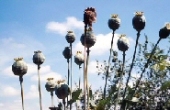
opium poppies
Afghanistan will become a narco-state unless "giant steps" are taken to rein in production, Walters said. "We cannot fail in this mission. Proceeds from opium production feed the insurgency and burden Afghanistan's nascent political institutions with the scourge of corruption."
The problem for Walters and the US is that embarking on widespread eradication is also likely to feed the insurgency as farmers and traders turn to the Taliban for protection from the central government and the "infidels." The Taliban is already doing just that, and it is using opium profits to fund its resurgence. So far this year, 189 NATO and US troops and some 4,000 insurgents have been killed in fighting, by far the largest toll since the US overthrew the Taliban in late 2001.
On top of that, after decades of war, Afghans are very leery of chemicals being dropped from planes. President Karzai himself earlier rejected spraying, saying herbicides proved too great a risk and could contaminate water and kill crops growing beside the poppies.
But Walters said Karzai has agreed to spraying, which will use glyphosate, the herbicide in Roundup. "I think the president has said yes, and I think some of the ministers have repeated yes," Walters said without specifying when spraying would start. "The particulars of the application have not been decided yet, but yes, the goal is to carry out ground spraying."
The Associated Press reported that Gen. Khodaidad, Afghanistan's deputy minister for counter-narcotics, said the government hadn't yet made any decisions. But the AP also quoted an unnamed Afghan official who said the government was studying the issue.
"We are thinking about it, we are looking into it. We're just trying to see how the procedure will go," said the official.
This work by StoptheDrugWar.org is licensed under Creative Commons Attribution-ShareAlike 4.0 International


Add new comment