Mexican Drug War

RSS Feed for this category

Drug Policy Prospects on Capitol Hill This Year [FEATURE]

There are nearly two dozen pieces of drug policy-related legislation pending on Capitol Hill, but given a bitterly divided Congress intently focused on the economic crisis and bipartisan warfare in the run-up to the 2012 election, analysts and activists are glum about the prospects for passing reform bills and even gloomier about the prospects for blocking new prohibitionist bills.

uphill climb for reform this year
But while drug reform in the remainder of the 112th Congress may take on the aspect of slow-moving trench warfare, there is work to be done and progress to be made, advocates interviewed by Drug War Chronicle said. And intensely expressed congressional concern over federal budget deficits could provide opportunities to take aim at the federal drug war gravy train.

Bills to reform drug policy or of relevance to drug policy reform this session run the gamut from hemp legalization, medical marijuana reforms, and marijuana legalization to various sentencing reform and ex-offender re-entry measures, as well as a pair of bills aimed at protecting public housing residents from eviction because a family member commits a drug offense. Also worth mentioning is Sen. Jim Webb's (D-VA) National Criminal Justice Commission Act of 2011, which, if it were to pass, would be a feather in the soon-to-be-retiring senator's cap.

On the other side of the issue, the most intense prohibitionist fervor this session is centered around banning new synthetic drugs, with five bills introduced so far to criminalize the possession and trade in either synthetic cannabinoids ("fake weed"), or synthetic stimulants ("bath salts"), or both. Other regressive bills would ban anyone with a drug arrest from owning a gun and require states to drug test welfare recipients. A hearing on welfare drug testing is reportedly coming soon. Conservative Republican-controlled House foreign affairs and national security committees could also see efforts to boost drug war spending in Mexico or other hard-line measures in the name of fighting the cartels.

[To see all the drug policy-related bills introduced so far in Congress, as well as legislation introduced in the states, visit our new Legislative Center.]

While advocates are ready to do battle, the political reality of a deeply divided Congress in the run-up to a presidential election in the midst of deep economic problems means drug policy is not only low on the agenda, but also faces the same Republican House/Democratic Senate gridlock as any other legislation.

"The inertia is not exclusive to sentencing or drug policy reform," said Kara Gotsch of the Sentencing Project. "Nothing is moving. There is such a deadlock between the House and the Senate and the Republicans and the Democrats in both chambers. I don't think failure to move in this Congress is necessarily a sign of limited interest in reform, but the political fighting means nothing moves."

"The House is passing stuff with no expectation it will pass the Senate," said Eric Sterling, executive director of the Criminal Justice Policy Foundation. "The whole Congress right now is in a state of suspended animation, waiting to see whether Obama is reelected or not and whether the Senate goes Republican or not. The gridlock we all see in the headlines around big issues such as taxes and spending filters down to almost every committee and every issue."

And with Republicans in control of the House, the prospects for marijuana law reform in particular are grim in the short term, the former House Judiciary Committee counsel said. "I don't think there is going to be any positive legislative action," Sterling predicted. "The House is not going to take up the medical marijuana bills and it's not going to take up the Frank-Paul legalization bill. They won't even get hearings."

"I don't think any of these marijuana bills will pass with this Congress, but they're very important as placeholders," agreed Morgan Fox, communications director for the Marijuana Policy Project. "As long as those bills are out there, we can keep bringing the issue in front of lawmakers and continue to educate them about this."

Even stalled bills provide opportunities for advancement, Sterling concurred. "That's not to say there isn't important education that can be done, and organizing and encouraging members to cosponsor good legislation. They need to be educated. The test of whether the effort is worthwhile or not is whether it can be passed this session," he offered. "The political stars are not lined up.

Jim Webb at 2007 hearing on incarceration (photo from sentencingproject.org)
Medical marijuana legislation in Congress includes a pair of bills aimed at making the financial system friendlier to dispensaries and other medical marijuana-related businesses, as well as a bill that would reschedule marijuana for prescription use:

  • Introduced by Rep. Jared Polis (D-CO), H.R. 1984, the Small Business Banking Improvement Act of 2011, would protect financial institutions that accept medical marijuana deposits from federal fines or seizures and having to file "suspicious activity" reports. Such threats have prompted major banks to stop doing business with dispensaries.
  • Introduced by Rep. Pete Stark (D-CA), H.R. 1985, the Small Business Tax Equity Act of 2011, would allow dispensaries to deduct expenses like any other business and is designed to avoid unnecessary IRS audits of dispensaries and put an end to a wave of audits already underway.
  • The marijuana rescheduling bill, H.R. 1983, the States' Medical Marijuana Patient Protection Act, would also specifically exempt from federal prosecution people in compliance with state medical marijuana laws. It was introduced by Rep. Barney Frank (D-MA).

"We're having our grassroots support all three pieces of legislation, but our primary thrust is H.R. 1983," said Kris Hermes, spokesman for Americans for Safe Access. "It's tough to get people engaged at the federal level, but we've mounted a social media campaign and want to promote the bill through Facebook and other methods, getting some viral participation in something that should be important for most patients around the country."

Part of the group's difficulty in getting members to focus on Congress is because they are busy fending off assaults at the state and local level, said Hermes. "We've had many instances of state officials doing an about-face on implementation of state laws or further restricting them, so the battleground has become very focused and localized," he noted.

"That takes energy away from what's going on at the federal level, and that's the real tragedy because it's the federal government that's at the root of all the opposition and tension taking place at the local level," Hermes said, pointing to this year's spate of threatening letter from US Attorneys to elected officials. "Having to fight this locally takes energy away from what's going on at the federal level."

Aaron Smith of the National Cannabis Industry Association, the recently formed trade association for marijuana businesses, said his group was focused on the financial bills. "I'm not holding my breath on the Republicans in the House, but the very introduction of these bills is progress," he said. "For the first time, we're actually seeing some of the industry's issues addressed. We think we'll see more traction for these bills than the broader legalization issue. There's already an industry clamoring for regulation, and federal laws are getting in between states and businesses in those states. We will be seeing state officials supporting these reforms. It's hard to write a check to the IRS or state treasuries when you can't have a banking account."

While the association is not predicting passage of the bills this session, it will be working toward that goal, Smith said. "We can get more cosponsors and we will be working to raise awareness of the issue," he said. "Just a year ago, no one even knew about these problems, now they are being addressed, and that's progress in itself."

But Congress is not the only potential source of relief for the industry, Smith said. "It would be helpful if we could get a memo from the Department of the Treasury clarifying that businesses licensed under their respective state laws are not a banking risk," he continued, suggesting that the existence of the bills could help prod Treasury.

While acknowledging the obstacles to reform in the current Congress, Bill Piper, national affairs director for the Drug Policy Alliance, was more upbeat about the state of affairs on Capitol Hill. "I'm super-excited about the level of support for the Frank-Paul marijuana legalization bill," he said. "It has 15 cosponsors now, and when you consider that it is completely undoing federal marijuana prohibition, that's pretty remarkable. Three or four years ago, we couldn't even get anybody to introduce it. And I'm also pleasantly surprised by not only the number of cosponsors, but who they are. They include Reps. John Conyers (D-MI), Charlie Rangel (D-NY), and Barbara Lee (D-CA), three important members of the Congressional Black Caucus, and most recently, Rep. Raul Grijalva (D-AZ), a member of the Hispanic caucus."

In the event that the Democrats retake the House in 2013, Conyers would become chair of the House Judiciary Committee again, Piper noted. "We would have a cosponsor of a bill to end federal marijuana prohibition chairing that key committee," he said. Until then, Piper continued, "while the bill is gaining steam, it is unlikely to get a hearing in this Congress."

If the prospects are tough for marijuana reform in the current Congress, they aren't looking much better for sentencing reform, although the budget crisis could provide an opening, Piper said. "I'm not optimistic about sentencing reform, but DPA is advocating that it be added to the package of spending cuts and bills designed to reduce the deficit over the long term. If they're talking about reforming entitlements and the tax code, they should be talking about reducing unsustainable drug war spending," he argued.

The Sentencing Project's Gotsch said that while the Hill would be difficult terrain for the rest of the session, there is progress being made on the sentencing front. "The Sentencing Commission has been very good, and the Department of Justice has responded favorably to Fair Sentencing Act implementation. Justice supported retroactivity on crack, and it has also reversed course on prosecuting crack cases prior to August 2010," she said.

Even in the Congress, there are small signs of progress, she noted. "I am encouraged by things like federal good time expansion included in the Second Chance Act reauthorization. That has passed the Senate Judiciary Committee, and it even picked up one Republican vote. That's good, and that's a discussion we hadn't had before."

What Gotsch is not getting enough of is hearings, she said. "It's disappointing that there hasn't been more activity regarding hearings, but next month, the Sentencing Commission will hopefully release its mandatory minimum sentencing report, and I know the advocacy community will be pushing the Senate Judiciary Committee to hold hearings on that."

For Sterling, it is money that is going to move things in the current Congress. "According to the latest Sentencing Commission on federal drug cases, 26% of federal drug cases were marijuana cases," he noted. "With a federal drug supply reduction budget of $15.4 billion, you can argue to the Congress that if you were to pass the Frank-Paul legalization bill, you could save about $4 billion a year."

Sterling is making a similar argument to the deficit-tackling congressional Supercommittee about federal crack cocaine prosecutions. "I argue to them that if they eliminated federal crack cocaine prosecutions, which account for about 20% of federal drug cases, they could save $3.5 billion a year," he said. "Crack is made and sold locally; it shouldn't be a federal case. That should be reserved for people like Mexican cartel leaders."

But while Sterling's argument is logical, he is not sanguine about the prospects. "We could save billions of dollars a year, but I don't think something that gets translated as letting dope dealers out of prison is going to get very far. Still, it's a contemporary argument, and the money is real money. What is clear is that these expenditures are a waste; they're not keeping drugs out of the hands of the community or reducing the crime in the community, and the money could be better spent on something else."

Budget battles offer potential openings to drug reform foes as well. House Republicans are using budget bills to attempt to kill reforms they didn't like, such as opening up federal AIDS funding streams to needle exchange programs, said Hilary McQuie of the Harm Reduction Coalition.

"We have to fight this constantly in the House now," she said. "They're reinserting all these bans; they even put a syringe exchange ban rider in the foreign operations budget bill, so that's a new front, and we can't even fight it in the House. That means we have to make sure the Senate is lined up so these things can be fixed in conference committee. It feels to me like we can't make any progress in Congress right now."

McQuie said, though, that Congress isn't the only game in town. "We're looking less to Congress and more to the regulatory bodies," she said. "Obama's appointments have been pretty good, and just last week we had SAMHSA coming out with guidance to the state about applying for substance abuse block grants. This is the first big piece of money going out with explicit instructions for funding syringe exchange services. Even in this political atmosphere, there are places to fight the fight."

Where the Congress is likely to be proactive on drug policy, it's likely to be moving in the wrong direction. The ongoing panic over new synthetic drugs provides a fine opportunity for politicians to burnish their drug warrior credentials, and legislation to ban them is moving.

"I'm pessimistic about those stupid bills to outlaw Spice and bath salts," said Piper. "One bill to do that just sailed through the House Commerce Committee, and we're hoping it at least goes through Judiciary. The Republicans definitely want to move it, it went through Commerce without a hearing, and no one opposed it," he explained. "But we're working on it. Given that this is the 40th anniversary of the failed war on drugs, why add another drug to the prohibitionist model?"

"Those bills are going to pass," Sterling bluntly predicted. "There may be some quibbling over sentencing, but there's simply no organized constituency to fight it. DPA and the ACLU are concerned about civil liberties, but I don't think that's going to have much of an impact. I'd be very surprised if more than a handful of liberals vote against this."

That may not be such a bad thing, he suggested. "I'm quite willing to say that people who use these things should not be punished, but I'm not sure I want to defend the rights of people to sell unknown chemicals and call them whatever they want," he said.

Even though the evidence of harm from the new synthetics may be thin, it remains compelling, Sterling said, and few legislators are going to stand up in the face of the "urgent" problem. "Even if you argued that these drugs needed to be studied, the rejoinder is that we are facing a crisis. To challenge these bills is asking more courage of our legislators than our system tolerates."

The remainder of the current Congress is unlikely to see significant drug reform, in large part for reasons that have more to do with congressional and presidential politics than with drug policy. But that doesn't mean activists are going to roll over and play dead until 2013.

"People should continue to pressure members of Congress to get on the Frank-Paul legalization bill," urged Piper. "The more cosponsors we get, the more it helps with passing legislation at the state level, and it also helps with getting media on the issue and making it more likely that the bill will get a hearing. That's a top priority for us."

The budget issue also needs to stay highlighted, Piper said. "Whether it's Democrats or Republicans in charge, Congress is going to make cuts, and they should definitely be pressured to cut the drug war. We want the drug war on the chopping block. This is a unique historical opportunity with the recession and the focus on the budget cuts. We have to re-frame the drug war as not only failed, but too expensive to continue."

Washington, DC
United States

Mexico Drug War Update

by Bernd Debusmann Jr.

Mexican drug trafficking organizations make billions each year smuggling drugs into the United States, profiting enormously from the prohibitionist drug policies of the US government. Since Mexican president Felipe Calderon took office in December 2006 and called the armed forces into the fight against the so-called cartels, prohibition-related violence has killed around 40,000 people, including more than 15,000 last year. The increasing militarization of the drug war and the arrest or killing of dozens of high-profile drug traffickers have failed to stem the flow of drugs -- or the violence -- whatsoever. The Merida initiative, which provides $1.4 billion over three years for the US to assist the Mexican government with training, equipment and intelligence, has so far failed to make a difference. Here are a few of the latest developments in Mexico's drug war:

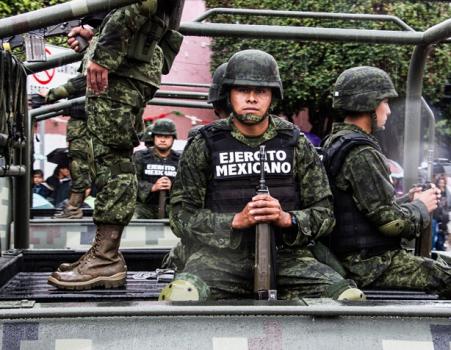
All those drug busts don't seem to make any difference. (image via Wikimedia)
Wednesday, August 31

In Mexico City,two female journalists were found murdered. Ana Maria Marcela Yarce Viveros and Rocio Gonzalez Trapaga were discovered by joggers in a park in a working class neighborhood. Both were naked. Yarce was a reporter for the investigative journalism magazine Contralinea and Gonzalez was a freelance journalist who used to work for Televisa.

Friday, September 2

Near Reynosa, police discovered the body of a top Gulf Cartel boss. Samuel Flores Borrego, 39, also known as "El Metro 3," appears to have been killed by members of his own organization for reasons that remain unknown. The body of Flores was found alongside that of a police officer. Both men had been shot. Flores, for whom the US Government had been offering a $5 million reward, is widely credited with being responsible for the bloody rift between the Gulf Cartel and their former enforcers, the Zetas, after he killed a high-ranking member of the Zetas in January 2010 in Reynosa. His replacement has already been identified as his former second-in-command, Mario Armando "Pelon" Ramirez Trevino.

In Hidalgo, 16 police officers were among 31 suspects taken into custody on suspicion of working for the Zetas. Authorities said that the arrests came after a cartel payroll was discovered during an arrest. Hidalgo is the home state of Zeta boss Heriberto Lazcano Lazcano, "El Lazca."

In Mexico City, President Calderon delivered a state of the nation speech in which he vowed to clean up corruption in Mexico's police forces by the time he leaves office by the time he leaves office in December 2012. He also announced the creation of a special federal prosecutor who will be in charge of identifying victims of the violence and find people who have disappeared.

Sunday, September 4

In Torreon, six people were killed during a series of incidents near the city's main stadium. Among the dead were three police officers who were killed after being ambushed by heavily armed gunmen. The same stadium was the scene of an August 20 shooting, which caused spectators and players to panic and run for cover. The game was called off.

Monday, September 5

In Nogales, police discovered an underground tunnel dug into a drainage tunnel that leads into the United States.  Police found the tunnel using information they received after the discovery of another tunnel on August 16.  Nogales is across the border from Nogales, Arizona.

In Jalisco, a high-ranking Sinaloa Cartel member was recaptured 40 days after escaping from a Mexico City hospital where he was taken after his original arrest on May 12. Guajardo Hernandez, "El Guicho," is known to have operated in Baja California and had an important role in arranging shipments of cocaine from Colombia to Mexico.

Tuesday, September 6

In Mexico City, authorities announced that an American citizen was arrested last week for smuggling grenades to the Sinaloa Cartel.  Jean Baptise Kingery was arrested in Mazatlan, Sinaloa. Kingery was also arrested in Arizona in August 2010, but was released, purportedly so that American law enforcement agencies could use him as an informant or in a sting operation.

[Editor's Note: We can no longer accurately enumerate the number of deaths in the Mexican drug wars this year. The Mexico City newspaper El Universal had been running a tally on which we relied, but it stopped. Our estimate for this year's death toll is just that -- an estimate.]

Total Body Count for 2007 (approx.): 4,300

Total Body Count for 2008 (approx.): 5,400

Total Body Count for 2009 (approx.): 9,600

Total Body Count for 2010 (official): 15,273

Total Body Count for 2011: (approx.): 7,000

Mexico

Mexico Drug War Update

by Bernd Debusmann Jr.

Mexican drug trafficking organizations make billions each year smuggling drugs into the United States, profiting enormously from the prohibitionist drug policies of the US government. Since Mexican president Felipe Calderon took office in December 2006 and called the armed forces into the fight against the so-called cartels, prohibition-related violence has killed around 40,000 people, including more than 15,000 last year. The increasing militarization of the drug war and the arrest or killing of dozens of high-profile drug traffickers have failed to stem the flow of drugs -- or the violence -- whatsoever. The Merida initiative, which provides $1.4 billion over three years for the US to assist the Mexican government with training, equipment and intelligence, has so far failed to make a difference. Here are a few of the latest developments in Mexico's drug war:

http://www.stopthedrugwar.org/files/wanted1.jpg
US Embassy in Mexico cartel wanted poster
Thursday, August 25

In Monterrey, 52 people were killed when suspected Zetas ignited gasoline at the entrance to the Casino Royale. As of August 31, twelve people are in custody for the attack. Many of those killed died of smoke inhalation after fleeing to offices and bathrooms in the interior of the casino.

Although the exact motive is yet unknown, police are investigating the possibility that the casino was attacked after having refused to pay protection money to the Zetas. Another possibility that has been floated in the Mexican press is that the casino was used to launder money for a rival cartel.

In Las Cruces, New Mexico, the former police chief of the town of Columbus pleaded guilty to conspiracy, smuggling, and public corruption charges. Angela Vega was arrested in March along with the town's mayor and 13 others. The group is known to have trafficked at least 200 weapons to La Linea, the military wing of the Juarez Cartel.

Friday, August 26

In Michoacan, wanted posters were put up by the Knights Templar Organization. The banners, which show the mugshots of five men the names of six men said to now be working for the Zetas, offered rewards of between $100,000 and $500,000 as well as a phone number to call.

Sunday, August 28

In Almoya de Juarez, near Mexico City, authorities discovered the decomposed bodies of five individuals buried in a corn field. The discovery was made after a family member of a missing man received a phone call from an unidentified man who said that 23 people were buried in the field. The other 18 remain unaccounted for.

Monday, August 29

In Acapulco, at least 140 local schools were closed after teachers refused to go to work because of extortion threats. School had just begun one week prior. Teachers indicated that at least four teachers had been kidnapped in the past eight days, and cars full of armed men were seen cruising past at least one school.

In Tamaulipas, authorities announced that a top Gulf Cartel commander was among several cartel members captured in the town of Camargo over the weekend. Abiel Gonzalez Briones, "R-2," 28, was captured after an aerial patrol spotted a group of armed men, at least seven of whom were captured. Gonzalez Briones is thought to have been a main financial operator of the Gulf Cartel and the area chief for the Miguel Aleman area.

In the mountain town of Guachochi, Chihuahua, seven bodies were discovered by the army. They had all been missing since August 13. Of the dead, six were strangulated to death, and the seventh, a woman, was shot. Additionally, near Ciudad Juarez, five human skulls thought to be several years old were discovered.

Tuesday, August 30

In Utah, authorities announced the dismantling of a Sinaloa Cartel cell. At least 30 people have so far been taken into custody after an 18th month investigation, which led to the discovery of several high-level men described as being "command and control" for the the cartel in Utah. At least 30 pounds of meth, 2.5 of heroin were taken into custody, as well as cash and high-powered weapons.

Total Body Count for 2007 (approx.): 4,300

Total Body Count for 2008 (approx.): 5,400

Total Body Count for 2009 (approx.): 9,600

Total Body Count for 2010 (official): 15,273

Total Body Count for 2011: (approx.): 6,700

Plan Merida Focus to Shift to Border Region [FEATURE]

US officials said this week in El Paso that the Merida Initiative to help Mexico strengthen its security forces and judicial system in their ongoing battle with criminal drug trafficking organizations -- the so-called cartels -- will shift its focus to Mexico's border states. Other officials defended the "Fast and Furious" Bureau of Alcohol, Tobacco & Firearms (ATF) gun-running scheme that resulted in weapons from the US being transferred to cartel members.

The remarks came at the eighth annual Border Security Conference at the University of Texas El Paso (UTEP), just across the Rio Grande River from Ciudad Juarez, one of the most deadly cities in the world in recent years because of prohibition-related violence plaguing Mexico. The conference is a joint undertaking of UTEP and US Rep. Silvestre Reyes (D-TX), a former El Paso sector Border Patrol head.

Somewhere around 40,000 people -- there are no official figures -- have been killed in the violence in Mexico since President Felipe Calderon deployed tens of thousands of troops and federal police in December 2006 to confront the increasingly brazen cartels head on. Despite the killing or arrest of dozens of high-profile cartel leaders, the flow of drugs north and guns and cash south has continued largely unabated.

The Merida Initiative, unveiled in 2008, allocated $1.5 billion in US aid to fight the drug traffic. Some of that money was destined for Central America, where Mexican cartels are increasingly encroaching, but the bulk of it is going to Mexico. Much of the Mexico funding has gone to the military and different law enforcement agencies, but given that both the military and the Mexican police are deeply compromised by cartel corruption, it is questionable whether throwing more money at them will accomplish much.

Now, said US Bureau of Narcotics and Law Enforcement Affairs assistant secretary William Brownfield in remarks reported by the El Paso Times, the emphasis will shift to Mexico's border states and their state and local police forces. That would be the best way advancing the goals of the initiative's four pillar strategy of disrupting the ability of the cartels to operate, enhancing Mexico's capacity to sustain the rule of law, creating a modern border infrastructure, and building resilient communities, he said.

The US-Mexico border. Drugs flow north, and cash, guns, and violence flow south. (Image via Wikimedia)
"This is where most of the cartels have focused their activities," Brownfield said Tuesday, adding that Plan Merida will continue no matter who wins next year's Mexican presidential election. "I want to make this clear, it does not matter if it is the PAN, the PRI or another party that wins the elections, the initiative will continue working, even if it undergoes some minor adjustments," he said. "We will proceed and we will succeed. We have no choice," he said.

Dallas ATF special agent in charge Robert Champion traced today's horrifying levels of violence not to Calderon's deployment of the troops at the end of 2006, but to conflicts that broke out when the Zetas, former Mexican special forces soldiers turned enforcers for the Gulf Cartel, turned on the Gulf Cartel.

"That's the genesis of where the violence began," said Champion.

Since then, Champion said, gun running has evolved from being a solely a border issue to being an issue as far north of the border as Indianapolis, St. Paul, and Atlanta.

"We now have organized arms trafficking rings," he said, adding that some of them use teenagers to smuggle weapons with the serial numbers erased.

Noting that the number of high powered rifles being smuggled into Mexico has increased dramatically in recent years, Champion felt compelled to defend ATF's Operation Fast and Furious, which has excited tremendous anger in Congress after it was found that guns smuggled in the operation ended up being used to kill a US Border Patrol agent and in at least two other killings in the US, as well as countless murders in Mexico. The operation was designed to track the weapons, which would lead to the cartels, but ATF lost track of many of them, effectively acting as an arms supplier for the cartels.

"We (ATF) were criticized because we only focused our efforts on attacking the suppliers of these weapons and when we wanted to expand our efforts and attack the criminal organizations, it worked out badly," Champion said by way of explanation.

Despite the determined optimism of US officials, others at the conference warned that the situation was deteriorating. Mexico is unable to retain effective control of parts of its national territory, they said.

The situation in Mexico "is starting to look like a civil war," said UTEP political science Professor Charles Boehmer. "Juarez is one of the hottest battlegrounds," he added.

Nearly 9,000 people have been killed in prohibition-related violence in Ciudad Juarez in the past two and a half years.

Mexicans are dying to supply the insatiable appetite for drugs north of the border, said Mexican officials. The easy availability of firearms isn't helping either, they said.

"That is what has brought about the violence -- the fight for control of US drug distribution," said Alejandro Poire, technical secretary to the Mexican National Security Council. "It's an unprecedented business opportunity for cartels in Mexico." The availability of weapons from the US has created a cartel "arms race," he added.

The conference featured lots of happy talk about how to win the Mexican drug war, but largely ignored the most radical option for doing so: legalizing the drug supply and sucking out the oxygen on which the cartels rely. That would not mortally wound the cartels, which are now morphing into all-around criminal enterprises, but it would cut off their main source of income. Maybe next year.

El Paso, TX
United States

Mexico Drug War Update

by Bernd Debusmann Jr.

Mexican drug trafficking organizations make billions each year smuggling drugs into the United States, profiting enormously from the prohibitionist drug policies of the US government. Since Mexican president Felipe Calderon took office in December 2006 and called the armed forces into the fight against the so-called cartels, prohibition-related violence has killed around 40,000 people, including more than 15,000 last year. The increasing militarization of the drug war and the arrest or killing of dozens of high-profile drug traffickers have failed to stem the flow of drugs -- or the violence -- whatsoever. The Merida initiative, which provides $1.4 billion over three years for the US to assist the Mexican government with training, equipment and intelligence, has so far failed to make a difference. Here are a few of the latest developments in Mexico's drug war:

All the drug busts in Mexico don't seem to make a difference. (image via Wikimedia)
Thursday, August 4

In Jalisco, six charred bodies were discovered by police in a flaming SUV. All six had apparently been tortured or mutilated before being set on fire, which is indicative of cartel-related violence. Jalisco is home to several cartels, including the Sinaloa Cartel and the Jalisco Cartel New Generation (CJNG).

Friday, August 5

In Ascension, Chihuahua, the entire 26-man police force quit for fear of their lives after two local police officers were killed earlier in the week. Their duties are now being taken over by state and federal police forces and by army patrols.

Saturday, August

In the Monterrey suburb of San Nicolas de las Garza, five young men between the ages of 17 and 20 were found murdered and dumped on a sidewalk. Police said the victims all had the "look of gang members," but this has not yet been confirmed. Police are investigating to see whether the men were killed elsewhere and then dumped where they were found, as only one bullet casing was discovered at the scene.

In Ciudad Juarez, a high-ranking police commander responsible for the city's downtown area was shot dead near the International Bridge to the US. Victor Nazario Moreno Ramirez, 32, was in his vehicle when it was boxed in by four vehicles full of gunmen who opened fire. Police discovered 420 spent shell casings at the scene, mostly from AK-47's. Another passenger was seriously wounded. Moreno had previously been in command of an elite unit of the municipal police responsible for special operations and responding to high-impact crime.

Sunday, August 7

In Ciudad Juarez, an El Paso woman was murdered in front of her 4-year old daughter. Stephanie Marie Lozano was sitting in a car with her boyfriend outside his home when gunmen arrived in a truck and shot them both dead. Her daughter Hailie was in the backseat and was not shot, but apparently suffered powder burns from gunpowder. Witnesses indicate that police did not chase the assailants car even though it continued to drive around the area. It also appears as if Juarez police told Lozano's family they would not be investigating and should simply consider it a tragic event.

Near Guadalajara, a 13-year old girl was taken into custody after a fire fight and allegedly admitted to working for the Zetas. The girl, identified only by her alias, "Pearl," told police that she was paid $325 dollars every two weeks to act as a "hawk," which is cartel slang for a look-out that reports on the movement of authorities and other enemies. She is the latest in a string of high-profile cases involving extremely young people who have become involved in cartel activities. The most famous, Edgar Jimenez Lugo, 14, is currently serving a three-year sentence for his participation in the torture and murder of four people who were found hanging from a bridge between Mexico City and Acapulco.

In Mexico City, the office of the chief federal security spokesman acknowledged that US agents participate in intelligence analysis and information exchange with Mexican security forces in Mexico. Over the weekend, the New York Times reported that CIA agents and former American military personnel are working on some Mexican military bases and that the government has considered using private contractors for security operations inside Mexico.

Monday, August 8

In Mexico City, the government announced that 172 municipalities will not be receiving federal anti-crime assistance money because they have not shown any progress in improving the training or quality of local police forces. Among the places being cut off from federal funding are the cities of Ciudad Juarez, Reynosa, and Nuevo Laredo, which have all experienced extremely high levels of drug-related crime.

Also in Mexico City, SEDENA announced the results of a 20-day military operation across the states of Coahuila, San Luis Potosi, Tamaulipas and Nuevo Leon. "Operation Northern Lynx" resulted in the deaths of 30 suspects and the arrest of 196 more, as well as the seizure of over 1,200 weapons and 3.3 tons of marijuana and 260 vehicles. Twelve kidnap victims were also rescued. Soldiers participating in the operation came under fire 21 times, resulting in the death of one soldier and wounding 21 others.

Tuesday, August 9

In Michoacan, the bullet-riddled bodies of four police officers and two civilians were found. The officers, two of whom were women, had all been reported missing Saturday in the neighboring state of Colima. The motive is currently unknown.

In Mexico City, a judge blocked the extradition of a high-ranking female cartel boss, Sandra Beltran Leyva, who is known as the "Queen of the Pacific," to the United States on organized crime, drug trafficking and money laundering charges for which she was acquitted. She has been in custody since her arrest in 2007, and it is unclear if this means she will now be released. She still faces a money laundering charge.


Wednesday, August 10

In the city of Chihuahua, a former police chief was assassinated as he ate at an Applebee’s Restaurant. Jose Refugio Ruvulcaba Plascencia was police chief in Chihuahua in the late 1990’s and in Ciudad Juarez in 2003.

In Ciudad Juarez, a transit police officer was run down by gunmen and shot dead.


Total Body Count for 2007 (approx.): 4,300

Total Body Count for 2008 (approx.): 5,400

Total Body Count for 2009 (approx.): 9,600

Total Body Count for 2010 (official): 15,273

Total Body Count for 2011: (approx.): 6,700

Mexico

Mexico Drug War Update

by Bernd Debusmann Jr.

Mexican drug trafficking organizations make billions each year smuggling drugs into the United States, profiting enormously from the prohibitionist drug policies of the US government. Since Mexican president Felipe Calderon took office in December 2006 and called the armed forces into the fight against the so-called cartels, prohibition-related violence has killed around 40,000 people, including more than 15,000 last year. The increasing militarization of the drug war and the arrest or killing of dozens of high-profile drug traffickers have failed to stem the flow of drugs -- or the violence -- whatsoever. The Merida initiative, which provides $1.4 billion over three years for the US to assist the Mexican government with training, equipment and intelligence, has so far failed to make a difference. Here are a few of the latest developments in Mexico's drug war:

All the drug busts in Mexico don't seem to make a difference. (image via Wikimedia)
Wednesday, July 27

In Veracruz, a local newspaper published an editorial strongly denying that a recently slain journalist had ties to drug trafficking organizations. Last week the state attorney general said that journalist Yolanda Ordaz De La Cruz -- who was found decapitated and tortured -- may have been killed by one gang because of her ties to another. The newspaper, Notiver, has called on state attorney general Reynaldo Escobar to publicly apologize and resign.

In Ciudad Juarez, Interior Minister Francisco Blake said that federal forces would not be withdrawn from Juarez, despite a statement Tuesday by Mayor Hector Murguia that federal police would be withdrawn in the area in September. The relationship between local security forces and the federal police is notoriously bad. Just last week, federal police shot at the convoy of municipal police chief Julian Leyzaola.

Friday, July 29

In the city of Chihuahua, authorities captured a high-ranking figure in La Linea, the armed wing of the Juarez Cartel. Jose Antonio Acosta Hernandez, "El Diego," is alleged to have participated in some 1,500 murders in the Ciudad Juarez area. Among the crimes he's accused of masterminding is the murder last year of a US consulate employee and the January 2010 massacre of 15 teenagers at a party.

Saturday, July 30

In Nuevo Laredo, about 80 local leaders including the mayor demanded that the local police force be reinstated. The Nuevo Laredo municipal police was disbanded in June and replaced with military personnel pending the vetting and testing of local police. Crime has since continued to rise. 21 other municipalities in Tamaulipas also had their security duties taken over by the Mexican military.

Sunday, July 31

In Ciudad Juarez, two people were murdered. According to researcher Molly Molloy, this brings July's total to 216, including 13 women and 8 minors.

In Michoacán, police arrested the head of the Knights Templar Organization for the city of Apatzingan. Nery Salgado Harrison, 24, has been in charge of the Apatzingan area since 2009 and is thought to be heavily involved in the production and local distribution of meth. The Knights Templar is an off-shoot of La Familia, which splintered into quarreling factions after the death of boss Nazario "El Chayo" Moreno in December 2010.

Monday, August 1

In Acapulco, federal police captured a high-ranking leader of the Independent Cartel of Acapulco. Moises Montero Alvarez, 42, "El Koreano," was captured along with one other suspect. Alvarez is thought to be connected to the September kidnapping and murder of 20 tourists from Michoacán, after apparently being mistaken for members of La Familia.

In Nuevo Leon, a police supervisor and his son were gunned down in front of a school in the town of San Nicolas de las Garza.

Tuesday, August 2

In Ciudad Juarez, authorities announced the arrest of a prison director and four guards in connection with last week's deadly clashes which killed 17 inmates in Ciudad Juarez's municipal jail facility. The director, Lucio Cuevas, is accused of granting favors to inmates. Video of the shooting shows guards letting in gunmen to open fire on inmates.

In Coahuila, authorities captured Valdemar Quintanilla Soriano, allegedly the number two financial operator of the Zetas Organization. Quintanilla is also thought to have connections to the top tier of Zetas leadership, such as Heriberto Lazcano. Another man was also taken into custody.

In Reynosa, five gunmen were killed in a fire fight with the army. The city used Twitter and other social networking sites to warn residents of the fighting, which took place at around noon in the Las Fuentes area of the city. Reynosa is just across the border from McAllen, Texas.

Total Body Count for 2007: (approx): 4,300

Total Body Count for 2008: (approx.): 5,400

Total Body Count for 2009: (approx.) 9,600

Total Body Count for 2010: (official) 15,273

Total Body Count for 2011: (approx.): 6,600

Mexico

Mexico Drug War Update

by Bernd Debusmann Jr.

Mexican drug trafficking organizations make billions each year smuggling drugs into the United States, profiting enormously from the prohibitionist drug policies of the US government. Since Mexican president Felipe Calderon took office in December 2006 and called the armed forces into the fight against the so-called cartels, prohibition-related violence has killed around 40,000 people, including more than 15,000 last year. The increasing militarization of the drug war and the arrest or killing of dozens of high-profile drug traffickers have failed to stem the flow of drugs -- or the violence -- whatsoever. The Merida initiative, which provides $1.4 billion over three years for the US to assist the Mexican government with training, equipment and intelligence, has so far failed to make a difference. Here are a few of the latest developments in Mexico's drug war:

Black market drug money buys lots of guns in Mexico. (image via wikimedia.org)
Tuesday, July 12

In Ciudad Juarez, at least 18 or 19 people were murdered in the city. Among the dead were four men who were shot dead at a field that had been the scene of a previous homicide, and a 12-year old boy who was working in a tire shop and chased into a restaurant where he was shot dead.

In Nuevo Laredo, at least 11 people were killed in and around Monterrey. In one incident, five men were gunned down in a public park by men armed with assault rifles. In another incident, four men were gunned down as they walked down a street, and armed men dragged a woman from her home in Escobedo and executed her outside.

Thursday, July 14

In Baja California, the Mexican army discovered the largest marijuana plantation on record, four times the size of previous record-holder, which was found in Chihuahua in 1984. The sophisticated plantation, which was discovered in the desert about 150 miles from Tijuana, could potentially have harvest 120 tons of marijuana each harvest.

Friday, July 15

In Sinaloa, 12 members of an elite police unit and a bystander were killed after being ambushed on the highway between Los Mochis and Guasave. Earlier in the day, two police officers were wounded during a shootout in Los Mochis. Signs later strung up in several parts of Sinaloa by members of the Beltran-Leyva Organization accusing the police of backing the Sinaloa Cartel, with whom the BLO split violently in 2008. Sinaloa, especially the area around the towns of Los Mochis and Guasave, has long been considered one the areas of the country under the most influence of drug cartels.

In Nuevo Laredo, 149 prisoners escaped during a large-scale jailbreak. At least 35 of the escapees are federal prisoners, which often means that they are cartel-affiliated. Five guards abandoned their posts during the incident.

Wednesday, July 20

In Queretaro, the Mexican Army seized the largest amount of meth precursor chemicals ever recorded in the country. The Army declined to comment on whether any arrests were made in the raids, which confiscated approximately 840 tons of chemicals which could have been used to process billions of dollars worth of meth.

In Chihuahua, prosecutors announced that a US District Court employee had been kidnapped and murdered in Ciudad Juarez recently. Jorge Dieppa, 57, a court interpreter, had apparently been kidnapped and held for a $10,000 ransom but was executed after allegedly recognizing a former girlfriend of his among the kidnappers. Three suspects, including the woman, are in custody, and another is on the run.

Friday, July 22

In Monterrey, two police officers assigned to the US consulate in the city were shot dead. The two men, who had been assigned to guard US diplomats, were riding on a motorcycle in the violence-plagued suburb of Guadalupe when they were shot by gunmen in a vehicle.

In Zacatecas, six gunmen were killed in a firefight with the army after troops on patrol came under fire after receiving a tip that suspected cartel members were setting up an illegal roadblock.

Monday, July 25

In Ciudad Juarez, 24 people were killed, including 17 killed inside the municipal jail. It is still unclear exactly what happened, but it is known that members of either the Mexicles, allied to the Sinaloa Cartel, and the Aztecas, allied to the Juarez cartel, overpowered guards and took their weapons. While the incident was initially considered an escape attempt, other reports indicate that at the time of the shooting, guards and prisoners were involved in an orgy which included drugs and underage women. Twenty people were also wounded in the incident, which was finally ended after an hour of shooting.

Also in Ciudad Juarez, the mayor announced that federal police would begin withdrawing from the area in early September. Mayor Hector Murguia said that municipal police are now capable of controlling the city themselves. Federal police took charge of law enforcement in Ciudad Juarez in April 2010, after an influx of soldiers were withdrawn after accusations that they were abusing their power.

Tuesday, July 26

In Veracruz, a crime reporter was found decapitated. Yolanda Ordaz de la Cruz had been missing since Saturday, when she was kidnapped by heavily armed men. Ordaz, who worked for the local newspaper Notiver, is the fourth Veracruz reporter to be murdered this year so far. A note left with the body seems to suggest that her killing is connected to the July 20 murder of a local columnist and his family in their home.

In Ciudad Juarez, police chief Julian Leyzoala said that a group of 20 federal police officers shot at his armored car on Monday as he was driving to the municipal jail to deal with the riot. Leyzoala said he is preparing criminal charges of attempted murder for the federal officers, who he says are well aware of the type of car he drives. "Fortunately the car is armored, or I wouldn't be here," he said.

Editor's Note: We cannot accurately tally the drug prohibition-related killings in Mexico at this time. El Universal, the only Mexican newspaper that was doing so on a regular basis, has stopped. We will have to rely on official pronouncements on the death toll, and will report them when they happen. Below are the numbers through the end of last year. With more than 1,400 reported dead in April alone, this year's toll could well exceed last year's. As of this month, we believe the total death toll in Calderon's drug war has surpassed 40,000.]

Total Body Count for 2007: (approx): 4,300

Total Body Count for 2008: (approx.): 5,400

Total Body Count for 2009: (approx.) 9,600

Total Body Count for 2010: (official) 15,273

Total Body Count for 2011: (approx.): 6,500

Mexico

Chronicle Book Review: To Die in Mexico

To Die in Mexico: Dispatches from Inside the Drug War, by John Gibler (2011, City Lights Press, 218 pp., $13.95 PB)

In Mexico, journalist John Gibler points out, there is the War on Drugs and then there is the drug war. The War on Drugs is the spectacle -- the well-publicized deployment of troops, the high-level diplomatic meetings, the perp walks of captured capos before the media, all designed to show that the Mexican government is dead serious about confronting the "menace to society" that Mexican drug trafficking organizations, the mislabeled "cartels," represent.

The drug war is what is really going on -- the tens of thousands of murders, the amazing ability of cartel killers to do their dirty work in broad daylight in cities full of police and soldiers and never get arrested, the unending flow of drugs north and guns and cash south, the undeniable collusion between factions of the security apparatus and different cartels, all within the context of a nation unable to provide safety or security for its citizens.

The Mexican War on Drugs is little more than a charade, or, as Gibler puts it, "a terrifying farce." And it is a charade in which the US is complicit. Our government is handing out $1.4 billion in Plan Merida funds, most of it going to the Mexican military and law enforcement apparatus to "strengthen institutions." But those institutions our money is supposed to strengthen -- the army, the national police -- are precisely the ones complicit in the drug wars.

How is it that Ciudad Juarez could see 3,000 drug war murders last year in a city filled with soldiers and military checkpoints? How is it that 95% of those murders are never even investigated? How is it that convoys of SUVS filled with rifle-toting cartel gunmen pass freely through the streets? How is it that 90% of those arrested in the drug war in Juarez are affiliated with the Juarez Cartel (La Linea), while the Sinaloa Cartel, which is waging a deadly battle to take over la plaza (the franchise), has hardly anyone arrested? How is that 90% of those who were arrested are later released without charge?

And how is it that there is la plaza in the first place? To be clear, the term refers to the ability of a cartel to go about its smuggling business unimpeded in a particular geographic location. That means someone, typically a military or national police commander has awarded la plaza to a particular cartel, allowing  safe and secure transit for its goods and either looking the other way or actively participating in the killing that needs to be done.

This is the second week in a row that I've reviewed a book that left me angry. Last week, it was The Wars of Afghanistan with its carefully documented evidence that billions of US taxpayer dollars going to Pakistan to help the US in Afghanistan were instead used to help gin up Islamic fundamentalist armies aimed at establishing a pro-Pakistan caliphate in Afghanistan, all under the watchful eye of the CIA and the Pentagon. And now, Gibler's revelations about the complicity of Mexican military and law enforcement in the drug trade--while we finance them.

Of course, it's not really a revelation. Anyone who has been seriously watching Mexico knows exactly what is going on, but given the lame US media coverage, it's easy to slip into a sort of crime beat mentality that is good for counting the bodies, but not so good for much else. To Die in Mexico is a sure antidote for that particular ailment.

Gibler's taut prose, keen eye, carefully honed outrage, and willingness to actually do on-the-scene reporting bring the horrifying reality of Mexico's drug war to vivid light. He travels with reporters who don't report because they don't want to end up like the 60 journalists murdered in Mexico in recent years; he travels with crime beat (nota roja) photographers who memorialize the corpses on the pages of their tabloids; he goes to Culiacan, the home of the Sinaloa Cartel, to interview Mercedes Murillo and the Sinaloa Civic Front and the journalists of Rio Doce, who tell him they can't do real journalism because it would be bad for their health. (I made that same trek, talked to those same people, three years ago).

The cowing of the press is a critical issue. Because of it, Gibler writes, a cone of silence descends over the drug war. The killings are noted, yes, but never is there any discussion of who did it or for whose benefit. There is no investigation beyond local cops counting bullet casings at the scene while managing to miss the convoys of cartel gunmen roaring by. Those whose tortured bodies prove their guilt by virtue of having been killed.

It's not just the corruption and impunity in Mexico. Gibler offers a devastating and heartbreaking critique of drug prohibition as well. His arguments are not new to people who follow this, but his eloquence is moving and astounding. And he offers a critique of a global capitalist order in which Mexico exports goods, workers, and drugs and imports guns, cash, and the violence of prohibition.

Yes, I am angry after reading To Die in Mexico. I've been cranking out the Drug War Chronicle for more than a decade because I hate drug prohibition and what it has done not only to our society, but around the world. Years of immersion in the huge pile of crap and lies that is the drug war tends to coarsen one, but work like Gibler's gets the righteous juices flowing again. I think that's a good thing.

Gibler writes with a wisdom and eloquence about Mexico and its drug war unmatched by anyone except the Sage of the Southwest, Charles Bowden. And like Bowden, he sees Mexico's drug war for what it is: a horrifying charade, a terrifying farce. And we're paying for it. I heartily recommend this book.

Guatemala President Wants "NATO-Style" Force to Battle Narcos

Guatemalan President Alvaro Colom said Central American countries threatened by Mexican drug cartels should lobby for the creation of a regional NATO-style military force in an interview with the Financial Times Wednesday. The center-left politician said only a combined regional military force and improved intelligence could thwart the power of the violent and well-armed drug trafficking organizations.

Guatemalan President Alvaro Colom would rather go to war with the narcos then legalize drugs. (Image: World Economic Forum)
Guatemala and other Central American nations form a transit corridor for South American cocaine destined for North American markets, an industry estimated to be worth as much as $40 billion a year. Mexican cartels seeking to expand their operations or fleeing the pressure cooker of the vicious drug war at home have moved into those small, relatively weak neighbors, with the Zetas in particular establishing a presence in Guatemala's Peten province.

In May, Zetas killed 27 farm workers at a ranch when they came looking for the owner, who wasn't there. A few days later, Zetas killed and dismembered a Guatemalan prosecutor working on the case. Drugs gangs are suspected in the killing of Facundo Cabral, the celebrated Argentine folk singer, who was gunned down as he headed toward the airport after a Guatemala City concert earlier this month. The attack was believed to be aimed not at Cabral, but at his Guatemalan concert promoter.

Colom, who is now in his final year in office, said that national borders meant nothing to the traffickers, while the region's armies and police forces have to respect the sovereignty of their neighbors.

"What good is it if the forces of one country are pursuing drug traffickers who cross a river but then have to stop to avoid an international incident?" he said. "Why not have a type of Central American NATO?"

Colom said he was against legalizing drugs and looked for financial assistance from the US to help fight the battle.  "Without support of co-responsibility from the consumer markets, this is going to be a permanent war," he said.

Guatemala

The 2011 National Drug Control Strategy: Drug Policy on Autopilot [FEATURE]

The Office of National Drug Control Policy (ONDCP -- the drug czar's office) Monday released this year's version of the annual guiding federal document on drug policy, the 2011 National Drug Control Strategy, and there's not much new or surprising there. There is a lot of talk about public health, but federal spending priorities remain weighted toward law enforcement despite all the pretty words.

http://stopthedrugwar.org/files/kerlikowske-200px.jpg
Drug Czar Gil Kerlikowske -- captured by the drug war establishment
The strategy identifies three "policy priorities": reducing prescription drug abuse, addressing drugged driving, and increased prevention efforts. It also identifies populations of special interest, including veterans, college students, and women with children.

The strategy promises continued strong law enforcement and interdiction efforts, including going after the opium and heroin trade in Afghanistan and cooperating with Mexican and Central American authorities in the $1.4 billion Plan Merida attack on Mexican drug gangs.

"Drug use affects every sector of society, straining our economy, our healthcare and criminal justice systems, and endangering the futures of our young people," said ONDCP head Gil Kerlikowske in introducing the strategy. "The United States cannot afford to continue paying the devastating toll of illicit drug use and its consequences."

This is all standard stuff. One thing that is new is ONDCP's felt need to fight back against rising momentum to end the drug war, or at least legalize marijuana, and rising acceptance of medical marijuana. The strategy devoted nearly five full pages to argumentation against legalization and medical marijuana.

"Marijuana and other illicit drugs are addictive and unsafe," ONDCP argued in a section titled Facts About Marijuana. "Making matters worse, confusing messages being conveyed by the entertainment industry, media, proponents of 'medical' marijuana, and political campaigns to legalize all marijuana use perpetuate the false notion that marijuana use is harmless and aim to establish commercial access to the drug. This significantly diminishes efforts to keep our young people drug free and hampers the struggle of those recovering from addiction."

Just to be clear, ONDCP went on to say flatly "marijuana use is harmful," although it didn't bother to say how harmful or compared to what, nor did it explain why the best public policy approach to a substance that causes limited harm is to criminalize it and its users.

ONDCP also argued that despite medical marijuana being legal in 16 states and the District of Columbia, "the cannabis (marijuana) plant is not a medicine." Somewhat surprisingly, given that the DEA just days ago held that marijuana has no accepted medical use, the national drug strategy conceded that "there may be medical value for some of the individual components of the cannabis plant," but then fell back on the old "smoking marijuana is an inefficient and harmful method" of taking one's medicine.

"This administration steadfastly opposes drug legalization," the strategy emphasized.  "Legalization runs counter to a public health approach to drug control because it would increase the availability of drugs, reduce their price, undermine prevention activities, hinder recovery support efforts, and pose a significant health and safety risk to all Americans, especially our youth."

It was this section of the strategy that excited the most attention from drug policy reformers. They lined up to lambast its logic.

"It is encouraging that ONDCP felt a need to address both medical marijuana and general legalization of the plant in its 2011 strategy booklet, which was released today," noted Jacob Sullum at the Reason blog. "It is also encouraging that the ONDCP's arguments are so lame… The ONDCP never entertains the possibility that a product could be legal even though it is not harmless. Do the legality of alcohol and tobacco send the message that they are harmless? If you oppose a return to alcohol prohibition, should you be blamed for encouraging kids to drink and making life harder for recovering alcoholics? ONDCP director Gil Kerlikowske may have renounced the use of martial rhetoric to describe the government's anti-drug crusade, but he still manages to imply that reformers are traitors whose 'confusing messages' are undermining morale in the nation's struggle against the existential threat of pot smoking."

"It's sad that the drug czar decided to insert a multi-page rant against legalizing and regulating drugs into the National Drug Control Strategy instead of actually doing his job and shifting limited resources to combat the public health problem of drug abuse," said Neill Franklin, director of Law Enforcement Against Prohibition. "Obama administration officials continually talk about the fact that addiction is a medical problem, but when our budgets are so strained I cannot understand why they're dumping more money into arrests, punishment and prisons than the Bush administration ever did. The fact is, once we legalize and regulate drugs, we will not only allow police to focus on stopping violent crime instead of being distracted by arresting drug users, but we will also be able to put the resources that are saved into funding treatment and prevention programs that actually work. Who ever heard of curing a health problem with handcuffs?"

Some reformers offered a broader critique of the strategy.

"Other than an escalating war of words on marijuana, it's all pretty much the same thing as last year," said Bill Piper, director of national affairs for the Drug Policy Alliance. "There's nothing really new here, except they are a bit more punitive this year," he added, citing the pushback on marijuana, the call for a drugged driving offensive, and a call to encourage workplace drug testing. "Last year, it was more about reform, but this year ONDCP is up to its old tricks again. Whatever window they had to turn over a new leaf is closed; Kerlikowske has been fully captured by the drug war establishment."

The Obama administration could pay a price for its intransigence on drug policy, said Piper.

"They badly underestimate the American people and the drug reform movement, especially on medical marijuana," he said. "It's not just the strategy, but the DEA refusal to reschedule and the Department of Justice memo, too. They are talking about coming out big against medical marijuana, but I think they know there is little they can do. In a sense, this is an act of desperation, a sign that we are winning. First they ignore you…"

The veteran drug reform lobbyist also professed concern about the drugged driving campaign. The strategy sets as a goal a 10% reduction in drugged driving (although it doesn’t even know how prevalent it is) and encourages states to pass zero tolerance per se DUID laws that are bound to ensnare drivers who are not impaired but may have used marijuana in preceding days or weeks.

"We are concerned about getting states to pass those laws," he said. "They are problematic because people can go to jail for what they did a week ago. We're also concerned about the push for employee drug testing."

Piper's overall assessment?

"There's not a lot of new policies there, and that's disappointing," he said. "This is a drug policy on autopilot; it's just a little more aggressive on the marijuana issue."

Washington, DC
United States

Drug War Issues

Criminal JusticeAsset Forfeiture, Collateral Sanctions (College Aid, Drug Taxes, Housing, Welfare), Court Rulings, Drug Courts, Due Process, Felony Disenfranchisement, Incarceration, Policing (2011 Drug War Killings, 2012 Drug War Killings, 2013 Drug War Killings, Arrests, Eradication, Informants, Interdiction, Lowest Priority Policies, Police Corruption, Police Raids, Profiling, Search and Seizure, SWAT/Paramilitarization, Task Forces, Undercover Work), Probation or Parole, Prosecution, Reentry/Rehabilitation, Sentencing (Alternatives to Incarceration, Clemency and Pardon, Crack/Powder Cocaine Disparity, Death Penalty, Decriminalization, Drug Free Zones, Mandatory Minimums, Rockefeller Drug Laws, Sentencing Guidelines)CultureArt, Celebrities, Counter-Culture, Music, Poetry/Literature, Television, TheaterDrug UseParaphernalia, ViolenceIntersecting IssuesCollateral Sanctions (College Aid, Drug Taxes, Housing, Welfare), Violence, Border, Budgets/Taxes/Economics, Business, Civil Rights, Driving, Economics, Education (College Aid), Employment, Environment, Families, Free Speech, Gun Policy, Human Rights, Immigration, Militarization, Money Laundering, Pregnancy, Privacy (Search and Seizure, Drug Testing), Race, Religion, Science, Sports, Women's IssuesMarijuana PolicyGateway Theory, Hemp, Marijuana -- Personal Use, Marijuana Industry, Medical MarijuanaMedicineMedical Marijuana, Science of Drugs, Under-treatment of PainPublic HealthAddiction, Addiction Treatment (Science of Drugs), Drug Education, Drug Prevention, Drug-Related AIDS/HIV or Hepatitis C, Harm Reduction (Methadone & Other Opiate Maintenance, Needle Exchange, Overdose Prevention, Safe Injection Sites)Source and Transit CountriesAndean Drug War, Coca, Hashish, Mexican Drug War, Opium ProductionSpecific DrugsAlcohol, Ayahuasca, Cocaine (Crack Cocaine), Ecstasy, Heroin, Ibogaine, ketamine, Khat, Marijuana (Gateway Theory, Marijuana -- Personal Use, Medical Marijuana, Hashish), Methamphetamine, Nicotine, Prescription Opiates (Fentanyl, Oxycontin), Psychedelics (LSD, Mescaline, Peyote, Salvia Divinorum), Synthetic Drugs (Mephedrone, Synthetic Cannabinoids)YouthGrade School, Post-Secondary School, Raves, Secondary School