Mexican Drug War

RSS Feed for this category

Latin America: Mexico Drug War Update

by Bernd Debussman Jr.

Mexican drug trafficking organizations make billions each year trafficking illegal drugs into the United States, profiting enormously from the prohibitionist drug policies of the US government. Since Mexican president Felipe Calderon took office in December 2006 and called the armed forces into the fight against the so-called cartels, prohibition-related violence has killed over 12,000 people -- the body count passing 6,000 for 2009 so far this week. The increasing militarization of the drug war and the arrest of several high-profile drug traffickers have failed to stem the flow of drugs -- or the violence -- whatsoever. The Merida initiative, which provides $1.4 billion over three years for the US to assist the Mexican government with training, equipment and intelligence, has so far failed to make a difference. Here are a few of the latest developments in Mexico's drug war:

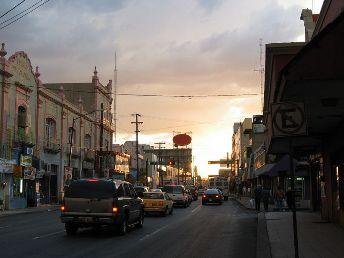
http://stopthedrugwar.org/files/ciudadjuarez.jpg
Ciuded Juárez (courtesy Daniel Schwen, Wikimedia)
Friday , October 16

In Michoacan, three bodies were found, all with messages attached. The messages were directed at the Zetas organization, and appear to have been from La Familia. La Familia was once part of the Zetas organization, but the two groups have been fierce rivals since the group split from the Gulf Cartel (and the Zetas) in 2006. In other parts of Mexico, two men were assassinated in Tijuana, and a boy who was jogging was killed after being caught in a firefight between gunmen and the army in Tamaulipas. Five people were murdered in Culiacan, Sinaloa, three in Hermosillo, Sonora, one in Durango, and six in the Ciudad Juárez area.

Saturday , October 17

In Tijuana, the nude, mutilated body of a man was found hanging from an expressway overpass. It is the second such discovery found in the last two weeks. Local news outlets reported that the man's tongue had been cut out, which suggests that drug traffickers suspected he was an informant. Additionally, a gun battle between police and drug traffickers left one police officer dead and two wounded. A suspected cartel member was also killed in the incident. Police recovered five assault rifles and vests with federal insignia from several vehicles used by the gunmen. The day before, the the decapitated body of a woman whose hands and feet had been bound were found in a different part of the city.

Monday , October 19

Two people were killed after being ambushed by a group of heavily armed gunmen in Guerrero. One of the dead was a policeman, and the other was a civilian who was riding a bus that was caught in the crossfire. Additionally, five bodies showing signs of torture were recovered from various parts of Acapulco. Attached to each of them were notes threatening "kidnappers, thieves and traitors" and signed by Arturo Beltran-Leyva, the boss of the Beltran-Leyva cartel. 18 people were killed in drug-related killings in Ciudad Juárez. At least 21 other drug-related homicides were reported in Mexico, including nine beheaded bodies found in Tierra Caliente.

Tuesday , October 20

In Guerrero, at least three banners were found which threatened police and Genaro Garcia Luna, the Secretary of Public Safety. The signs were signed by what appears to be a new, Guerrero branch of the "La Familia" cartel which is based in Michoacan. The signs also accused Garcia Luna of protecting the Beltran-Leyva cartel and the allied Zetas organization. In another part of Guerrero, the body of a bus driver was found by the side of the road, and showed signs of torture. A second body was found near Acapulco.

Near the city of Ciudad Mante, police arrested a man who had 107 kilos of marijuana in a hidden compartment of his pick-up truck.

Wednesday , October 21

A suspected member of the Juárez Cartel was added to the FBI's ten most wanted list. Eduardo "Tablas" Ravelo, 41, is allegedly a high-ranking member of the Barrio Azteca gang. In exchange for a steady supply of narcotics, Barrio Azteca performs enforcement tasks for the cartel on both sides of the border, and can effectively be considered part of the Jurez cartel which operates on American soil. Ravelo is suspected of ordering the killing of another high-ranking gang member, David "Chicho" Meraz, during an internal power struggle. Meraz was killed in Ciudad Jurez last year. Ravelo is reportedly hiding in Juárez under the protection of the cartel.

Earlier in the week, another man with suspected cartel connections was also added to the FBI's ten most wanted list. Jose Luis Saenz, of Los Angeles, is suspected of killing at least four people (including his girlfriend) and is allegedly an enforcer for an unnamed Mexican drug trafficking organization. In October 2008 he shot and killed another gang member in LA County who apparently owed $620,000 to the cartel.

Across Mexico, 40 drug-related homicides were reported in a 24-hour period, bringing the 2009 total to over 6,000. Thirteen of these were in Chihuahua, and of these, nine were in Ciudad Juárez. According to a running tally by El Universal, 1,000 people were killed in drug-related violence in Mexico in the last 40 days. The previous 1,000 had been killed over 41 days, and the 1,000 before that in 44 days. Since August 1st, an average of 24 homicides were reported daily, approximately one every hour. One out of every three drug-related homicides was in Ciudad Juárez. Much of the violence is due to the conflict being fought by the Sinaloa Federation and the Juárez cartel over control of the Ciudad Juárez-El Paso drug trafficking corridor.

Thursday, October 22

In the United States, over 300 people were arrested, in what is being called the largest single-blow against Mexican drug cartels operating in the country. The arrests targeted the US operations of the La Familia cartel, which is based in the Mexican state of Michoacan. Law enforcement officials said arrests were made or charges were files in multiple states, including California, Colorado, Georgia, Massachusetts, Minnesota, Mississippi, Missouri, Oklahoma, New York, North Carolina, South Carolina, Tennesee, Texas, and Washington State. Many of the charges filed were directed against those involved with the cartels methamphetamine smuggling network in the US, with other charges being directed at those involved in cocaine and marijuana trafficking for the organization. Additionally, a New York grand jury has indicted Servando Gomez-Martinez, who is linked to the July murder of twelve federal police officers who were found dead by the side of a roadway.

Total body count for the week: 203
Total body count for the year: 6,018

Read the last Mexico Drug War Update here.

Latin America: Mexican Drug War Update--October 22

by Bernd Debussman Jr. Mexican drug trafficking organizations make billions each year trafficking illegal drugs into the United States, profiting enormously from the prohibitionist drug policies of the US government. Since Mexican president Felipe Calderon took office in December 2006 and called the armed forces into the fight against the so-called cartels, prohibition-related violence has killed over 12,000 people, with a death toll of over 5,800 so far in 2009. The increasing militarization of the drug war and the arrest of several high-profile drug traffickers have failed to stem the flow of drugs -- or the violence -- whatsoever. The Merida initiative, which provides $1.4 billion over three years for the US to assist the Mexican government with training, equipment and intelligence, has so far failed to make a difference. Here are a few of the latest developments in Mexico's drug war: Friday , October 16 In Michoacan, three bodies were found , all with messages attached. The messages were directed at the Zetas organization, and appear to have been from La Familia. La Familia was once part of the Zetas organization, but the two groups have been fierce rivals since the group split from the Gulf Cartel (and the Zetas) in 2006. In other parts of Mexico, two men were assassinated in Tijuana, and a boy who was jogging was killed after being caught in a firefight between gunmen and the army in Tamaulipas. Five people were murdered in Culiacan, Sinaloa, three in Hermosillo, Sonora, one in Durango, and six in the Ciudad Juarez area. Saturday , October 17 In Tijuana, the nude, mutilated body of a man was found hanging from an expressway overpass. It is the second such discovery found in the last two weeks. Local news outlets reported that the man’s tongue had been cut out, which suggests that drug traffickers suspected he was an informant. Additionally, a gun battle between police and drug traffickers left one police officer dead and two wounded. A suspected cartel member was also killed in the incident. Police recovered five assault rifles and vests with federal insignia from several vehicles used by the gunmen. The day before, the the decapitated body of a woman whose hands and feet had been bound were found in a different part of the city. Monday , October 19 Two people were killed after being ambushed by a group of heavily armed gunmen in Guerrero. One of the dead was a policeman, and the other was a civilian who was riding a bus that was caught in the crossfire. Additionally, five bodies showing signs of torture were recovered from various parts of Acapulco. Attached to each of them were notes threatening “kidnappers, thieves and traitors” and signed by Arturo Beltran-Leyva, the boss of the Beltran-Leyva cartel. 18 people were killed in drug-related killings in Ciudad Juarez. At least 21 other drug-related homicides were reported in Mexico, including nine beheaded bodies found in Tierra Caliente. Tuesday , October 20 In Guerrero, at least three banners were found which threatened police and Genaro Garcia Luna, the Secretary of Public Safety. The signs were signed by what appears to be a new, Guerrero branch of the “La Familia” cartel which is based in Michoacan. The signs also accused Garcia Luna of protecting the Beltran-Leyva cartel and the allied Zetas organization. In another part of Guerrero, the body of a bus driver was found by the side of the road, and showed signs of torture. A second body was found near Acapulco. Near the city of Ciudad Mante, police arrested a man who had 107 kilos of marijuana in a hidden compartment of his pick-up truck. Wednesday , October 21 A suspected member of the Juarez Cartel was added to the FBI’s ten most wanted list. Eduardo "Tablas" Ravelo, 41, is allegedly a high-ranking member of the Barrio Azteca gang. In exchange for a steady supply of narcotics, Barrio Azteca performs enforcement tasks for the cartel on both sides of the border, and can effectively be considered part of the Juarez cartel which operates on American soil. Ravelo is suspected of ordering the killing of another high-ranking gang member, David "Chicho" Meraz, during an internal power struggle. Meraz was killed in Ciudad Juarez last year. Ravelo is reportedly hiding in Juarez under the protection of the cartel. Earlier in the week, another man with suspected cartel connections was also added to the FBI’s ten most wanted list. Jose Luis Saenz, of Los Angeles, is suspected of killing at least four people (including his girlfriend) and is allegedly an enforcer for an unnamed Mexican drug trafficking organization. In October 2008 he shot and killed another gang member in LA County who apparently owed $620,000 to the cartel. Across Mexico, 40 drug-related homicides were reported in a 24-hour period, bringing the 2009 total to over 6,000. Thirteen of these were in Chihuahua, and of these, nine were in Ciudad Juarez. According to a running tally by El Universal, 1,000 people were killed in drug-related violence in Mexico in the last 40 days. The previous 1,000 had been killed over 41 days, and the 1,000 before that in 44 days. Since August 1st, an average of 24 homicides were reported daily, approximately one every hour. One out of every three drug-related homicides was in Ciudad Juarez. Much of the violence is due to the conflict being fought by the Sinaloa Federation and the Juarez cartel over control of the Ciudad Juarez-El Paso drug trafficking corridor. Total body count for the week: 113 Total body count for the year: 5,928 Read the last Mexico Drug War Update here.

Latin America: Mexico Ex-President Fox Lashes Out at President Calderon Over Drug War

Latin America: Mexico Ex-President Fox Lashes Out at President Calderon Over Drug War For years, former Mexican President Vicente Fox has suggested that drug legalization needs to be on the agenda when discussing how to resolve prohibition-related problems like the wave of violence plaguing Mexico. Now, he's getting personal and political, as he attacks sitting President Felipe Calderon for what Fox is describing as a "failed" effort to send the military after the so-called drug cartels. Fox and Calderon are both members of the conservate National Action Party (PAN), and Calderon replaced Fox in the Mexican presidency in December 2006. With Mexico already stricken by violent conflict among the cartels and between the cartels and Mexican law enforcement, Calderon called out the military to join the fray, but matters have only gotten worse. An estimated 14,000 people have been killed in the conflicts since Calderon sent in the soldiers, with 2,000 being killed in one city—Ciudad Juarez—this year alone. Addressing reporters at the annual conference of the conservative European Popular Party in Vienna last weekend, Fox said Calderon's efforts against the cartels had gone astray and the military should return to the barracks. "The use of army in the fight against drug mafia and organized crime, the use of force against force gave no positive results. On the contrary, the number of crimes only grows," Fox told journalists on Saturday. "It's time to think of alternative ways to fight the crime," Fox said, adding that police and governments of Mexican states should be charged with anti-drug efforts on their territory, instead of federal forces. Not that Fox himself had much better luck against the cartels, nor was he averse to using the military. While Fox was president between 2000 and 2006, he deployed troops to Sonora, Chihuahua, Tamaulipas, and other states, especially after 2003, when violence began escalating. By 2005, nearly 1,400 were reported killed in the drug wars, and 2,000 more in 2006. But those levels of violence, which once seemed extraordinary, would now be a welcome relief after nearly three years of Calderon's campaign and the harsh response from the cartels. This year's toll in Ciudad Juarez alone matches the toll nationwide for the last year of the Fox era. Fox was also critical of the United States, saying it needed to do more to control arms trafficking, money laundering, and drug use. But he again questioned whether drug prohibition is the best way to attain those ends. "Drug consumption is a personal responsibility, not one of government, Fox said."Perhaps it is impossible to ask government to halt the supply of drugs to our children."
Location: 
Vienna
Austria

Latin America: Mexico Drug War Update

by Bernd Debussman Jr.

Mexican drug trafficking organizations make billions each year trafficking illegal drugs into the United States, profiting enormously from the prohibitionist drug policies of the US government. Since Mexican president Felipe Calderon took office in December 2006 and called the armed forces into the fight against the so-called cartels, prohibition-related violence has killed over 12,000 people, with a death toll of over 5,800 so far in 2009. The increasing militarization of the drug war and the arrest of several high-profile drug traffickers have failed to stem the flow of drugs -- or the violence -- whatsoever. The Merida initiative, which provides $1.4 billion over three years for the US to assist the Mexican government with training, equipment and intelligence, has so far failed to make a difference. Here are a few of the latest developments in Mexico's drug war:

Wednesday, October 7

Three men were killed in the state of Guerrero in different parts of the city of Tecpan de Galeana. Police believe that armed men travelling in two vehicles were involved in all three incidents, which occurred the same night.

Thursday, October 8

A pregnant Guatemalan woman was killed along with her mother in Chiapas. The two Guatemalan women were found dead on a farm outside the city of Tuxla Chico. Additionally, five people were killed in Guerrero, three in Durango, and three decapitated bodies were found in Sinaloa. In the northern city of Monterrey, two people were killed and a third was wounded after a firefight took place inside a restaurant. Fifteen people were reported killed in Ciudad Juarez during the same 24 hour period.

Friday, October 9

In Tijuana, the mutilated body of a state official was found hanging from a bridge. The official, Rogelio Sanchez, was kidnapped Wednesday, and was suspected by police of giving fake drivers licenses to drug traffickers. Tijuana is currently the scene of a violent turf war between the Arellano-Felix Cartel and a breakaway faction led by Teodoro Garcia Simental.

In Guerrero, ten people were found executed, all bearing signs that read "This is what is going to happen to thieves and extortionists. Respectfully, the Boss of Bosses." Local authorities offered no explanation for the notes. (The same appellation was used in a September 12 killing in Acapulco.) Authorities were alerted to the bodies -- many of whose heads were found bound in masking tape -- by a series of anonymous phone calls. In recent months many low-level criminals have been killed by vigilante groups thought to be working with the support of drug traffickers or members of the police.

In the state of Jalisco, four suspected cartel gunmen were killed in an hours-long gun battle with the Mexican army. During the battle, a police helicopter which had been called to the scene was struck by gunfire. A helicopter gunship was also called in. In the state of Chihuahua, a soldier was killed and several wounded after being ambushed near the small hamlet of Colonia LeBaron. The area has been heavily patrolled following the July killing of an anti-crime activist and his neighbor.

Monday, October 12

In the waters of the port city of Mazatlan, four men were arrested after the ship in which they were travelling was found to be carrying approximately 500 kilos of cocaine. After catching sight of an American naval vessel in the area, the men were seen began throwing the drugs overboard, set fire to their ship, and jumped into the water. American naval personnel rescued the men and turned them over to Mexican military authorities.

Tuesday, October 13

In Ciudad Juarez, eight people were killed in drug-related violence. Among them was a woman who was found beheaded. The woman was in her late twenties and had a tattoo of Santa Muerte, or "Saint Death", a symbol popular among Mexican criminals. In a separate incident, four men were killed when gunmen attacked a mechanics workshop, and three others were killed in other shootings.

In Navolato, Sinaloa, a group of armed men kidnapped and killed the brother-in-law of a brother of Vicente Carillo Fuentes, the reputed head of the Juarez Cartel. The man, Jacobo Retamoza, 34, was the lawyer who represented the La Guajira farm, where in November 2008 a group of armed men dressed in military uniforms kidnapped 27 people. He was driving on a highway when he was intercepted by a group of heavily armed gunmen who spirited him away in a truck. Several hours later he was found dead with multiple gunshot wounds.

In Chiapas, a vast arsenal was discovered after the arrest of four men, who ranged in ages from 21 to 41. The men had in their possession 21 AR-15 rifles, 18 AK-47's, and five pistols, one of which was jewel encrusted. Additionally, law enforcement officers found 17, 212 rounds of ammunition, over 300 grenades, several blocks of TNT, a sniper rifle, nine vehicles, and confiscated two race horses found on the property.

Total body count for the week: 178
Total body count for the year: 5,815

Read the last Mexico Drug War Update here.

See you in Juarez? This Week's Mexico Drug War Update

So...the Stopthedrugwar crew will be attending the Drug Policy Alliance conference in Albuquerque a few short weeks from now. We've been discussing the possibility of taking a couple of days before or after the conference and shooting down to Ciudad Juarez. It's only a few hours down I-25, and the city across the Rio Grande from El Paso seems to be the hot spot for prohibition-related violence. Hmmm, maybe a little too hot, as this week's update suggests. Stay tuned. And now, Bernd's weekly gift to us all: Latin America: Mexico Drug War Update by Bernd Debusmann, Jr. Mexican drug trafficking organizations make billions each year trafficking illegal drugs into the United States, profiting enormously from the prohibitionist drug policies of the US government. Since Mexican president Felipe Calderon took office in December 2006 and called the armed forces into the fight against the so-called cartels, prohibition-related violence has killed over 12,000 people, with a death toll of over 5,000 over 5,800 so far in 2009. The increasing militarization of the drug war and the arrest of several high-profile drug traffickers have failed to stem the flow of drugs -- or the violence -- whatsoever. The Merida initiative, which provides $1.4 billion over three years for the US to assist the Mexican government with training, equipment and intelligence, has so far failed to make a difference. Here are a few of the latest developments in Mexico's drug war: Wednesday, October 7 Three men were killed in the state of Guerrero in different parts of the city of Tecpan de Galeana. Police believe that armed men travelling in two vehicles were involved in all three incidents, which occurred the same night. Thursday, October 8 A pregnant Guatemalan woman was killed along with her mother in Chiapas. The two Guatemalan women were found dead on a farm outside the city of Tuxla Chico. Additionally, five people were killed in Guerrero, three in Durango, and three decapitated bodies were found in Sinaloa. In the northern city of Monterrey, two people were killed and a third was wounded after a firefight took place inside a restaurant. Fifteen people were reported killed in Ciudad Juarez during the same 24 hour period. Friday, October 9 In Tijuana, the mutilated body of a state official was found hanging from a bridge. The official, Rogelio Sanchez, was kidnapped Wednesday, and was suspected by police of giving fake drivers licenses to drug traffickers. Tijuana is currently the scene of a violent turf war between the Arellano-Felix Cartel and a breakaway faction led by Teodoro Garcia Simental. In Guerrero, ten people were found executed, all bearing signs that read “This is what is going to happen to thieves and extortionists. Respectfully, the Boss of Bosses”. Local authorities offered no explanation for the notes. Authorities were alerted to the bodies--many of whose heads were found bound in masking tape--by a series of anonymous phone calls. In recent months many low-level criminals have been killed by vigilante groups thought to be working with the support of drug traffickers or members of the police. In the state of Jalisco, four suspected cartel gunmen were killed in an hours-long gun battle with the Mexican army. During the battle, a police helicopter which had been called to the scene was struck by gunfire. A helicopter gunship was also called in. In the state of Chihuahua, a soldier was killed and several wounded after being ambushed near the small hamlet of Colonia LeBaron. The area has been heavily patrolled following the July killing of an anti-crime activist and his neighbor. Monday, October 12 In the waters of the port city of Mazatlan, four men were arrested after the ship in which they were travelling was found to be carrying approximately 500 kilos of cocaine. After catching sight of an American naval vessel in the area, the men were seen began throwing the drugs overboard, set fire to their ship, and jumped into the water. American naval personnel rescued the men and turned them over to Mexican military authorities. Tuesday, October 13 In Ciudad Juarez, eight people were killed in drug-related violence. Among them was a woman who was found beheaded. The woman was in her late twenties and had a tattoo of Santa Muerte, or “Saint Death”, a symbol popular among Mexican criminals. In a separate incident, four men were killed when gunmen attacked a mechanics workshop, and three others were killed in other shootings. In Navolato, Sinaloa, a group of armed men kidnapped and killed the brother-in-law of a brother of Vicente Carillo Fuentes, the reputed head of the Juarez Cartel. The man, Jacobo Retamoza, 34, was the lawyer who represented the La Guajira farm, where in November 2008 a group of armed men dressed in military uniforms kidnapped 27 people. He was driving on a highway when he was intercepted by a group of heavily armed gunmen who spirited him away in a truck. Several hours later he was found dead with multiple gunshot wounds. In Chiapas, a vast arsenal was discovered after the arrest of four men, who ranged in ages from 21 to 41. The men had in their possession 21 AR-15 rifles, 18 AK-47’s, and five pistols, one of which was jewel encrusted. Additionally, law enforcement officers found 17, 212 rounds of ammunition, over 300 grenades, several blocks of TNT, a sniper rifle, nine vehicles, and confiscated two race horses found on the property. Total body count for the week: 178 Total body count for the year: 5,815 Read the last Mexico Drug War Update here.

Latin America: Mexico Drug War Update

by Bernd Debusmann, Jr.

Mexican drug trafficking organizations make billions each year trafficking illegal drugs into the United States, profiting enormously from the prohibitionist drug policies of the US government. Since Mexican president Felipe Calderon took office in December 2006 and called the armed forces into the fight against the so-called cartels, prohibition-related violence has killed over 12,000 people, with a death toll of over 5,000 so far in 2009. The increasing militarization of the drug war and the arrest of several high-profile drug traffickers have failed to stem the flow of drugs -- or the violence -- whatsoever. The Merida initiative, which provides $1.4 billion over three years for the US to assist the Mexican government with training, equipment and intelligence, has so far failed to make a difference. Here are a few of the latest developments in Mexico's drug war:

http://stopthedrugwar.org/files/malverde1-smaller.jpg
shrine to San Malverde, patron saint of the narcos (and others), Culiacán -- plaque thanking God, the Virgin of Guadalupe, and San Malverde for keeping the roads cleans -- from ''the indigenous people from Angostura to Arizona''
Wednesday, September 30

In Tijuana, three municipal policemen were killed after being attacked by suspected cartel gunmen. The three men were riding in two pickup trucks when they were ambushed. Two others were wounded. In the past, Tijuana-based drug trafficking organizations have targeted members of the policemen at random, in what is thought to possibly be an attempt to force high-ranking police officials to resign.

Thursday, October 1

According to a tally being kept up by El Universal September has (so far) been the most violent month of 2009 in Mexico. Some 757 drug-trafficking related homicides were committed in 2009. Of these, 360 occurred in Chihuahua (which includes Ciudad Juarez), 112 in Sinaloa, 74 in Durango, and 55 in Guerrero, with smaller numbers in other areas of Mexico. On the last day of September, 22 people were killed across the country, including several policemen. 12 of these killings occurred in Ciudad Juarez.

Friday, October 2

A federal investigation found that guns purchased in the Houston area were used in at least 55 murders on the Mexican side of the border. All the killings were linked to one particular cell of the Gulf Cartel, and the dead included Mexican police, civilians, and drug traffickers. The federal government contends that Houston is the top spot in the US for the purchase of weapons later used in drug-related murders in Mexico.

During one 24 hour period, nine policemen were murdered in several incidents across the country. Among these were two in Guerrero, were two policemen were ambushed. One of them was found dead by the roadside, while another was kidnapped (and his squad car taken) and later found dead. In Sonora, a policeman was kidnapped by a group of armed men and later found dead in an empty lot. In addition to the killings of the policemen across the country, 13 people were killed in Ciudad Juarez and 7 in other parts of the country.

Saturday, October 3

Mexican authorities seized a record 37 tons of precursor chemical used in the production of methamphetamine. The drug seizure was the result of two separate raids. Twenty tons were intercepted at the Pacific port of Manzanillo, and 17 tons were taken at a customs post in Nuevo Laredo, on the border with Texas.

While public safety and law enforcement officers were meeting in Guanajuato to discuss ways to fight organized crime, 10 people were gunned down in various parts of the state. Local officials believe that at least seven of the killings can be linked together, and all ten are thought to be part of a turf battle between different drug trafficking groups fighting over the area.

Monday, October 5

In Ciudad Juarez, period five men were killed when gunmen burst into a bar and opened fire. Four people were gunned down at the same bar six months ago.

Tuesday, October 6

Seven men were killed after being attacked by a group of armed men near the Guatemalan border in the state of Chiapas. Large quantities of cocaine are thought to transit through the Guatemalan-Mexican border on their way to the US border from South America.

At Mexico City International Airport, a woman was arrested carrying seven kilos of cocaine. The woman, a Mexican citizen, was caught after being searched by airport security personnel. She was also carrying nearly 15,000 pesos and $525 -- a total of less than $650.

Total body count for the week: 226
Total body count for the year: 5,637

Read the last Mexico Drug War Update here.

Latin America: Mexico Drug War Update

by Bernd Debusmann, Jr.

Mexican drug trafficking organizations make billions each year trafficking illegal drugs into the United States, profiting enormously from the prohibitionist drug policies of the US government. Since Mexican president Felipe Calderon took office in December 2006 and called the armed forces into the fight against the so-called cartels, prohibition-related violence has killed over 12,000 people, with a death toll of over 5,000 so far in 2009. The increasing militarization of the drug war and the arrest of several high-profile drug traffickers have failed to stem the flow of drugs -- or the violence -- whatsoever. The Merida initiative, which provides $1.4 billion over three years for the US to assist the Mexican government with training, equipment and intelligence, has so far failed to make a difference. Here are a few of the latest developments in Mexico's drug war:

http://stopthedrugwar.org/files/drugpatrols.jpg
Mexican army anti-drug patrol
Wednesday, September 23

Nine people were killed in a nine hour span in Ciudad Juarez. The dead included a beheaded man, and bullet-riddled bodies of three men and a woman found in a car. Additionally, another gunshot victim was found by the side of a road, and two bodies -- one beheaded -- were found wrapped in a blanket. The ninth victim was found dead inside a car.

Four people were killed after a gun battle in La Crucita, Durango. The four dead, all men, were killed during a firefight between two groups of rival drug traffickers in a hillside community. Three bullet-riddled SUVs were left at the scene.

Thursday, September 24

At least three US citizens were killed when gunmen attacked a motel in Ciudad Juarez, along with a Mexican man, whom police believe was the intended target. The two women who were killed were sisters.

A high-ranking police official was ambushed in Sinaloa. The official, Jesús Adolfo Fierro Bojórquez, had called his wife to pick him up after his car broke down. She arrived to find him dead with a gunshot wound to the chest. Additionally, a police radio operatior was shot and killed in Ecatepec, near Mexico City, and 18 people were killed across Ciudad Juarez in a 24 hour period. Two men were killed in Tijuana, and three in Guerrero.

Friday, September 25

Five suspected Sinaloa cartel assassins were arrested by the Mexican army in Ciudad Juarez. The men are thought to be involved in at least 45 murders, including the two recent attacks on drug rehabilitation centers in which 28 people were lined up against a wall and executed.

Monday, September 28

In the resort town of Puerto Vallarta, two Canadian men were shot and killed in execution-style slayings. Gunmen attacked Gordon Douglas Kendall and Jeffrey Ronald Ivans outside an apartment building, chasing them to the pool area before finally killing them. Canadian law enforcement officials were apparently aware of the two men, and believed they were deeply involved in the British Columbia cocaine trade.

A former Juarez police officer was arrested over the weekend, and is suspected of taking part in at least 18 killings in the city. He was one of several arrests made by Mexican military and police forces in Juarez over the weekend. The ex-officer, Miguel Angel Delgado Carmona, 39, was captured with an accomplice following a vehicle chase after an aborted extortion attempt at a Juarez funeral home. He is also suspected of taking part in locating another 80 homicide victims, and was captured with two AK-47s.

Mexico's foreign minister, Patricia Espinosa, said that the high death toll of the Mexican government's war on drug traffickers is a sign of its success. "This is a very ugly statistic," she said, "but a good percentage of those killed never have their bodies claimed, their families never go and get them... that is a very clear indicator that these people were involved in drug trafficking." She added that some 60,000 drug traffickers have been arrested since president Calderon took office, and 50,000 weapons have been seized.

Tuesday, September 29

In Cuernavaca, Morelos, Mexican army elements took over police stations and surrounded a stadium where municipal vehicles are kept. They also interrogated local police officers about an incident that occurred on the 3rd of September, in which it is suspected that local police leaked information to drug traffickers who killed at two police officers and a fireman who were travelling unarmed.

Wednesday, September 30

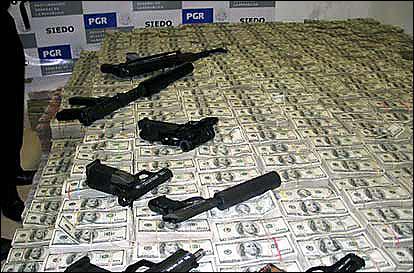
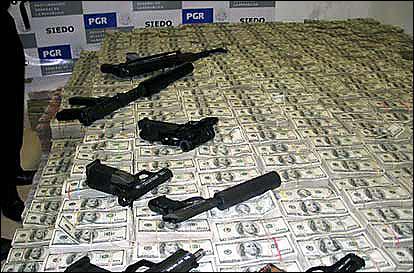
Army troops seized $7.3 million in cash from a house in Ciudad Victoria, the capital of Tamaulipas state. The raid came after soldiers received a tip from local residents who said they had seen several armed men at the house. Four handguns and four vehicles were also seized in the raid on the home, which is thought to have been a Gulf Cartel safe house.

Three civilians were wounded when soldiers at a military checkpoint shot at the car in which they were travelling. The incident took place in Morelia, Michoacan. The three men in the car were apparently drunk, and security in the area was high because of a visit to the city by President Calderon. This is the latest in a series of shootings at road blocks set up by the military to stem the flow of drugs and arms moving along Mexico's roads.

Body count for the last two weeks: 275
Body count for the year: 5,411

Read the last Mexico Drug War Update here.

Room for Debate on Mexico's Drug Decriminalization Law

The New York Times "Room for Debate" blog has a series of comments on Mexico's new decriminalization law. Will it reduce violence, or police corruption? Will increase drug use? Is it really a decriminalization law? Former foreign minister of Mexico Jorge Castaneda is among the participants. Check it out . Also of interest today, Mary O'Grady in the Wall Street Journal on "Mexico's Hopeless Drug War." O'Grady points out that "[p]rohibition and demand make otherwise worthless weeds valuable," arguing that neither the decrim law nor Calderon's ongoing drug war will reduce the violence. Via Tony Newman...

Latin America: Mexico Drug War Update

by Bernd Debusmann, Jr.

http://stopthedrugwar.org/files/malverde1-smaller.jpg
shrine to San Malverde, Mexico's ''narco-saint,'' Culiacan, Sinaloa
Mexican drug trafficking organizations make billions each year trafficking illegal drugs into the United States, profiting enormously from the prohibitionist drug policies of the US government. Since Mexican president Felipe Calderon took office in December 2006 and called the armed forces into the fight against the so-called cartels, prohibition-related violence has killed over 12,000 people, with a death toll of over 4,000 so far in 2009. The increasing militarization of the drug war and the arrest of several high-profile drug traffickers have failed to stem the flow of drugs -- or the violence -- whatsoever. The Merida initiative, which provides $1.4 billion over three years for the US to assist the Mexican government with training, equipment and intelligence, has so far failed to make a difference. Here are a few of the latest developments in Mexico's drug war:

Friday , September 4

- Troops arrested three suspected cartel assassins in Ciudad Juarez. The three are thought to be part of La Linea, the enforcement arm of the Juarez cartel. Between them, they are accused of having participated in 70 killings.

- A high ranking police official was gunned down in Los Mochis, Sinaloa. The commander, Ubaldo Dominguez Grijalva, was shot by at least two gunmen outside his house at 6:30 AM. Fifteen days ago, he was involved in an operation in which three suspected cartel hitmen were arrested after a firefight in Los Mochis.

Saturday , September 5

- Mexican troops captured a suspect in the September 2 killing of 17 patients in Ciudad Juarez drug rehabilitation center. The suspect, Jose Rodolfo Escajeda, is a high-ranking member of the Juarez cartel. He is also on the DEA's list of most wanted fugitives on suspicion of being involved in marijuana and cocaine trafficking to the United States.

- A former high ranking official of US Immigrations and Customs Enforcement (ICE) was arrested on suspicion of conspiracy to smuggle cocaine into the US. The man, Richard P. Kramer, had previously been stationed in Mexico. He was apparently convinced by drug cartel members to retire and begin working for them directly. Kramer is accused of searching for information from law enforcement databases concerning possible informants, and with being involved in a 660 pound cocaine shipment which traveled from Panama to the United States, before being finally seized in Spain in 2007.

Sunday , September 6

- Gunmen killed a state legislative candidate, his wife, and their two children at their home in Tabasco. Authorities originally suspected that the murders were carried out by drug traffickers angered by recent arrests. Jose Francisco Fuentes Esperon, 43, a former university professor, had begun his campaign just one day prior to his murder. Mr.Esperon and his wife were both shot, while the children, ages 8 and 10, were asphyxiated.

Monday, September 7

- An arrest was made in the killing of Juan Francisco Fuentes Esperon, the state legislative candidate murdered over the weekend (see above). Police arrested several young men in what apparently was a burglary gone wrong. Interestingly, however, the Zetas drug trafficking organization took the unusual step of publicly distancing itself from the murders. The Zetas hung a banner in Villahermosa, the state capital, saying they were not involved.

- Seven people were gunned down in several separate incidents in Ciudad Juarez. Four of the victims were killed at a motel, and included an ex-US soldier who lived in El Paso and worked for the Postal Service. The men were drinking when they were attacked by heavily armed gunmen. In another incident, a man was killed and five people wounded when gunmen entered a private party and began shooting.

Tuesday, September 8

- Mexico replaced its attorney general, Eduardo Medina Mora, who had held the position for nine years. President Calderon gave no reason for the move. He is slated to be replaced by Arturo Chavez Chavez, who had previously worked for the state attorney general's office of Chihuahua, of which Ciudad Juarez is capital. He is likely to face a tough nomination battle in Mexico's congress, as the decision has been criticized because of his work in Chihuahua. During his tenure there from 1992-1996, the Juarez cartel became much stronger and the murders of hundreds of women went unsolved.

- In Veracruz, police found a headless body along with a message from drug traffickers attached to it. The body was left in the same location where two bodies (and another message from drug traffickers) were found on August 26. The note left with the body threatened extortionists and kidnappers, and may be the work of vigilante groups supported by drug traffickers or elements of the police.

- In Ciudad Juarez, a body with both arms severed was found dumped on a street. A spokesman for the regional prosecutor's office said that the victim was found with his severed arms crossed and placed on top of a cardboard sign that was left with the body. Additionally, the victim had plastic bags shoved into his mouth and his eyes were taped shut.

On another subject, two journalists from the state of Tabasco were arrested on suspicion of working for the Zetas drug trafficking organization. Newspaper correspondents Roberto Juarez and Lazaro Abreu Tejero Sanchez are accused of taking thousands of dollars from drug traffickers to withhold stories and share information from police sources. Police learned of the payments, which totaled some $4,500 a month, from a captured Zeta lieutenant.

Total reported body count for the week: 239

Total reported body count for the year: 4,955

Read last week's Mexico drug war update here.

Resignation of Mexico's Attorney General Won't Change Much

I have an invited comment online at JURIST, explaining why the resignation of Mexican Attorney General Eduardo Medina Mora won't change much. (Hint: It's Prohibition.) JURIST, which is published at the University of Pittsburgh School of Law, is "the world's only law school-based comprehensive legal news and research service," according to its FAQ. It's also free, archives included. I've already added it to my Google Reader.

Drug War Issues

Criminal JusticeAsset Forfeiture, Collateral Sanctions (College Aid, Drug Taxes, Housing, Welfare), Court Rulings, Drug Courts, Due Process, Felony Disenfranchisement, Incarceration, Policing (2011 Drug War Killings, 2012 Drug War Killings, 2013 Drug War Killings, Arrests, Eradication, Informants, Interdiction, Lowest Priority Policies, Police Corruption, Police Raids, Profiling, Search and Seizure, SWAT/Paramilitarization, Task Forces, Undercover Work), Probation or Parole, Prosecution, Reentry/Rehabilitation, Sentencing (Alternatives to Incarceration, Clemency and Pardon, Crack/Powder Cocaine Disparity, Death Penalty, Decriminalization, Drug Free Zones, Mandatory Minimums, Rockefeller Drug Laws, Sentencing Guidelines)CultureArt, Celebrities, Counter-Culture, Music, Poetry/Literature, Television, TheaterDrug UseParaphernalia, ViolenceIntersecting IssuesCollateral Sanctions (College Aid, Drug Taxes, Housing, Welfare), Violence, Border, Budgets/Taxes/Economics, Business, Civil Rights, Driving, Economics, Education (College Aid), Employment, Environment, Families, Free Speech, Gun Policy, Human Rights, Immigration, Militarization, Money Laundering, Pregnancy, Privacy (Search and Seizure, Drug Testing), Race, Religion, Science, Sports, Women's IssuesMarijuana PolicyGateway Theory, Hemp, Marijuana -- Personal Use, Marijuana Industry, Medical MarijuanaMedicineMedical Marijuana, Science of Drugs, Under-treatment of PainPublic HealthAddiction, Addiction Treatment (Science of Drugs), Drug Education, Drug Prevention, Drug-Related AIDS/HIV or Hepatitis C, Harm Reduction (Methadone & Other Opiate Maintenance, Needle Exchange, Overdose Prevention, Safe Injection Sites)Source and Transit CountriesAndean Drug War, Coca, Hashish, Mexican Drug War, Opium ProductionSpecific DrugsAlcohol, Ayahuasca, Cocaine (Crack Cocaine), Ecstasy, Heroin, Ibogaine, ketamine, Khat, Marijuana (Gateway Theory, Marijuana -- Personal Use, Medical Marijuana, Hashish), Methamphetamine, Nicotine, Prescription Opiates (Fentanyl, Oxycontin), Psychedelics (LSD, Mescaline, Peyote, Salvia Divinorum), Synthetic Drugs (Mephedrone, Synthetic Cannabinoids)YouthGrade School, Post-Secondary School, Raves, Secondary School