State & Local Government

RSS Feed for this category

NYPD Facing Double-Barreled Challenge to Marijuana Practices [FEATURE]

There has been a double-barreled challenge this week to the NYPD and its heavy-handed policing. On the one hand, the department and the city are being sued in federal court over their stop-and-frisk program, which is aimed predominantly at young men of color. On the other, the NYPD is facing the glare of publicity over a new report that contends it has wasted as much as a million man-hours over the past ten years arresting low-level marijuana offenders.

March 2012 protest of NYC stop and frisk violations
Under the stop-and-frisk program, which the city touts as a crime-fighting effort, more than 531,000 people were stopped last year and nearly five million in the past decade. Some were stopped only for questioning, some had their bags or backpacks searched, some were subjected to full pat-down searches. Only 10% of those stops resulted in arrests -- including arrests for public marijuana possession after police tricked or intimidated people into pulling out their baggies (possession is otherwise decriminalized in the state) -- and only a tiny number resulted in the seizure of weapons.

The massive number of annual stop-and-frisks, five times the number a couple of decades ago, raises questions itself. But who is being stopped-and-frisked is raising even more questions and concerns. While blacks make up a quarter of the city's population, they accounted for 51% of all stop-and-frisk encounters, being stopped at a rate twice what would be expected with color-blind enforcement. Whites, on the other hand, make up 44% of the population, but accounted for only 11% of stop-and-frisk encounters.

Many of the stop-and-frisks are illegal and the enforcement is racially biased, argued attorneys in the class action lawsuit in federal court this week. In the case, which began Monday, attorneys for the plaintiffs -- people who were subjected to stop-and-frisk searches -- are seeking a court-appointed monitor to oversee changes in police practices.

They are not seeking to ban stop-and-frisk searches because they have been found legal. But US District Court Judge Shira Scheindlin, who has expressed deep concerns over the tactic in previous rulings, could order reforms. The trial could last for up to a month.

NYPD is doing illegal stops and must reform its practices, said Center for Constitutional Rights attorney Darius Charney, who is representing the plaintiffs. The stops are "arbitrary, unnecessary, and unconstitutional" and a "frightening and degrading experience" for "thousands, if not millions" of New Yorkers, Charney argued. He said plaintiffs will present "powerful testimonial and statistical evidence" that residents are stopped for no good reason.

On Monday, the first plaintiff witnesses took the stand. Devin Almonor, 16, the son of a police officer, testified that he was stopped when he was 13, handcuffed and thrown against an unmarked police car as he made his way home. David Floyd, now a 33-year-old medical student, testified that he was stopped twice without cause.

Attorneys for the city responded that in a city that large, large numbers of stop-and-frisks should not be unexpected and that the NYPD went where the crime was.

"The New York Police Department is fully committed to policing within the boundaries of the law," said Heidi Grossman, an attorney for the city. "Crime is not distributed evenly across the city. Police are given an awesome responsibility, one of which is to bring crime down and keep people safe."

Given those awesome responsibilities, a new report from the Drug Policy Alliance and the Marijuana Arrest Research Project is raising eyebrows. The report's main finding is clear from its title: One Million Police Hours: Making 440,000 Marijuana Possession Arrests in New York City, 2002-2012. The report was authored by CUNY sociology professor Dr. Harry Levine, an expert on marijuana possession arrests, at the request of members of the city council and the state legislature.

While marijuana possession offenders typically faced only fines once they had their day in court, the report found that the arrests themselves inflicted immediate pain. Those 440,000 arrests resulted in five million hours of police custody, an average of more than 10 hours per person of being held in the city's notorious holding cells, often overnight.

"We cannot afford to continue arresting tens of thousands of youth every year for low-level marijuana possession," said Alfredo Carrasquillo, civil rights organizer with VOCAL-NY. "We can't afford it in terms of the negative effect it has on the future prospects of our youth and we can't afford in terms of police hours. It's shocking that the same mayor who has been taking money away from youth programs and cutting other social services, is wasting tens of millions of dollars locking youth up through the NYPD's marijuana arrests crusade. We need legislative action to fix this madness."

"This report shows that people arrested for marijuana possession spend an average of 12-18 hours, just in police custody, and the vast majority of those arrested are young Black and Latino men from seven to ten neighborhoods in NYC," said Chino Hardin, field coordinator and trainer with the Center for NuLeadership on Urban Solutions. "This is not just a crisis, but a frontline civil rights issue facing urban communities of color in the 21st century. We are calling on Governor Cuomo to do the right thing, and exercise the moral and political will to address this injustice."

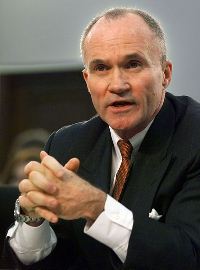
While Mayor Bloomberg and Police Commissioner Raymond Kelly last fall announced changes it how the NYPD processes marijuana arrests and the number of pot possession busts have begun to decline slightly, advocates are calling on the legislature and the governor to change the state's 1977 decriminalization law to remove law enforcement's "in public view" loophole, the provision NYPD has used to great effect.

"For years, New Yorkers from across the state have organized and marched and rallied, demanding an end to these outrageous arrests. And now we learn that the police have squandered one million hours to make racially biased, costly, and unlawful marijuana possession arrests. This is scandalous," said Gabriel Sayegh, New York state director for the Drug Policy Alliance. "I’m sure we can all think of more effective things for the police to spend their time on -- imagine if NYPD committed one million hours to working with communities to stop gun violence or to pursue unsolved serious crimes. We stand with the caucus and other leaders in Albany -- both Democrats and Republicans -- in demanding reform. The hour of change is upon us, and reform is long, long overdue."

Whether it is the massive stop-and-frisk policing program or the practice of turning marijuana possession tickets into misdemeanor arrests complete with post-booking jail time and criminal records, NYPD is coming under increasing scrutiny and criticism..

New York City, NY
United States

Medical Marijuana Update

Medical marijuana action was concentrated in state legislatures this week, although there was also news from the Massachusetts attorney general's office.

California

On Tuesday, Rep. Tom Ammiano introduced a bill to regulate dispensaries. The San Francisco Democrat filed Assembly Bill 473, which would create comprehensive state-level regulations for dispensaries. It would create a Division of Medical Cannabis Regulation within the Department of Alcoholic Beverage Control to set standards and rules and set fees and would require dispensaries to have state-issued permits.

Massachusetts

Last Wednesday, the state attorney general's office struck down a local ban on dispensaries. The office nixed a ban in the town of Wakefield, ruling that towns can regulate, but not prohibit dispensaries under the state law. Such bans would frustrate the purpose of the medical marijuana law that allows patients with certain medical conditions to obtain marijuana for medical use, the ruling said. But in a separate decision, the office upheld a temporary moratorium on dispensaries in the town of Burlington.

New Hampshire

On Wednesday, a medical marijuana bill passed the House. The bill, House Bill 573, was approved by an overwhelming 286-64 vote. The bill would allow qualifying patients to cultivate up to three mature plants or obtain cannabis from one of five non-profit, state-regulated alternative treatment centers. It will next be considered by the Senate, which passed similar legislation in 2009 and 2012. Gov. Maggie Hassan (D) previously expressed support for making medical marijuana legal in the Granite State.

Oregon

Last Friday, a bill to license and regulate dispensaries was introduced by Rep. Peter Buckley (D) and Sen. Floyd Prozanski (D). The bill, House Bill 3460, would require medical marijuana facilities to seek a license from the Oregon Medical Marijuana Program similar to the license that patients and registered growers are required to obtain under current law. The bill sets out a series of regulations the medical marijuana facilities must meet and allows the Oregon Health Authority to draft additional rules and regulations to ensure patients are protected.

NYPD Marijuana Arrests Scandal Blows Up Again

March 2012 protest of NYC stop and frisk violations
A front page story on The Huffington Post reported on another New York marijuana arrests report by our friend Prof. Harry Levine, this one with Loren Siegel (formerly of ACLU) and DPA's Gabriel Sayegh. It's the best one yet, or at a minimum the title is the best one yet:

"NYPD Spent 1 Million Hours Making 440,000 Marijuana Possession Arrests Over Last Decade"
 

Many of those hours involved overtime pay too. It really sums up the stupidity of it all, in a pretty special way. (The injustices were addressed last week.)

Also, there's a lawsuit, and a judge told NYPD to stop "stop and frisk" arrests in the meanwhile. (But have they?) And Gov. Cuomo continues to push for full decrim to plug the "open view" loophole officers have abused to make all these arrests.

Phil is working on a story for the Chronicle, but there are some links in the meanwhile.

Location: 
New York City, NY
United States

Marijuana Legalization Bill Introduced in Nevada

On Monday, Nevada became the latest state to see a marijuana legalization bill filed this year. Assemblyman Joe Hogan (D-Las Vegas) introduced Assembly Bill 402, which would allow people 21 and over to possess up to one ounce of marijuana and would set up a system of state regulation and taxation of marijuana commerce.

Nevada now joins Maine, Maryland, Massachusetts, New Hampshire, Pennsylvania, Rhode Island, and Oregon as states where legalization bills have been or will be filed. A legalization bill died earlier this year in Hawaii, and one died last week in New Hampshire, but another New Hampshire legalization bill is still alive.

The Nevada bill expressly does not allow driving while impaired, does not require employers to accept marijuana use, and limits legalization to those 21 and over.

Marijuana has already been legalized by voters in Colorado and Washington, and the Alaska courts have recognized a privacy right allowing for the possession of small amounts of marijuana in one's home. Marijuana remains illegal under federal law.

Hogan told the Las Vegas Review-Journal he introduced the bill because of what he called the persecution of young people.

"I think it's better than chasing young kids around the neighborhoods, endlessly, and damaging them," he said. "We've been wasting terrible amounts of money on these completely unsuccessful law enforcement techniques. I think it's time to get serious, get it fixed and move on."

Hogan said that marijuana legalization would raise badly needed money for the state's education system. It envisions excise taxes on both wholesale and retail sales of marijuana and marijuana products.

"There's enough tax money in this line of products to properly and fully support education in the state of Nevada, which we have failed to do for a number of years," Hogan said.

The bill is the brainchild of Dr. Steven Frye, a retired Las Vegas psychiatrist and marijuana legalization activist. Frye told the Review-Journal legalization could generate as much as $500 million a year in tax revenues.

"It's a big tourist issue," he said. "And we create green jobs in Nevada growing, processing and selling it."

Carson City, NV
United States

Maryland Senate Okays Marijuana Decriminalization

 A bill that would decriminalize the possession of small amounts of marijuana in Maryland passed the state Senate Tuesday by a nearly two-to-one margin. The vote was 30-16.

Sponsored by Sens. Bobbi Zirken (D-Baltimore County) and Allan Kittleman (R-Carroll County), Senate Bill 297, would make possession of 10 grams (about a third of an ounce) or less a civil offense punishable by no more than a $100 fine. Under current state law, possession of 10 grams or less is a misdemeanor punishable by up to 90 days in jail and a $500 fine.

A state legislative fiscal and policy analysis of the bill estimated that it would result in small losses in fine revenues, small savings from decreases in the number of jail days, and would significantly reduce caseloads in the Office of the Public Defender.

The bill now proceeds to the House, where it has been assigned to the Judiciary Committee. If it successfully passes out of committee, it would have to get a House floor vote, and pass it, before being sent to Gov. Martin O'Malley (D).

Annapolis, MD
United States

DC 911 Good Samaritan Drug Overdose Bill Takes Effect

As of Tuesday, there will be limited legal protections for people who witness or experience a drug overdose in the District of Columbia and summon medical assistance. That's because the District's Good Samaritan Overdose Prevention Amendment Act goes into effect then.

Passed last fall by the DC city council, the new is aimed at reducing overdose deaths by removing the threat of arrest from overdose victims and those who might assist or seek help for them. Many overdose deaths do not occur immediately, and medical interventions can save lives, but some drug users and their peers are reluctant to seek help because of fear of arrest and prosecution.

"Criminalization should not be a barrier to calling 911," said Grant Smith, policy manager with the Drug Policy Alliance. "This new law will help encourage District residents who witness an overdose to pick up the phone and help save a life." 

Under the new law:

  • Law enforcement officers who observe small amounts of illegal drugs or paraphernalia at the scene of an overdose should not consider these drug law violations to be crimes for the individual experiencing the overdose and the witness who sought emergency medical services.
  • A minor is provided limited protection from criminal charges for underage possession of alcohol if they experience an overdose or seek emergency medical services for a peer.
  • An adult who is 25 years of age or younger is given limited protection from criminal charges for providing alcohol or other drugs to a minor who is 16 years of age or older if they seek emergency medical services for the minor in need.
  • The possession of naloxone – a medication that rapidly reverses opiate overdoses – and its use by lay persons on individuals experiencing an opiate overdose is decriminalized.

Ten states (California, Connecticut, Colorado, Florida, Illinois, Massachusetts, New Mexico, New York, Rhode Island and Washington State) have already enacted Good Samaritan laws for preventing fatal drug overdoses. Good Samaritan legislation is currently pending in New Hampshire, North Carolina, Missouri and other states. A coalition comprised of the Drug Policy Alliance, Students for Sensible Drug Policy, American Civil Liberties Union of the Nation's Capital, Bread for the City, HIPS, students from the George Washington University School of Public Health and Health Services and GW Law Students for Sensible Drug Policy, parents and advocates supported passage of the Good Samaritan law.

"Implementation of this new law by public health and law enforcement officials is critical to improving public willingness to immediately seek medical assistance for overdoses involving illegal drug and alcohol use," said Smith.

Spurred by the rapid rise in opioid pain medication prescribing and the diversion of pain pills, drug overdose rates nationwide have increased five-fold since 1990 and more than doubled between 2000 and 2010. Heroin and other opiates are the second leading cause of overdose deaths in the District in recent years, following cocaine.

Washington, DC
United States

No Medical Marijuana for Minnesota This Year

Bills to allow for the use of medical marijuana in Minnesota have popular support and may still be introduced this year, but will be little more than place markers for 2014, supporters said this week, citing opposition from the governor's office and law enforcement.

Heather Azzi of Minnesotans for Compassionate Care said the effort got off to a late start this year, and that the rest of the year would be devoted to trying to shore up support.

"We just had a lot of background work to do before we got started," she told the Minneapolis Star-Tribune. And there is a lot of work to be done assuaging the concerns on opponents. "There has to be a way for us to mitigate their concerns," she said. "We will be meeting with them between now and January to do just that."

Medical marijuana made it through the legislature in 2009, only to be vetoed by then-Gov. Tim Pawlenty (R). The current governor, Democrat Mark Dayton, isn't any friendlier on the issue.

He told the Associated Press in December that he wasn't interested in advancing either medical marijuana or decriminalization. "I don't think we need another drug operating in our society," he said then.

Minnesota law enforcement remains intransigent as well. Dennis Flaherty, executive director of the Minnesota Police and Peace Officers Association, told the Star-Tribune any bill like the 2009 bill would not be going anywhere. "It would be a regulatory and enforcement nightmare," Flaherty said.

The state's political movers-and-shakers are apparently more attuned to the complaints of law enforcement than the desires of the electorate. A Public Policy Polling survey earlier this month had support for medical marijuana at 65%, with 66% saying the governor should not veto such a bill if it passes and 54% saying they would disapprove of sheriffs and prosecutors opposing it.

St. Paul, MN
United States

Vermont Marijuana Legalization Bill Filed

Vermont has become the latest state to see a marijuana legalization bill filed this year. House Bill 499, "An Act Relating to Regulation and Taxation of Marijuana," was introduced to the House and assigned to the House Judiciary Committee on Tuesday.

The bill is sponsored by Reps. Susan Davis (P-Washington), David Deen (D-Westminster), James Masland (D-Thetford), William Stevens (I-Shoreham) and Teo Zagar (D-Barnard).

It would allow people 21 and over to possess up to two ounces of marijuana and grow up to three plants. The bill also legalizes the possession of pot paraphernalia. It would also "create a regulatory structure for the wholesale and retail sale of marijuana that includes licensing and oversight by the Department of Liquor Control." The bill envisages a $50 per ounce excise tax on commercial marijuana sales.

People who possess more than two ounces or three plants or who sell marijuana outside regulated commercial channels would still be subject to criminal penalties.

And the bill would allow industrial hemp production in accordance with existing state law "regardless of whether federal regulations have been adopted."

Colorado and Washington freed the weed in November, and marijuana legalization bills have been or will be introduced this year in Maine, Massachusetts, New Hampshire, Pennsylvania, Rhode Island, and Oregon. A legalization bill died earlier this year in Hawaii, and one died this week in New Hampshire, but another New Hampshire legalization bill is still alive.

Montpelier, VT
United States

New Hampshire Marijuana Legalization Bill Defeated

A bill to legalize marijuana in New Hampshire is dead after a House vote Wednesday. The measure was defeated on a vote of 239-122 with no debate. Democrats supported the bill on a roughly two-to-one margin, while Republicans opposed it by roughly the same margin.

The vote against the bill came after the Criminal Justice and Public Safety Committee voted 12-8 last month not to pass the measure.

The bill, House Bill 337, would have removed marijuana from the state's criminal code, effectively ending marijuana prohibition in the Granite State, but did not contain any provisions for taxation and regulation of cultivation and sales.

Another marijuana legalization bill, House Bill 492, is still alive, but is stuck in the Criminal Justice and Public Safety Committee with no vote scheduled. That bill would allow people to grow up to six plants and sets up a scheme to tax and regulate marijuana commerce.

Concord, NH
United States

Medical Marijuana Update

There is action in various state houses, Michiganders continue to tussle over their medical marijuana law, and there's an investigation going on in Maine. Let's get to it:

California

Last Thursday, the California Coastal Commission approved Imperial Beach zoning law changes that banned dispensaries from operating in the city. The city had approved the ban in July 2011, but action was delayed while opponents of the ban sought unsuccessfully to overturn it with a municipal initiative last November. The change in local zoning will not impact the ability for up to three people to form a collective to cultivate marijuana in Imperial Beach.

Maine

Last Friday, state officials said they were investigating a cultivation center that supplies the state's largest dispensary operator. The grow operation supplies Wellness Connection of Maine's four dispensaries, which all closed last week. A Wellness Connection spokesperson said the state was conducting "a comprehensive regulatory inspection" and that there was no connection between the investigation and the dispensary closings. State officials had no further comment.

Maryland

Last Friday, the governor's office suggested he would support a pending medical marijuana bill. Joshua Sharfstein, Gov. Martin O’Malley’s secretary of Health and Mental Hygiene, testified before lawmakers on Friday that a bill sponsored by Del. Dan K. Morhaim (D), a Baltimore County doctor, contained most of the provisions the governor could support. The bill would allow academic medical centers in the state to operate "compassionate use programs" beginning in 2016.

Massachusetts

Last Friday, the Massachusetts Medical Society called for research on marijuana's medical uses. The move signals an evolution in the thinking of the doctors' group, which had publicly opposed passage of the state's medical marijuana initiative last year. The group called for research to ensure that marijuana is subjected to the same rigorous testing as prescription drugs.

Michigan

Last Tuesday, a circuit court judge ruled that medical marijuana users can collect unemployment benefits. Ingham County Circuit Judge William Collette overturned a decision by a state commission that found a state-approved medical marijuana user, who was fired from her job after failing a drug test, was not eligible for the benefits. Collette ruled that the worker had already informed her employer of her medical marijuana use and the drug test "merely demonstrated what she had informed her employer of prior to the test -- that she uses medical marijuana."

Last Wednesday, police in Grand Rapids raided three dispensaries. Dispensaries were ruled illegal by the state Supreme Court last month, and the state attorney general has given local prosecutors the go-ahead to start shutting them down. At least one dispensary has already reopened, with the proprietor arguing that it is not violating the law because it requires caregivers to be present with patients during transactions. No charges have been filed yet.

Last Friday, a circuit court judge ruled that dispensaries are bound by local zoning laws. Washtenaw County Circuit Court Judge Archie Brown made the ruling in refusing dismiss a complaint against two Ypsilanti Township residents who are accused of growing more marijuana than the town's zoning ordinance allows. Under the Michigan Medical Marijuana Act, caregivers can grow up to 72 plants for patients, but township code only allowed the 12 plants approved for an individual patient. The case was the first court challenge to zoning laws restricting medical marijuana in the state.

Minnesota

On Wednesday, a Public Policy Polling survey found that 65% of state voters support medical marijuana. The results of the statewide survey come as state lawmakers prepare a bipartisan bill that would make it legal for Minnesota residents with debilitating medical conditions, such as cancer, multiple sclerosis, and HIV/AIDS, to access and use medical marijuana if advised to do so by their physicians. Its introduction is expected within the next two weeks, at which time details of the proposal will be made available. The poll found a strong majority (54%) of voters in the state would disapprove of their county sheriff or county attorney working to defeat such a bill, while only 24% would approve.Two-thirds (66%) think Gov. Mark Dayton should sign it if it is approved by the legislature.

Missouri

Last Friday, a medical marijuana bill was reintroduced in the state legislature. The bill, House Bill 688, would allow patients with debilitating conditions, such as HIV/AIDS, cancer, and multiple sclerosis, to use and possess marijuana for medical purposes if their doctors recommend it. The bill would put the question to voters on the November 2014 general election ballot.

New Hampshire

Last Thursday, a medical marijuana bill advanced in the House. The Health Human Services and Elderly Affairs Committee voted 14-1 to recommend that the full House pass the bill after amending it to block out of state patients from buying marijuana at the five dispensaries the bill envisions. Out of state patients could bring up to two ounces of their medicine with them. The amended bill also lowers the number of plants allowed from four adults to three and reduces the area of a legal grow site from 100 square feet to 50.

Drug War Issues

Criminal JusticeAsset Forfeiture, Collateral Sanctions (College Aid, Drug Taxes, Housing, Welfare), Court Rulings, Drug Courts, Due Process, Felony Disenfranchisement, Incarceration, Policing (2011 Drug War Killings, 2012 Drug War Killings, 2013 Drug War Killings, Arrests, Eradication, Informants, Interdiction, Lowest Priority Policies, Police Corruption, Police Raids, Profiling, Search and Seizure, SWAT/Paramilitarization, Task Forces, Undercover Work), Probation or Parole, Prosecution, Reentry/Rehabilitation, Sentencing (Alternatives to Incarceration, Clemency and Pardon, Crack/Powder Cocaine Disparity, Death Penalty, Decriminalization, Drug Free Zones, Mandatory Minimums, Rockefeller Drug Laws, Sentencing Guidelines)CultureArt, Celebrities, Counter-Culture, Music, Poetry/Literature, Television, TheaterDrug UseParaphernalia, ViolenceIntersecting IssuesCollateral Sanctions (College Aid, Drug Taxes, Housing, Welfare), Violence, Border, Budgets/Taxes/Economics, Business, Civil Rights, Driving, Economics, Education (College Aid), Employment, Environment, Families, Free Speech, Gun Policy, Human Rights, Immigration, Militarization, Money Laundering, Pregnancy, Privacy (Search and Seizure, Drug Testing), Race, Religion, Science, Sports, Women's IssuesMarijuana PolicyGateway Theory, Hemp, Marijuana -- Personal Use, Marijuana Industry, Medical MarijuanaMedicineMedical Marijuana, Science of Drugs, Under-treatment of PainPublic HealthAddiction, Addiction Treatment (Science of Drugs), Drug Education, Drug Prevention, Drug-Related AIDS/HIV or Hepatitis C, Harm Reduction (Methadone & Other Opiate Maintenance, Needle Exchange, Overdose Prevention, Safe Injection Sites)Source and Transit CountriesAndean Drug War, Coca, Hashish, Mexican Drug War, Opium ProductionSpecific DrugsAlcohol, Ayahuasca, Cocaine (Crack Cocaine), Ecstasy, Heroin, Ibogaine, ketamine, Khat, Marijuana (Gateway Theory, Marijuana -- Personal Use, Medical Marijuana, Hashish), Methamphetamine, Nicotine, Prescription Opiates (Fentanyl, Oxycontin), Psychedelics (LSD, Mescaline, Peyote, Salvia Divinorum), Synthetic Drugs (Mephedrone, Synthetic Cannabinoids)YouthGrade School, Post-Secondary School, Raves, Secondary School