Consequences of Prohibition
Drug War Issues
Politics & Advocacy
Already by far the world's leader in opium production, Afghanistan could set a new global record this year, the United Nations Office on Drugs and Crime warned Monday. According to its assessment of winter planting trends, increases are expected in 15 provinces, mainly in the volatile south and east, decreases in seven provinces, no change in six provinces, and six provinces will produce no opium.
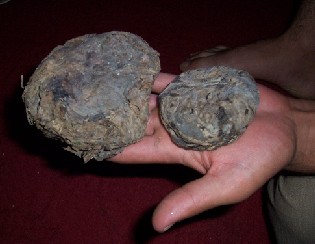
trader's opium, outside Jalalabad, Afghanistan, photo by Drug War Chronicle editor Phil Smith
Last year was already a record crop, with Afghanistan harvesting more than 6,000 metric tons of opium, enough to produce more than 600 metric tons of heroin. Increased cultivation area, along with ample rain and snowfall this winter, should result in a bountiful harvest this year, the UN reported.
The report comes as US and NATO troops prepare for the spring fighting season against the Taliban in the south and east. According to all accounts, the Taliban is among those profiting nicely from the opium trade. But efforts to repress the trade to cut funding for the Taliban threaten to drive peasant farmers right into the guerrilla group's waiting arms.
Still, the US and NATO follow a policy of eradicating the opium crop and substituting alternative development, a program that has not worked so far. They continue to reject an increasing clamor to try a different approach, including various proposals to license and market the crop through legitimate channels.
Costa also warned that more than $1 billion of opium from last year's bumper crop had not yet made it to market, with traders holding onto it in a bid for higher prices. "Is it in the insurgents' hands?" he asked. "It is not under the bed of the farmers," he said, adding, "It could become a serious problem down the road."
Permission to Reprint: This content is licensed under a modified Creative Commons Attribution license. Content of a purely educational nature in Drug War Chronicle appear courtesy of DRCNet Foundation, unless otherwise noted.
Add new comment